
Tag: best practice

  • Its the Heart

    Its the Heart

    “A good, quick, small team can beat a big, slow team any time.”

    Paul William “Bear” Bryant, legendary college football coach

    In the early 1990s my former wife and I, both avid sailors decorated our boat for the local Christmas Boat Lane Parade.  While we had some help, most of the work was performed by the two of us.  That 27 foot sailboat, one of the smallest in the fleet that year won the overall Best In Fleet Grand Prize.  During the presentation, we were asked how many worked decorating the boat which had over 10,000 Christmas tree lights mounted on several three dimensional frames.  At the awards ceremony, when we told them that it was a very small team–this explanation was met with disbelief.

    During World War II, the mathematician, Alan Turing led a small tightly knit team breaking the German Enigma code, saving upwards to several million people.  A dramatization of his team’s challenges were captured in the 2014 movie, The Imitation Game.

    These two very different examples have one thing in common–Coach Bryant’s admonition.  Entrepreneurs such as Steve Jobs, Sir Richard Branson, Elon Musk and others have long argued that one should hire the best people and turn them loose.  Looks like sound advise.  This may be the reason start up firms consistently beat established larger organizations with greater resources.

    Inclusion

    Teams often appear to be cliques.  Much like the kids game where teams are divided up based on favoritism as ‘buddies’ are selected.  Any non-buddy can be effectively excluded since he or she may not be part of the in-crowd.

    In the movie, Turning was initially shunned by both team members as well as his superior.  He did not fit in.  In a large team he may have drifted into the background where his perspectives might not even be heard.  However, as a key ‘different’ member of a small team, his views could not be easily dismissed although they were disagreed with and even hated.  Yet they became part of the discussion and eventually the entire team supported him and ‘now their’ solution saved millions.

    During this period, the Tuskegee Airmen faced even greater challenges.  While some individuals and units may have been forced to accept them, their highly visible contributions could not be denied by those directly benefiting from their inclusion into the air bombardment task force.  Likely, this would not be as conspicuous if they were part of a larger organization.

    Bottom Line

    Not only are small high performance teams usually more successful, they offer all team members a better opportunity to be included in the activity.  This is even more true virtually when it is often difficult to prevent one party from attempting to dominate meetings.  Talking over people and/or raising one’s voice is a tried and true way to bully in a meeting and it is almost impossible to control virtually with a large group.

    Similar to atomic energy, it is not the amalgamation of large quantities of dynamite that makes the biggest bang.  It is the release of the smallest that is the Big Bang!  Harness the power of your team atom.

    What is Your Organization’s Small Team Strategy?

    For More Information

    Please note, RRI does not endorse or advocate the links to any third-party materials.  They are provided for education and entertainment only.

    For more information on Cross Cultural Engagement, check out our Cross Cultural Serious Game

    We presented, Should Cross Cultural Serious Games Be Included in Your Diversity Program: Best Practices and Lessons Learned at the Online Conference, New Diversity Summit 2020 the week of September 14, 2020.  Check Out this timely event and contact the organizer for access to the presentations!!

    You can contact this author as well.

  • Point of View

    Point of View

    What Are We Doing?


    An interesting sign of the times.  Individuals on social media who identify themselves by name, photo, job (even senior) title, organization etc. are taking controversial positions on a variety of often emotional subjects.  In the old days discussions about , sex, politics and religion were off limits in the corporate environment.  Apparently, not any more.

    If the recent election results are to be believed; 74 million voted for one candidate and 81 million for the other.  So if you are pontificating about one position, you are potentially alienating half of your clients, coworkers, superiors, etc.  What’s the point in doing this?

    Short term high possibly; however, items posted online remain forever.  Seems career limiting for a brief moment of venting.

    New Normal Model?

    First Amendment and all that aside, shouldn’t all of us govern our written feelings?  Writing, so and so is a jerk and I can’t stand him or her maybe a feel good moment.  However, do we do this in real life?  Generally not.

    Like sexting, baring your soul online might not be the best approach.  Tempered, as in the real world is probably a better model.  Most of us filter our response to controversial subjects in a business and even social environments.

    Why is this filter frequently off when we are online?  Some believe there that online presences have a level of anonymity.  Yet there is no evidence this is remotely true.

    Passions of the moment can run deep and after all it is just my opinion and it is my right to express it.  Theoretically this is correct but certain individuals are having accounts closed if the perception by monitors disagrees with their position.  More importantly, the sticky nature of posts may come back to haunt posters.

    Suggestion

    We are all entitled to our opinions and can express them in a number of ways.  The voting booth and political activism are one way.  Our religious affiliation is another and our sexual preferences are accepted these days.  Taking others to task online for their preference seems intolerant and not relevant when one is seeking to advance one’s career using social media.

    Put the older filters back on and reserve judgment for the voting booth, the bedroom and houses of worship.  The cost of venting on these subjects may be quite high and you may never know why you were not promoted, hired, or sales proposal rejected.  Finally, most organizations will have a clause as part of the employment agreement not to use company affiliation the way many are.

    We all have opinions, yet how are you remaining professional online?

    For More Information

    Please note, RRI does not endorse or advocate the links to any third-party materials.  They are provided for education and entertainment only.

    For more information on Cross Cultural Engagement, check out our Cross Cultural Serious Game

    We presented, Should Cross Cultural Serious Games Be Included in Your Diversity Program: Best Practices and Lessons Learned at the Online Conference, New Diversity Summit 2020 the week of September 14, 2020.  Check Out this timely event and contact the organizer for access to the presentations!!

    You can contact this author as well.

  • You’re Kidding, Right?

    You’re Kidding, Right?

    Not Again


    In 2018 we posted an opinion regarding social media driven sales ‘cold calling.’  As noted then, the comments went along the lines, “I reviewed your profile and I know I can help.”  This unsolicited approach continues to be blown off by this and other pundits/potential customers as amateurish.

    Recently, the tactic has sifted.  Now the argument seems to refrain (not literally), “I have reviewed your profile and I would like to offer you something that you have no interest in.”  What?

    In the past few weeks, I have been offered the opportunity to ‘buy in’ to an insurance agency, retain a coach, buy a franchise specifically chosen for me, and any number of prospect generation engagements.  Kidding right?  As if I do not know how to run my business?

    Innovative solutions that individuals and organizations are not aware of can add value and ‘reaching out’ to inform those unaware is legitimate and a long standing sales approach.  Most prospects welcome this knowledge and then can make an informed decision as to the relevance to their needs.

    Lunch and Learn models come to mind.  If I respond to this invitation, perhaps I am a qualified prospect worthy of follow up.

    The Call Back . . .

    Then, “Since you did not respond, I am sending you the same crap again“.  Maybe there was no response because the owner of a software company does not want to invest in the insurance business.

    A follow up should further the prospects knowledge, thus generating interest.  Regurgitating the same o ‘ same o ‘ is pointless, if not insulting.

    What a waste of everyone’s time, including the seller.  If the idea is just to blast everyone and see what sticks, this approach has never really worked.

    For example, somehow despite my being on the ‘no mail’ list this writer routinely receives (snail) junk mail from an AC service company that is not nearby, two real estate brokers I have no relationship with (one because they sold the house next to mine last year) and the infamous, home insurance renewal scam.

    Finally, I love the one whereby the vendor will send me qualified leads for my stock brokerage business.  What filter did that guy use?  Maybe AI.  As might be expected, none of these vendors received a call back, much less a sale.

    Someone With Your Name

    We have all received notification that someone with your surname has died and her/his bank account has millions in it.  “I am writing to you because we can transfer this wealth to you.  Just send us your banking information.”

    How is any of this different from online cold calling?  At its core, it is not.  These approaches to selling are abusive and condescending.  Moreover, they are not likely to win any business.  They come across as scams and not bonifide offers.

    Develop a Value Proposition

    If you want my business, explain how its adds value to my life.  Don’t just blast out something you HOPE will get my attention.  Why do I need coaching?  Why do I need a franchise or insurance agency?  Tell me something that matters to me.

    I am sure this message will not be heeded and I expect to continue to receive worthless materials from people I do not know.  The waste of bits and bites will not stop.  Just know that like rewards from the African princesses, such requests will go to Junk.

    For a sales model that works, see our Economic Value Proposition Matrix® (EVPM).  Additional information and a free version to build your own EVPM is available.

    Are You Doing Your Homework and Presenting Yourself/Organization as a Legitimate Provider?

    For More Information

    Please note, RRI does not endorse or advocate the links to any third-party materials.  They are provided for education and entertainment only.

    For more information on Cross Cultural Engagement, check out our Cross Cultural Serious Game

    We presented, Should Cross Cultural Serious Games Be Included in Your Diversity Program: Best Practices and Lessons Learned at the Online Conference, New Diversity Summit 2020 the week of September 14, 2020.  Check Out this timely event and contact the organizer for access to the presentations!!

    You can contact this author as well.


  • Post Covid-19 Operational Performance

    Post Covid-19 Operational Performance

    Not the So-Called New Normal


    The light at the end of the Covid-19 tunnel may not be the train many still believe.  Populations are being inoculated at very high rates.  Moreover, there is ample evidence in my metropolitan area that the general population no longer believes or adheres to the ‘advice of experts.’  This should surprise no one who understands the US long history of civil disobedience.

    We pundits forecasting the new normal following a traumatic social event always get it wrong and so we will again this time.  There is a simple reason for this–Human Behavioral Economics.  Another leg of the three legged stool is the Technology Readiness Level (TRL) and not all technologies are at the same level or even play well together.  Finally, Organizational Culture must be ready as well.  If these situational settings are not met, the crisis passes and we get back into the comfortable and familiar.

    Following the initial euphoria that we could work from home and not wear pants, many discovered this really was not for them.  Many children did not do as well in a stay at home educational setting and teachers were challenged as well.  Moreover, many tasks require personal engagement.

    Many are Called . . .

    As always winners and losers will emerge and it will take some time for that rank order to solidify.  While digital is important and we have supported that business model for decades, bits will not physically move the barrels.  Still will take heavy industrial technology and processes.

    Using information and other technologies to drive Operations Management Systems are the future.  Not necessarily driven by IT firms but those digital engineers steeped in both disciplines.

    If Organizations are to achieve successful Sustainability, they first need a High Reliability level of Agility and Resiliency.  The only get these attributes when they perform at a high level of Excellence.

    So as we arrive at another new normal, we need to recognize that not everything from the past was bad and not everything we see today is good.  Some processes will be sustained and coupled with newer one.  New Normals do not really destroy the past; we continue to evolve.

    Even innovation from Creative Destruction is not instantaneous.

    How will your organization take advantage of emerging opportunities?

    For More Information

    Please note, RRI does not endorse or advocate the links to any third-party materials.  They are provided for education and entertainment only.

    For more information on Cross Cultural Engagement, check out our Cross Cultural Serious Game

    We presented, Should Cross Cultural Serious Games Be Included in Your Diversity Program: Best Practices and Lessons Learned at the Online Conference, New Diversity Summit 2020 the week of September 14, 2020.  Check Out this timely event and contact the organizer for access to the presentations!!

    You can contact this author as well.

  • Is Your Remote Team Aligned?

    Is Your Remote Team Aligned?

    Recently, my team and I were tasked with a delicate decision making process.  Due to its nature and signatory level, team members were only authorized to explore and present options.  The final decision was mine alone.  Our project governance model clearly defined this decision making process.

    One day I received a call from remote members explaining they were going to a vendor site to assess our options–I concurred.  Several hours later they let me know that they had made a decision and signed a contract.  When challenged about their actions they informed me that the vendor had demanded that they ‘act fast.’

    Twice in my career I was the C level executive responsible for global operations.  In one case, one of my direct reports was in a different office along with my boss, the CEO.  I received multiple calls from the CEO over a period that ‘so and so’ had stopped by to talk and decisions were made about my operations.  “Well you were not here was the excuse and it seemed like a good idea to me.”  Would it surprise anyone that ‘so and so’ was relieved shortly thereafter?

    In another, the software development operation was in a different part of town.  Development plans were agreed to and then in some cases materially changed with without authority or even informing management.  Needless to say, projects were late or not completed.  After a few weeks of this, the development lead was terminated.

    Remote Management Governance

    Based on the above paragraphs, some may argue that I am not a very good manager.  Perhaps, they are right; however, the point is remote management can be very difficult.  Empowered individuals and teams must have boundaries.

    Yes, hire smart people and get out of the way.  However, there are limits as even Steve Jobs, the micromanager would agree.

    Evidence suggests that working remotely has its challenges and not everyone is well suited for it.  Some individuals will need additional support.

    There is a great deal of information available about remote management.  Some is sound, but this Though Leader on the subject disagrees with much the advice.  It seems for many, this is their ‘first rodeo’ while remote management goes back to antiquity.  While not the first, the Roman Empire functioned well from a bureaucratic or management perspective.

    Inclusive Teams

    Currently, much of the discussion focuses on the Inclusion of team members.  We are recognizing that Diversity is not enough if not every one participates.

    Previously, we had put forth the construct that cross cultural teams have many of the same characteristics of diverse groups.  We can extend this model and success that Inclusive Teams include those individual who are not as well suite for remote teams as others.

    Managing diverse remote teams and assuring that all team members are valued contributors requires a level of managerial engagement that is constant, consistent and appropriately empowering.  ALL members must be encouraged to participate and their input must be acknowledged by the others.  Only then can Steve Jobs and Elon Musk like decisions be taken and not by those who tend to dominate groups unilaterally.

    D&I in a Post-Pandemic World

    Typically, D&I has been defined as a function of ethnicity and/or gender.  Last year we put forth the construct that Cross-Cultural and D&I are similar models of human behavior and best practices from both could add value to the other.

    Diversity must now include those are not well suited for new business models; however, flawed they may be–jury is still out regarding the effectiveness and efficiency of full time remote teamsInclusion means they must be actively involved.  Leaders at all levels must assure this model is successful.

    How Do You Assure the Reluctant Remote Team Members are Included?

    For More Information

    Please note, RRI does not endorse or advocate the links to any third-party materials.  They are provided for education and entertainment only.

    For more information on Cross Cultural Engagement, check out our Cross Cultural Serious Game

    We presented, Should Cross Cultural Serious Games Be Included in Your Diversity Program: Best Practices and Lessons Learned at the Online Conference, New Diversity Summit 2020 the week of September 14, 2020.  Check Out this timely event and contact the organizer for access to the presentations!!

    You can contact this author as well.


  • Covid-19 Positive: Telemedicine Kicked into High Gear

    Covid-19 Positive: Telemedicine Kicked into High Gear

    Crisis Drives Change

    In 2001 this writer approached the Houston medical community, post tropical storm Allison which flooded many basements in the Houston Medical Center with the loss of experimental data and other records.  We proposed the development of an Internet based solution to hold and manage medical records of all types.  The response to my organization’s offer to digitize records was met with disbelief and ultimate rebuke.

    At the time I was employed by a major corporation with the technology and financial resources to accomplish this task.  Sales Objections included privacy, doctors will not ‘buy in,’ insurance will not pay for it and a host of other lame excuses.

    Flash forward to 2020.  Why are thing so different now and the idea of ‘digitalization’ almost universally accepted?

    Twenty years is a career for many, yet it took a crisis this year to kick the medical sector into action at critical mass—Coronavirus, aka Covid-19.  As often the case large organizations are content to stay with the status quo.  Culture, processes, and even individual bonuses incent lethargy and complacency.  This common trait is not limited to one sector.

    Moreover, advances in online telemetry support the physician’s ability to treat many aliments remotely.  The industry did not just ‘jump’ to the current state, it evolved over time.  For example, remote and inaccessible areas such as Antarctica have taken advantage of telemedicine including remotely directed surgeries.

    Democratization

    We may look back on 2020 as the seminal moment when medicine was digitalized.  Despite current access issues such as we are finding with K-12 education, most will have the ability to interact online in the near future.  Moreover, a number of COTS (commercial off the shelf) health solutions such as found in a variety of Smart phone products enable remote diagnosis and monitoring on a global basis.

    The catalyst for taking telemedicine to the next level is Covid-19!  A good Positive.

    How is your organization taking advantage of remote operational technologies?

    For More Information

    Please note, RRI does not endorse or advocate the links to any third-party materials.  They are provided for education and entertainment only.

    For more information on Cross Cultural Engagement, check out our Cross Cultural Serious Game

    We presented, Should Cross Cultural Serious Games Be Included in Your Diversity Program: Best Practices and Lessons Learned at the Online Conference, New Diversity Summit 2020 the week of September 14, 2020.  Check Out this timely event and contact the organizer for access to the presentations!!

    You can contact this author as well.

  • Input Response: Cycle Time Reaction

    Input Response: Cycle Time Reaction

    Melvin—a story of growth.  At beginning of my oil and gas career, I was partnered with my mentor to be and at the time my supervisor; Melvin.  A gruff old cuss, he was a long-time south Louisiana ‘Cajun’ field engineer.  Little did I know at the time the next months would be life changing for me.

    The task at hand was open hole logging of oil wells using electronics and later computer driven—early digital oilfield solutions.  There was the ‘book’ and Melvin’s version of the book.  Years later when I used Melvin’s approach in Mississippi and was initially challenged by my operators.  I able to show them the method was safe and faster.  Accolades later, Melvin’s added value to the process was monetized; again.

    What I learned in the early days in south Louisiana was not a short cut or work around.  Rather, it was from experts who understood the work processes better than the desktop engineers writing the manuals.

    Flash Forward

    As of this writing, the Boeing Max 8 seems to be back in the operational fleet.  Months of financial disaster when knowledgeable pilots already knew how overcome its software short comings.  What did they know that the ‘suits’ and desk bound engineers did not—experience in reality!

    The BUT is, too many depend on the technology when human override is required.  There are many stories of aircraft autopilots destroying the aircraft and killing all.  Why did the so-called pilot allowed that to happen?  Perhaps, they were not pilots but simply human observes of the technological aviators?

    One common human interaction with technology is the computer keyboard.  Often, we seek to type faster than the on-line system can accept our input.  Impatience, especially with online ‘lag’ prompts frustration and even anger.  Sometimes the result is a frozen system.

    Next

    Melvin taught this young field engineer how the real world worked.  Playing it forward, our interaction with technology is not a function of simply accepting what we are told, but understanding it uses and limitations.

    The human relationship with technology continues to evolve.  Not just IT but all manner of ways to make life better.  However, our relationship with it and how we RESPOND to it continues to evolve.

    For every ‘by the book,’ there is a Melvin who knows better.  Find your Melvin!

    How are you managing technology or is it managing you?

    For More Information

    Please note, RRI does not endorse or advocate the links to any third-party materials.  They are provided for education and entertainment only.

    For more information on Cross Cultural Engagement, check out our Cross Cultural Serious Game

    We presented, Should Cross Cultural Serious Games Be Included in Your Diversity Program: Best Practices and Lessons Learned at the Online Conference, New Diversity Summit 2020 the week of September 14, 2020.  Check Out this timely event and contact the organizer for access to the presentations!!

    You can contact this author as well.

  • How Dare You!!

    How Dare You!!

    Lessons in Leadership—how dare you put young people in jeopardy for loss of life or failures they will live with the rest of their life?

    As we end Veteran’s Week, we are reminded of President Herbert Hoover’s comment, “Older men declare war.  But it is the youth that must fight and die.”  Hoover was president in the late 1920s and died in 1964.  How many wars has the United States been in since 1930?

    Don’t bother to count—too many.  Probably more to come from political hawks who have never served much less been in combat nor have members of their family.  Not leadership but only positioning for personal gain.

    Disclosure: I have been in the military but not combat.  My father on the other hand was awarded the Silver Star during WW II.

    This piece is not about war or politics, it is about leadership or lack thereof.  After BP Horizon in 2010, this writer attended a conference where a VP responsible for operations from a well-known public oil & gas company admitted that he had never been on an offshore drilling rig but he and his colleagues were making arrangements to visit one soon.

    Dah!  What was he doing for 20 years—home office political parlor games?  Same is true for many Washington Generals/Admirals—check their resumes.

    You’ve Got to Be Kidding Me?  Yet it was true.

    This pundit repeatedly worked on drilling rigs during his 20s.  Begs the question, how can you ‘lead from behind’ when you do not have a clue what your people are dealing with?  How Dare You send young people in an operational grinder you know nothing about?

    Decision making, by definition is made with limited and incomplete data and information.  However, informed decisions are made by those who can put things in context.

    In today’ operationally intense environment, so called ‘ground truth’ is imperative.  Executives owe their employees, contractors and partners their very best and not just organizational politicly correct thinking.

    YOU are responsible for the lives and careers of your team and by extension their families.  There are countless suppliers of training, coaching, and all manner of consulting.  However, bottom line—Lead from the Front!

    The celebrated veterans of this week have blazed your trail.  The US infantry motto, “Follow Me” is not the vision of a desk bound manager espousing leadership consulting mantra.

    Admiral Chester Nimitz is credited with statement, “When you’re in command, command.”  Not the words of a manager but a leader.  I would take his dare.

    But you need to know what you are doing before you send young men and women into harm’s way, whether the military, oil field operation or any critical infrastructure mission or task.

    You owe it to them.  How Dare You if you don’t have the required expertise!  Bonuses don’t mean anything if members of your team are killed.

    Do Your People Respect Your Leadership?

    For More Information

    Please note, RRI does not endorse or advocate the links to any third-party materials.  They are provided for education and entertainment only.

    For more information on Cross Cultural Engagement, check out our Cross Cultural Serious Game

    We presented, Should Cross Cultural Serious Games Be Included in Your Diversity Program: Best Practices and Lessons Learned at the Online Conference, New Diversity Summit 2020 the week of September 14, 2020.  Check Out this timely event and contact the organizer for access to the presentations!!

    You can contact this author as well.

  • Radar: Technology Game Changer!

    Radar: Technology Game Changer!

    The battle of Leyte Gulf in 1944 with over 200,000 individuals involved is possibly the largest naval battle in history.  Hopefully, one of the last ones.

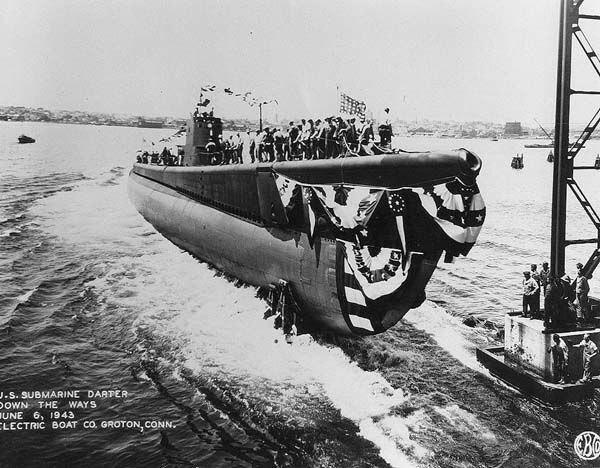
    In that battle, the submarine USS Darter initially detected (on radar) the Japanese task force early on October 23.  Other US naval vessels spotted that armada shortly thereafter on their radar screens.  This advanced knowledge enabled to US Navy to seize the initiative.  After the battle, the Japanese never stood up an equivalent naval force again.

    Technological advantage can be a game changer.  There is evidence of this phenomenon throughout history.  In this instance, the result was the elimination of the adversary’s ability to recover and reengage in a meaningful way.

    History’s Lessons

    Another game changer from that era was the proximity fuse developed by the Applied Physics Laboratory of Johns Hopkins University.  This technology enabled anti-aircraft rounds to explode within 75 feet of an attacking enemy aircraft instead of requiring physical contact which had a poor track record.  Referred to as, “The real secret weapon of World War II,” it is credited with shorting the war.

    Adversity has always led to rapid technological development.  There are indications that the Covid-19 pandemic is fueling an explosion of new ideas that directly address the infection as well as drive performance when the threat has passed.

    Capturing Value

    The conventional approach is to follow the Technology Adoption Life Cycle.  But is that still the realistic model today?  In our article published in 2004 Calculus of Value Model, we argue that the exact opposite is true.

    Advantage can go to those organizations that deploy technology early and codify knowledge obtained as a result.  The resulting ‘unfair advantage’ can change an industry.

    Previously we have made the case that while the concept of Minimum Viable Product aka MVP; a product that Early Adopters will find satisfactory, “The assessment of such technological solutions needs to be robust and thought through.  Not the knee jerk response often seen.”  Meaning that certain risks must be factored in the Value Proposition, but these can be manageable.

    According to Oracle’s Larry Ellison, “If you do everything that everyone else does in business, you’re going to lose.  The only way to really be ahead, is to ‘be different’.”  So Be Different—Start Early!

    How Can You Make New Technologies Your Organizational Game Changer?

    For More Information

    Please note, RRI does not endorse or advocate the links to third-party materials.  They are provided for education and entertainment only.

    For more information on Cross Cultural Engagement, check out our Cross Cultural Serious Game

    We are presenting, Should Cross Cultural Serious Games Be Included in Your Diversity Program: Best Practices and Lessons Learned at the Online Conference, New Diversity Summit 2020 the week of September 14, 2020.  Check Out this timely event!!

    You can contact the author as well.

  • Data Bias: The Latent or Unobserved

    Data Bias: The Latent or Unobserved

    In statistics a Latent Variable can be defined as, ‘a variable inferred from observed or measured data.’ Its analysis is often used psychology, economics, and predictive modeling.  This author used Structural Equation Models (SEM) in his 1996 doctoral dissertation, Cross Cultural Negotiations Between Japanese and American Businessmen: A Systems Analysis (Exploratory Study).

    From that abstract, “The use of sophisticated statistical techniques such as structural equation modeling and game theory is becoming increasing more important.  Traditional techniques are known to be limited, particularly in the context of cross-cultural behavioral studies.”

    Survival Bias

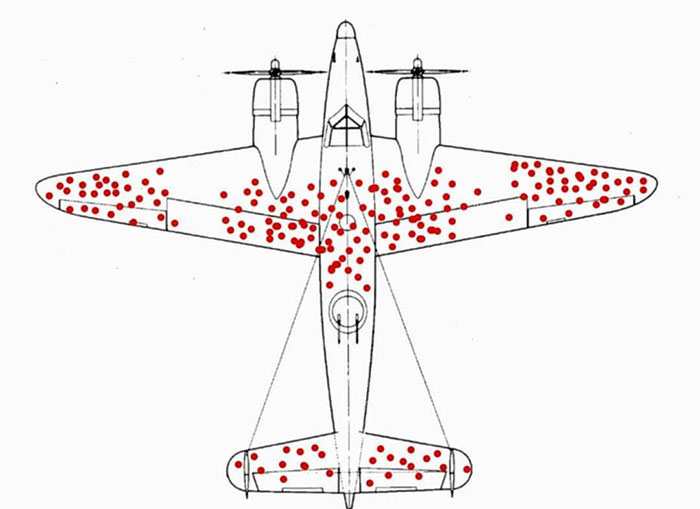
    A recent LinkedIn post alerted this writer to the inimitable perspective statistician Abraham Wald brought to the assessment of World War II Allied bomber damage upon return from missions.  He argued that observed anti-aircraft damage was non-crippling since the aircraft remained airworthy and was able to return.

    He surmised that planes that did not come home may have suffered damage to other areas making them unairworthy and hence their data was unobserved.  Based on this analysis, the U.S. Navy beefed-up armor in the less or unaffected areas and this was credited with saving lives and aircraft.

    This type of analysis came to known as Survival Bias which has its proponents and detractors.  On the surface, it seemed intuitively obvious that areas of damage need addressing while not necessarily those statistically showing fewer issues.

    It is not our intent herein to assess its merits and applicability.  Rather to help readers better understand the very nature of big data and its use, especially in predictive and behavioral models.

    Covid-19

    Today, policy and other decision makers are tasked with dealing with a deadly global pathogen.  Apparently developing quickly and spreading exponentially—a super spreading event.  As of this writing has afflicted millions in 188 countries/region in much less than 12 months.

    In this pundit’s opinion, much of the concern, confusion and clearly wrong information regarding this disease and mitigation protocols can be traced to data collection and analysis.  By now most readers will have some familiarity with the chaos associated with these predictive models.

    For example, according to the US National Library of Medicine, National Institute of Health, “A key fact for us all to remember is that, for the majority of countries, we’re not actually counting how many people have the virus—instead were counting the reports of how many people have the virus, and, like all metrics, those numbers vary according to how they’re measured.  An increase in the number of tests being carried out will result in an increase in the number of infections detected.”

    In addition to the Herculean efforts to tame this tiger from the vast medical, scientific, technology and many other disciplines, Structural Equation Modeling is being used to shed additional light on the latent variables.

    Final Thoughts

    The 2020 Coronavirus is an early test of Big Data analysis in support of decision makers both for public policy and non-government organizations.  While performance so far has been weak, this pundit believes great value can come from this effort.

    Data quality must be highly reliable and valid.  Moreover, models must assess what is not seen, the latent variables such as found in Survival Bias.  These two aspects of strong decision support models are crucial.  These are lessons for all of us.

    Where Didn’t the Bullets Hit Your Business Model?

    For More Information

    Please note, RRI does not endorse or advocate the links to third-party materials.  They are provided for education and entertainment only.

    For more information on Cross Cultural Engagement, check out our Cross Cultural Serious Game

    We are presenting, Should Cross Cultural Serious https://rri-ccgame.com/Games Be Included in Your Diversity Program: Best Practices and Lessons Learned at the Online Conference, New Diversity Summit 2020 the week of September 14, 2020.  Check Out this timely conference!!

    You can contact the author as well.

  • The Tyranny of the Blank Sheet of Paper

    The Tyranny of the Blank Sheet of Paper

    We have all had that, “Where do I start” moment?  Confronted with the NEW, sometimes the task seems daunting.  In a recent conversation, a colleague and I were discussing an adult training program.  The subject centered on how to help students jump start a creative flow.

    We humans are fond of using so called cheat sheets.  Whether school CliffNotes, Cut and Paste, Go Bys, Best Practices or other tools to wrap our mind around a subject and launch the thought process.  In other words, anything to move us away from the cosmic void–so called ‘writer’s block.’

    Tidbits that Work for Me

    Faced with tyranny often during my formative career years, i.e., a professional services proposal, new spreadsheet, etc. a few tricks were developed.

    First—Just start writing.  Put your thoughts down as they fly out and don’t worry about the order or even if they are relevant.  You can sort these things out later, but a least your paper is no longer blank.

    Get Up—Hit a spot where nothing is pouring out of your brain? Put your (electronic) paper down and go exercise or do something totally unrelated.  You will be surprised how the creative juices will flow when you return.

    Ask a Friend—Remember the old game show where contestants could ‘phone a friend’ when stumped on a question?  Brainstorm with friend and colleagues; even those who have no knowledge of the problem your engaged with.  Sometimes, they have the best insight—true out of the box.

    Do Something Else—If time allows put the project on the shelf and work on something entirely different.  You can come back later refreshed.

    FYI, the tyranny never goes away.  Hundreds of publications and presentations later, it still can persist from time to time.  The four tidbits still work for this author.

    By one definition, tyranny is “cruel, unreasonable, or arbitrary use of power or control.”  There is no reason to let a blank sheet of paper exercise such awful authority.  Take back your creativity!

    Why Let the Blank Sheet of Paper Ruin Your Day?

    For More Information

    Please note, RRI does not endorse or advocate the links to third-party materials.  They are provided for education and entertainment only.

    For more information on Cross Cultural Engagement, check out our Cross Cultural Serious Game

    We presented, Should Cross Cultural Serious Games Be Included in Your Diversity Program: Best Practices and Lessons Learned at the Online Conference, New Diversity Summit 2020 on April 9, 2020.  The summit will be offered again soon.  Check it Out!!

    You can contact the author as well.

  • Technology Assessment in the Era of Minimum Viable Product (MVP)

    Technology Assessment in the Era of Minimum Viable Product (MVP)

    App developers have fallen in love with the concept of Minimum Viable Product aka MVP.  Wikipedia defines minimum viable product (MVP) as “a version of a product with just enough features to satisfy early customers and provide feedback for future product development.”

    This development model might make some sense for consumer software or even some business data analytics but how does it work for mission critical software and those apps that allow remote connectivity to those data resources?  MVP is problematic in these cases at best.

    Most mission critical software development organizations understand that robust testing is necessary, yet sometimes the specter of the MVP mentality sneaks its camel nose under the tent.  Think this does not happen?  Think again.

    The Boeing 737 Max 8 is one current example of this phenomena.  One can argue that the costs to this organization, its customers and the flying public have been astronomical and perhaps not measurable.

    Many of us will not be flying any time soon and many months ago this writer has been told by a knowledgeable individual that safe work around for the Max8 software issues have always been readily available—even before the crashes.  There is a more onerous issue that affects everyone on the planet is widely accepted by policy makers.

    We extend the construct of MVP to Minimum Viable Thought.  MVT is defined as, “The version of a decision that the decision makers believe will be accepted by organizational executives and public policy makers.”

    As of publication, this statement is posted on The Institute for Health Metrics and Evaluation (IHME) at the University of Washington.  “To construct our “Current projection” (the line that shows what we think will most likely happen), we assume that in each location the trend of easing mandates will continue at its current trajectory until the daily death rate reaches a threshold of 8 deaths per million.  If the daily death rate in a location exceeds that threshold, we are assuming that mandates will be reintroduced for a six-week period.”

    We do not dispute modelers making assumptions.  We do that same.  However, this caveat.  Decisions made based modeling assumptions such as these often lead to cataclysmic results.

    The concept of MVP can be a slippery slope.  In an era of rapid software/data release, the risk to the public whether in airplanes or a pandemic can be huge.

    The assessment of such technological solutions needs to be robust and thought through.  Not the knee jerk response often seen.

    How do you assure new technology implementation does not material negatively impact on your business?

    For More Information

    Please note, RRI does not endorse or advocate the links to third-party materials.  They are provided for education and entertainment only.

    For more information on Cross Cultural Engagement, check out our Cross Cultural Serious Game

  • Agility, Resiliency, Sustainability

    Agility, Resiliency, Sustainability

    In a recent Harvard Business Review, I was struck by an article about Best Practices for small businesses.  From that piece, “To successfully navigate Volatile, Uncertain, Complex and Ambiguous (VUCA) challenges like Covid-19, family business leaders can look to best practices from another organization that specializes in VUCA situations—the U.S. military’s Special Operations Forces (SOF)” (emphasis added).  There are a lot of good ideas in the article that organizations can implement immediately.  Moreover, we have long recognized that properly vetted and adjusted as necessary, Best Practices from others can add significant value to organizations in other industries.

    Out of the Darkness

    It is easy to be overwhelmed these days.  Mildly put, most if not all organizations were thrown into chaos in less than a month.  Depending on your business you are either partially operating or still waiting to open-up.

    Regardless, how you work in June will be different than early March (~60 days as of this writing).  Traditional recession management and recovery techniques may not be applicable this time.

    There are lots of ideas about how to use technology going forward.  Digitalization, IoT, IT-OT, among others are hawked as THE solution.  Problem is, it is not that simple, and it takes time and money to implement.  Many midsize firms do not have those privileges/resources.

    There are a lot of actions most organizations can take without major CAPEX investments in time and money.

    Years ago, we recognized that certain industrial sectors, particularly those with a high-risk profile such as energy or others deemed to be part of Critical Infrastructures face unique challenges.  Some have a tendency towards incremental change or even the status quo.  Change is often slow with setbacks.

    Moreover, for every major firm there can be thousands of organizations in the supply chain ecosystems all of which must work well if total costs and profitability for all are to be effectively addressed.

    This seemingly daunting task yet it need not be.  There is a solution set available that can help organizations manage through this dark period and into the light, thriving.

    The mission of The Rapid Response Institute is;

    “Helping Clients Achieve Organizational Agility, Resiliency and Sustainability”

    To that end, we have developed solutions, methodologies, and tools enabling enterprises of all sizes to not just survive but thrive after disruptive events.  Much of this is either free or at low cost.

    Rapid Response

    In our 2009 White Paper, Rapid Response Management: Thriving in the New World Order we posited our new approach to managing your business.  “Rapid Response Management (RRM) is an organizational construct or mental model that enables the organization and its key partners to rapidly sense changes and respond accordingly–quickly.  While it maximizes the effectiveness of management knowledge to address change, it is not simply gut feel.  Rather it is a simple yet sophisticated, methodical paradigm any organization can quickly and inexpensively implement.”

    RRM is a creative and well documented method for running your business.  The thinking was well advanced by 2009 and has been further ‘stress tested’ over the past decade.

    We have updated RRM with our Operational Excellence Platform and interested readers are invited to check that out as well.  Our offerings are designed to help our clients get through crises such as Covid-19.

    We are updating this white paper and it will be available as an e-book in the near future.  If you would like to reserve a free copy, Contact us.

    We are here to shed some light during this dark period.  For no cost, no obligation discussion contact us.  We can put decades of experience dealing with business cycle adversity on your team.

    Feel like your trapped?  You’re NOT!

    For More Information

    Please note, RRI does not endorse or advocate the links to third-party materials.  They are provided for education and entertainment only.

    For more information on Cross Cultural Engagement, check out our Cross Cultural Serious Game

    We presented, Should Cross Cultural Serious Games Be Included in Your Diversity Program: Best Practices and Lessons Learned at the Online Conference, New Diversity Summit 2020 on April 9, 2020.  The summit will be offered again soon.  Check it Out!!

    You can contact the author as well.

  • Hanging App?

    Hanging App?

    By one measure, the US presidential primary season is off to a rough start.  In a small state, counting the ballots became a challenge.  Wasn’t technology supposed to solve the problems of past confusions?

    Yet the mechanism seemingly failed—again!  How is this different from the Boeing Max 8 disaster?  In one sense it isn’t.

    Disclaimer:  The only information this author has on the recent electoral IT problem is publicly available and he is not aware of anyone involved in that process that he may know personally.  This piece is only an opinion about a technology issue.

    Technology Adoption Process

    App developers strive to get to MVP as rapidly as possible.  Wikipedia defines a Minimum Viable Product as, “A version of a product with just enough features to satisfy early customers and provide feedback for future product development.  Gathering insights from an MVP is often less expensive than developing a product with more features, which increases costs and risk if the product fails, for example, due to incorrect assumptions.”

    Speed is of the essence in software development.  Yet, a rapid time to market should not sacrifice adequate analysis and assurance the software is robustly ‘stress tested.’

    Apps are moving from simple tools designed to call an independent driver of transport or order a burger.  They are now integral parts of enterprise solutions with broad implications if they fail.  This changes the fundamental project development process and benchmarks for release.  This is true for all App developers, even if their employee base is one or the development process is outsourced entirely.

    Release Maturity

    Most new technologies start is some’s ‘garage.’  Whether Steve Jobs’ or 3M, the processes are ad hoc and getting a so-called ‘Alpha’ product is the goal.  Those third parties who accept and test it know their risks and exposure.  Such customers would never use that release in a production environment.

    Other maturity models include Technology Readiness Levels (TRLs) by NASA and the European Association of Research and Technology Organisations.  At a minimum, testing must assure it is fit-for-purpose and that the product can ‘scale’ to meet the expected demand.

    Technology vendors to ‘critical infrastructure’ sectors such as oil and gas often express exasperation at the sometime slow take up of new solutions.  Individuals that take excessive risks deploying new technology may literally be putting their career at risk as well as their critical processes.  Therefore, they tend to be risk averse.

    There are many examples of what not to do rolling out new technology.  This month’s primary election is just the latest.  The adage, ‘no one wants to make the front page of The Wall Street Journal’ has a lot of truth to it.  Make sure you and your customer get media coverage for the right reasons.

    How Do You Know Technology is Ready for Enterprise Wide Deployment?

    For More Information

    Please note, RRI does not endorse or advocate the links to other third-party materials.  They are provided for education and entertainment only.

    For more information on Cross Cultural Engagement, check out our Cross Cultural Serious Game

    You can contact the author as well.

    End Notes

      https://en.wikipedia.org/wiki/Technology_readiness_level

      https://therrinstitute.com/critical-infrastructure-sectors/

  • 10, 20, 30, 40, 50 or More!

    10, 20, 30, 40, 50 or More!

    The advent of 5 G so soon after 4 G—Humm.  What’s next?  How many G’s are there?

    In 1965, Gordon Moore put forth the construct that the density of transistors in integrated circuits doubled each year.  The so-called Moore’s Law has governed technology growth ever since.  However; over 50 years later, some argue that we may be far up that power curve.  One conjectures if the latter statement is correct.

    In 1899, Charles H. Duell then the Commissioner of US patent is purported to have said, “Everything that can be invented has been invented.”  Mr. Duell died in 1920 so he missed many of the ‘new’ things we now take for granted.

    Marketers tend to categorize in buckets; Boomers, Gen Xers, Millennials and so forth.  Do any of these labels matter?  Probably not.  The same is true for technology tags as well.

    Life, technology, knowledge et al marches on, just like it has throughout human history.  Will we see the advent of 50 G networks?  Most likely; with 100 G hot on its heels!

    Less we forget, the current version of the cell phone (iPhone and its equivalents) was first released in 2007.  Much has changed in the last 13 years and we can expect that arc to continue with disruptive new mobile technology crashing in at some point.

    Agility

    Most think of an ‘agile enterprise’ as information technology driven.  In this writer’s opinion, this is a narrow perspective.  The word ‘agility’ is defined in terms of power and thinking.  In other words, the ability to make good decisions with the capacity to implement them.

    In this hyper-technology environment, it is not the adoption of a particular rendition, but the capability to incorporate the appropriate new in an economic manner.  This is true whether the organization is an ‘early adopter’ or even a ‘laggard.’

    For decades, organizational strategy has been enabled by technology.  There is no reason to change that model with many G’s to follow!

    How Does Your Organization Ingest New Technologies?


    Enjoy this flash back to the 1960’s.

    For More Information

    Please note, RRI does not endorse or advocate the links to other third-party materials.  They are provided for education and entertainment only.

    For more information on Cross Cultural Engagement, check out our Cross Cultural Serious Game

    You can contact the author as well.

    End Notes

      https://en.wikipedia.org/wiki/4G

      https://en.wikipedia.org/wiki/Moore%27s_law

      https://www.dictionary.com/browse/agility

      https://en.wikipedia.org/wiki/Technology_adoption_life_cycle

  • Reflection: Are We Near a Digital Tipping Point?

    Reflection: Are We Near a Digital Tipping Point?

    Generally, this time of year humans are wont to look back on the closing year and assess the good and the bad, and dare I say the ugly?  We celebrate successes, review the not so successes, and what is left undone.  This process prepares us for the New Year’s resolutions that are often then broken.

    Today, we will see lots of stories on the accomplishments of the year, notables that passed from this life and other celebrations and questions about the waning hours.  In this piece, let us ask another question.

    The subject of the Man—Machine relationship has long been the subject of comment and speculation.  It remains so.  Where are we along this path?

    But as the march on a continuum towards the future, it is time to assess the level of Maturity of our Operational Excellence as a function of IT-OT.

    Challenges remain.  Recently, the Boeing’s Starliner space vehicle failed to reach its planned orbit.  The glitch is apparently in the capsule’s clock where a programming error misinterpreted the stage of the mission.

    News media reporting suggests that if astronauts had been on board, they may have been able to override the system and correct the problem.  This is an area we have addressed herein on several occasions.  When does the human act?  Recent articles include:

    The decision model whether to override the computer remains elusive.  Likely, it will for some time.

    In this writer’s opinion, it is currently difficult to develop an appropriate governance model for this emerging man-machine interface.  That said, the task is upon society and individuals and organizations must proactively engage.

    Not Just Digitalization

    There is much ado about the promise of digitalization and speculation about its ability to be a game changer.  One wonders how any technology available to all warrants such status?

    Since the advent of the Turing machine, circa 1936 and its enablement of the winning of Word War II (at least in Europe), there has been a level of trust in information technology that is not always warranted.  Today, how many of us will sit with our children in the backseat of a driverless automobile?

    Human factors must be considered when new technology models are put forth.  After all, humans still govern, right?

    Maturity Assessment

    Building on the CMMI and our own maturity model development methodology we put forth a set of constructs.  Beginning in 2004, when we released our Roadmap study.  It was one of the earliest, if not the first industry wide assessment of the so-called digital oilfield and guide for organizations to transform themselves with this enabling technological model.

    As part of that study we posited a maturity model that still has applicability for heavy industry and its use of information technologies to manage the business.  An updated version is shown in the following figure.

    For many organizations, Level 3 is satisfactory and accomplished the required.  One can argue that an airline autopilot would be at least Level 4.

    The current issues Boeing has with is space capsule and 737 suggests that may not be the case.  By the way, this is not limited to this manufacturer, others have similar issues as well.

    In the opinion of this writer, as a society we are at best Level 2 when it comes to digitalization.  What do readers think?

    Paraphrasing a famous election cycle quote, “It’s the software, stupid.”  Are we near a digital tipping point?  Perhaps not.

    Much work is yet to be done.  Fear not for the robots taking your job—at least for the moment.

    What is Your Digitalization Management Maturity Level?

    For More Information

    Please note, RRI does not endorse or advocate the links to other third-party materials.  They are provided for education and entertainment only.

    For more information on Cross Cultural Engagement, check out our Cross Cultural Serious Game

    You can contact the author as well.

    End Notes

      https://www.space.com/boeing-starliner-oft-fails-to-reach-correct-orbit.html

      https://en.wikipedia.org/wiki/Turing_machine

      https://therrinstitute.com/maturity-models/

      (2004, September). Roadmap to Enterprise Optimization: A Guide to the Impact of Information Driven Field Operations on the Petroleum Corporation.

      https://www.popularmechanics.com/flight/airlines/a26854898/plane-automation-crashes-incidents/

  • Safety Santa: Another Case of Operational Excellence Success

    Safety Santa: Another Case of Operational Excellence Success

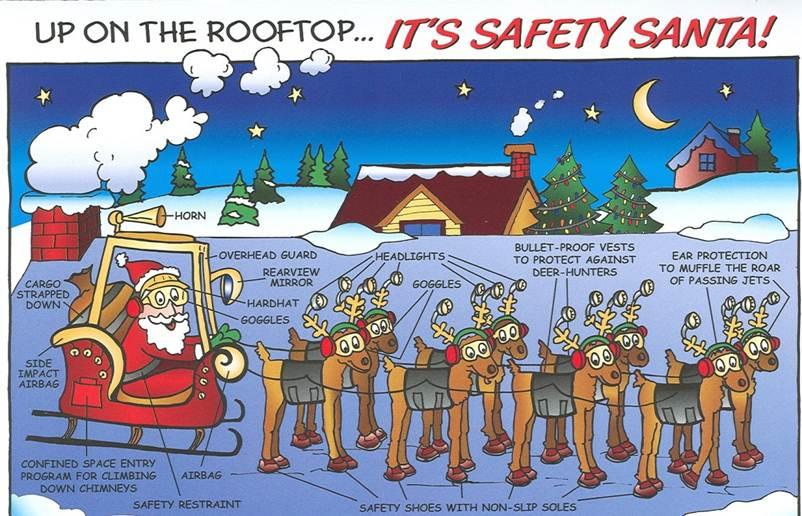
    A year ago, it was the pleasure of this blogger to report that Santa Clause completed yet another successful global fulfillment process AND importantly, the process was in compliance with the US Federal Aviation Authority’s (FAA) regulations.  A great deal of progress since the advent of one red light on the nose of the lead reindeer!

    This year we are once again pleased to report that not only have the flying sled and its power plants remained in compliance with the FAA but has now taken additional steps forward.  Incorporating new technologies and processes, safety has been enhanced in the following manner:

    • Addressing Slips, Trips and Fails with new safety/skip proof landing gear
    • A new Confined Space program along with appropriate personal safety gear
    • An alarm Klaxon and Better Lighting
    • Enhance Safety Restraints such as airbags and an overhead guard
    • Extensive Head, Vision, and Hearing Protection systems
    • Better Work Place Violence technology enabled processes
    • A new Cargo Restraint system

    It looks like the arctic region of the Occupational Safety and Health Administration (OSHA) outreach program is having great success.  Interested readers are invited to review the above safety Infographic for further details and perhaps new insights.

    Simplified Business Model

    There are a lot of lessons herein for those who don’t live at a mythical north pole.  First, it seems that much if not all the safety improvements made are inexpensive and easily implemented.

    Next, change management and new policies appear to be welcomed by those affected.  Answering the, “What’s In It For Me” question when adopting new technologies.

    Management is also ‘walking the walk’ with employees by driving the sled and taking the same risks as the rest of the team fulfilling customer requirements, i.e., snow covered rooftops and chimneys.  One can argue that this entire team is the Customer Facing part of the system.  Finally, customers have high expectations that must be met, and late delivery is not an option—this project has a fixed deadline!

    Stakeholder Value

    With billions of children waiting and using a complex and global logistics system, this team does not disappoint.  Earlier competitors have long dropped off the map.

    So why with a clear monopoly does this organization still seek greater Operational Excellence with its transformational Safety Culture?

    Simple—safe and excellent operational performance is good business!  Less unplanned downtime increases the bottom line.  Few incidents increase morale and the bottom line.

    Fewer legal issues, regulatory matters, and so forth and so on positively impact the bottom line.  With such significant ROI, what’s a stakeholder not to like?

    Is Your Operational Safety on Par with Ole Saint Nick?

    For More Information

    Please note, RRI does not endorse or advocate the links to other third-party materials.  They are provided for education and entertainment only.

    For more information on Cross Cultural Engagement, check out our Cross Cultural Serious Game

    You can contact the author as well.

  • Lessons in Servant Leadership: What Did You Say?

    Lessons in Servant Leadership: What Did You Say?

    Watch almost any media talk show and the interviewer will often interrupt the guest trying to answer the question just posed.  This is such a common phenomenon that it is accepted behavior perhaps driven by ratings that come from on-air confrontation.  It is part of the culture!

    Why ask the question if you’re only going to impose your view in the middle of an answer?  Perhaps guests are just convenient foils.

    When briefing senior management, colloquial wisdom is to get to the point quickly and succinctly.  Words to live by and often put forth by this pundit.  Yet it is amazing how many of us violate the axiom by continuing to talk.

    Truly listening with all senses is a rare skill.  How often have we been in a situation such as a sales call when the customer is interrupted by members of the sales team?

    It is more difficult to close a deal when the preconceived notions of the seller override the buyer’s response.  Often in such a situation the client’s body language will give a clue as to her irritation when ‘talked over.’

    The Power of Listening

    So, you have made your pitch and are now sitting quietly waiting for the client to respond.  However, the so called ‘pregnant pause’ ensues.

    The overwhelming desire is to ‘jump in’ and say something to break the silence.  But how does that close a deal when an offer has just been made?

    Such behavior usually results in either prolonged negotiation or no deal.  The human inclination to talk can be irresistible.  A better behavior is to shut up and listen!

    Some research shows that good listening is beneficial to both employees and their organizations.  However, barriers to better listening include:

    • Loss of Power—The appearance of weakness or not in control of the situation
    • Takes Time and Effort—Daily time pressures may negatively impact on the work product
    • Fear of Change—The speaker must refrain from making ‘foregone conclusions’ until a response is articulated

    In addition to certain listening skills, a good listener must have the ‘intention’ to become one and resist the urge to interrupt.  This can become the framework for real dialogue and exchange of ideas and information.

    Getting to Yes

    In a TEDx Talk, the coauthor of the negotiation book, Getting to Yes discusses the value of listening in any human interaction.  The investment of less than 16 minutes of your time will be enlightening.  One suspects the almost 900,00 viewers would agree.

    Our inherent nature to ‘rattle on’ distracts us from our goals.  We recently discussed the value of understanding the difference between Wants, Likes and Needs.

    Truly listening and understanding your counterpart’s feelings (or deeply personal Needs) will unlock the key to getting a deal done—Yes!  This is a major component of  servant leadership.

    R B C

    Human (B)ehaviors in certain situations or (C)onditions establish (R)elationships between two or more parties.  We have been extending this construct for almost 25 years and it has broad applicability.  What kind of Relationship is established if one or more individuals do not listen to others?

    How Well Do You Listen to Your Colleagues and Family Members and Do They Listen to You?

    For More Information

    Please note, RRI does not endorse or advocate the links to other third party materials.  They are provided for education and entertainment only.

    For more information on Cross Cultural Engagement, check out our Cross Cultural Serious Game

    You can contact the author as well.

    End Notes

      https://en.wiktionary.org/wiki/pregnant_pause

      https://hbr.org/2018/05/the-power-of-listening-in-helping-people-change

      https://therrinstitute.com/want-like-need/

  • Lessons from the Seventies

    Lessons from the Seventies

    At lunch the other day and for whatever reason, the history of the 3M Post It Note became a subject of our conversation.  This technological marvel unveiled in the 1970s is still widely used today.

    As with other new or disruptive technologies, the ‘sticky note’ was panned at first and for some time.  According to Wikipedia, the technology was first developed in 1968.  It was not until 1974 that it gained some internal company support.

    When finally introduced in 1977, the pilot results were unsatisfactory.  However, things started to change in 1978 when a small (focus) group of consumers were positive about the product.

    The United States roll-out began in the spring of 1980, followed by Europe and Canada in 1981.  A bit of trivia, the reason it was originally yellow was because yellow colored scrap paper was readily available at its inception.

    Earlier the day of our lunch meeting, a discussion revolved around how long it might take an idea to become a fundable start-up company.  Several participants argued that with proper guidance, the process still might take up to two years.  This pundit argued that many entrepreneurs would see that as too long and become disinterested.

    The legacy of the Post It Note suggests that this pundit might be incorrect.  The lowly sticky note did not even begin its journey to become a Unicorn until twelve years after its technology was discovered.

    In 2015, we penned a blog, Titans of the 1940s Today.  The basic premise of that piece was when commenting about the Internet of Things (IoT) and its complexity, individuals such as Richard Feynman and John von Neumann (father of the 1945 computer architecture that is the basis of modern computing) had developed solutions for today prior to this author’s birth.

    We stand on the shoulders of these and other giants.  The challenge of every generation has been to build on what those who came before advanced.  So it remains today!

    Body of Knowledge

    Human kind has developed a rich body of knowledge in all areas of endeavor.  It is readily available for entrepreneurs as well as those employed by all types of organizations.  This knowledge base has been addressed in this blog and other writings by the author.  Interested readers are invited to review my blogs and newsletters dating back to the last century.

    Our march through history provides all of us a ‘go-by’ that can shorten our learning curve.  One example this author often cites is the depth of historical knowledge of management.  Contrary to many gurus, humans have managed others and processes for many millennia.

    Fail Fast, Fail Often?

    If 3M or Feynman et al practiced this technology development model as most interpret it, our world might be a lesser place.  Give up and move on to the next?

    One interpretation suggests, “Originating from Silicon Valley and its ocean of start-ups, the real aim of “fail fast, fail often,” is not to fail, but to be iterative.  To succeed, we must be open to failure—sure—but the intention is to ensure we are learning from our mistakes as we tweak, reset, and then redo if necessary.”

    This same article goes on to state, “Thomas Edison, by example, ‘failed’ 9,000 times before he was successful with his light bulb invention.”  Perseverance can be a lonely quality!

    Don’t lose heart.  Great ideas abound but must gestate.  It is often said that we find our soulmate when we least expect to—I know I did.  Progress is an iterative process fueled by creativity and critical thinking.

    Is Your Idea a Unicorn Waiting to be Born and Mature?

    For More Information

    Please note, RRI does not endorse or advocate the links to other materials.  They are provided for education and entertainment only.

    You can contact the author more information as well.

    End Notes

      https://en.wikipedia.org/wiki/Post-it_Note

      https://therrinstitute.com/wp-content/uploads/2018/10/Titans-of-the-1940s-Today-April-20-2015.pdf

      https://therrinstitute.com/wp-content/uploads/2019/10/1993-Management-Theory-Evolution-Not-Revolution.pdf

      https://www.forbes.com/sites/danpontefract/2018/09/15/the-foolishness-of-fail-fast-fail-often/#1db35b0e59d9

  • Aging Success: Never Give Up!

    Aging Success: Never Give Up!

    We live in a youth culture.  As young Baby Boomers, we were going to change the world.  Later other Gens would say the same.  Is it now too late for those over 50 to attain entrepreneurial success?

    A serial (often failed) entrepreneur, (Kentucky) Colonel Harland Sanders sold his first franchised secret receipt for “Kentucky Fired Chicken” at age 62 (1952).  After a mixed career, Winston Churchill was first elected the Prime Minister of Great Britain at age 66.  The list of older individual success stories goes on, but readers will get the point.

    According to TEDxMidAtlantic, “Backed by mathematical analysis, network theorist Albert-László Barabási explores the hidden mechanisms that drive success — no matter your field — and uncovers an intriguing connection between your age and your chance of making it big.”

    His thoughts are well worth watching.

    He makes several good points:

    • Variations of human performance is relatively small, i.e., difference between world class athletes and ‘normal’ athletes
    • Your level of success is a function of what others think (measurable) , i.e., the market
    • Success can come at any time in your career
    • Entrepreneurs over 50 are more than twice as likely to have a successful ‘exit’ than those in their 30’s
    • There is a positive correlation between productivity and success

    When viewed objectively, these observations make good sense.  For example, musicians that shoot to the top in their teens and twenties are often less productive after they have ‘made it.’  Typically, we hear less and less of them.  Don’t tell that to the Rolling Stones.

    A cliche of this author’s youth, “Hang in their baby” was typically depicted as a kitten hanging from a tree branch.  Cute then, apropos for today’s Baby Boomer entrepreneurs!

    Whether you’re a scientist, entrepreneur or simply want a better career and life, take heart.  Success comes at any age for those who persevere.  While your Condition (age), Behavior (interaction with others of all ages) may be changing in this phase of life, it will only generate new and possibly much better Relationships in the work place as well as your personal life.

    Mr. Churchill demands we “Never, Never, Never Give Up.”  So, don’t!  The best is yet to come.

    Still Have an Idea That Will Change The World?

    For More Information

    The TED Talks link has several additional video talks on the subject and Professor Albert-László Barabási has published the book: The Formula: The Universal Laws of Success.  Disclaimer: as of this writing this blogger has not yet read the book.

    You can contact the author more information as well.

    End Notes

      https://en.wikipedia.org/wiki/Colonel_Sanders

      https://www.google.com/search?q=when+was+winston+churchill+elected+prime+minister&ie=&oe=

      https://en.wikipedia.org/wiki/Hang_in_there,_Baby

  • What Lies Beneath the Surface of Your Organization: Structural Dynamics?

    What Lies Beneath the Surface of Your Organization: Structural Dynamics?

    As the officers, seamen and passengers of the Titanic came to understand, it is not what you can see that gets you but what is below the visible surface.  Visualizing the unseen remains a continuing challenge.

    The current president of the United States is by many accounts the most unlikely political victor.  He is not from the ‘industry’ and has limited experience in this field of endeavor.  None-the-less, he holds the office.

    The results of the US presidential election of 2016 is the subject of innumerable discussions.  Most center around the performance of his opponent and missed opportunities by the opposing party.  This pundit argues that neither of these are the prime reason for his election.

    Almost 30 years ago this writer was a member of the Leadership Team for a major publicly traded company.  Multiple reorganizations and the advice of numerous consulting firms did not enhance our position in a difficult market.

    Something we did not understand was at work.  Why couldn’t those with decades of managerial/industry experience and all the experts fathom the forces at work?  Unless, we could no action taken would be effective.

    What are Structural Dynamics?

    During this period, management theories abounded.  Examples included The New Realities by Drucker, The Fifth Discipline by Senge and Economic Value Added (EVA) to name a few.  None seemed to be able to help us understand the latent forces that eluded us.

    As part of the doctoral dissertation, assessing cross cultural negotiations and the relationship between human Relationships, Behaviors, and Conditions (RBC) we enhanced existing theory into an actionable methodology, Structural Dynamics.

    The fundamental premise upon which the theory of Structural Dynamics is developed is the belief that structures are not static and that more often than not, these dynamics are not directly observable.

    Over time, the very nature of the structure and the very nature of the component parts of the structure may be radically different from today’s composition.

    In other words, Structural Dynamics is defined as “the morphology or patterns of motion towards process equilibrium of interpersonal systems.”  While this sounds academic, the implementation is straightforward.  Think of this as an iceberg.

    The Iceberg Principle—90% of any system’s structure is below the surface or hidden from direct observation.  This latent component controls all the processes associated with the system.

    Implementation

    While there is a quantitative aspect to Structural Dynamics, analysts can use this qualitative approach.  There is plenty of information available; however, it can be challenging to shift through it and separate actionable data from noise.

    For example, while it was evident for all to see most prognosticators wrote off the Trump rallies and the size of the crowds.  Similarly, Xerox had most of the technology for today’s PC, but it took Apple and others to realize the value.

    Think these are remote and one-off events?  Only 60 companies that were members of the Fortune 500 in 1955 were still members in 2017.  Some mergers for sure, but why did the others not see the waves that swept them away?  Sears is a recent example.

    Assessment

    Structural Dynamics analysts can use the following checklist as guidelines.  This list is not all-inclusive, nor is it meant to be a list that one simply puts a check mark next to and tallies up the number of checks versus not check.

    It is more accurately a framework for developing a Structural Dynamics model for any given industry environment.  The following criteria provide a preliminary checklist of set of questions that should be addressed when one seeks a better understanding of the latent variables associated with an industry segment or emerging environment, such as new technologies.

    1. Not obvious or normally thought of as industry driver
    2. Usually not directly related to standard industry practices
    3. Becomes more visible over time or repeated measurement
    4. Often not specific to a single industry or economy
    5. Cannot be determined by analysis of best practices
    6. Typically, not associated with a single or few number of processes
    7. Not associated with processes in a single firm
    8. Can be cyclical or seasonal in nature
    9. Not necessarily random or chaotic events in nature
    10. Not necessarily economic variables in nature
    11. Tend to be long term variables with limited reaction to specific current events
    12. Can remain dormant for long periods of time, but when they become visible the impact can be significant and swift
    13. Demographics may provide insight into emerging or future Structural Dynamics, they should not be used exclusively
    14. Often small niche (or new) players may benefit from Structural Dynamics These niches are often outside of the industry of interest, but are subsequently imported into the industry of interest
    15. Technological developments may forecast future competitive events, i.e., the impact of cellular phones on the pay phone industry
    16. Not all technology is useful in the near term. The technology developed by Xerox, Palo Alto in the 1960s was not commercialized for almost 20 years.

    Computer icon and windows technology was not commercially viable until Steve Jobs (founder of Apple Computer), and Bill Gates (Microsoft) expanded hobbyist’s niches into the personal computer revolution of the 1980s.

    Knowledge of Structural Dynamics variables can defeat the brute force of large deep-pockets organization, although this is not guaranteed.  As this construct evolves, we expect to develop a more robust set of tools, so managers and other practitioners will be better able to visualize their Structural Dynamics environment.  In the meantime, it is useful to define latent variables.

    Latent Variables Are impacting Your Organization.  What Will You Do About it?

    For More Information

    Much of this blog is taken from our monograph, Structural Dynamics: Foundation of Next Generation Management Science.  The Kindle version is available from Amazon https://www.amazon.com/gp/product/B00U0JKMT0/ref=dbs_a_def_rwt_bibl_vppi_i1

    Fundamental to our Operational Excellence Platform, also see https://therrinstitute.com/structural-dynamics/

    End Note

      http://www.aei.org/publication/fortune-500-firms-1955-v-2017-only-12-remain-thanks-to-the-creative-destruction-that-fuels-economic-prosperity/

  • Organizational Predators: Jackals, Hyenas, and Wolves in Managerial Clothing

    Organizational Predators: Jackals, Hyenas, and Wolves in Managerial Clothing

    Prologue

    In the author’s August 2004 edition of the then, Executive Briefing Newsletter (early online delivery) we addressed the impact on the firm of managerial misbehavior.  This article was one of a list of challenges put forth to that generation of management.

    Sadly, recent events have compelled us all to revisit this issue, although for some it is the first time.  Upon re-reading the document, we felt that it might add value to current management and those that work for them to release it again in the blog format.

    The text presented is original and only minor typographical changes have been made.  We firmly believe that historical documents need to be held to their original meaning and we invite the reader to decide its value in today’s context.

    One note, readers may feel passion seeping through.  As this author recalls, at the time one of the jackals had harassed someone close to me.

    Point of the piece, this behavior was inappropriate then and it remain inappropriate today for this kind of nonsense to exist in the workplace.  Shareholder value is destroyed by this stupid behavior.

    One would guess that over the next months and years shareholder value will be destroyed in court settlements because of the recent behaviors of Organizational Predators: Jackals, Hyenas, and Wolves in Managerial Clothing.  Won’t put the names here—Google it!

    The original text is available in Essays on Business and Information II: Maximizing Organizational Performance, pp. 85-87 of the printed edition.  Readers will find it in the Ethics Section.

    Reprint

    Originally published in August 2004

    I think I did something for the worst possible reason—just because I could. I think that’s the most, just about the most morally indefensible reason that anybody could have for doing anything.”

    – Bill Clinton

    Thank you, Mister President.  You have empowered another generation of Omega males in managerial positions who denigrate women “just because they could.”  In Bill’s case, Hillary emasculated him and moved on to become a U.S. Senator.  This option is not always available to others.

    Organizational leaders are role models for guidance in how managers relate to our female subordinates.  Dominant men (and sometimes women) are well positioned to do things just because they could.  If the organizational culture condones the just because they could model, in reality this conduct is what management offers shareholders.  As an investor, I am ready to sign up for that business model. Yah, Right—Perhaps NOT!

    Over the past three years, this newsletter has sought to put forth important and indeed even critical issues to the forefront of discussions.  I will tell readers up front, that this edition of the newsletter is different.  It is personal, and it comes about as the result of this author’s direct knowledge about how women in his professional and personal life are being treated.

    Therefore, I do not claim objectivity but seek to raise the thinking of those in similar situations as well and even the culprits themselves (and their spouses, usually wives).  In this writer’s humble opinion, this issue is not transit, but endemic.  In the list of those things that will not go away, this one is high.

    Corporate boards and CEOs should take note, as not only are there EEOC (Equal Employment Opportunity Commission) issues at stake (usually addressed by Human Resources and attorneys as background noise) but also Sarbanes Oxley exposure.  Sarbanes Oxley is usually couched along the lines of information flow to the CEO and Board, however, there is another dimension.

    The quality of management and their readiness to “hear” and incorporate the thinking of the best of the best, regardless of sex.  Just think if the CEO of Enron had actually listened to Ms. Sharon Watkins when she raised concerns instead of just blowing her off—he might still be enjoying his Aspen resort.

    You can outsource non-core activities, but you cannot outsource the corporate identity. How firm’s truly value every employee is who they are.  United States criminal law has a long history of prosecuting wife and child beating felons.  The principle is well established.

    Oh, the Humanity

    Men, more often than women, abuse the other sex and their offspring.  Predators prey upon the weak and the young, usually males dominating or destroying females and their young.  We see this in the wild animal kingdom and we see these predators on the Internet.

    We also find them inside corporate walls.  Boards and C levels often hide their heads in the sand and take a “don’t ask don’t tell” approach.  Guess what guys (and it usually is the ole boys club); the train has left the station without you.

    Fact is this train left a millennium or more ago.  Mothers are revered as the fount of life.  Regardless of ethnicity or religion, Mothers are central.

    That is until we get to corporate America or any other nation for that matter.  Once a woman choses or is forced to work, Mother’s Day goes out the window.

    Now Alpha (and those who think we are but have not yet been culled) males think we own these feminine prizes.  Guess what, you out of shape, overweight pathetic excuses for males, you do not.

    Do these women report to you and are their bonuses, promotions etc. depend on your stated and written opinion?  The answer is NO!

    Take that and shove it up your behind you legacies of the20th century.  There is a cataclysmic shift underway and while you may enjoy the short-term high of intimidating and even firing these women, Darwin rules.

    You are dead meat my friend, and probably at an age when you will least be able to afford it.  Mom is never irrelevant!

    Throughout the western United States, one can often see the skins of coyotes hanging on barbwire fences.  The clear message to other predators is this could be your fate as well.

    Similar symbolic gestures are necessary in publicly traded corporations.  Who gives some mid-level manager the right to denigrate hard working employees just as they put themselves out as bastions of righteousness?

    If these people were so smart, they would be top executives, and if they were the real comers, they think they are (with top level sponsors) petty crap would not be their forte.  Unless the organizational culture rewards the humiliation of women as part of the reward system.

    Truth is, most will never amount to anything.  While they have some short-term power, the organization does not really care about their efforts.  Fundamentally, they know this and this fact eats at them.

    Their anger is projected on their direct reports, and often the females in their organization.  This is a safe bet for an abuser!

    Who would challenge him?  Senior management demand results that he delivers for a while and his female direct reports are put through the grinder.  Pretty good gig if you can get one, especially if you are a predator by nature.

    Final Thoughts

    It is far past the time for a superior to have the audacity to state that I took advantage because I could.  This is not just a civil liberty, human rights, woman’s right, or Constitutional Amendment right.

    Organizations depend on the synergy of their organizational knowledge.  Not necessarily without friction, a necessary catalectic creative agent, but beyond retribution, physical and mental intimidation, fear of job loss or demotion, as well as physical threat posited by someone often 100 pounds or larger than his target.

    Sarbanes Oxley, global stock exchanges as well as common decency demand that our mothers, wives, sisters, nieces, and girlfriends be heard.  The rallying of the “ole boy” network does not have a place in the 21st century organization.

    Firms that overlook or down play these issues expose themselves to major lawsuits and the possibility that shareholder value may be decreased by BILLIONS.  There is no credible support for predator losers.

    The usual predator is an overweight male between 30-50 who attained his position through vigorous internal politicking or as the result of a merger where this individual had a title and thus perceived expertise.  Often, these individual distains women all the while being a pornographic connoisseur.

    This manager is impaired when dealing with women.  When a strong, woman subordinate questions his decision, this personality often retreats to his dominate position over this person and seeks to dictate.  This type of manager may have unresolved issues with his mother.

    I do not know about you, but I will not invest my hard-earned money in firms that condone, and even promote jackals.  In earlier times, these individuals would rape and pillage women unless/until challenged by a true Alpha male.  Today, as then these cowards retreat rapidly, only to reappear when they think the coast is clear—always hiding in the organizational shadows.

    When Boards and top management condone this behavior, they denigrate investor confidence. Billion-dollar class action lawsuits are not the fantasies of writers, they routinely occur.  Why should an investor support the pathetic disgusting behavior of reprehensible psychotics who usually make less than $250K? Is this the risk-reward trade off expected?

    Throw the bums out of the executive suite, but perhaps more importantly throw these true Nazis out of middle management.  Sarbanes Oxley demands nothing less.

    Proposition: All men and women are created equal.  No pathogen has the right to spend my money furthering his limitations.  A real man would just resign.

    But then again, these individuals are not men. They are Jackals, Hyenas, and Wolves in Managerial Clothing.  They may even be thieves as they destroy shareholder value.

    What a return on $250,000! CEOs, beware, SOX looms large over organizational incompetence.

    Finally, as true indictment of this testosterone starved wimps they take one of two paths in their personal life.  They either physically and emotionally beat the women (and children) in their lives (wives, daughters, nieces, step-daughters, aunts, mothers, et al) sometimes resulting in the death of these females or they kowtow to these same people and take their frustrations out on organizational female underlings.

    Regardless, these people are cowards and bullies.  There is no place for them in publicly traded corporations and I for one do not care to fund their criminal activities.

    The first CEO that tolerates or accommodates this behavior is yet to be sent to jail.  No doubt, we will soon read about such an individual.

    Earth to Wall Street. Enough is enough.  This piece is not the rambling of a female in an activist organization.  It comes from the pen of a white male born in 1948.  Demographically not high on the feminist hit parade.

    That is the point. This is not just a social issue it is an economic one.

    The psychological rape of our wives, sisters, and daughters by low life managerial predators can no longer be tolerated.  Fire these losers and put mothers in charge.

    The power of motherhood is not overrated.  We all have a mother and celebrate her wisdom every May.  Capitalize on this hidden downtrodden resource, and remove the cowardly scum whose manly prowess is limited, except perhaps in their own twisted ego.

    I for one do not care to fund such dysfunctional behavior.  I for one do not care to put my capital at risk at the hands of wife beaters and other predators.

    Set the traps, eliminate these vermin, and hang their skins on the corporate barbwire fence.  Corporate returns will surely be better without their “help.”

    Let the mothers, sisters, nieces and wives loose and let’s see if greater returns do not soon appear.  I am betting my money on Oprah and Carly and not Ken, Jeff and the others heading to jail who condoned managerial malfeasance.

    Further Reading

    Most of the issues discussed in this newsletter are part of a larger dialogue.  Readers are invited to explore additional thinking.  There are many books about abuse that you may wish to investigate.

  • Excellent Behaviors: Assessing Relationships in the Operational Excellence Ecosystem

    Excellent Behaviors: Assessing Relationships in the Operational Excellence Ecosystem

    One of the hot business buzzwords of 2017 is “Operational Excellence.” It has been the subject for many pundits, including this one.
    In October and November we published a two part series, Assuring Operational Excellence from Contractors and Their Subcontractors through BTOES Insights. Each part included a link to additional information.

    The October edition featured an excerpt of our Implementing a Culture of Safety book. In the November edition we released our new best practice solution, Attaining & Sustaining Operational Excellence: A Best Practice Implementation Model. We are proud to make it available herein and in general.

    One of the basic tenets of the RBC Framework is the general construct that Relationships cannot be determined a priori. The well-used example is a man and a woman sitting on a bench at a bus stop. Are they married, siblings, coworkers, friends or simply two people waiting to catch the same/different bus?

    Their relationship cannot be known directly. However, their Behaviors will provide insight into how they relate to each other. Romantic behavior may indicate marriage, dating, an affair etc. They may still be coworkers but most likely are not strangers.

    The third dimension, Conditions (environment) can be considered the stage upon which behaviors play. So, what does this have to do with Operational Excellence?

    Another component of our digital environment is Human Systems Integration (HSI). In our forthcoming book, we have defined HSI as, “Human Systems Integration (HSI) considers the following seven domains: Manpower, Personnel, Training, Human Factors Engineering, Personnel Survivability, Habitability, and Environment, Safety and Occupational Health (ESOH). In simple terms, HSI focuses on human beings and their interaction with hardware, software, and the environment.”

    This suggest that our ecosystem is getting more complex and not less. While not usually thought of in these terms, machines have a behavior as well. IBM’s chess playing Watson is a simple example of this phenomena.

    With all of these behavioral dynamics, how can an organization attain and sustain Operational Excellence? If one takes the position that with complex highly interconnected systems things will fail (Perrow’s Normal Accident Theory) then OE is a mythical destination.

    However, with a High Reliability Management (HRM) business model OE cannot only be attained, there is no reason why it cannot be sustained indefinitely. As the name indicates, HRM has a strong focus on reliability or that ability to recover quickly when an event occurs.

    One example is the 2015 Ebola virus incident in Dallas, Texas. One may recall that the virus was brought to the US by a traveler from Africa. Concerns quickly mounted that an epidemic might quickly ensue.

    While a few health care workers were infected, the public health care systems, medical community and others rapidly responded and contained the problem. The system was resilient! Were there problems and lessons learned, absolutely but the system worked. For most of us, life soon returned to normal.

    Conditions may change, but behaviors need to continue to rise to levels of excellence. This is the key to developing strong relationships throughout the ecosystem.