
Category: Project

  • You Have 10 Minutes: Maybe

    You Have 10 Minutes: Maybe

    Over the past couple of weeks this writer has been part of several conversations regarding the value proposition of technology for established as well as startup companies and how to articulate it.

    This remains a tough subject and we have been addressing it over the years.  However, there is an approach that is successful when properly executed.

    As part of master’s level course, one graded test for my students goes along these lines.  You have been given the opportunity to ‘pitch’ your CAPEX/Technology Sale to the Chief Financial Officer.  In the current market environment, she is skeptical about new capital investments.  She is the economic buyer, very busy and has allocated no more than ten minutes for this meeting?  How will you close the deal?

    Students are offered the opportunity to select their own project or sales initiative, so they are very familiar with the background.  This also allows them the opportunity to ‘rehearse’ with the instructor before the actual meeting with the CFO.

    First, What Not to Do

    Sadly, many sales representatives/internal project advocates view the selling process through the following lens:

    The merits of this project or technology solution are obvious.  After all, everyone agrees we must move forward.

    The Return on Capital Employed (ROCE) or Net Present Value (NPV) is clear on the chart presented.  The justifications (spreadsheets) support our plan.

    Moreover, senior executives only want the single PowerPoint slide and high-level risk overview.  After all, she doesn’t want the details and has been briefed by her staff.  How much can be discussed in ten minutes anyway?

    Hit–Lost Deal Button!!

    If this scenario sounds far fetched, it is based on reality.  At an Internet of Things conference, one panel moderator from a major professional services firm advocated that IoT investments must be made to remain competitive because everyone else is doing it.  When this attendee asked about project governance and risk mitigation planning, was told it was outside the scope of the discussion.

    What Drives Decisions?

    One of the first things this sales guy does when preparing for a meeting with senior executives is to read the Letter to Shareholders in the customer’s Annual Report.  Typically, the strategy, challenges and priorities of the firm are easily discerned.

    If the project/solution is not aligned with business, success is much less likely.  Also, how does it fit in the firm’s portfolio of projects/technologies?

    Often risks are not as well understood as they could be with simple models suggesting exposures are low and unlikely.  Many sale representatives do not even think about the governance issues associated with the ‘spend.’

    Expect a senior executive to be engaged and ask insightful even tough questions.  They have to be answered—with authority!  Can’t wing this, only homework will prepare for this meeting!

    Finally, what drives her?  Not the company; the individual.

    Hit–Won the Deal Button!!

    Is this in the ‘too hard to do’ category?  Not at all, and processes and means are available to guide this course.  Several tools are available such as our Economic Value Proposition Matrix® and the white paper Asset/Equipment Integrity Governance: Operations—Enterprise Alignment.  These can help guide your closing efforts.

    Not a typical sales model but it works—several billion dollars later!

    Lessons from the Classroom

    As might be expected in an academic environment, many students struggled to reduce the data into a ten-minute compelling pitch.  Mark Twain is credited with saying “I didn’t have time to write a short letter, so I wrote a long one instead.”

    It takes significant effort to succinctly address complex multi-faceted problems.  A classic; when tasked to write a one-page executive summary one student submitted a multi-page report with appendices.  His retort was that the subject was too important to only write one page on it.  This response defeated the learning objective of the exercise.

    CFO’s do not make trivial decisions.  If you would have her take time to listen to you.  Be prepared!

    Is the Deal Worth Winning?

    For more information check out our Value Proposition Matrix® and the Digital Oilfield Case Study.

  • Human—Machine Interface in the Age of Digitalization: Can the Machine be Trusted and When Should the Human Intervene?

    Human—Machine Interface in the Age of Digitalization: Can the Machine be Trusted and When Should the Human Intervene?

    On March 10, 2019 the second Boeing 737 Max 8 (in approximately 5 months) crashed in Ethiopia.  This incident has led to extensive investigations and as of this writing that model aircraft is grounded.

    This pundit cannot and will not hazard a guess as to ‘why’ this aviation incident happened and what its ramifications will be—not our area of expertise.  However, this raises another issue that seems to be buried in the headlines.

    Recently, the President of the United States is purported to have said, “Airplanes are becoming far too complex to fly.  Pilots are no longer needed, but rather computer scientists from MIT.  I see it all the time in many products.”

    In our era of Digitalization, this question/belief is one that many Boards and senior executives may be asking/holding.  It is our understanding that pilots can override the sophisticated autopilot (whose sensor may have been sending erroneous data).  This begs the question, what is the protocol for the Human taking over from the Machine?

    What level of training do pilots receive?  What are the ramifications to their career if they make the wrong decision?  These and other questions are being asked continuously.

    In this blog series as well as in numerous other articles/speeches, we have commented on this issue.  Interested readers should review several other Critical Mass Blog writings et al. so that information will not be repeated herein.

    The question posed in the title, ‘Can the Machine be Trusted and When Should the Human Intervene?’ can be answered and has been many times.  A combination of training and experience will give the human the confidence to make difficult decisions in times of stress.

    Recent examples include the landing of US Airways Flight 1549 on the Hudson in 2009, elite military successes, sports teams, and other feats where a small group took charge at difficult moments and as the saying goes, “saved the day.”

    Scaling Training and Especially Experience

    So how does an organization ‘broadly’ train its large global workforce as well as its ecosystem?  Moreover, how does the same workforce gain ‘experience?’

    The saying goes something like, “You can have 30 years of experience in your career or you have one year of experience 30 times.”  Unfortunately, many organizations consist of the latter—employees/contractors and this includes senior executives as well!

    Some organizations see training as a cost.  Many have tuition reimbursements programs and send employees to a myriad of conferences and workshops.  However, other than high level platitudes, what is the value of any of this to the employee and/or the organization?

    There is also plenty of evidence that traditional training programs do not provide long term knowledge and do not address the experience issue at all.

    Immersion

    Immersive training is one form of experience.  The individuals live the situation and realistic options she or he is faced with.

    Moreover, on-demand information feeding remote individuals addressing major field problems is important too.  These information feeds can (and probably should) include Subject Matter Expertise from those who came before the contemporary workforce.

    In other words, taking the knowledge of those with 30 years of experience and making it available to those with only a few at the task step level is essentially having that senior individual in the cockpit with the more inexperienced person.

    Sounds good on this ‘paper’ blog but is this model realistic?  It absolutely is and at a price point that makes the value proposition compelling.

    No longer a week-long instructor led workshop where the information is quickly forgotten but knowledge on-demand in a matter that the user can absorb during a critical moment.  One report about the recent airliner crashes was that the pilots were ‘looking up’ procedures in the event of …

    Who has time for that in life and death situations?  No one!  The answer must be in front of you in a ‘heads up display’ manner on demand.

    Enabling technology is available at reasonable price points.  Blowing stuff up and killing people because employees/contractors are ill equipped to do their job is unacceptable.

    Could Your Organization Withstand a Max 8 Incident?  If Not, What is Being Done to Mitigate this Risk?


    For more information on Risk Mitigation check out our Operational Excellence Platform.

      https://www.marketwatch.com/story/trump-today-president-says-airplanes-far-too-complex-to-fly-after-boeings-737-max-crash-2019-03-12

  • Operational Complexity: Risk Model Insufficiency

    Operational Complexity: Risk Model Insufficiency

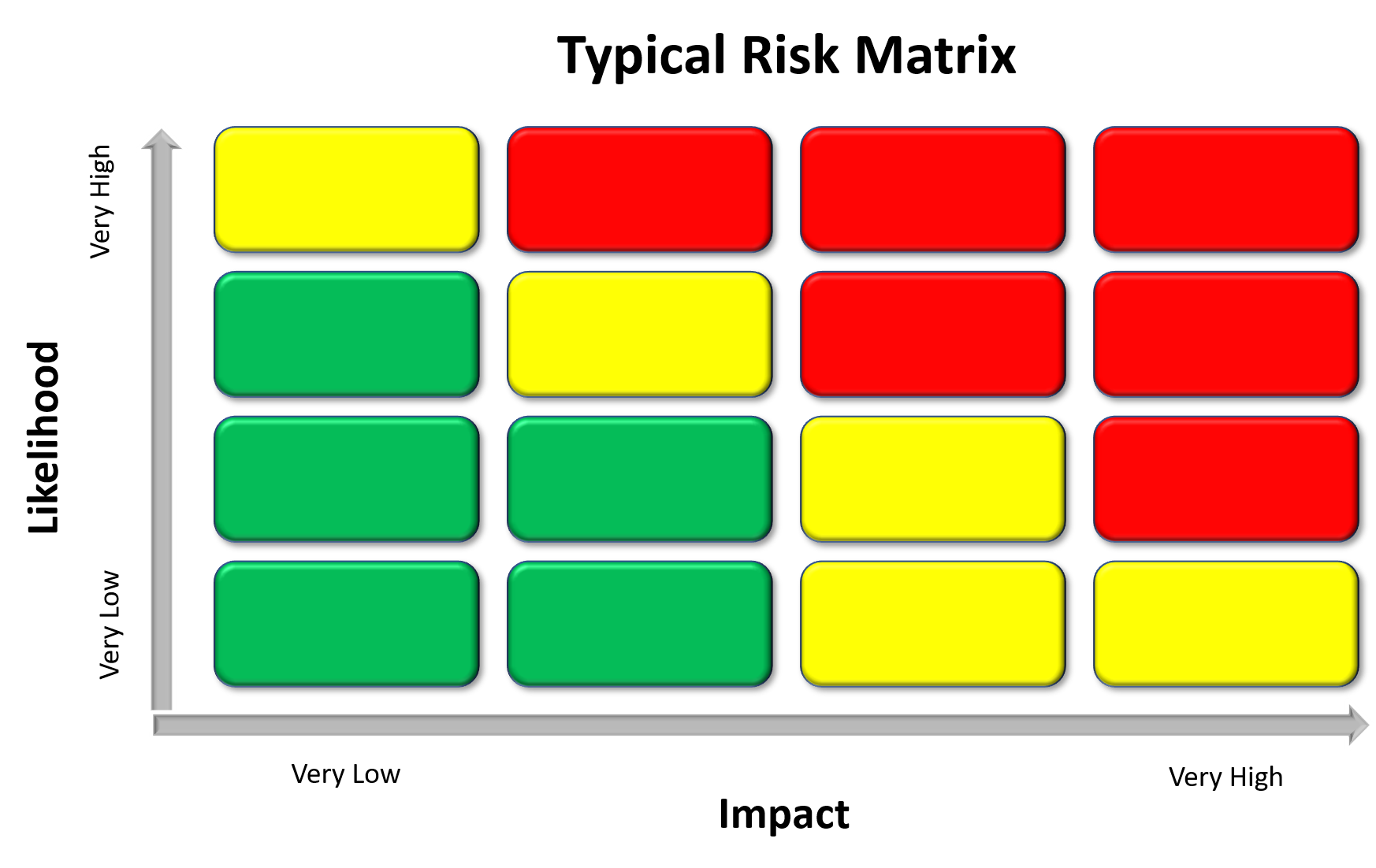
    Most readers will be familiar with the above linear Risk Matrix Model.  This graphical representation of risk exposure is useful but strict adherence to it can lead to a false sense of security.

    Systemic Risk Management

    The real world is very complex with many moving parts.  The potential interaction of processes, events and other challenges can lead to disaster.  It is often the case that the combination of a number of seemingly unrelated and in and of themselves potentially minor events can lead to catastrophe.

    A systemic approach to risk exposure is appropriate.  Field operations usually involves several to many somewhat disparate processes and individuals.

    Typically, the operator will have individuals in the field as well as the office working together.  Contractors and sub-contractors are similarly constructed.  The number of interactions can grow exponentially in a large project or program.

    Therefore, it is important to ‘see’ risk as a dynamic interacting model.  For example, the following quotation is a straightforward presentation of the actual risk field operators face.

    “Planning for the abandonment of Macondo was extremely complex.  The fundamental source of that complexity was a phenomenon well known to systems engineers: the number of potential pairwise interactions among a set of N elements grows as N times N-1, divided by 2.  That means that if there are two elements in the set, there is one potential interaction; if there are five elements, there are ten potential interactions; ten elements and there are forty-five; and so forth.  If the interactions are more complex, such as when more that two things combine, the number is larger.  Every potential interaction does not usually become an actual one, but adding the elements to a set means that complexity grows much more rapidly than ordinary intuition would expect.”

    The authors’ note that NOT all combinations can happen, but the possibility of several is likely.  Many decision makers do not expect exposures as great as they likely are in a complex environment.

    Interactive Model

    So how great is your risk?  The following calculator will give you a perspective on your organization’s exposure.  It is straightforward and easy to use.

    You are only required to input two variables:

    n = the number of elements

    m = elements from n in certain order, it is arrangement

    Taken from the Macondo model above, if n=10 and m=2, the number of combinations of m from n equals 45.


    [planetcalc cid=”977″ language=”en” code=”” label=”PLANETCALC, Combinatorics. Combinations, arrangements and permutations” colors=”#263238,#435863,#090c0d,#fa7014,#fb9b5a,#c25004″ v=”3275″]

    Addition data the calculator provides:

    Each ordered set of n is a permutation

    Generally, the number of combinations of m from n with repetitions is not useful for our purposes other than the recognition that repetition is possible.

    This calculator does not indicate where risk lies.  As the authors of Deepwater Horizon: A Systems Analysis of the Macondo Disaster suggest, it helps decision makers better understand the nature of their complex environment.

    Final Thoughts

    Simple risk models may have their place.  They are useful for presentation purposes.  However, they are insufficient when assessing the exposure of today’s complex operational situations.

    High Reliability Management requires that decision makers NOT simplify the complex.  Understanding the level of exposure using systemic risk management techniques can help clarify organizational threats.

    Are Your Organization’s Risk Management Techniques Robust Enough?

    For more information on Risk Mitigation check out our Operational Excellence Platform.

      Boebert, Earl and Blossom, James M. (2016). Deepwater Horizon: A Systems Analysis of the Macondo Disaster. Cambridge, MA: Harvard University Press. pp. 65-66.

    Appendix–The Math

    For those interested, this is the math for the calculator. It is taken directly from the Planetcalc website.

    So, assume we have a set of n elements.

    Each ordered set of n is called permutation.

    For example, we have set of three elements – А, В, and С.
    Example of ordered set (one permutation) is СВА.
    Number of permutations from n is

    P_n = n!

    Example: For set of А, В, С number of permutations is 3! = 6. Permutations: АВС, АСВ, ВАС, ВСА, САВ, СВА

    If we choose m elements from n in certain order, it is arrangement.

    For example, arrangement of 2 from 3 is АВ, and ВА is the other arrangement. Number of arrangements of m from n is

    A_{n}^m=frac{n!}{(n-m)!}

    Example: For set of А, В, С number of arrangements of 2 from 3 is 3!/1! = 6.
    Arrangements: АВ, ВА, АС, СА, ВС, СВ

    If we choose m elements from n without any order, it is combination.

    For example combination of 2 from 3 is АВ. Number of combinations of m from n is

    C_{n}^m=frac{n!}{m!(n-m)!}

    Example: For set of А, В, С number of combinations of 2 from 3 is 3!/(2!*1!) = 3.
    Combinations: АВ, АС, СВ

    Here is the dependency between permutations, combinations and arrangements

    C_{n}^m=frac{A_{n}^m}{P_m}
    Note Pm – number of permutations from m
  • Fleeting Success: In Pursuit of Sustainability

    Fleeting Success: In Pursuit of Sustainability

    Winston Churchill is credited with saying, “Success is not final, failure is not fatal: it is the courage to continue that counts.”  The late Prime Minister nailed it; once again!

    Our journey through life, including our career is a marathon not a sprint.  While we celebrate success, often at happy hour or a party, we recognize it is only a moment.

    Early in this writer’s career, a multi-million-dollar deal closed after more than a year of effort.  A celebration ensued.  The next day the sales manager, “Asked what was next?”

    Attain and Sustain

    Organizational initiatives seem to procreate.  In some ways like the Tribbles of the original Star Trek series.  Cute furry things, the Tribbles multiple at such a rate as to almost consume the Enterprise.  Only the transporter beam saves the crew.

    Like the rah-rah of New Year’s Resolutions, the question is not will I go to the gym in January, but will I still set foot on the treadmill in June or even March.  The road to you know where is paved with good intentions.  It is the sustained energy of the execution that assures more successes than failures—and that failures are teachable moments.

    Culture is one of the current buzzwords, yet Cultural Transformation is the key to sustainability.  Courage requires the organization to pick itself up, so to speak and continue the journey to a sustained high level of Operational Excellence.

    Easy to Say

    According to Forbes, in 2018 “enterprises are expected to invest $1.3 trillion (USD) in digital transformation initiatives to apply digital capabilities to improve efficiencies, increase customer value and create new monetization opportunities.”  The article goes on to posit, that almost $900 billion of that spend will be wasted as goals are not attained.

    Why are these projects always seemed doomed to fail?  A quick Google search identifies a large body of knowledge over the years documenting these types of failure.  So, the beat goes on.

    Hard to Do

    There is also a body of work documenting the “should do’s” of organizational transformation.  In fact, this author has contributed several articles and books on this subject.  Most notably, Implementing a Culture of Safety: A Roadmap for Performance Based Compliance.

    A Missing Piece

    There is a lot of talk about Operational Excellence, Digitalization, High Reliability Organizations, Human Factors, Safety Culture et al.  As with the Forbes data, many are suffering the same fate.  No wonder senior management is skeptical of new spend for more ‘Tribble-itiatives.’

    For example, when a critical infrastructure sector discusses the transformation to a Safety Culture, the term is often expressed as singular, i.e., there is one industry safety culture.  However, all firms have their own ecosystems consisting of multiple and sometimes disparate entities.

    They have developed a culture that is a source of pride, competitive advantage, etc.  Their culture differentiates each organization from their peer group.

    The following figure presents the actual nature of a firm’s Safety Culture.  The reality is that a large organization’s “culture” is a combination of multiple cultural dimensions.  It is this ‘nature of culture’ that must be better understood if a transition process is to be successful and sustained.

    Readers should note that the multi-dimension structure is continuously changing as business, technology, and regulatory environments impact on the Relationships, Behaviors, and Conditions of the situation.  This dynamic requires continual managerial energy and training to sustain the change desired.

    Cross Cultural Engagement

    It would seem to be a daunting if not impossible task to effectively and efficiently train a large work force including relevant third-party suppliers on an ongoing basis.  Of course, the cost would be prohibited as well.

    Not so fast, e-learning serious games are now available to support the training requirements necessary to “sustain” the transformation.  Moreover, specific scenarios can quickly be developed to meet specific organizational requirements.

    The games are developed using Game Theory and Human Behavioral theories.  They simulate a real-world environment and have been shown to give great results over decades.  With Cloud technology, these training tools are now inexpensive and readily available to all.

    Why have your Organization’s Business Transformation Initiatives Failed?

    Check out our Cross Cultural Serious Game


      https://en.wikipedia.org/wiki/The_Trouble_with_Tribbles

      https://www.forbes.com/sites/forbestechcouncil/2018/03/13/why-digital-transformations-fail-closing-the-900-billion-hole-in-enterprise-strategy/#1f5923507b8b

      https://www.xlibris.com/Bookstore/BookDetail.aspx?BookId=SKU-0143303003

      Shemwell, Scott M. (2015, November 28). Comments and Thoughts Regarding the IAEA Technical Meeting on Developing Improvement Programmes for Safety Culture November 2-4, 2015. Vienna, Austria.

  • Three Years—Ten Months: How did they do it?

    Three Years—Ten Months: How did they do it?

    The United States officially entered World War II on December 8, 1941.  The war in the Pacific formally ended on September 2, 1945.

    A recent documentary on one of the history channels chronicled the path the United States took from a nation with an underdeveloped military to global dominance over this period.  What struck this author was the technological distance covered.  Not just marshaling the military and civilian workforce, but how heavy industry, including maritime (ships), aircraft, and weapons advanced so quickly.

    Some might say that this period was unique in human history with a strong focus on the survival of the nation.  No doubt this line of thinking persisted at the time, but perhaps something else was driving this behavior.

    Crisis Management is appropriate when nations, industrial sectors, organizations and even individuals are in times of stress.  By some accounts, the managerial prowess of this period stems from the knowledge of industrial manufacturing and logistical processes. 

    While the ‘War Agencies of the Executive Branch of the Federal Government’ played important roles in this wartime effort, it was not this alone that caused a juggernaut to appear.  The size of the United States, “prewar technological industrial base” and “large population” were also contributing factors.

    Large scale hostilities brings a spotlight that is not normally held during peace time.  The fight or flight instincts of all humans help bring focus in times of trial.  However, organization and management are important for societal success for either option.

    Attaining and sustaining Critical Mass in those Critical Success Factors (CSFs) were key to enabling the rapid ascent to industrial might.  Has anything changed?

    Parallels to Today

    A recent article, The Oils Shock That Never Was, reflected on the advancements the upstream oil and gas sector made during the recent downturn.  The piece makes the case that while most prognosticators predicted so-called doom and gloom often associated with downturns, the opposite seems to have happened, particularly in the shale space.

    In a previous blog, we put forth the rationale that Operational Excellence is the key to strong financial performance.  The Oil Shock article documents the transformation of the overall industry Cost Structure.  Operators are also focusing on sectors where profits are possible at current commodity price points.

    Moreover, firms are capitalizing on existing infrastructures that are supported by new technologies.  This sounds familiar to the behaviors of economic actors almost eighty years ago!

    However, challenges remain for service sector providers.  Could these firms utilize World War II business models employed by shipbuilders in the 1940s?

    Does Your Organization have Critical Mass for its CSFs?

    For more information:


      https://www.files.ethz.ch/isn/23588/mcnair50.pdf

      https://www.rigzone.com/news/the_oil_shock_that_never_was-30-jan-2019-158034-article/?utm_campaign=WEEKLY_2019_02_01&utm_source=GLOBAL_ENG&utm_medium=EM_NW_F1

      https://therrinstitute.com/beat-the-market-can-operational-excellence-increase-eps/

  • Beat the Market: Can Operational Excellence Increase EPS?

    Beat the Market: Can Operational Excellence Increase EPS?

    In a recent Houston Chronicle article, its author puts forth the premise that while oil and gas companies should do well in the stock market this year, don’t expect the energy services sector to fare as well.  As those who are either in the sector or track it (stock analysts) know all to well that when the price of oil dips, so do the Returns of those companies that provide equipment, labor and other services to the E&P sector.

    The crude oil commodity price has always been cyclical.  Often Boom—Bust, this leads to the hiring and firing of tens of thousands of employees and contractors.

    As many as 750,000 in the 1980s were fired (not to mention those businesses that provided products/services to these individuals and companies).  A lousy career choice that may limit new entrants who will not be guaranteed a salary during a short-term “shut down.”

    For years, this pundit has held the belief that due to technology advancements in both engineered products/services and information management that a return to the good ole days of $100 oil is not likely.  Economic actors in the sector must continue to adopt new business models and processes, not just to remain competitive but to stay in business.

    For example, Weatherford International, founded in the 1940s is endangered of being delisted by the New York Stock Exchange.  Baker Hughes continues to struggle as General Electric has announced its divestiture.

    We remain committed to the belief that oil is probably well within a trading range that will not provide price relief to the service sector.  That said, how can energy service survivors return shareholders reasonable value?

    The traditional business model of layoffs and equipment stacking is well underway.  Short term Stop the Bleeding which makes one wonder why this sector added 10,000 in just the last two years during a ‘weak’ recovery.

    The Future is Now

    The concept of the so-called digital oilfield has been around for decades.  This author was first formally involved with construct in the early 1990s when it was titled the Digital Oilfield of the Future.  Hasn’t the future arrived?

    In 2004 we released an industry supported research project, Roadmap to Enterprise Optimization: A Guide to the Impact of Information Driven Field Operations on the Petroleum Corporation.  Other articles, white papers, blogs and workshops continue to date.

    In the recent Houston Chronicle article, one interviewee believes that the energy service sector needs to Collaborate and Digitalize if they are to generate higher Earnings per Share. 

    This leads one to question, why after all these years is the disconnect the same as two decades ago?  We can no longer blame the Baby Boom generation as the brake on digitalization.  The Boomers have largely left the sector building.  Moreover, we can no longer blame the cost and maturity of information technology.

    So, if the blame game is over how can the sector attain and sustain these laudable process goals?  One can make a case that business/technology models and their value propositions were either fragmented or not understood by management.

    Having attended countless conferences, seminars, et al. over the years there does tend to be a narrow focus on each business need.  For example, downhole, big data, safety, decommissioning, digital oilfield, offshore, drones, onshore and so the list goes.  All vying for the same CAPEX.

    Those days may be over.  The Operational Excellence construct directly addresses all the field driven processes and technologies necessary to assure profitable performance.

    As with other initiatives, what is needed is an actionable methodology with a well understood value proposition.  Today, even smaller energy services companies can implement Operational Excellence.  A solution is available!

    Operational Excellence is the key to higher Earnings per Share and greater investor interest in the firm.  This is true for both public companies as well as private and their banking/investor relationships.

    What is Your Organizations Excuse for Not becoming Operationally Excellent?

    For more information about how to solve the weak Earnings per Share problem, check out our new Operational Excellence Platform.


      https://www.houstonchronicle.com/business/energy/article/Several-major-changes-on-the-horizon-for-troubled-13556827.php

      https://therrinstitute.com/wp-content/uploads/2019/01/Dr-Scott-M-Shemwell-Publications-and-Interviews-January-2019.pdf

  • Bull or Bear: Is there gold in them there markets?

    Bull or Bear: Is there gold in them there markets?

    Are we on the verge of another California gold rush, boom market or depression?  No one knows.  What is certain; risk mitigation must be central to any business model.

    This year may be especially challenging for the oil industry.  Recently, conventional wisdom is downgrading average crude oil prices for 2019.  Reasons include a plentiful supply and the other usual suspects.

    This pundit tends to agree with a trading WTL trading range averaging in the mid $50s/bbl.  There is likely more downward pressure than upward.  If true, hopes for top/bottom line growth may not materialize.

    The sector can continue to experience market difficulties, consolidations/spinoffs, reductions in force, etc.  However, this need not be the fate for many.

    For several years several studies have suggested that significant value is available if organizations in the oil sector implement and sustain a high level of Operational Excellence.  Typical opportunities include:

    The resulting impact on the Balance Sheet and Net Income Statement can be substantial.  The implication is that Earning per Share will also grow.

    The upstream sector has already undergone Austrian economist Joseph Schumpeter’s (1883-1950) Creative Destruction—some might refer to this process as disruption.  This is widely attributed to information technology and fraking.

    Therefore, any hopes that stronger crude prices will somehow ‘save’ the organization are misplaced.  The clear strategic hope lies with Operational Excellence.

    Since we know that ‘hope is not a strategy,’ only effective business processes will add shareholder value.  Time to roll up your operational sleeves and get to work.

    What is Your Organization’s Excuse for Not Implementing Operational Excellence?

  • Resolution: Celebrating a New Operational Start–One More Time

    Resolution: Celebrating a New Operational Start–One More Time

    It is hard to believe we are now 19 years into the century.  Seems like only yesterday we were worried whether the lights would stay on at Y2K.

    Each year many of us promise to do better at a list of things, some personal and some professional.  Some days or weeks later, some or all of our resolutions go unmet.

    For many heavy industry sector firms, January 1st is also the start of a new fiscal year.  New budgets will be released, and management will extol their workforce to meet new (possibly stretch) targets.

    If the equity markets are a barometer of things to come (leading indicator), then the Conditions organizations will find themselves in will most likely be volatile and some segments may even face significant challenges.

    For example, WTI crude oil closed on January 4th at US$ 47.96/bbl.  Some are bullish on this sector, with an expectation higher prices in the future.  History has shown this faith may not bear out.

    Regardless, organizational Behavior will need the flexibility to adjust in a process relevant time frame as conditions change.  The resulting Relationship with the firm’s ecosystem is a function of the behavior in the conditions or market circumstance.

    In other words, the R B C Framework is applicable in our everyday corporate life.  Why is this important?

    One way to view the global marketplace is one of continual change.  Often purveyors of Change Management/Organizational Transformation present this as a point in time.  Statements about continuous improvement are seemingly afterthoughts.

    We have developed an Operational Excellence Platform, as depicted in the following figure.  Please note that it is built upon the R B C Framework.

    Since the nature of Relationships across the organizational ecosystem will continuously evolve based on the marketplace, it follows that maintaining Operational Excellence depends on these tree factors.  Safe and profitable operations on strong, positive relationships.

    How well does your organization understand the R B C Framework for its ecosystem?

    Further Reading

    The author and others have published extensively on this subject.  The list of appropriate articles and papers is too extensive to list here.  However, readers are invited to peruse Dr. Shemwell’s extensive list of blogs and publications.

    See our Economic Value Proposition Matrix® (EVPM) for additional information and a free version to build your own EVPM.

    For further information Contact Us.

  • Mission Accomplished: Santa Completes Another Worldwide Transit—Incident Free!

    Mission Accomplished: Santa Completes Another Worldwide Transit—Incident Free!

    Every December 24th, this jolly ole elf embarks on one more global initiative.  We know this to be true because each year since 1955, the North American Aerospace Defense Command (NORAD and its predecessor the Continental Air Defense Command (CONAD) Operations Center in Colorado Springs, Colorado have tracked his operation–www.noradsanta.org.

    We are happy to report that as of this writing, Santa has returned to the North Pole with all his reindeer healthy having delivered almost 7.3 billion gifts.  Another 364 days of operational planning has paid off handsomely.

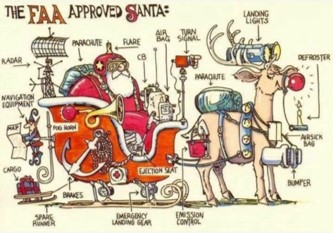
    So how does this bearded (non-millennial) man in a red suite and his supporting elf ecosystem routinely accomplish this logistical nightmare?  Could it be that Santa is the CEO of a High Reliability Organization (HRO)?

    Through this blog and others including our book Implementing a Culture of Safety: A Roadmap for Performance Based Compliance, the author has extensively written on the High Reliability Management (HRM).  Interested readers are invited to search these and other works on the subject.

    Briefly, an HRO focuses on operations from the top down, expects failure and puts in place resilient processes and procedures designed to recover quickly.  Moreover, Human Factors play a major role in Santa’s HRO operation.

    For example, human elves must care for the reindeer full time, not just the night of the flight.  The sled must meet certain regulatory and safety compliance requirements.  Packages must be wrapped, and hand delivered efficiently without damage.  Finally, route planning and coordination with various airspace control entities is critical to assure an incident free transit.

    Concluding Thoughts

    This ‘tongue and cheek’ mythical case study does serve a point.  Large, global, complex initiatives involving a number of constituent parties including customers require HRM.  Much is said about Operational Excellence (OE) these days and we make the case herein that without HRM, OE is also an unattainable myth.

    We are told on good authority that after a short rest, the Santa OE Ecosystem will start planning for the December 24, 2019 transit.  Children believe in Santa Claus and marvel at all he can accomplish in one night.  Perhaps those of us who are older can also learn new lessons from this jolly ole elf.

    How Do You Assure your Global Initiatives Remain Incident Free?

  • Millennials Take On Our Increasingly Complex World

    Millennials Take On Our Increasingly Complex World

    Originally published in 2013.

    On January 1st at 0348 hours a young engineer employed by a service company is trying to address a problem she has encountered with a compressor on a drilling rig in the Deepwater Gulf of Mexico.  She graduated from college three years ago and went to work for a large energy services company.  However, several months ago she changed jobs and is now on her first offshore hitch as team leader with her new company, a similar size global energy services company.

    She is a competent engineer but is uncertain what the company policy is regarding a piece of rotating equipment that while seemingly malfunctioning does not appear to jeopardize safety, the environment or production at the present time.  But she worries that the situation could get worse.

    A quick call to the “graveyard” shift at the company onshore Operations Center is not reassuring.  Staffed by those who are too junior to be on vacation during the holiday season, the engineer she talked with had only been with company three years and actually had less field experience than she did.  His supervisor was not encouraging either.  Should he call and wake experts at this early hour?

    Adding to the problem, the compressor’s data plate was mostly unreadable.  And of course, a famous Texas blue northern was blowing through.  High winds, rain and cold temperatures further impaired proper equipment identification, much less working conditions.

    Both the field engineer and the operations engineer are aware that their company signed a Bridging Document with their customer as part of the new Safety and Environmental Management System (SEMS) regulatory requirements and both had attended the appropriate training for this project.  Both are knowledgeable that the Stop Work Authority (SWA) gives them the right and even the obligation to dramatically intervene with operations if they feel it necessary.

    As a new mom, the field engineer is concerned that she might develop a reputation in the company as a “flaky” female if her next decision turned out to be a mistake.  The engineer at the operations center was receiving real time data feeds from the rotating equipment but he could not “feel” the vibrations like the on-site individual could and the equipment was still within tolerances.

    Horns of a Dilemma

    The engineers in our story are competent, qualified individuals doing a great job.  Early in their careers, they are the vanguard of field operations.  Millennials by label, they are technologically savvy and among the best and the brightest in their fields.

    Things never go “bump in the night” during daylight hours in perfect weather, hence the colloquial term.  Moreover, the personal stress of a new mother concerned about her reputation and opportunities for promotion resulting from just another day at the “office” should not be underestimated by those desk bound or later and more secure in their careers.

    The real world of field operations can be very unforgiving even when the results turn out OK.  All of the individuals in our story have significant “skin in this game.”

    It is fine to “empower” people in the team building sessions.  It is an entirely different story in the middle of the proverbial stormy night when one’s career and reputation are on the line.  Field personnel must believe they company will stand behind their decisions, right or maybe less so.

    Enablement

    These best and brightest can only be as good as their supporting infrastructure.  These individuals not only face engineering issues, any actions they take must be in accordance with company policy, the Bridging Document and various regulatory compliance requirements as well.  This is a lot to put on the plate of an engineering team.

    However, since their childhood these individuals have been online.  Our field engineer mother looks in on her infant son at day care from her smart phone from a hundred miles offshore.  The operations center engineer routinely Skype’s with his girlfriend, a physician, who is in east Africa serving with Doctors Without Borders.

    These individuals are at the top of their technological game.  However, they lack the field engineering experience of their more seasoned colleagues.  This represents a demographic challenge for organizations in the middle of the Big Crew Change.  How do these young people come up to speed—quickly?

    Organizations not only depend on the individuals depicted in our story for their bottom line, shareholder value is at risk if they cannot prevent the next major mega-disaster.  And what if they can prevent a minor incident?

    Loss time, loss production, loss anything has economic consequences.  Most organizations run on margins that are thinner than they would like.  Oil companies are included in this group.  More importantly, energy service provider margins can be even lower.  This business model pushes our engineers to lower costs, reduce downtime and in some cases push the envelope.

    Millennial Transformation

    Out engineers appear to have the deck stacked against them.  Normal Accident Theory (NAT) with its roots in the Three Mile Island nuclear power plant incident suggests that tightly coupled technologies with invariant sequences and limited slack such as Deepwater drilling operations will have accidents in the normal course of events.  In other words there is a certain inevitability of a major incident on their watch.  Maybe not during this rotation but a certain possibility during their careers.

    However, these Millennials have a safety arsenal their parents did not—a new business model that capitalizes on their technology prowess.  The emerging field of High Reliability Theory (HRT) “emphasizes are a strategic prioritization of safety, careful attention to design and procedures, a limited degree of trial-and-error learning, redundancy, decentralized decision-making, continuous training often through simulation, and strong cultures that create a broad vigilance for and responsiveness to potential accidents.”

    Arm field engineers and graveyard operations watch colleagues with HRT driven policy and associated tools and then get out of their way.  A strategic or systemic safety model with a holistic perspective of the life cycle the process coupled with truly empowered key personnel trained with the latest learning tools in a strong Culture of Safety offer a new perspective for a new workforce.

    Aircraft pilots routinely retain and upgrade their skills in sophisticated flight simulators.  “What If” scenarios, whereby the team can learn by trial and error environment where the worst result is a computer animated “do-over.”  Other industry sectors train using this well documented successful approach.

    In a true Culture of Safety a mom would not worry about her job or career if she erred on the side of safe operations.  She would not be labeled nor would her co-worker in the Operations Center hesitate to wake up the experts New Year’s Eve.

    Finally, if the maintenance history and all updated equipment manuals were available on a Smart Tablet with training videos and animation support, trepidation by those new to the company/process would lessen.  Organizational policy, its Operations Management System and bridging documentation built into the workflow will enable better decision making in the High Reliability Organization of the near future.

    A decade ago the digital oilfield was labeled the Digital Oilfield of the Future.  Integrated Operations is a common model today.  The Millennial’s World-of-the-Future will mirror the concepts of an HRO.

    Will she be working for you or your competitor?

    End Notes

    http://www.doctorswithoutborders.org/

    Weick, Karl E., Sutcliffe, Kathleen M. and Obstfeld, David. (2008). Organizing for High Reliability: Processes of Collective Mindfulness. In Arjen Boin (Ed.), Crisis Management Volume III. (pp. 31-66). Los Angeles: Sage.

    Ibid.

  • Command and Control: Is this the Way to Run the modern Railroad?

    Command and Control: Is this the Way to Run the modern Railroad?

    The managerial model, Command and Control (C&C) dates back to the dawn of humanity when tribal chieftains dictated the behavior of the group.  It survives to this day in many forms.  Typically, one thinks of military operations as the current manifestation of C&C in the western world.

    According to Wikipedia, by one definition found in The US Department of Defense (DOD) Dictionary of Military and Associated Terms, “command and control functions are performed through an arrangement of personnel, equipment, communications, facilities, and procedures employed by a commander in planning, directing, coordinating, and controlling forces and operations in the accomplishment of the mission.”  This definition has evolved from a more simplistic version found in the Cambridge Dictionary, ”situation in which managers tell employees everything that they should do, rather than allowing them to decide some things for themselves.”

    One suspects that most laypeople believe the latter definition to be to be the typical approach to C&C in their organizations.  In today’s complex (often global) organizational ecosystem, that version is outdated.

    The International Command and Control Institute, publication (circa 2005) , Understanding Command and Control develops this management construct in great detail.  As the following figure suggests, even a simple C&C structure such as a heating/AC system is driven by a set of KPIs.

    This is indicative of the digitalization of the system versus the analog controls many of us can recall from our youth.  Adding another layer, today’s ‘Smart’ thermostat operates within a well-defined governance schema such as the Internet of Things.

    Strong Bond Governance

    We first made the case for “Strong Bond Governance” in our September 17, 2013 Governing Energy blog, Strong vs. Weak?  In Critical Infrastructure sectors such as energy, medicine, etc. as defined by the US Department of Homeland Security we make the case for the construct of High Reliability Management (HRM).

    The Strong Bond Governance (SBG) paradigm enables HRM.  SBG demands Board of Directors and C Suite engagement in operations.

    Not directly but by putting in place a governance structure.  This has not always been the case with a number of catastrophic man-made disasters as the result.

    In some ways, C&C mimics HRM.  However, there are some significant differences.  HRM sets in place a structure designed to meet the test of adversities.

    • Preoccupation with Failure—a recognition that ‘failure is an option’ and the organization must respond quickly and effectively to mitigate exposure and recover. C&C does not directly address is concern.


    • Reluctance to Simplify—today’s organizational ecosystems are complex. Reducing operational decisions to the so-called Power Point three bullets, High, Likely, Low is completely unsatisfactory and potentially exposes the firm to business or technical process catastrophe.  Likewise, C&C models do not directly address this approach.


    • Operational Sensitivity—the field is where organizational action is, and senior management must have a focus on this critical component of the business. C&C also has a focus on operations, especially in the military sector.


    • Resiliency—things will go ‘bump in the night.’ Organizations must but in place the processes and expertise to rapidly respond to goblins that will be encountered.  C&C does not address this process.


    • Deference to Expertise—engage those who have the ‘know how’ to solve problems and that is mostly likely not the management team. This is substantially difference than the C&C model

    HRM allows management to look at computer dashboard and get a snapshot of most if not all aspects of the organization.  However, this does not mean that these individuals can manage from afar.  Those closed to and more knowledge about this issue must take the lead.

    Concluding Thoughts

    Watching the news, History Channel and/or various movies, one can see that even the military no longer uses simplistic C&C.  Small semi-autonomous teams take on the bad guys.  To be sure there is a Mission, Rules of Engagement and other governance controls in place.

    This provides local commanders the latitude needed to accomplish the mission at a minimum of human (good guy/non-combatants) and other collateral damages.  Additionally, military aircraft employ ‘High Reliability Management’ techniques where the expertise of the entire crew is used rather than the Captain dictating operational performance.

    Asiana Flight 214 crashed attempting a landing at San Francisco in July 2013.  One causal component was deemed to be the C&C culture of the Korean pilots.  Cockpit Management might have saved this aircraft and the lives lost.

    Likewise, those organizations and their ecosystems in critical infrastructure sectors that use HRM enjoy safer and more productive track records than those that do not—better bottom line.  The October 2014 Ebola scare is an example where the public health sector employed HRM and limited the impact of a highly contagious deathly pathogen.

    There is a tendency when the stakes are high for management to take the ‘reigns.’  In other words, engage in micromanagement.  The usual results are often sub-optimal.  The ‘gut instinct’ towards simplistic C&C is a strong urge and this addiction must be put into remission.

    A well-established Strong Bond Governance, High Reliability Organization can weather any storm the markets or nature can throw at it.  However, this organization transformation must precede the advent of major challenges!

    Traditional C&C is not an OE Imperative


  • Selling Your Economic Value Proposition to the C Suite: Translating Technology to the Language of Business

    Selling Your Economic Value Proposition to the C Suite: Translating Technology to the Language of Business

    The challenge of building a Business Case for CAPEX investments with high intangible content, i.e., IoT, professional services and operational excellence, remains difficult.  Many also argue that disruptive new business models are making the old ways irrelevant.

    Hence, we simply must make the investment to remain competitive.  After all, everyone is doing it.  A matter of faith!  The returns are huge (just look at this white paper).

    To some extent technological based business model disruption has always been true, certainly throughout the industrial and cyber revolutions of the last 200 years or so.  However, one of the major issues with technological change is the nature of the cultural differences between the technologists and those who write the checks.

    We have previously described organizational culture as partly a function of an Interdisciplinary Common Vocabulary (ICV).  One can look at the gap between advocates of new technologies and/or business models and the “C” suite as the lack of shared ICV.  This gap may become egregious during economic downturns when financial concerns overtake strategy.

    Making Your Case

    As a junior sales representative and later ‘pitching’ CAPEX projects to management, I often presented the ‘Feature—Benefit’ of my suite of products and services.  My success rate was on par with my peers, but the case could be made that I was no better than average.  We all had weak value propositions.

    While I did not know it at the time, my sales ‘ah ha’ moment happened when the department of head for an Engineering, Procurement and Construction (EPIC) firm with a refinery rebuild project asked me if he would get promoted if he bought from me.  Dah, what did that have to do with anything I wondered.  I have great features and benefits.

    At least as good as my multiple competitors.  Moreover, I could lower my price and give him great value.

    Once we understood his CSFs, we won a multimillion dollar (high margin) deal.  His problem was not the technology.  All competitive specs and price points were tightly grouped.  Almost any reputable vendor would do.

    His key problem were project milestones!  He did not want a pile of products to be assembled.  He need solutions to meet deadlines and we could deliver against that critical path.  That was the value proposition he needed.  By the way, he got promoted!

    I have seen this phenomenon often, including earlier this month.  Sales people and internal proponents of new ideas often focus on the new hot stuff, for which many competitors vie.  The current crazes include IoT, Blockchain, Operational Excellence to name a few.

    How many suppliers of these technologies and methods are there and how are they differentiated?  Lots and poorly would be my bet and experience.

    C Suite Value

    The stereotypical ‘hard nose’ businessman or businesswoman is alive and well.  He and she live in the C suite and boardroom.  Preaching features and benefits, PPT bullet points of value or use case with glossary, poorly articulated and often unbelievable claims will make for a short meeting.

    Proponents of big, disruptive or simply expensive ideas can have their ‘ah ha’ moment too.  Who is the audience and what are their drivers that can you facilitate?  In a previous blog this author took umbrage with sales cold calls who wanted to meet, waste my time and “learn about my company.”

    In other words what I hear is, I don’t have time to do my homework before I meet the economic buyer.  Another deal closing strategy!  Not.

    In an invited Guest Editorial for the Professional Petroleum Data Management Association (PPDM) online magazine, Foundations we had the privilege to post a short article.  In How to Make The Case To the C-Suite: Selling Large Scale Data Management Project to the C Suite, we present a short overview of this process.  The magazine (Vol 5, Issue 2) is free; all one has to do is sign up as a Guest.

    The article tells the story of a hypothetical Chief Data Scientist as she prepares for a presentation to the Chief Financial Officer.  Readers will see that for some concerns management has, she has a lot of homework and preparation to do.  One would expect that much of this work is outside her comfort zone, but necessary.

    Driving Success

    In our hypothetical case, she has the prep work in addition to her so-called ‘day job,’ a problem most have.  Additionally, she must align with their ICV and move away from ‘data speak.’

    Since 2004, we have used our Economic Value Proposition Matrix ® (EVPM) to help guide this process for a wide range of large projects (including security).  A free version is available.  Your invited to check it out and contact us if you have any questions.

    When the economic cycle is at a low point, it is hard to sell new projects.  When the cycle is active, there are competing projects.  Throwing money at technology has failed time and time again and ruined many careers (the antithetical of ‘getting promoted’).  Building a solid business case in the ICV of senior executives is a step towards accelerating one’s career, closing a deal or enjoying a project rather than fighting every step.

    One final point, when one reads statements such as, “Our software will save you 50%” they are not true on their face and management never believes them.  So never make those claims no matter the authority of their source.  Sometimes the value can be greater.  To find out the secret look at our webpage for the answer.

    Good Selling to the Top Dogs!

    Further Reading

    The author and others have published extensively on this subject.  The list of appropriate articles and papers is too extensive to list here.  However, readers are invited to peruse Dr. Shemwell’s extensive list of blogs and publications.

  • Are You In Distress?

    Are You In Distress?

    During a recent offshore sail from Florida to Texas the weather significantly deteriorated on this blogger and his boat mates. Our 45-foot ocean going sailboat was one in which (mostly) the same crew that has significant sea time together.

    That said, there were two days of very uncomfortable passage making. At one-point a nearby ship hailed us on the radio and inquired, “Are you in distress?” We responded, “no we were not” and thanked them for their concern. Both vessels continued their separate courses.

    At that moment, our vessel was undergoing a pounding by large waves and from the bridge of the ship, it probably did appear that our yacht was in distress and in possible need of assistance. However, our vessel was simply handling tough sea conditions.

    Experienced sailors know that anything is possible while at sea. Therefore, careful preparation is critical prior to any voyage. Simply put, the vessel must be sound, (able) seamen competent, and equipped as appropriate.

    The US Navy has identified six principles for shipboard operations, “formality, procedural compliance, level of knowledge, questioning attitude, forceful backup and integrity, focus on human performance and create the foundation for highly effective commands where errors that could lead to minor or catastrophic events are identified and stopped early. Used together, these six principles form the bedrock on which the Surface Force implements the three operating processes: operational risk management; plan, brief, execute, and debrief; and hazard reporting.”

    One could make the case that a pleasure vessel need not adhere to these six principles; however, this long time offshore sailor argues that they should as well. For example, there is always only on Master (Captain) of a vessel regardless of long time friendships. Appropriate expertise or Knowledge, Skills and Abilities (KSA) for all crew members is essential as well.

    Some may notice that the six principles and three operating processes are akin to those found in High Reliability Organizations (HROs). In other words, this short story holds lessons for all as well.

    Our vessel was engaged in a mission—transit from Florida to Texas. This mission was supported by a number of processes and associated tools, technologies and human capital to accomplish the overall goal.

    When adversity struck, the crew (organization) responded to events on the ground (water) to address the new situation in the spirit of prudent mariners. Is this not allegorical to business?

    How Can You Assure Your Organization Will Not Be in Distress When Adversity Strikes?

  • Love to Have the Opportunity to Learn About Your Company: I Know I Can Help

    Love to Have the Opportunity to Learn About Your Company: I Know I Can Help

    It seems that the preferred CRM Cold Call script goes something like this, ”I’d love to jump on a call with you and learn more about your company.  I am sure we can help.”  Really?

    The roots of this approach may be from the “Sell me this pen” sales model whereby the sales representative queries the prospect seeking to find a need that can then be filled.  Understanding your customer and her business needs are a critical selling skill.

    However, a cold call (using this sales model) from someone the prospect does not know and may even be unclear about the product/service being offered is usually a non-starter.  Yet, increasingly this is the opening gambit in many digital marketing campaigns materials.

    What is missing from all of this is the construct of homework.  The race car driver, Bobby Unser is credited with saying, “Success is where preparation and opportunity meet.”

    Somehow, I don’t think he jumped in the car ‘cold’ the day of the race.  Long hours of preparation preceded race day.

    B2B selling is all about solving a specific issue or challenge the buyer is facing.  Whether the potential customer knows about the issue or is unaware (for example, the first-generation smart phone), he or she must perceive value from the selling firm.

    While it is usually impossible to know the details of an issue, the rep must have a starting point.  Rather than, “let’s jump on a call” articulate that the rep has some actual knowledge about the prospect.

    Value Proposition

    If the purchasing authority works on average ten hours a day (plus or including commuting time) a 30-min meeting is 5% of his or her day.  Is talking to this sales rep the best use of that time?

    Frankly, teaching an uninformed individual about the company and fielding a battery of probing questions probably is not worth it to most of us.  A more valuable approach would be to develop a ‘strawman’ value proposition.

    The usual benchmark of value is financial.  An increase in the top/bottom lines, stock price or more recently reputation (great place to work, etc.) drive operational excellence initiatives.  Whether tangible or intangible organizations seek value from business cases put forth by suppliers.

    Unfortunately, value often remains loosely defined; as shown in the text box.  Moreover, it is often difficult and time consuming to develop a viable and valid value proposition.  No matter, this homework must be done!

    At a recent conference about the Industrial Internet of Things (IIoT), two panels extoled the (technology) virtue available to heavy industry.  An inquiry from the audience regarding the project risk of implementing enterprise level IIoT was not impressively answered.  Likewise, when questioned about the value proposition one panelist timidly answered that IIoT was simply necessary to remain competitive.

    Trust me, it’s going to be good!  Not the most compelling use case.

    Early in my sales career, this rep often put forth value propositions along the line of the IIoT example.  Often, the company provided me with presentation materials to that end.

    My sales life forever changed at a Mexican restaurant one lunch when I was going through the usual pitch and was interrupted by the prospect.  His question to me paraphrased, “If I buy from you will I be promoted?”

    I thought I knew this individual reasonably well and was speechless at the question.  Later I realized that instead of a laundry list of products, spares and other materials, he was looking for a solution.

    His problem would have been apparent if I had done my homework.  He was charged with installing all the instrumentation in a $ 1 billion refinery retrofit.  When successful, he believed his career would advance

    Grilling him about his business would have made me persona non-grata as he did not have time for that.  Once I proactively engaged his organization it quickly became clear how to win the deal.  Three million dollars later our manufacturing facility was in over drive.  And he did get promoted!

    Finally, there is a level of impersonality from this selling model.  This includes the much ‘loved’ follow up email driven by CRM, “I haven’t heard from you so I thought I would resend my email.”

    Certainly, persistence is required to close deals; however, pestering will drive prospects away as fast as they can run.  Professional behavior coupled with persistence are two sales KPIs.

    You want me to give you some of my valuable time?  Then do your homework and show me why I should

    Further Reading

    The author and others have published extensively on this subject.  The list of appropriate articles and papers is too extensive to list here.  However, readers are invited to peruse Dr. Shemwell’s extensive list of blogs and publications.

    See our Economic Value Proposition Matrix® (EVPM) for additional information and a free version to build your own EVPM.

    For further information Contact Us.

  • Are Organizational Governance Models Broken: Why Can’t Management Get a Handle on Things?

    Are Organizational Governance Models Broken: Why Can’t Management Get a Handle on Things?

    Over 15 years ago, organizations such as Enron, Worldcom, Tysons, and others failed after massive managerial maleficence and even criminality.  Enron’s auditor, Arthur Andersen folded as well.

    The result of this carnage was the imprisonment of many, the death (apparent heart attack) of the disgraced former CEO of Enron, suicides, massive shareholder value destruction and the Sarbanes Oxley Act of 2002.  SOX, as the act was commonly called was supposed to fix fractures in organizational transparency!

    Later, Bernie Madoff, Robert Allen Sanford and others (Ponzi schemes) stole billions from trusting clients.  Where was the oversight for crimes of these magnitudes?

    Almost a decade ago, three major disasters causes incalculable death and destruction:

    • BP Deepwater Horizon aka Macondo—commencing April 20, 2010
    • San Bruno Pipeline Explosion—commencing September 9, 2010
    • Fukushima Daiichi Nuclear Incident—commencing March 11, 2011

    According to one 2018 report, “Close to half (46%) of senior oil and gas professionals believe that there has been under investment in inspection and maintenance of infrastructure and equipment in recent years.”  Has anything been learned about the risks posed by Critical Infrastructure to the Bottom Line and societal reputations?  What about continued loss of human life?

    Finally, our US political class tells us they cannot ‘securely’ run an election and that outside interference somehow tainted or even changed the 2016 national election.  Five plus months before the next national election, what has changed?

    Nuisance to Menacing

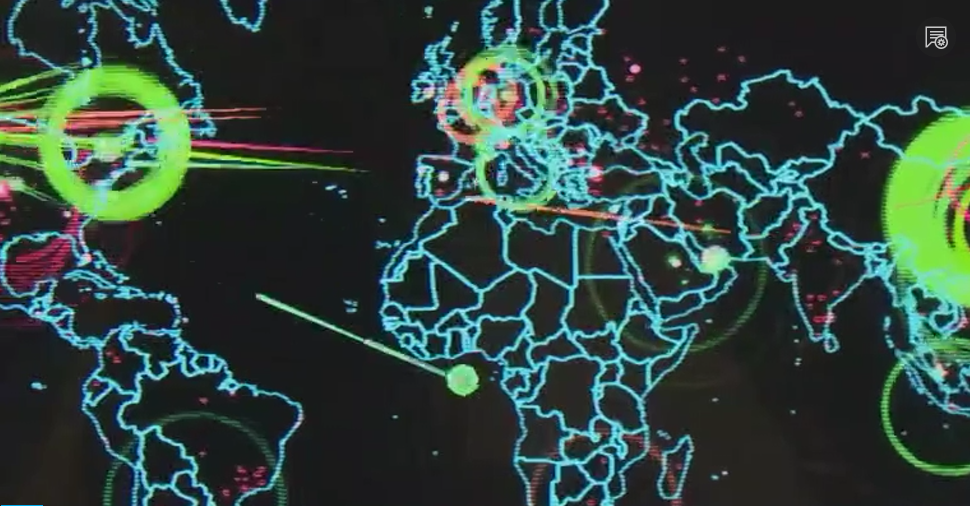
    Now a series of high profile Cyberbreaches (seemingly exponentially) continue as do management’s apparent attempts to hide the damage from affected customers and shareholders.  Is this lack of transparency a SOX violation?

    More regulations are not the answer.  Criminals and others with malice don’t pay much attention to laws.  They never have, whether mugging you in the park or stealing your identity online.

    Purportedly, the first ‘hack’ took place in 1903 when a demonstration of the Morse Code was disrupted and insulting messages were sent through the theater projector. Perhaps a mere nuisance then, today cyber malcontents desire vast fortunes, political intrigue and even social instability.

    In our November/December, 2017 Petroleum Africa article, A Governance Model for the Era of Digitalization: Achieving Operational Excellence Using Disruptive Data Management Techniques, we mentioned that at a conference in late 2017, an investment banker when responding to a discussion about the use of IoT as part of the digital oilfield (now how we run the business) “suggested words to the effect that if the enterprise is driven by these technologies then it is now an agenda item for the Board of Directors.”  This is consistent with this author’s previous statements to this effect.

    What’s Going On?

    In his 1984 book, Normal Accidents: Living with High-Risk Technologies, Charles Perrow put forth the theorem that in our complex world, “It takes just the right combination of circumstances to produce a catastrophe, just as it takes the right combination of inevitable errors to produce an accident.”

    We have written extensively about Governance and Operational Excellence, including methodologies for developing and sustaining both.  In 2014, we put forth the construct of Strong Bond Governance as well as ways Critical Infrastructure sectors can become High Reliability Organizations.

    Finally, we have developed and implemented a Best Practices Model for Operational Excellence that incorporates modern governance that address issues discussed herein.

    Normal Incident Theory indicates, that in any complex system accidents will happen.  This theory has been debunked just like Keynesian Economics.  Yet practitioners of both continue unswayed by empirical data.

    It appears that corporate governance models have fallen into the same trap, making assumptions that business and technology models are limited and reactive.  This appears to be a short-sighted approach with ample empirical evidence that these models are no longer relevant.

    Threats to shareholder value and even the safety and economic security of entire populations that depend on Critical Infrastructures are increasing for a variety of reasons.  Organizational Governance models must keep pace.  Clearly, this is now part of the fiduciary responsibility of Board members as well as the entire “C” suite of executives.

    Further Reading

    The author and others have published extensively on this subject.  The list of appropriate articles and papers is too extensive to list here.  However, readers are invited to peruse Dr. Shemwell’s extensive list of blogs and publications.  For more information on this and other subjects, please contact us.

  • Is Your Digitalized Organization Cybersecure?

    Is Your Digitalized Organization Cybersecure?

    Here is How to Find Out!

    It seems that everyday a new major cyber breach is announced.  The Rapid Response Institute and its Principals have addressed this issue many times through a variety of venues and publications.

    We recently conducted a workshop, “Implementing Digitalization: A Game Changing Transformation of the E&P Sector.”  The Cybersecurity of this sector transformation is critical to its success.

    Moreover, since “this is the way we run our business,” Cybersecurity is now a Board of Directors issue and an integral part of its fiduciary responsibility.

    As part of our continuing effort to add value to Operational Excellence and Risk Mitigation processes, it our pleasure to feature this recent Public Television interview.

    We encourage you to watch this 30 minutes discussion with one of the world’s leading Thought Leaders in the Management of Cybersecurity for Critical Infrastructure Sectors such as oil & gas, electric power generation & distribution, medicine and others as identified by the United States Department of Homeland Security.

    Patriot Act of 2001 defined critical infrastructure as those “systems and assets, whether physical or virtual, so vital to the United States that the incapacity or destruction of such systems and assets would have a debilitating impact on security, national economic security, national public health or safety, or any combination of those matters.”

    We believe you and your organization will find watching this video time well spent.  Also, should you wish to talk further with her please contact us and we will arrange this.

    Stay Cyber Safe!

  • Organizational Predators: Jackals, Hyenas, and Wolves in Managerial Clothing

    Organizational Predators: Jackals, Hyenas, and Wolves in Managerial Clothing

    Prologue

    In the author’s August 2004 edition of the then, Executive Briefing Newsletter (early online delivery) we addressed the impact on the firm of managerial misbehavior.  This article was one of a list of challenges put forth to that generation of management.

    Sadly, recent events have compelled us all to revisit this issue, although for some it is the first time.  Upon re-reading the document, we felt that it might add value to current management and those that work for them to release it again in the blog format.

    The text presented is original and only minor typographical changes have been made.  We firmly believe that historical documents need to be held to their original meaning and we invite the reader to decide its value in today’s context.

    One note, readers may feel passion seeping through.  As this author recalls, at the time one of the jackals had harassed someone close to me.

    Point of the piece, this behavior was inappropriate then and it remain inappropriate today for this kind of nonsense to exist in the workplace.  Shareholder value is destroyed by this stupid behavior.

    One would guess that over the next months and years shareholder value will be destroyed in court settlements because of the recent behaviors of Organizational Predators: Jackals, Hyenas, and Wolves in Managerial Clothing.  Won’t put the names here—Google it!

    The original text is available in Essays on Business and Information II: Maximizing Organizational Performance, pp. 85-87 of the printed edition.  Readers will find it in the Ethics Section.

    Reprint

    Originally published in August 2004

    I think I did something for the worst possible reason—just because I could. I think that’s the most, just about the most morally indefensible reason that anybody could have for doing anything.”

    – Bill Clinton

    Thank you, Mister President.  You have empowered another generation of Omega males in managerial positions who denigrate women “just because they could.”  In Bill’s case, Hillary emasculated him and moved on to become a U.S. Senator.  This option is not always available to others.

    Organizational leaders are role models for guidance in how managers relate to our female subordinates.  Dominant men (and sometimes women) are well positioned to do things just because they could.  If the organizational culture condones the just because they could model, in reality this conduct is what management offers shareholders.  As an investor, I am ready to sign up for that business model. Yah, Right—Perhaps NOT!

    Over the past three years, this newsletter has sought to put forth important and indeed even critical issues to the forefront of discussions.  I will tell readers up front, that this edition of the newsletter is different.  It is personal, and it comes about as the result of this author’s direct knowledge about how women in his professional and personal life are being treated.

    Therefore, I do not claim objectivity but seek to raise the thinking of those in similar situations as well and even the culprits themselves (and their spouses, usually wives).  In this writer’s humble opinion, this issue is not transit, but endemic.  In the list of those things that will not go away, this one is high.

    Corporate boards and CEOs should take note, as not only are there EEOC (Equal Employment Opportunity Commission) issues at stake (usually addressed by Human Resources and attorneys as background noise) but also Sarbanes Oxley exposure.  Sarbanes Oxley is usually couched along the lines of information flow to the CEO and Board, however, there is another dimension.

    The quality of management and their readiness to “hear” and incorporate the thinking of the best of the best, regardless of sex.  Just think if the CEO of Enron had actually listened to Ms. Sharon Watkins when she raised concerns instead of just blowing her off—he might still be enjoying his Aspen resort.

    You can outsource non-core activities, but you cannot outsource the corporate identity. How firm’s truly value every employee is who they are.  United States criminal law has a long history of prosecuting wife and child beating felons.  The principle is well established.

    Oh, the Humanity

    Men, more often than women, abuse the other sex and their offspring.  Predators prey upon the weak and the young, usually males dominating or destroying females and their young.  We see this in the wild animal kingdom and we see these predators on the Internet.

    We also find them inside corporate walls.  Boards and C levels often hide their heads in the sand and take a “don’t ask don’t tell” approach.  Guess what guys (and it usually is the ole boys club); the train has left the station without you.

    Fact is this train left a millennium or more ago.  Mothers are revered as the fount of life.  Regardless of ethnicity or religion, Mothers are central.

    That is until we get to corporate America or any other nation for that matter.  Once a woman choses or is forced to work, Mother’s Day goes out the window.

    Now Alpha (and those who think we are but have not yet been culled) males think we own these feminine prizes.  Guess what, you out of shape, overweight pathetic excuses for males, you do not.

    Do these women report to you and are their bonuses, promotions etc. depend on your stated and written opinion?  The answer is NO!

    Take that and shove it up your behind you legacies of the20th century.  There is a cataclysmic shift underway and while you may enjoy the short-term high of intimidating and even firing these women, Darwin rules.

    You are dead meat my friend, and probably at an age when you will least be able to afford it.  Mom is never irrelevant!

    Throughout the western United States, one can often see the skins of coyotes hanging on barbwire fences.  The clear message to other predators is this could be your fate as well.

    Similar symbolic gestures are necessary in publicly traded corporations.  Who gives some mid-level manager the right to denigrate hard working employees just as they put themselves out as bastions of righteousness?

    If these people were so smart, they would be top executives, and if they were the real comers, they think they are (with top level sponsors) petty crap would not be their forte.  Unless the organizational culture rewards the humiliation of women as part of the reward system.

    Truth is, most will never amount to anything.  While they have some short-term power, the organization does not really care about their efforts.  Fundamentally, they know this and this fact eats at them.

    Their anger is projected on their direct reports, and often the females in their organization.  This is a safe bet for an abuser!

    Who would challenge him?  Senior management demand results that he delivers for a while and his female direct reports are put through the grinder.  Pretty good gig if you can get one, especially if you are a predator by nature.

    Final Thoughts

    It is far past the time for a superior to have the audacity to state that I took advantage because I could.  This is not just a civil liberty, human rights, woman’s right, or Constitutional Amendment right.

    Organizations depend on the synergy of their organizational knowledge.  Not necessarily without friction, a necessary catalectic creative agent, but beyond retribution, physical and mental intimidation, fear of job loss or demotion, as well as physical threat posited by someone often 100 pounds or larger than his target.

    Sarbanes Oxley, global stock exchanges as well as common decency demand that our mothers, wives, sisters, nieces, and girlfriends be heard.  The rallying of the “ole boy” network does not have a place in the 21st century organization.

    Firms that overlook or down play these issues expose themselves to major lawsuits and the possibility that shareholder value may be decreased by BILLIONS.  There is no credible support for predator losers.

    The usual predator is an overweight male between 30-50 who attained his position through vigorous internal politicking or as the result of a merger where this individual had a title and thus perceived expertise.  Often, these individual distains women all the while being a pornographic connoisseur.

    This manager is impaired when dealing with women.  When a strong, woman subordinate questions his decision, this personality often retreats to his dominate position over this person and seeks to dictate.  This type of manager may have unresolved issues with his mother.

    I do not know about you, but I will not invest my hard-earned money in firms that condone, and even promote jackals.  In earlier times, these individuals would rape and pillage women unless/until challenged by a true Alpha male.  Today, as then these cowards retreat rapidly, only to reappear when they think the coast is clear—always hiding in the organizational shadows.

    When Boards and top management condone this behavior, they denigrate investor confidence. Billion-dollar class action lawsuits are not the fantasies of writers, they routinely occur.  Why should an investor support the pathetic disgusting behavior of reprehensible psychotics who usually make less than $250K? Is this the risk-reward trade off expected?

    Throw the bums out of the executive suite, but perhaps more importantly throw these true Nazis out of middle management.  Sarbanes Oxley demands nothing less.

    Proposition: All men and women are created equal.  No pathogen has the right to spend my money furthering his limitations.  A real man would just resign.

    But then again, these individuals are not men. They are Jackals, Hyenas, and Wolves in Managerial Clothing.  They may even be thieves as they destroy shareholder value.

    What a return on $250,000! CEOs, beware, SOX looms large over organizational incompetence.

    Finally, as true indictment of this testosterone starved wimps they take one of two paths in their personal life.  They either physically and emotionally beat the women (and children) in their lives (wives, daughters, nieces, step-daughters, aunts, mothers, et al) sometimes resulting in the death of these females or they kowtow to these same people and take their frustrations out on organizational female underlings.

    Regardless, these people are cowards and bullies.  There is no place for them in publicly traded corporations and I for one do not care to fund their criminal activities.

    The first CEO that tolerates or accommodates this behavior is yet to be sent to jail.  No doubt, we will soon read about such an individual.

    Earth to Wall Street. Enough is enough.  This piece is not the rambling of a female in an activist organization.  It comes from the pen of a white male born in 1948.  Demographically not high on the feminist hit parade.

    That is the point. This is not just a social issue it is an economic one.

    The psychological rape of our wives, sisters, and daughters by low life managerial predators can no longer be tolerated.  Fire these losers and put mothers in charge.

    The power of motherhood is not overrated.  We all have a mother and celebrate her wisdom every May.  Capitalize on this hidden downtrodden resource, and remove the cowardly scum whose manly prowess is limited, except perhaps in their own twisted ego.

    I for one do not care to fund such dysfunctional behavior.  I for one do not care to put my capital at risk at the hands of wife beaters and other predators.

    Set the traps, eliminate these vermin, and hang their skins on the corporate barbwire fence.  Corporate returns will surely be better without their “help.”

    Let the mothers, sisters, nieces and wives loose and let’s see if greater returns do not soon appear.  I am betting my money on Oprah and Carly and not Ken, Jeff and the others heading to jail who condoned managerial malfeasance.

    Further Reading

    Most of the issues discussed in this newsletter are part of a larger dialogue.  Readers are invited to explore additional thinking.  There are many books about abuse that you may wish to investigate.

  • A New Relationship

    A New Relationship

    This time of year, many make the so-called New Year’s Resolutions and make a personal if not short-term commitment to modify behaviors deemed as needing change.  Typical personal commitments include, losing weight, getting more exercise, becoming a better spouse/partner, etc.

    Unfortunately, most of these behavioral changes go by the wayside in short order.  Many reasons and excuses are offered and then the cycle starts all over again on January 1st of the next year.

    For example, weight loss vendors are heavily advertising at this time of year.  Most of the ads look fairly similar to the those from last year and even the year before.  Our ability to fail at resolutions seems endemic.

    The Relationships, Behaviors and Conditions (RBC) framework discussed herein and in other publications by the author is the proverbial three-legged stool.  In this model behaviors in a set of conditions determine the relationships among parties.

    When our focus on a New Year’s Resolution is only behavioral change, failure is likely.  In the example of weight loss, conditions may not change, i.e., we eat out for lunch at work every day.  A new relationship with food may not emerge in such an environment.

    Likewise, as part of our diet plan our doctor tells us to exercise but we still hate it, failure is likely.  So, what is the point?  Most resolutions are doomed!

    Not so fast.  Achieving new behavioral critical mass will sustain our resolutions and lead to sustained change.  A new relationship with the ole bogyman will cast this issue into the pit of the past.

    By definition, new behavioral critical mass is self-sustaining.  Hating the diet plan and associated exercise does not meet that criterion.

    In other words, a set of behaviors must be changed.  For example, “all things in moderation” as our mothers taught us coupled with social engagement with like minded individuals (social media and in person as well) may achieve the critical mass for sustained change.

    Note that implicit in the last statement is a change in the conditions one is surrounded by.  This does not mean that one must quit his/her job because everyone goes to lunch together every day.  However, bringing one’s lunch several days a week does change the lunch time conditions.

    None of the transformational process described herein are easy and two steps forward and one step back is often the norm.  The key incentive is the new relationship one seeks.

    Once that “stake” is set, appropriate new behaviors coupled with changes in existing conditions can ensure.  Personal transformation is difficult; however, the RBC model offers new insight into how all of us can move forward.

    There is evidence that diets do not work.  Once the target weight is reached, the old behaviors often emerge.

    In this case, the new relationship may better be defined as Better Health which may be a better incentive to change than simply dieting.  Those who make the sustained, permanent transformation may not realize they are implementing a personal RBC but in fact they are.

    Happy New Year and best of luck to all of us with our resolutions!

  • Excellent Behaviors: Assessing Relationships in the Operational Excellence Ecosystem

    Excellent Behaviors: Assessing Relationships in the Operational Excellence Ecosystem

    One of the hot business buzzwords of 2017 is “Operational Excellence.” It has been the subject for many pundits, including this one.
    In October and November we published a two part series, Assuring Operational Excellence from Contractors and Their Subcontractors through BTOES Insights. Each part included a link to additional information.

    The October edition featured an excerpt of our Implementing a Culture of Safety book. In the November edition we released our new best practice solution, Attaining & Sustaining Operational Excellence: A Best Practice Implementation Model. We are proud to make it available herein and in general.

    One of the basic tenets of the RBC Framework is the general construct that Relationships cannot be determined a priori. The well-used example is a man and a woman sitting on a bench at a bus stop. Are they married, siblings, coworkers, friends or simply two people waiting to catch the same/different bus?

    Their relationship cannot be known directly. However, their Behaviors will provide insight into how they relate to each other. Romantic behavior may indicate marriage, dating, an affair etc. They may still be coworkers but most likely are not strangers.

    The third dimension, Conditions (environment) can be considered the stage upon which behaviors play. So, what does this have to do with Operational Excellence?

    Another component of our digital environment is Human Systems Integration (HSI). In our forthcoming book, we have defined HSI as, “Human Systems Integration (HSI) considers the following seven domains: Manpower, Personnel, Training, Human Factors Engineering, Personnel Survivability, Habitability, and Environment, Safety and Occupational Health (ESOH). In simple terms, HSI focuses on human beings and their interaction with hardware, software, and the environment.”

    This suggest that our ecosystem is getting more complex and not less. While not usually thought of in these terms, machines have a behavior as well. IBM’s chess playing Watson is a simple example of this phenomena.

    With all of these behavioral dynamics, how can an organization attain and sustain Operational Excellence? If one takes the position that with complex highly interconnected systems things will fail (Perrow’s Normal Accident Theory) then OE is a mythical destination.

    However, with a High Reliability Management (HRM) business model OE cannot only be attained, there is no reason why it cannot be sustained indefinitely. As the name indicates, HRM has a strong focus on reliability or that ability to recover quickly when an event occurs.

    One example is the 2015 Ebola virus incident in Dallas, Texas. One may recall that the virus was brought to the US by a traveler from Africa. Concerns quickly mounted that an epidemic might quickly ensue.

    While a few health care workers were infected, the public health care systems, medical community and others rapidly responded and contained the problem. The system was resilient! Were there problems and lessons learned, absolutely but the system worked. For most of us, life soon returned to normal.

    Conditions may change, but behaviors need to continue to rise to levels of excellence. This is the key to developing strong relationships throughout the ecosystem.

  • Precedent Matters: Physical and Cyber Security Materiality

    Precedent Matters: Physical and Cyber Security Materiality

    Cyber-attacks continue, seemingly unabated. Major industrial incidents seem to remain regardless of efforts to curtail them as well.

    In many cases significant shareholder value is destroyed and perhaps never to be regained. Lives are lost and business models compromised.

    In isolated incidents, senior executives “retire.” Usually, it is business as usual until the next time with the promise not to do it again. However, there is precedent for punishing organizational maleficence.

    Regarding cyber security, the digitalization process underway places the process of managing information technologies into the arena of “core competency.” There are several definitions of the term. Digitalization is the process of using digital technologies as a way of doing everyday business. In other words, this process is material to the well being of the firm.

    While not an attorney nor offering advice, one can observe that in the late 1990s another software issue was so concerning that the U.S. Securities and Exchange Commission issued guidance for public companies and others regarding the risk and materiality of exposure to the so-called Y2K date rollover. Most affected firms had significant efforts underway to assure business was not disrupted and/or risk mitigation strategies were put in place.

    Shortly thereafter, the activities of Enron, MCI and others resulted in the Sarbanes Oxley Act of 2002. Section 404 of that act requires firms put in place “management systems” to assure adequate and effective internal controls and transparency regarding financial reporting.

    According to one source approximately $2.5 trillion in value can be unlocked by digitalization for the oil industry ecosystem. However, if cyber security is weak and SCADA and process controls systems are exposed lives may be lost and facilities may be irreparably damaged.

    One view is that today’s Industrial Internet of Things (IIoT) organization has greater exposure than any Year 2000 problem may have caused. Shouldn’t society and investors have protections in place equal to Y2K and SOX?

    There is precedent for holding organizational leadership accountable. Digitalization is a Board of Directors agenda item!