
Category: Policy

  • Birds of a Feather . . .

    Birds of a Feather . . .

    Eagles Soar, others flock.

    Post the US election, it seems that many on the losing side are circling the wagons and pointing to the ‘other guy’ to blame for a series of political sins.  Like fish in a school, the belief seems to be that the crowd provides an element of protection.  But is this belief borne out by observation?

    Experience suggests that the masses can be figuratively slaughtered while the lone leader prevails.

    Keep Doing What You’re Doing

    Paraphrasing the Brown/Einstein quote about insanity, ‘many are doubling down on past behaviors that have already cost success.’  Yet we humans keeping going back to the old playbook.  Partially, because we do not know any other options.  Shame on those without a well thought out strategy (with options) because as we know, ‘No plan survives initial contact.”  If your political party just lost a major nationwide election, why would the first post-election reaction be to do more of the same?  Not all are taking this path, but based on the public media it seems many are.

    We often refer to the concept of Groupthink, “A process through which the desire for consensus in groups can lead to poor decisions.  Rather than object to them and risk losing a sense of group solidarity, members may remain silent and lend their support,” when speaking about group dynamics.  Let me posit that this sociological model does not address the dynamics of the losing side in the recent Presidental election.

    The Abilene Paradox

    The “Abilene paradox refers to a situation wherein no member of a group decides to contest a decision taken by the group, believing it to be the consensus of everyone, when in reality, none of the group members agree with the decision.  However, none of them speak up for the fear of going against the wishes of others and end up regretting not speaking up in time.”

    To this pundit, the Abilene paradox more closely mirrors what may have been happening to the losing presidential candidate team than many other social and behavioral models.

    The following short video provides a good and concise presentation of this methodology and its origin.  Suggest readers take a few minutes to watch it.

    Early Signals from the Markets

    Note: This paragraph is the opinion of this writer and not the result of a formal data analysis or use of any methodology.  Also, it does make one wonder if the results of the US Presidental election were borne out exclusively for the reasons many pundits are putting currently putting forward.

    Thanksgiving is the informal kick off for the holidays or Christmas.  It seems that the atmosphere this year is more upbeat, even joyous than in the recent past.  For example, starting with the so-called Black Friday (the day after Thanksgiving), “E-commerce was the biggest winner over the weekend, showing the strongest growth year over year. U.S. online sales for the weekend were $41.1 billion, and online spending set new records on each of the five days, according to data from Adobe Analytics.”  Despite persistent inflation, these sales figures are extraordinarily strong.

    Moreover, advertisers seem more willing to use the phase, “Merry Christmas” more than in the recent past.

    Perhaps, the outcome of the election excited the population, but maybe there is an additional factor to be considered.

    Retail marketers must develop champaigns well in advance of the purchasing season.  Decisions regarding inventory volume and key ‘in’ styles and toys etc. must be made.  Moreover, festivities, parades and other market Pull Drivers as well Push (when appropriate) must be developed, funded and implemented.

    Bottom Line–these efforts should be seen as a major Leading Indicator.  This suggests that retailers and other consumer/hospitality sectors had supporting data many months ago, i.e., Big Data Analytics.

    Hypothesis, while very important, the personalities in the election may have played a lesser role than many believe.  The rising tide lifted the boat of the candidate(s) that could sense this underlying movement higher better than those that did not pick up on these vibrations.  This is an important leadership trait.

    This does not diminish the role of candidates and positions taken.  We simply make the case that there is a broader social and economic movement afoot.

    This writer only has access to public information and the opinions of others on this subject.  There may be other processes and behaviors taken by the presidential parties (not publicized) that can either add or detract from the arguments herein.  Additionally, some public behaviors such as campaign budgets and spending habits are known and likely contributed to the wining process as well as the losing operation.

    Final Thoughts

    In the coming years many books, research papers and other documents will be written about the 2024 US Presidental election.  Some will add real value to the discussion, yet sadly many will seek to justify positions taken.  Others will label scapegoats.

    Likely, history will show that this election is but a single yet major impact event of a very large social transformation whose final impact we cannot yet surmise. 

    To be successful in this new environment, individuals and the groups they represent only gain actionable and factual knowledge when strict and structured methodologies are use based on strong data foundations.  In this piece, the November 15, 2024, edition The Transformation of Our Spreadsheet Society and others (previously published and future editions), we attempt to participate in these early discussions.

    What have you learned from the outcomes of November 5, 2024?

    For More Information

    Please note, RRI does not endorse or advocate the links to any third-party materials herein.  They are provided for education and entertainment only.

    See our Economic Value Proposition Matrix® (EVPM) for additional information and a free version to build your own EVPM.

    The author’s credentials in this field are available on his LinkedIn page.  Moreover, Dr. Shemwell is a coauthor of the recently published book, “Smart Manufacturing: Integrating Transformational Technologies for Competitiveness and Sustainability.”  His focus is on Operational Technologies.

    We are also pleased to announce our forthcoming book to be published by CRC Press in 2025, Navigating the Data Minefields: Management’s Guide to Better Decision-Making.  This is a book for the non-IT executive who is faced with making major technology decisions as firms acquire advanced technologies such as Artificial Intelligence (AI).

    “People fail to get along because they fear each other; they fear each other because they don’t know each other; they don’t know each other because they have not communicated with each other.” (Martin Luther King speech at Cornell College, 1962).  For more information on Cross Cultural Engagement, check out our Cross Cultural Serious Game.  You can contact this author as well.

    For more details regarding climate change models, check out Bjorn Lomborg and his latest book, False Alarm: How Climate Change Panic Costs Us Trillions, Hurts the Poor, and Fails to Fix the Planet.

    Regarding the economics of Climate Change, check out our blog, Crippling Green.

    For those start-up firms addressing energy (including renewables) challenges, the author can put you in touch with Global Energy Mentors which provide no-cost mentoring services from energy experts.  If interested, check it out and give me a shout.

  • Are Your DEI Wheels Spinning?

    Are Your DEI Wheels Spinning?

    Originally published as a LinkedIn article on July 6, 2021, this updated version is reprinted here with the permission of the author.  Links to relevant sources are added.

    Lately, many LinkedIn posts bemoan the state of Diversity, Equity, Inclusion (DEI) initiatives. The seeming slow take up of great ideas.

    Some argue that DEI initiatives are no more than window dressing or organizational efforts to stave-off litigation. To others, they have the appearance of one more management initiative that if waited out will simply go away like so many others before.

    Fundamentally, DEI initiatives require change. A change of (B)ehaviors in the face of seemingly new situations or influencing (C)onditions (Circumstances, Capabilities, Cultures, Environments). When these two variables evolve, so do exiting (R)elationships. The RBC model is well established in social science and was first used to model Cross-Cultural (international business) Negotiations.

    It is multi-dimensional including a temporal schema capable of addressing numerous aspects of human behavior. Furthermore, it encompasses cultural as well as other situational aspects such as individual backgrounds.

    We tested this model using Japanese and American executives. This culturally diverse group needed to develop a level of trust if negotiation outcomes were to be successful.

    Likewise, successful DEI initiatives require that culturally diverse groups develop a high level of trust among those working together and/or members of teams.

    “Tell Me and I Forget. Teach Me and I Remember. Involve Me and I Learn”

    Attributed to Benjamin Franklin, this quote tells us all we need to know. The so-called Death by PowerPoint lecture long in vogue are often forgettable. Instruction, along with the homework prerequisite and tests are traditional methods. Finally, engaging individuals, teams, departments and even entire organizations can create long standing sustainable knowledge that is the basis for behavioral transformation.

    Paper based serious games or “games whose purpose is other than entertainment” originated in the late 1960-70s. In a nutshell, this is an interactive training solution. Subsequently, online serious games can incorporate actual scenarios designed to immerse players solving real world challenges.

    Rather than a video game whereby players engage with electronic decision trees, human-to-human serious games train players/teams to deal with diverse yet real colleagues. Collaborative scenarios direct participants to collectively solve problems while learning how their culturally dissimilar counterparts address the same challenge.

    Scenarios can drive engagement by all players including those who may not be typically involved in decision making processes. This is also a safe, no-harm no-foul environment with little to no individual decision-making risk.

    Transformation

    Any successful ‘change’ initiative must answer the What’s in It for Me? question. Humans may resist change if they do not see personal value from such actions. Moreover, while senior executive leadership is required, heavy handed top down My Way or The Highway may result in direct resistance, and/or a more crowed freeway to the exit ramp.

    For example, the current version of the smart phone was first available circa 2007. According to Statista, approximately 1.38 billion smartphones were sold in 2020. Likewise, over 46 percent of the global population own these devices.

    What does this have to do with DEI? In 2006 cellphones were great and becoming ubiquitous. No one knew they needed a smartphone. Our collective Behavioral transformation was caused because the What’s in it for Me question was answered.

    One component of the Conditions criteria, Capability changed as this technology enabled individuals to drive new behaviors based on Apps that emerged. The resulting transformation in our Relationships is well documented, i.e., the use of text as opposed to voice.

    Sustained transformation requires continued energy. The term ‘initiative’ implies a short-term event and one that will pass.

    Trust must be established and maintained. Over time, sustained energy will result in critical mass, or the (statistically significant) number of individuals engaged and trusting each other. This self-sustaining energy is transformation.

    Reframing DEI Initiatives into the RBC Framework can enable dramatic and rapid transformation. Take advantage of these types of cross-cultural models.

    For More Information

    Please note, RRI does not endorse or advocate the links to any third-party materials.  They are provided for education and entertainment only.

    For more information on Cross Cultural Engagement, check out our Cross Cultural Serious Game

    We presented, Should Cross Cultural Serious Games Be Included in Your Diversity Program: Best Practices and Lessons Learned at the Online Conference, New Diversity Summit 2020 the week of September 14, 2020.  Check Out this timely event and contact the organizer for access to the presentations!!

    You can contact this author as well.

  • Complicity or Write a Book?

    Complicity or Write a Book?

    I Need a Book Deal!


    With the change of the US federal administration, previous key individuals are now coming out and writing books regarding their former boss.  This all the while with plenty of video evidence where these individuals pontificated a position and even changed their position dramatically while in the employ and in seemingly in support of that administration’s policy.

    Now some of the very architects of the US response to the Coronavirus are claiming their innocence all the while blaming others for thousands of deaths.  The nerve.  If true, she is equally responsible and perhaps more since she is a medical doctor.  First do no harm.

    We all have a boss and most need a job; however, when does an individual’s moral compass come to play?  Senior officials who will be gainfully employed doing something else fail to come forward or even resign.  THEN they claim victimhood!  The LOVE of power is so intoxicating.

    Remember, ordinary Germans were widely condemned after World War II for much less personal involvement.

    Credibility?

    Many institutions lack any credulity today.  This is not news and is a widely held view.  Any wonder when so called responsible parties now claim they could have reduced deaths but failed to do so?

    Organizational maleficence often leads to criminal charges and many executives have gone to jail.  If many of the books written after every administration are true, should at least some authors be at least censured for the complicity they themselves are documenting?

    ESG

    We have addressed the issue of governance a number of times.  Most notably in 2011, as part of our Changing the Dialogue monographs, Asset/Equipment Integrity Governance: Operations–Enterprise Alignment (A Case for Board Oversight) addressed the role of operations including environmental and social issues as critical components of the role of organizations.

    As part of the Safety and Environmental Management System tenets, the right for individuals to express themselves without redress is sacrosanct.  Surely, this includes senior officials?  If they can’t or rather seek to write ‘tell all’ books later, governance models are at risk.

    The days of Yes Men (and Women) and Empty Suits are over.  Perhaps, organizations need to clean house.

    How Do You Know Y0ur Advisors are Being Honest with You?

    For More Information

    Please note, RRI does not endorse or advocate the links to any third-party materials.  They are provided for education and entertainment only.

    For more information on Cross Cultural Engagement, check out our Cross Cultural Serious Game

    We presented, Should Cross Cultural Serious Games Be Included in Your Diversity Program: Best Practices and Lessons Learned at the Online Conference, New Diversity Summit 2020 the week of September 14, 2020.  Check Out this timely event and contact the organizer for access to the presentations!!

    You can contact this author as well.

  • Open Sesame

    Open Sesame

    A Year of Leadership–Or Not!

    On March 2, 2021 the Governor of Texas announced its 100% reopening–effectively proclaiming an end of the Covid-19 crisis.  Needless to say in our hyper-partisan world, many widely decried the decision and even accused him or bringing physical death to the state population.

    Mississippi announced a similar rollback of virus driven constraints.  Likewise, Connecticut is rapidly easing similar restrictions.  These state join others with loose Covid-19 protocolsThis pundit expects this trend to gain speed quickly and worldwide.

    Meanwhile, the President of the United States accuses these decisions as being made by Neanderthals, while the Director of NIAID position has move from NO mask to wearing MUTIPLE masks.  The political divide regarding the path forward remains wide.

    Consent of the Governed

    “You can fool all the people some of the time, and some of the people all the time, but you cannot fool all the people all the time,” is attributed to Abraham Lincoln.  This oft quote is usually seen through a political lens.  More importantly, it is a position from a Leader!

    Driven by suspect data we were told that this virus had an Armageddon like quality.  At one point over 2 million Americans were projected to die and the hospital systems would be overwhelmed, perhaps irrevocably.  Hospital ships were mobilized and economies brought to their knees all to save lives.  Perhaps, even our own.

    To be clear, many did succumb and many lives were destroyed or at least changed forever.  We mourn those and recognize the serious of this pathogen.


    A few of my family and friends have been infected but fortunately with only minor symptoms and limited hospitalization.  In this we are very fortunate.

    Crises can happen at any time, hurricane, winter storms, hostilities are part of the human conditions.  How we respond it the difference between chaos and inconvenience.  Leadership determines the outcome!

    If you have lost someone to Covid-19, cancer, accident, fire (I lost two family members) or other tragedies, statistical arguments are meaningless as the probability is 100%.  However, for the overall population likelihood of recovering from the coronavirus has always been quite high.

    Many questions have been raised regarding the myriad of conflicting “authoritative” information and misinformation the public has endured for 12 months.  With no conclusive or definitive game plan put forth by authorities, we were left to fend for ourselves.

    A resident of the Houston metropolitan area, this writer has noted that traffic is almost back to normal.  This suggests that the governed no longer have faith in political or medical leadership demanding yet another year under their ‘knowledgeable’ thumb.

    Once that credibility is lost, game over for leaders pontificating that to be safe we must hunker down forever.  Not sure even the Londoners did that during the Blitz.

    The Future is Bright

    Rulers attempt to dictate through a never ending series of edicts.  Knowledgeable governed conduct reasonable due diligence and make there own risk adjusted behavioral decisions.

    Likely, recent events are driven by the political class learning that enough is enough.  After all, we are adults and capable of living our own lives.

    Agree that the pathogen is still with us and we must address it.  Vaccines have a long history of success and processes are in place for safe openings.

    Society is opening with or without the politicians.  Remember the Speakeasies during Prohibition of the 1920s?

    Expect more to run to a microphone and claim leadership.  Ultimately, this process is irrelevant.  Getting out ahead of a parade and claiming to be the Grand Marshal does not make it so.

    Regardless, 2020 is over and there is NO interest in repeating it in 2021.  Message from the governed–we will take our chances going forward!  Our  R B C Framework model at work.

    Covid-19 is not over but seems to be getting to remission thanks to the army of men an women who have risen to the challenge in less than a year and saved countless lives.

    How are you leading your organization to recapture Normal?

    For More Information

    Please note, RRI does not endorse or advocate the links to any third-party materials.  They are provided for education and entertainment only.

    For more information on Cross Cultural Engagement, check out our Cross Cultural Serious Game

    We presented, Should Cross Cultural Serious Games Be Included in Your Diversity Program: Best Practices and Lessons Learned at the Online Conference, New Diversity Summit 2020 the week of September 14, 2020.  Check Out this timely event and contact the organizer for access to the presentations!!

    You can contact this author as well.

  • I Didn’t Do It, He Did — I Didn’t Do It Either, Someone Else Did

    I Didn’t Do It, He Did — I Didn’t Do It Either, Someone Else Did

    “When converted into productive thought and action, the energy it takes to blame, shame, and game is enough to launch anyone into heights of real success and happiness.”

     – Charles F Glassman

    Entrée

    It is not often that an entire geographically LARGE state loses power and water simultaneously.  Now we know it can happen!  Welcome to Texas (ERCOT) circa the dawn of the 21st Century.

    The finger pointing and claims, ‘not my responsibility’ surfaced immediately at all political levels.  As I sat in my power free, cold, waterless house, I was moved that political leadership was focused on saving their own hides.

    Benjamin Franklin’s words, “We must all hang together, or, most assuredly, we shall all hang separately” are lost on our hyper partisan world.  Earth to all polls, there is enough blame on this one to go around.  This society loves to Share and Like and is quick to find fault.

    The usual suspects will pontificate about blaming others and legal initiatives have already surfaced.  Good media, but who actually cares?

    This blog post is not about politics or the blame game.  It rather posits a solution that sees that this never happens again–anywhere.

    Operational Excellence Platform

    Excellent performance requires a conscious effort at all levels of an organization and its ecosystem.  We embodied a approach for heavy industry in our 2012 article, High Reliability Management in Process Industries: Sustained by Human Factors.  In that piece we put forth the argument that High Reliability Management is a strong methodology for management large complex systems such as the Texas Electric Power Grid.  HRM provides organizations with Agility, Resiliency and Sustainability in the face of large complex incidents.

    As we have previously put forth, Normal Accident Theory (NAT) posits, “that some accidents are inevitable because of system complexity.”  While logical, this model has its critics and lacks empirical evidence.

    The Texas electricity power grid got into process/technological/engineering trouble rather quickly.  Debate will rage for years as to what actually happened.  However, it seems practitioners at all levels practiced NAT.  Like Deepwater Horizon, this event did not have to happen.

    Safety Culture

    At the core of High Impact Performance is a strong safety culture.

    Systemic Safety Culture as the Core Set of Values and Behavioral Economics of ALL participants of the extended organization and its Enterprise Risk Management strategy that reflect a Strong Bond Governance commitment to behaving as a High Reliability Enterprise Ecosystem in a safe and environmentally responsible manner.

    Going Forward

    The over used phrase, ‘teachable moment’ suggests that we learn from our history so as not to repeat it.  Most likely oxen will be gored, witch hunts abound and the likelihood of little tangible progress will be made.

    Career losses will most like exceed the six board members who have already resigned.  All because the reactive NAT model was followed.  One is well advised not to follow this lead.

    How are you making sure that your operations processes are proactive?

    For More Information

    Please note, RRI does not endorse or advocate the links to any third-party materials.  They are provided for education and entertainment only.

    For more information on Cross Cultural Engagement, check out our Cross Cultural Serious Game

    We presented, Should Cross Cultural Serious Games Be Included in Your Diversity Program: Best Practices and Lessons Learned at the Online Conference, New Diversity Summit 2020 the week of September 14, 2020.  Check Out this timely event and contact the organizer for access to the presentations!!

    You can contact this author as well.


  • Is Your Remote Team Aligned?

    Is Your Remote Team Aligned?

    Recently, my team and I were tasked with a delicate decision making process.  Due to its nature and signatory level, team members were only authorized to explore and present options.  The final decision was mine alone.  Our project governance model clearly defined this decision making process.

    One day I received a call from remote members explaining they were going to a vendor site to assess our options–I concurred.  Several hours later they let me know that they had made a decision and signed a contract.  When challenged about their actions they informed me that the vendor had demanded that they ‘act fast.’

    Twice in my career I was the C level executive responsible for global operations.  In one case, one of my direct reports was in a different office along with my boss, the CEO.  I received multiple calls from the CEO over a period that ‘so and so’ had stopped by to talk and decisions were made about my operations.  “Well you were not here was the excuse and it seemed like a good idea to me.”  Would it surprise anyone that ‘so and so’ was relieved shortly thereafter?

    In another, the software development operation was in a different part of town.  Development plans were agreed to and then in some cases materially changed with without authority or even informing management.  Needless to say, projects were late or not completed.  After a few weeks of this, the development lead was terminated.

    Remote Management Governance

    Based on the above paragraphs, some may argue that I am not a very good manager.  Perhaps, they are right; however, the point is remote management can be very difficult.  Empowered individuals and teams must have boundaries.

    Yes, hire smart people and get out of the way.  However, there are limits as even Steve Jobs, the micromanager would agree.

    Evidence suggests that working remotely has its challenges and not everyone is well suited for it.  Some individuals will need additional support.

    There is a great deal of information available about remote management.  Some is sound, but this Though Leader on the subject disagrees with much the advice.  It seems for many, this is their ‘first rodeo’ while remote management goes back to antiquity.  While not the first, the Roman Empire functioned well from a bureaucratic or management perspective.

    Inclusive Teams

    Currently, much of the discussion focuses on the Inclusion of team members.  We are recognizing that Diversity is not enough if not every one participates.

    Previously, we had put forth the construct that cross cultural teams have many of the same characteristics of diverse groups.  We can extend this model and success that Inclusive Teams include those individual who are not as well suite for remote teams as others.

    Managing diverse remote teams and assuring that all team members are valued contributors requires a level of managerial engagement that is constant, consistent and appropriately empowering.  ALL members must be encouraged to participate and their input must be acknowledged by the others.  Only then can Steve Jobs and Elon Musk like decisions be taken and not by those who tend to dominate groups unilaterally.

    D&I in a Post-Pandemic World

    Typically, D&I has been defined as a function of ethnicity and/or gender.  Last year we put forth the construct that Cross-Cultural and D&I are similar models of human behavior and best practices from both could add value to the other.

    Diversity must now include those are not well suited for new business models; however, flawed they may be–jury is still out regarding the effectiveness and efficiency of full time remote teamsInclusion means they must be actively involved.  Leaders at all levels must assure this model is successful.

    How Do You Assure the Reluctant Remote Team Members are Included?

    For More Information

    Please note, RRI does not endorse or advocate the links to any third-party materials.  They are provided for education and entertainment only.

    For more information on Cross Cultural Engagement, check out our Cross Cultural Serious Game

    We presented, Should Cross Cultural Serious Games Be Included in Your Diversity Program: Best Practices and Lessons Learned at the Online Conference, New Diversity Summit 2020 the week of September 14, 2020.  Check Out this timely event and contact the organizer for access to the presentations!!

    You can contact this author as well.


  • What Is Your Opinion Based On?

    What Is Your Opinion Based On?

    “Without data, you’re just another person with an opinion.”

    ~ W. Edwards Deming

    Data and its use is a very hot topic these days.  Significant controversy exists over decision making regarding Covid-19 strategies and the quality or lack there of the data supporting government policies.  Scientific disagreements and so called ‘academic arguments‘ are appropriate, especially when facing the NEW.  However, the way some data is being used should give us all pause.

    We will learn a lot from this pandemic, one important opportunity is to understand how incomplete and competing data can/must be used in important decision processes.  By definition, every decision is made with incomplete and/or poor quality data.  Moreover, all data is not revealed by traditional data analysis–Latent variables play a major role in any assessment process.

    Opinions Are Like …

    There are a number of ways to complete the above sentence and we will leave that to the reader.  As Deming mentioned, if the data supporting a position is not valid and reliable, it enters the arena of “FAKE.”  According to Accenture, “Fake data is data that is unverified, maliciously tampered with, or just plain wrong.”

    Unfortunately, much of what is passed today, especially on social media might be classified in the fake category.  With no quality assurance, even by institutional resources, positions are advanced as gospel and are often not just wrong but driven by agendas.

    For example, months ago, hydroxychloroquine was vilified by an on air journalist, yet a world leading medical expert posited that it helped.  Presently, the pendulum has swung against this drug.  Questions of the efficacy of the data have been resurrected.

    It is beyond the scope of this piece to address data nuances. Interested parties may find the Public Health Research Guide: Primary & Secondary Data Definitions useful.  Moreover, it is not necessary to become a data expert or data scientist.  The construct, Wisdom of the Crowds suggest that the knowledge and decision of a large group can be better than experts.

    If you have expertise in data, ask this simple question “Is the data reliable and valid?”  Also, follow the wisdom of physicist Richard Feynman, “If it disagrees with experiment, its wrong.”

    With so many claiming to follow The Science, it is important that individuals have a level of understanding about the data that supports The Science.  Sadly, from this physicist’s perspective secondary, unvetted data is often the weak foundation of their positions.

    So, What Are Your Statements Based On?

    For More Information

    Please note, RRI does not endorse or advocate the links to any third-party materials.  They are provided for education and entertainment only.

    For more information on Cross Cultural Engagement, check out our Cross Cultural Serious Game

    We presented, Should Cross Cultural Serious Games Be Included in Your Diversity Program: Best Practices and Lessons Learned at the Online Conference, New Diversity Summit 2020 the week of September 14, 2020.  Check Out this timely event and contact the organizer for access to the presentations!!

    You can contact this author as well.

  • Covid-19 Positive: Telemedicine Kicked into High Gear

    Covid-19 Positive: Telemedicine Kicked into High Gear

    Crisis Drives Change

    In 2001 this writer approached the Houston medical community, post tropical storm Allison which flooded many basements in the Houston Medical Center with the loss of experimental data and other records.  We proposed the development of an Internet based solution to hold and manage medical records of all types.  The response to my organization’s offer to digitize records was met with disbelief and ultimate rebuke.

    At the time I was employed by a major corporation with the technology and financial resources to accomplish this task.  Sales Objections included privacy, doctors will not ‘buy in,’ insurance will not pay for it and a host of other lame excuses.

    Flash forward to 2020.  Why are thing so different now and the idea of ‘digitalization’ almost universally accepted?

    Twenty years is a career for many, yet it took a crisis this year to kick the medical sector into action at critical mass—Coronavirus, aka Covid-19.  As often the case large organizations are content to stay with the status quo.  Culture, processes, and even individual bonuses incent lethargy and complacency.  This common trait is not limited to one sector.

    Moreover, advances in online telemetry support the physician’s ability to treat many aliments remotely.  The industry did not just ‘jump’ to the current state, it evolved over time.  For example, remote and inaccessible areas such as Antarctica have taken advantage of telemedicine including remotely directed surgeries.

    Democratization

    We may look back on 2020 as the seminal moment when medicine was digitalized.  Despite current access issues such as we are finding with K-12 education, most will have the ability to interact online in the near future.  Moreover, a number of COTS (commercial off the shelf) health solutions such as found in a variety of Smart phone products enable remote diagnosis and monitoring on a global basis.

    The catalyst for taking telemedicine to the next level is Covid-19!  A good Positive.

    How is your organization taking advantage of remote operational technologies?

    For More Information

    Please note, RRI does not endorse or advocate the links to any third-party materials.  They are provided for education and entertainment only.

    For more information on Cross Cultural Engagement, check out our Cross Cultural Serious Game

    We presented, Should Cross Cultural Serious Games Be Included in Your Diversity Program: Best Practices and Lessons Learned at the Online Conference, New Diversity Summit 2020 the week of September 14, 2020.  Check Out this timely event and contact the organizer for access to the presentations!!

    You can contact this author as well.

  • How Dare You!!

    How Dare You!!

    Lessons in Leadership—how dare you put young people in jeopardy for loss of life or failures they will live with the rest of their life?

    As we end Veteran’s Week, we are reminded of President Herbert Hoover’s comment, “Older men declare war.  But it is the youth that must fight and die.”  Hoover was president in the late 1920s and died in 1964.  How many wars has the United States been in since 1930?

    Don’t bother to count—too many.  Probably more to come from political hawks who have never served much less been in combat nor have members of their family.  Not leadership but only positioning for personal gain.

    Disclosure: I have been in the military but not combat.  My father on the other hand was awarded the Silver Star during WW II.

    This piece is not about war or politics, it is about leadership or lack thereof.  After BP Horizon in 2010, this writer attended a conference where a VP responsible for operations from a well-known public oil & gas company admitted that he had never been on an offshore drilling rig but he and his colleagues were making arrangements to visit one soon.

    Dah!  What was he doing for 20 years—home office political parlor games?  Same is true for many Washington Generals/Admirals—check their resumes.

    You’ve Got to Be Kidding Me?  Yet it was true.

    This pundit repeatedly worked on drilling rigs during his 20s.  Begs the question, how can you ‘lead from behind’ when you do not have a clue what your people are dealing with?  How Dare You send young people in an operational grinder you know nothing about?

    Decision making, by definition is made with limited and incomplete data and information.  However, informed decisions are made by those who can put things in context.

    In today’ operationally intense environment, so called ‘ground truth’ is imperative.  Executives owe their employees, contractors and partners their very best and not just organizational politicly correct thinking.

    YOU are responsible for the lives and careers of your team and by extension their families.  There are countless suppliers of training, coaching, and all manner of consulting.  However, bottom line—Lead from the Front!

    The celebrated veterans of this week have blazed your trail.  The US infantry motto, “Follow Me” is not the vision of a desk bound manager espousing leadership consulting mantra.

    Admiral Chester Nimitz is credited with statement, “When you’re in command, command.”  Not the words of a manager but a leader.  I would take his dare.

    But you need to know what you are doing before you send young men and women into harm’s way, whether the military, oil field operation or any critical infrastructure mission or task.

    You owe it to them.  How Dare You if you don’t have the required expertise!  Bonuses don’t mean anything if members of your team are killed.

    Do Your People Respect Your Leadership?

    For More Information

    Please note, RRI does not endorse or advocate the links to any third-party materials.  They are provided for education and entertainment only.

    For more information on Cross Cultural Engagement, check out our Cross Cultural Serious Game

    We presented, Should Cross Cultural Serious Games Be Included in Your Diversity Program: Best Practices and Lessons Learned at the Online Conference, New Diversity Summit 2020 the week of September 14, 2020.  Check Out this timely event and contact the organizer for access to the presentations!!

    You can contact this author as well.

  • Data Bias: The Latent or Unobserved

    Data Bias: The Latent or Unobserved

    In statistics a Latent Variable can be defined as, ‘a variable inferred from observed or measured data.’ Its analysis is often used psychology, economics, and predictive modeling.  This author used Structural Equation Models (SEM) in his 1996 doctoral dissertation, Cross Cultural Negotiations Between Japanese and American Businessmen: A Systems Analysis (Exploratory Study).

    From that abstract, “The use of sophisticated statistical techniques such as structural equation modeling and game theory is becoming increasing more important.  Traditional techniques are known to be limited, particularly in the context of cross-cultural behavioral studies.”

    Survival Bias

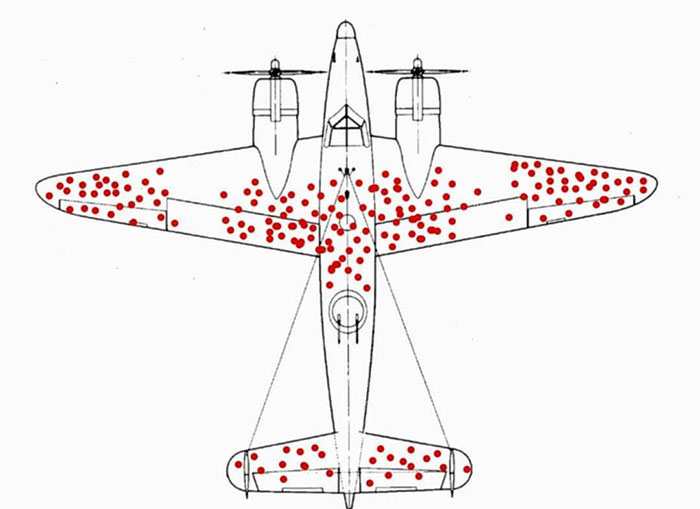
    A recent LinkedIn post alerted this writer to the inimitable perspective statistician Abraham Wald brought to the assessment of World War II Allied bomber damage upon return from missions.  He argued that observed anti-aircraft damage was non-crippling since the aircraft remained airworthy and was able to return.

    He surmised that planes that did not come home may have suffered damage to other areas making them unairworthy and hence their data was unobserved.  Based on this analysis, the U.S. Navy beefed-up armor in the less or unaffected areas and this was credited with saving lives and aircraft.

    This type of analysis came to known as Survival Bias which has its proponents and detractors.  On the surface, it seemed intuitively obvious that areas of damage need addressing while not necessarily those statistically showing fewer issues.

    It is not our intent herein to assess its merits and applicability.  Rather to help readers better understand the very nature of big data and its use, especially in predictive and behavioral models.

    Covid-19

    Today, policy and other decision makers are tasked with dealing with a deadly global pathogen.  Apparently developing quickly and spreading exponentially—a super spreading event.  As of this writing has afflicted millions in 188 countries/region in much less than 12 months.

    In this pundit’s opinion, much of the concern, confusion and clearly wrong information regarding this disease and mitigation protocols can be traced to data collection and analysis.  By now most readers will have some familiarity with the chaos associated with these predictive models.

    For example, according to the US National Library of Medicine, National Institute of Health, “A key fact for us all to remember is that, for the majority of countries, we’re not actually counting how many people have the virus—instead were counting the reports of how many people have the virus, and, like all metrics, those numbers vary according to how they’re measured.  An increase in the number of tests being carried out will result in an increase in the number of infections detected.”

    In addition to the Herculean efforts to tame this tiger from the vast medical, scientific, technology and many other disciplines, Structural Equation Modeling is being used to shed additional light on the latent variables.

    Final Thoughts

    The 2020 Coronavirus is an early test of Big Data analysis in support of decision makers both for public policy and non-government organizations.  While performance so far has been weak, this pundit believes great value can come from this effort.

    Data quality must be highly reliable and valid.  Moreover, models must assess what is not seen, the latent variables such as found in Survival Bias.  These two aspects of strong decision support models are crucial.  These are lessons for all of us.

    Where Didn’t the Bullets Hit Your Business Model?

    For More Information

    Please note, RRI does not endorse or advocate the links to third-party materials.  They are provided for education and entertainment only.

    For more information on Cross Cultural Engagement, check out our Cross Cultural Serious Game

    We are presenting, Should Cross Cultural Serious https://rri-ccgame.com/Games Be Included in Your Diversity Program: Best Practices and Lessons Learned at the Online Conference, New Diversity Summit 2020 the week of September 14, 2020.  Check Out this timely conference!!

    You can contact the author as well.

  • Technology Assessment in the Era of Minimum Viable Product (MVP)

    Technology Assessment in the Era of Minimum Viable Product (MVP)

    App developers have fallen in love with the concept of Minimum Viable Product aka MVP.  Wikipedia defines minimum viable product (MVP) as “a version of a product with just enough features to satisfy early customers and provide feedback for future product development.”

    This development model might make some sense for consumer software or even some business data analytics but how does it work for mission critical software and those apps that allow remote connectivity to those data resources?  MVP is problematic in these cases at best.

    Most mission critical software development organizations understand that robust testing is necessary, yet sometimes the specter of the MVP mentality sneaks its camel nose under the tent.  Think this does not happen?  Think again.

    The Boeing 737 Max 8 is one current example of this phenomena.  One can argue that the costs to this organization, its customers and the flying public have been astronomical and perhaps not measurable.

    Many of us will not be flying any time soon and many months ago this writer has been told by a knowledgeable individual that safe work around for the Max8 software issues have always been readily available—even before the crashes.  There is a more onerous issue that affects everyone on the planet is widely accepted by policy makers.

    We extend the construct of MVP to Minimum Viable Thought.  MVT is defined as, “The version of a decision that the decision makers believe will be accepted by organizational executives and public policy makers.”

    As of publication, this statement is posted on The Institute for Health Metrics and Evaluation (IHME) at the University of Washington.  “To construct our “Current projection” (the line that shows what we think will most likely happen), we assume that in each location the trend of easing mandates will continue at its current trajectory until the daily death rate reaches a threshold of 8 deaths per million.  If the daily death rate in a location exceeds that threshold, we are assuming that mandates will be reintroduced for a six-week period.”

    We do not dispute modelers making assumptions.  We do that same.  However, this caveat.  Decisions made based modeling assumptions such as these often lead to cataclysmic results.

    The concept of MVP can be a slippery slope.  In an era of rapid software/data release, the risk to the public whether in airplanes or a pandemic can be huge.

    The assessment of such technological solutions needs to be robust and thought through.  Not the knee jerk response often seen.

    How do you assure new technology implementation does not material negatively impact on your business?

    For More Information

    Please note, RRI does not endorse or advocate the links to third-party materials.  They are provided for education and entertainment only.

    For more information on Cross Cultural Engagement, check out our Cross Cultural Serious Game

  • Next or Back to the Future?

    Next or Back to the Future?

    Current events may have us all longing for the ‘good ole days.’  Sounds good on paper but not something any of us can realize.  Nostalgia aside we all must continue to slog on.  It is after all a one-way trip and there is no Delorean to help us.

    The Challenge of Change

    People change all the time and we have covered this before in this series a number of times.  However, some change is not without transformational difficulties.  The literature is replete with case studies where organization/industry transformation failed and sometimes spectacularly.

    Depending on one’s perspective sometime during February or March of this year, the global population became generally aware of a new and potentially devastating pathogen.  Dramatic (even draconian) measures were taken, and we were all convinced of the potential for global devastation.  Global Stay-At-Home orders wrecked economies but most of us dutifully obeyed.

    As of this writing, in a world of almost 8 billion people, according to a credible source, Johns Hopkins:

    • Cumulative Cases; Less than 8 million
    • Deaths; Less than 500k
    • Recovered; Approximately 3.7 million

    Rarely, emphasized math suggests that there are approximately 3.7 million Active cases.

    For those of you in the US (~330 million) like I am, the math looks like this:

    • Cumulative Cases; Just over 2 million
    • Deaths; Approximately 116k
    • Recovered; Approximately 560k

    Active US cases are approximately 1.4 million.

    Credibility Factor

    We have been told Covid-19 Armageddon was at hand.  Hospitals would be overwhelmed, etc.  No Mask and now Mask.  Most show few if any symptoms.  Now asymptomatic will kill the elderly and so it goes.  This list of contradictory positions goes on and change is justified by our “New Knowledge” about the pathogen.

    So What?

    Now we are told a new wave is coming from Memorial Day celebrations, protests and more from the phasing out of the lockdown.  How is the population reacting to these new pronouncements of doom?

    By engaging in normal human interactions.  Mask free in many cases to the chagrin of the medical experts.  One expert suggested that the United States does not have a coherent Covid-19 national policy.

    From my high school Civics, class, ”Enumerated powers are specific powers granted to Congress by the United States Constitution.  The framers of the Constitution wanted to ensure the new federal government would not become an overreaching entity that might subject the people to the oppression from which they had fled.  To that end, they listed, in Article 1, Section 8 of the Constitution, the authority over certain specific things.  Authority over every issue not enumerated, or assigned to Congress, is reserved for the individual states.”

    My interpretation, States are the governing body for most activities including a pandemic.

    Therefore, each state is charged with managing this process within federal law, taking guidance from resources such as the Center for Disease Control.  This is 200+ year-old policy.

    Failure to Launch

    In recent days, this writer has encountered numerous individuals seemingly in violation of the tenets of Covid-19 response.  After months of predicting the end of human interaction as we have known it and in the face of numbers that just don’t add up, we are told it isn’t over yet.  Seemingly entrenched positions prevail although data and subsequent rationale are fungible.

    Lessons Learned

    Much is being said about fundamental changes to industry, i.e., oil and gas, airlines, and others.  Societal change is presented as fait accompli and the time is now!

    The history of transformation does not support these hypotheses.

    Sustained change requires significant ongoing energy from catalysis.  Not the continuation of exogenous events but continued commitment to answer the What’s In It for Me question we all ask when confronted with a new model.

    Current events will fade and life as we knew it will likely continue.  To be sure, there will be some change but disruptive transformation in the social fabric pundits are predicting are unlikely based on the past and typical human behavior.

    How will You Assure Transformation is Sustained?

    For More Information

    Please note, RRI does not endorse or advocate the links to third-party materials.  They are provided for education and entertainment only.

    For more information on Cross Cultural Engagement, check out our Cross Cultural Serious Game

    We presented, Should Cross Cultural Serious Games Be Included in Your Diversity Program: Best Practices and Lessons Learned at the Online Conference, New Diversity Summit 2020 on April 9, 2020.  The summit will be offered again soon.  Check it Out!!

    You can contact the author as well.

  • A Funny Thing Happened on the Way to . . . Innovation!

    A Funny Thing Happened on the Way to . . . Innovation!

    The anecdote, ‘A Funny Thing Happened on the Way to’ wherever manifests itself for a number of paths.  One interpretation; we often end up somewhere other than expected.

    We find ourselves at another historical precipice.  Some suggest Armageddon, the end of life as we know it and the emergence of a new normal.  This writer only agrees with the last two words.

    New Normal

    Since the advent of Covid-19 in the United States (probably before) the medical community has been doing some great things at hyper speed.  Now it is hard to keep up with the creative, innovative and downright amazing work being done at the global scale.

    Some argue that the new normal will include an army of remote workers.  Probably some truth to that but perhaps more importantly will be the recognition that society can quickly ‘scale’ to the global level when confronted with new and unknown threats.

    Reduced Cycle Time and Cost

    This pundit has long advocated that the use of knowledge enabled by technology can reduce project cycle time dramatically.  It can also significantly reduce project cost as well.  If we visualize the Covid-19 global initiative as a project, then perhaps most importantly we can decrease the timeline pointedly.

    To be clear, this writer has no medical training and is only prognosticating that the use of knowledge enabled by technology can reduce the overall time and impact of the pandemic.  After all, this is not 1918!

    For example, many will be familiar with the TV sitcom, M*A*S*H, set in the Korean War of the early 1950s.  We are seeing modern day versions of the Mobile Army Surgical Hospital with the deployment of new ‘temporary’ hospital beds to virus hot spots like NYC.  The medical profession has established long standing triage protocols as well.

    Moreover, the use of 3D printing has augmented the medical equipment manufacturing process in ways no one could have foreseen on January 1, 2020.  Changes in Clinical Trial protocols and other pharmaceutical related processes are, as the saying goes, ‘on steroids’ destroying this virus.

    The list goes on and shortly after this publication, this post will probably be outdated—the rate of positive change is so explosive right now.

    Donald Rumsfeld gets credit for saying, “There are known knowns.  These are things we know that we know.  There are known unknowns.  That is to say, there are things that we know we don’t know.  But there are also unknown unknowns.  There are things we don’t know we don’t know.”  However, this construct has its roots in the 1950s.

    I am betting that last sentence will fall sooner rather than later.  We are rapidly learning what we don’t know we don’t know.

    Godspeed to all on the front line and those of us who are not will continue to support you in every way known and about the be known that we can.  This writer grows less concerned about the final outcome every day.  It seems that collectively Humankind is rising up to the challenge.  We will prevail!

    How is your knowledge enabled to contribute to the demise of this pandemic?

    For More Information

    Please note, RRI does not endorse or advocate the links to third-party materials.  They are provided for education and entertainment only.

    For more information on Cross Cultural Engagement, check out our Cross Cultural Serious Game

    We will be presenting, Should Cross Cultural Serious Games Be Included in Your Diversity Program: Best Practices and Lessons Learned at the Online Conference, New Diversity Summit 2020 beginning April 5, 2020.  Check it Out!!

    You can contact the author as well.

  • Is Big Data Analysis Being Applied?

    Is Big Data Analysis Being Applied?

    We have been hearing for years how, Big Data Analysis will help us optimize our businesses and generate performance at levels here to for never hear of.  So where is it now?

    Two major sources for data on the Covid-19 virus are Johns Hopkins University and the Centers for Disease Control and Prevention.  This is fine at one level.  Living in the Houston, Texas metropolitan area, this pundit can see a general (real time) overview of the situation from either.

    However, my home is on the west side of the city.  I was recently surprised to learn that most of the local exposure is on the east side; 30+ miles from my domicile.  Is my risk lower than I am being told by the authorities?  Or is it the same or higher?

    Why am I staying at home?  Perhaps the result of a blunt policy instrument?

    It appears to me that most medical professionals are not Data Scientists.  Absolutely knowledgeable in their field, including pathogens (I personally know many in the field including a pathologist).  Is that system taking help from data scientists?  I have not heard that it is.

    Additionally, if the argument is we don’t yet have enough data, this holder of a doctoral degree will argue that Small Data set modeling can be effective as well.  My doctoral dissertation was founded on these statistics.

    I have no doubt that the best minds are working this problem.  However, if policy makers take a hammer to the nail, when perhaps a series of tacks is appropriate, significant economic damage will continue.

    The tack approach appears to be what we are hearing about certain parts of the United States coming back online in a week or so.  The concept of months some advocate makes no sense to this writer.  We will see social unrest long before that.

    The Big Data Analysis sector has been pressing their value proposition and software/solutions for years as a way of optimizing businesses.  Why is the sector quiet regarding coronavirus?

    If we can parse data and sell web advertisements based on ‘clicks’ why can’t we figure this out a level of granularity that allows the economy to restart (at least in some geographies)?  Get to work guys and prove my concerns wrong!

    Finally, what is the role for Artificial Intelligence (AI)?  Its advocates suggest it has magical powers and it  has been used to solve other problems.  Prove it on this global stage!

    Where are Big Data and AI in this fight?

    For More Information

    Please note, RRI does not endorse or advocate the links to third-party materials.  They are provided for education and entertainment only.

    For more information on Cross Cultural Engagement, check out our Cross Cultural Serious Game

    We will be presenting, Should Cross Cultural Serious Games Be Included in Your Diversity Program: Best Practices and Lessons Learned at the Online Conference, New Diversity Summit 2020 beginning April 5, 2020.  Check it Out!!

    You can contact the author as well.

  • To KISS or Not?

    To KISS or Not?

    According to legend, the term KISS or ‘Keep It Simple, Stupid’ was coined by Kelly Johnson, lead engineer at the Lockheed Skunk Works and noted by the US Navy as early as 1960.  Subsequent phrases such as ‘Less is More’ followed.

    At first glance, it makes sense not to overly complicate a product, process or project.  Certainly, a non-technical audience such as senior management will need to the issue and risk management strategy explained in terms they understand.  However, in our search for Red. Yellow, Green ratings are we overly simplifying complex environments?

    Albert Einstein is created with saying, “Everything should be made as simple as possible, but not simpler.”  This begs the questions, where is that line and how do you know if you’ve crossed it?

    One of the mantras of the High Reliability Organization Mindfulness is, Preoccupation with Failure.  This is not defined as with Normal Accident Theory, where failures are inevitable.  Rather, it is an understanding the modern complex systems one must be resolute in one’s focus on operational issues and rapidly move to normalize out of limit situations.

    In 2016 (and earlier) we made the case that after the Ebola outbreak in Dallas, the Public Health sector was resilient and that issue was contained quickly (links to all three parts of this series provided below).  In this writer’s opinion, this was not possible if the process was ‘worked’ at a too simple level.  Lessons learned from that and other contagion incidents may be useful combating Coronavirus Disease 2019 (COVID-19).

    The overused phrase, “failure is not an option” is the root of contemporary Operational Excellence business models.  In fact, failure happens but mitigating its impact and rapidly recovering are the hallmark of successful organizations.

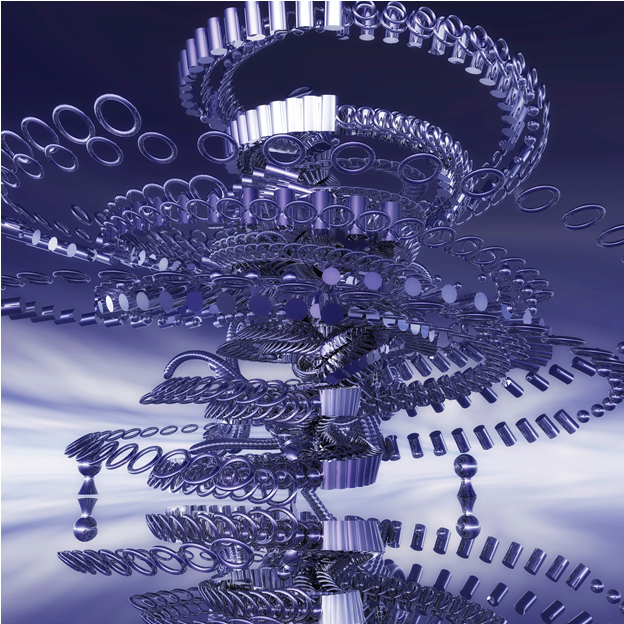
    The graphic is a fractal.  From the Fractal Foundation, “A fractal is a never-ending pattern.  Fractals are infinitely complex patterns that are self-similar across different scales.  They are created by repeating a simple process over and over in an ongoing feedback loop.  Driven by recursion, fractals are images of dynamic systems – the pictures of Chaos.  Geometrically, they exist in between our familiar dimensions.  Fractal patterns are extremely familiar, since nature is full of fractals.  For instance: trees, rivers, coastlines, mountains, clouds, seashells, hurricanes, etc.”

    Our world is a complex place.  Processes and technologies must deal with that fact.  Successful risk management strategies must take Einstein’s wisdom into consideration.

    Does Your Organization Have a Robust Enterprise Risk Mitigation Strategy?

    For More Information

    The Three-Part Series Referred to in this blog:

    Please note, RRI does not endorse or advocate the links to third-party materials.  They are provided for education and entertainment only.

    For more information on Cross Cultural Engagement, check out our Cross Cultural Serious Game

    You can contact the author as well.

  • 10, 20, 30, 40, 50 or More!

    10, 20, 30, 40, 50 or More!

    The advent of 5 G so soon after 4 G—Humm.  What’s next?  How many G’s are there?

    In 1965, Gordon Moore put forth the construct that the density of transistors in integrated circuits doubled each year.  The so-called Moore’s Law has governed technology growth ever since.  However; over 50 years later, some argue that we may be far up that power curve.  One conjectures if the latter statement is correct.

    In 1899, Charles H. Duell then the Commissioner of US patent is purported to have said, “Everything that can be invented has been invented.”  Mr. Duell died in 1920 so he missed many of the ‘new’ things we now take for granted.

    Marketers tend to categorize in buckets; Boomers, Gen Xers, Millennials and so forth.  Do any of these labels matter?  Probably not.  The same is true for technology tags as well.

    Life, technology, knowledge et al marches on, just like it has throughout human history.  Will we see the advent of 50 G networks?  Most likely; with 100 G hot on its heels!

    Less we forget, the current version of the cell phone (iPhone and its equivalents) was first released in 2007.  Much has changed in the last 13 years and we can expect that arc to continue with disruptive new mobile technology crashing in at some point.

    Agility

    Most think of an ‘agile enterprise’ as information technology driven.  In this writer’s opinion, this is a narrow perspective.  The word ‘agility’ is defined in terms of power and thinking.  In other words, the ability to make good decisions with the capacity to implement them.

    In this hyper-technology environment, it is not the adoption of a particular rendition, but the capability to incorporate the appropriate new in an economic manner.  This is true whether the organization is an ‘early adopter’ or even a ‘laggard.’

    For decades, organizational strategy has been enabled by technology.  There is no reason to change that model with many G’s to follow!

    How Does Your Organization Ingest New Technologies?


    Enjoy this flash back to the 1960’s.

    For More Information

    Please note, RRI does not endorse or advocate the links to other third-party materials.  They are provided for education and entertainment only.

    For more information on Cross Cultural Engagement, check out our Cross Cultural Serious Game

    You can contact the author as well.

    End Notes

      https://en.wikipedia.org/wiki/4G

      https://en.wikipedia.org/wiki/Moore%27s_law

      https://www.dictionary.com/browse/agility

      https://en.wikipedia.org/wiki/Technology_adoption_life_cycle

  • Running Across an Open Field: Strategy for Disruptive Technology?

    Running Across an Open Field: Strategy for Disruptive Technology?

    Several weeks ago, as an amateur history buff, I was watching a documentary about World War I.  During one segment the commentator discussed the apparent fact that if soldiers refused to charge out of their trenches across an open field into the teeth of waiting machine guns they would be shot.

    The brutality of such a command by (so-called) leadership is appalling.  It may have been one thing for Alexander the Great’s armies to engage in open battles with sharp pointed objects as weapons.

    It is quite another for General Pickett’s infantry at Gettysburg to charge cannons and 50+ years later to repeatedly try the same tactic (by both sides) at horrific costs.  Generals always fight the last war, so the saying goes.

    This blog is not about some of history’s follies, it is about learning so as not to repeat the mistakes of others.  These lessons apply to readers’ daily business world as well.

    When New Technology is Deployed

    New disruptive technology can tear the societal fabric.  Some old jobs and companies disappear, and new ones thrive.  This process has been repeated since antiquity.

    Our culture is having this dialogue today regarding digitalization and its suite of technological driven change, i.e., Blockchain, AI, etc.  Principal issues that must be addressed include Human Factors Engineering (HFE).

    “HFE places the human operator at the center of the complex operating environment.  HFE recognizes that this individual or set of individuals is the puppet master and is responsible for the entire show.”  In other words how do we interact with the new technological reality.

    Reliable and valid HFE is the key to successful digitalization initiatives.  It will be the vital to whatever is next as well.

    Tyranny of the Minority

    From political science, “For centuries, theorists have worried about the potential of unrestrained democracy to lead to a tyranny of the majority, in which majority groups ride roughshod over the rights of minorities.  What we often see today is instead a kind of tyranny of the minority: a system in which a particularly extreme and motivated fraction of the populace can wield outsized power in the face of a majority which is either too indifferent or too scared to oppose it,” (italics added).

    In most organizations, there are fewer leaders than those who fabricate a ‘work product.’  The responsibility of leadership is to set the vision, mission and goal as well as enabling the organization with the tools and support necessary to reach targeted stakeholder value.

    But what if this minority group is the slowest to come to grips with disruptive forces?  In the face of newness, they may ‘keep doing what they have always been doing.”  In such an environment, the organization will likely not reap the same reward as in the past.

    Does too indifferent or too scared describe your organization’s ecosystem workforce?  One suspects It would be good to know.

    Fast Fail

    In our last blog we discussed the rapid assessment of technology and when to drop it if it does not appear to be working out.  Perhaps, we should treat managerial processes the same way.  After a horrific and visible failure in leadership, conceivably one preserves best by looking for alternative?

    If charging head long across an open field leads to disaster, why keep doing it?  While a counter argument might be that we had no tools to defeat those equipped with the new technology, to this writer, that logic is suspect.

    Flanking an enemy’s line or using guerrilla tactics, et. al. are as old as human confrontation.  Unconventional warfare has a long record of documented success.

    The business lexicon is loaded with military terminology.  We often speak of business as if it is warfare, when of course it is not.  There are lessons to be learned about human and organizational behavior, however.

    Decades ago, the concept of Guerrilla Marketing was the rage.  With the advent of social media, it has advanced, and the methodology is available to all.  Huge budgets and massive media campaigns are no longer necessary.

    Head-to-Head the biggest ‘guy’ usually wins.  So, if you’re not him/her, DON’T DO IT!!  However, the small mammals may displace slow moving dinosaurs.

    Agile is not an IT term.  It should be the state of mind of leaders at all levels.  To charge across the open business landscape into technology designed to destroy your organization remains folly.

    How Are You Leading the Charge into the Future?

    For More Information

    Please note, RRI does not endorse or advocate the links to other materials.  They are provided for education and entertainment only.

    See this 3:15 minute clip for more information on living in a World War I trench.  Pathetic way for leaders to force those under their command to live.

    For more information on Cross Cultural Engagement, check out our Cross Cultural Serious Game

    You can contact the author as well.

    End Notes

      https://consult2050.com/job-disruption-due-to-digitalization/

      https://therrinstitute.com/wp-content/uploads/2018/10/HRM-in-Process-Industries-Sustained-by-Human-Factors.pdf

      Ibid.

      https://areomagazine.com/2019/04/02/the-tyranny-of-the-minority-and-how-to-prevent-it/

      https://therrinstitute.com/lessons-from-the-seventies/

      https://en.wikipedia.org/wiki/Guerrilla_marketing

  • In Defense of Humans—Machines Are Not Ready Yet

    In Defense of Humans—Machines Are Not Ready Yet

    I recently submitted an internal organizational document that was spellchecked in addition to my review; several times.  One sentence where there the intent was to say, “that which is …” was change to “that witch is …”

    Did I type it wrong or did ‘auto correct’ take over the decision process?  In any event spellcheck did not perform adequately against minimal Quality Assurance standards.  And how many of us ‘fat finger’ text messages?

    Is this is the technology that is going to drive me to work safely over 200 days a year; round trip?  I hope not.

    One pervasive message—technology gets better with time (more mature).  Is this true?

    How old is spellcheck?  By some accounts it dates to the 1960s.  Most believe by the late 1970s.  So close to half a century.  Yet!

    Usually a spellchecker is not used in a life or death situation.  That is unless it’s for your resume or job application!  However, what about software that is utilized for critical processes, i.e., medicine, process control, etc.

    There are many examples where apparent software failures have negatively impacted human life.  This pundit has written this subject including a look at Man Machine Codependency.  In another blog we commented on problems associated with valid and reliable analysis of Big Data.

    In this author’s opinion, software is getting better and while most likely will not be perfect, will change our daily processes.  The human overlords will need to be trained and/or retrained for the digitalization era.

    This cautionary tale is not about this writer’s inability to use word processing tools.  As we depend on these tools for critical decision making, we must have the core knowledge of the subject we are tackling.

    During a class on digitalization for my master’s level students, I put forth several examples where errors were made by various software applications.  Most had a level of comedy to them, but ALL have potential real-world consequences (bold font).

    • All People in Canada are the Same AgeDemographics for Census or Marketing
    • In Excel 2007, multiplying 77.1 times 850 yielded 100,000 instead of the accurate answer 65,535—Accounting or Engineering
    • The Making of a Fly, a classic work in developmental biology, was listed on Amazon.com as having 17 copies for sale: 15 used from $35.54, and two new from $23,698,655.93 (plus $3.99 shipping)–Procurement
    • Finally, Airline Disaster on AutopilotSafety for the Traveling Public

    This writer has authored books, articles, speeches, presentations, and blogs for many years.  Arguably, he can claim some experience as a writer.  Subject Matter Expert?

    In one instance, the ‘witch’ word won over my intent.  Did the technology cause this error?  Probably, as the goddess of Halloween is not something I typically pontificate about—not on my radar, so to speak.

    Humans can rule for the foreseeable future.  That is unless we seed to the technology.  Most importantly, algorithmic errors can lead to cataclysmic business and even life events.

    Finally, I spellchecked this blog before publication, and it caught the ‘witch’ word this time.  Go figure.

    How Prepared is Your Organization to Oversee the Digitalization Transformation?

    For More Information

    Please note, RRI does not endorse or advocate the links to other materials.  They are provided for education and entertainment only.

    You can contact the author more information as well.

    End Notes

      https://en.wikipedia.org/wiki/Spell_checker

      https://therrinstitute.com/wp-content/uploads/2018/10/Man-Machine-Codependency-September-22-2014.pdf

      https://therrinstitute.com/wp-content/uploads/2018/10/Big-Data-Revisited-December-15-2016.pdf

      https://consult2050.com/job-disruption-due-to-digitalization/

  • Brand Your Digital Oilfield Culture: Internalize Its Transformation

    Brand Your Digital Oilfield Culture: Internalize Its Transformation

    Our recent article, “The Digital Oilfield Culture: Transformation Value for the Organizational Ecosystem” (pp.24-26) takes a somewhat different change management approach.  Why not brand your digital oilfield culture?

    Most consumers are familiar with the so-called ‘Brand Name.’  These are names so ubiquitous that in some cases that we take them for granted.  Soft drinks, beer, fast food and automobiles are only a small sample of ‘product/service’ brands most can immediately relate to; even subconsciously.

    Hearing a brand name elicits a response, usually positive but possible negative as well.  This is the way organizations seek to have their product become part of the lexicon.  Examples include Xeroxing and Googling among others.

    Digital Oilfield Culture

    “Systemic Digital Oilfield Culture can be defined as the Core Set of Values and Behavioral Economics of ALL participants of the extended organization and its Enterprise Risk Management strategy that reflect a Strong Bond Governance commitment to behaving as a High Reliability Enterprise Ecosystem in a Safe and Environmentally responsible manner.”

    Ok, while accurate, this author’s definition of a Systemic Digital Oilfield Culture may be stiff and boring to some.  What does it mean to me and why do I care?

    As noted in past blogs and written pieces, a successful cultural transformation must address the. “What’s in it for ME” question.  Moreover, the answer must make sense to me if I am to internalize it.

    Taken from consumer marketing a, “Brand Essence is the emotional heart of a brand, summed up in a few words.  The Brand Essence Wheel is a format for capturing and communicating the conceptual subtleties of the brand.” (Chung and Doran, 2016).

    Successful brand strategies can create fierce lifelong loyalties, i.e., the cola wars of the 1970’s attempts to capture the emerging Baby Boomer demographic.  So why not take advantage of this marketing strategy when transforming the culture of an organization?  Create these fierce loyalties for your organization’s success!

    Brand Wheel Construct

    In accordance with the theory, the Digital Oilfield Culture Brand Wheel (First Draft) is composed of two major categories:

    Facts & Symbols or those components of the Brand that address the “hard” and often more measurable aspects.

      • What the Culture does do for ME
      • How I would Describe the Culture

    Brand Personality addresses the more emotional side of the Brand

      • How the Brand make ME look
      • How the Brand makes ME feel

    The wheel is then populated with those criteria of interest to the organization (generally developed through a series of workshops at all levels of the firm and its ecosystem).  One example is depicted in the following (Version 1.0) graphic.

    Final Thoughts

    There is a significant body of knowledge about the highs and lows of organizational transformation/change management.  The preponderance of the evidence suggests the transformation of a digitalized organization is difficult and often fleeting.

    The B2C sector has demonstrated repeated and sustained success creating perceived value to the individual (ME).  In B2B sectors, Rah Rah, executive sponsorship, training, etc. all have their place with change.  Yet, this is approach has proved wanting.

    Most importantly, strong Brands are sustained when the Rah-Rah fades.  Just Do It is the tag line of one major brand.  Betting most readers know what firm that is.

    Is Digital Oilfield Cultural Branding in Your Organization’s Future?

    For More Information

    The complete article is available from Petroleum Africa magazine and a ‘for fee’ copy can be downloaded.  In addition to a more detailed discussion of the branding process, it contains a high-level Implementation Plan.

    You can also contact the author as well.

    End Notes

      Shemwell, Scott M. (2019, May/June). The Digital Oilfield Culture: Transformational Value for the Organizational Ecosystem. Petroleum Africa Magazine. Issue 3. pp. 24-26.

    Petroleum Africa magazine has graciously allowed the re-publication of this edition.  See our full article.

      Ibid.

      https://en.wikipedia.org/wiki/Cola_wars

  • What Lies Beneath the Surface of Your Organization: Structural Dynamics?

    What Lies Beneath the Surface of Your Organization: Structural Dynamics?

    As the officers, seamen and passengers of the Titanic came to understand, it is not what you can see that gets you but what is below the visible surface.  Visualizing the unseen remains a continuing challenge.

    The current president of the United States is by many accounts the most unlikely political victor.  He is not from the ‘industry’ and has limited experience in this field of endeavor.  None-the-less, he holds the office.

    The results of the US presidential election of 2016 is the subject of innumerable discussions.  Most center around the performance of his opponent and missed opportunities by the opposing party.  This pundit argues that neither of these are the prime reason for his election.

    Almost 30 years ago this writer was a member of the Leadership Team for a major publicly traded company.  Multiple reorganizations and the advice of numerous consulting firms did not enhance our position in a difficult market.

    Something we did not understand was at work.  Why couldn’t those with decades of managerial/industry experience and all the experts fathom the forces at work?  Unless, we could no action taken would be effective.

    What are Structural Dynamics?

    During this period, management theories abounded.  Examples included The New Realities by Drucker, The Fifth Discipline by Senge and Economic Value Added (EVA) to name a few.  None seemed to be able to help us understand the latent forces that eluded us.

    As part of the doctoral dissertation, assessing cross cultural negotiations and the relationship between human Relationships, Behaviors, and Conditions (RBC) we enhanced existing theory into an actionable methodology, Structural Dynamics.

    The fundamental premise upon which the theory of Structural Dynamics is developed is the belief that structures are not static and that more often than not, these dynamics are not directly observable.

    Over time, the very nature of the structure and the very nature of the component parts of the structure may be radically different from today’s composition.

    In other words, Structural Dynamics is defined as “the morphology or patterns of motion towards process equilibrium of interpersonal systems.”  While this sounds academic, the implementation is straightforward.  Think of this as an iceberg.

    The Iceberg Principle—90% of any system’s structure is below the surface or hidden from direct observation.  This latent component controls all the processes associated with the system.

    Implementation

    While there is a quantitative aspect to Structural Dynamics, analysts can use this qualitative approach.  There is plenty of information available; however, it can be challenging to shift through it and separate actionable data from noise.

    For example, while it was evident for all to see most prognosticators wrote off the Trump rallies and the size of the crowds.  Similarly, Xerox had most of the technology for today’s PC, but it took Apple and others to realize the value.

    Think these are remote and one-off events?  Only 60 companies that were members of the Fortune 500 in 1955 were still members in 2017.  Some mergers for sure, but why did the others not see the waves that swept them away?  Sears is a recent example.

    Assessment

    Structural Dynamics analysts can use the following checklist as guidelines.  This list is not all-inclusive, nor is it meant to be a list that one simply puts a check mark next to and tallies up the number of checks versus not check.

    It is more accurately a framework for developing a Structural Dynamics model for any given industry environment.  The following criteria provide a preliminary checklist of set of questions that should be addressed when one seeks a better understanding of the latent variables associated with an industry segment or emerging environment, such as new technologies.

    1. Not obvious or normally thought of as industry driver
    2. Usually not directly related to standard industry practices
    3. Becomes more visible over time or repeated measurement
    4. Often not specific to a single industry or economy
    5. Cannot be determined by analysis of best practices
    6. Typically, not associated with a single or few number of processes
    7. Not associated with processes in a single firm
    8. Can be cyclical or seasonal in nature
    9. Not necessarily random or chaotic events in nature
    10. Not necessarily economic variables in nature
    11. Tend to be long term variables with limited reaction to specific current events
    12. Can remain dormant for long periods of time, but when they become visible the impact can be significant and swift
    13. Demographics may provide insight into emerging or future Structural Dynamics, they should not be used exclusively
    14. Often small niche (or new) players may benefit from Structural Dynamics These niches are often outside of the industry of interest, but are subsequently imported into the industry of interest
    15. Technological developments may forecast future competitive events, i.e., the impact of cellular phones on the pay phone industry
    16. Not all technology is useful in the near term. The technology developed by Xerox, Palo Alto in the 1960s was not commercialized for almost 20 years.

    Computer icon and windows technology was not commercially viable until Steve Jobs (founder of Apple Computer), and Bill Gates (Microsoft) expanded hobbyist’s niches into the personal computer revolution of the 1980s.

    Knowledge of Structural Dynamics variables can defeat the brute force of large deep-pockets organization, although this is not guaranteed.  As this construct evolves, we expect to develop a more robust set of tools, so managers and other practitioners will be better able to visualize their Structural Dynamics environment.  In the meantime, it is useful to define latent variables.

    Latent Variables Are impacting Your Organization.  What Will You Do About it?

    For More Information

    Much of this blog is taken from our monograph, Structural Dynamics: Foundation of Next Generation Management Science.  The Kindle version is available from Amazon https://www.amazon.com/gp/product/B00U0JKMT0/ref=dbs_a_def_rwt_bibl_vppi_i1

    Fundamental to our Operational Excellence Platform, also see https://therrinstitute.com/structural-dynamics/

    End Note

      http://www.aei.org/publication/fortune-500-firms-1955-v-2017-only-12-remain-thanks-to-the-creative-destruction-that-fuels-economic-prosperity/

  • Three Years—Ten Months: How did they do it?

    Three Years—Ten Months: How did they do it?

    The United States officially entered World War II on December 8, 1941.  The war in the Pacific formally ended on September 2, 1945.

    A recent documentary on one of the history channels chronicled the path the United States took from a nation with an underdeveloped military to global dominance over this period.  What struck this author was the technological distance covered.  Not just marshaling the military and civilian workforce, but how heavy industry, including maritime (ships), aircraft, and weapons advanced so quickly.

    Some might say that this period was unique in human history with a strong focus on the survival of the nation.  No doubt this line of thinking persisted at the time, but perhaps something else was driving this behavior.

    Crisis Management is appropriate when nations, industrial sectors, organizations and even individuals are in times of stress.  By some accounts, the managerial prowess of this period stems from the knowledge of industrial manufacturing and logistical processes. 

    While the ‘War Agencies of the Executive Branch of the Federal Government’ played important roles in this wartime effort, it was not this alone that caused a juggernaut to appear.  The size of the United States, “prewar technological industrial base” and “large population” were also contributing factors.

    Large scale hostilities brings a spotlight that is not normally held during peace time.  The fight or flight instincts of all humans help bring focus in times of trial.  However, organization and management are important for societal success for either option.

    Attaining and sustaining Critical Mass in those Critical Success Factors (CSFs) were key to enabling the rapid ascent to industrial might.  Has anything changed?

    Parallels to Today

    A recent article, The Oils Shock That Never Was, reflected on the advancements the upstream oil and gas sector made during the recent downturn.  The piece makes the case that while most prognosticators predicted so-called doom and gloom often associated with downturns, the opposite seems to have happened, particularly in the shale space.

    In a previous blog, we put forth the rationale that Operational Excellence is the key to strong financial performance.  The Oil Shock article documents the transformation of the overall industry Cost Structure.  Operators are also focusing on sectors where profits are possible at current commodity price points.

    Moreover, firms are capitalizing on existing infrastructures that are supported by new technologies.  This sounds familiar to the behaviors of economic actors almost eighty years ago!

    However, challenges remain for service sector providers.  Could these firms utilize World War II business models employed by shipbuilders in the 1940s?

    Does Your Organization have Critical Mass for its CSFs?

    For more information:


      https://www.files.ethz.ch/isn/23588/mcnair50.pdf

      https://www.rigzone.com/news/the_oil_shock_that_never_was-30-jan-2019-158034-article/?utm_campaign=WEEKLY_2019_02_01&utm_source=GLOBAL_ENG&utm_medium=EM_NW_F1

      https://therrinstitute.com/beat-the-market-can-operational-excellence-increase-eps/

  • Millennials Take On Our Increasingly Complex World

    Millennials Take On Our Increasingly Complex World

    Originally published in 2013.

    On January 1st at 0348 hours a young engineer employed by a service company is trying to address a problem she has encountered with a compressor on a drilling rig in the Deepwater Gulf of Mexico.  She graduated from college three years ago and went to work for a large energy services company.  However, several months ago she changed jobs and is now on her first offshore hitch as team leader with her new company, a similar size global energy services company.

    She is a competent engineer but is uncertain what the company policy is regarding a piece of rotating equipment that while seemingly malfunctioning does not appear to jeopardize safety, the environment or production at the present time.  But she worries that the situation could get worse.

    A quick call to the “graveyard” shift at the company onshore Operations Center is not reassuring.  Staffed by those who are too junior to be on vacation during the holiday season, the engineer she talked with had only been with company three years and actually had less field experience than she did.  His supervisor was not encouraging either.  Should he call and wake experts at this early hour?

    Adding to the problem, the compressor’s data plate was mostly unreadable.  And of course, a famous Texas blue northern was blowing through.  High winds, rain and cold temperatures further impaired proper equipment identification, much less working conditions.

    Both the field engineer and the operations engineer are aware that their company signed a Bridging Document with their customer as part of the new Safety and Environmental Management System (SEMS) regulatory requirements and both had attended the appropriate training for this project.  Both are knowledgeable that the Stop Work Authority (SWA) gives them the right and even the obligation to dramatically intervene with operations if they feel it necessary.

    As a new mom, the field engineer is concerned that she might develop a reputation in the company as a “flaky” female if her next decision turned out to be a mistake.  The engineer at the operations center was receiving real time data feeds from the rotating equipment but he could not “feel” the vibrations like the on-site individual could and the equipment was still within tolerances.

    Horns of a Dilemma

    The engineers in our story are competent, qualified individuals doing a great job.  Early in their careers, they are the vanguard of field operations.  Millennials by label, they are technologically savvy and among the best and the brightest in their fields.

    Things never go “bump in the night” during daylight hours in perfect weather, hence the colloquial term.  Moreover, the personal stress of a new mother concerned about her reputation and opportunities for promotion resulting from just another day at the “office” should not be underestimated by those desk bound or later and more secure in their careers.

    The real world of field operations can be very unforgiving even when the results turn out OK.  All of the individuals in our story have significant “skin in this game.”

    It is fine to “empower” people in the team building sessions.  It is an entirely different story in the middle of the proverbial stormy night when one’s career and reputation are on the line.  Field personnel must believe they company will stand behind their decisions, right or maybe less so.

    Enablement

    These best and brightest can only be as good as their supporting infrastructure.  These individuals not only face engineering issues, any actions they take must be in accordance with company policy, the Bridging Document and various regulatory compliance requirements as well.  This is a lot to put on the plate of an engineering team.

    However, since their childhood these individuals have been online.  Our field engineer mother looks in on her infant son at day care from her smart phone from a hundred miles offshore.  The operations center engineer routinely Skype’s with his girlfriend, a physician, who is in east Africa serving with Doctors Without Borders.

    These individuals are at the top of their technological game.  However, they lack the field engineering experience of their more seasoned colleagues.  This represents a demographic challenge for organizations in the middle of the Big Crew Change.  How do these young people come up to speed—quickly?

    Organizations not only depend on the individuals depicted in our story for their bottom line, shareholder value is at risk if they cannot prevent the next major mega-disaster.  And what if they can prevent a minor incident?

    Loss time, loss production, loss anything has economic consequences.  Most organizations run on margins that are thinner than they would like.  Oil companies are included in this group.  More importantly, energy service provider margins can be even lower.  This business model pushes our engineers to lower costs, reduce downtime and in some cases push the envelope.

    Millennial Transformation

    Out engineers appear to have the deck stacked against them.  Normal Accident Theory (NAT) with its roots in the Three Mile Island nuclear power plant incident suggests that tightly coupled technologies with invariant sequences and limited slack such as Deepwater drilling operations will have accidents in the normal course of events.  In other words there is a certain inevitability of a major incident on their watch.  Maybe not during this rotation but a certain possibility during their careers.

    However, these Millennials have a safety arsenal their parents did not—a new business model that capitalizes on their technology prowess.  The emerging field of High Reliability Theory (HRT) “emphasizes are a strategic prioritization of safety, careful attention to design and procedures, a limited degree of trial-and-error learning, redundancy, decentralized decision-making, continuous training often through simulation, and strong cultures that create a broad vigilance for and responsiveness to potential accidents.”

    Arm field engineers and graveyard operations watch colleagues with HRT driven policy and associated tools and then get out of their way.  A strategic or systemic safety model with a holistic perspective of the life cycle the process coupled with truly empowered key personnel trained with the latest learning tools in a strong Culture of Safety offer a new perspective for a new workforce.

    Aircraft pilots routinely retain and upgrade their skills in sophisticated flight simulators.  “What If” scenarios, whereby the team can learn by trial and error environment where the worst result is a computer animated “do-over.”  Other industry sectors train using this well documented successful approach.

    In a true Culture of Safety a mom would not worry about her job or career if she erred on the side of safe operations.  She would not be labeled nor would her co-worker in the Operations Center hesitate to wake up the experts New Year’s Eve.

    Finally, if the maintenance history and all updated equipment manuals were available on a Smart Tablet with training videos and animation support, trepidation by those new to the company/process would lessen.  Organizational policy, its Operations Management System and bridging documentation built into the workflow will enable better decision making in the High Reliability Organization of the near future.

    A decade ago the digital oilfield was labeled the Digital Oilfield of the Future.  Integrated Operations is a common model today.  The Millennial’s World-of-the-Future will mirror the concepts of an HRO.

    Will she be working for you or your competitor?

    End Notes

    http://www.doctorswithoutborders.org/

    Weick, Karl E., Sutcliffe, Kathleen M. and Obstfeld, David. (2008). Organizing for High Reliability: Processes of Collective Mindfulness. In Arjen Boin (Ed.), Crisis Management Volume III. (pp. 31-66). Los Angeles: Sage.

    Ibid.

  • Command and Control: Is this the Way to Run the modern Railroad?

    Command and Control: Is this the Way to Run the modern Railroad?

    The managerial model, Command and Control (C&C) dates back to the dawn of humanity when tribal chieftains dictated the behavior of the group.  It survives to this day in many forms.  Typically, one thinks of military operations as the current manifestation of C&C in the western world.

    According to Wikipedia, by one definition found in The US Department of Defense (DOD) Dictionary of Military and Associated Terms, “command and control functions are performed through an arrangement of personnel, equipment, communications, facilities, and procedures employed by a commander in planning, directing, coordinating, and controlling forces and operations in the accomplishment of the mission.”  This definition has evolved from a more simplistic version found in the Cambridge Dictionary, ”situation in which managers tell employees everything that they should do, rather than allowing them to decide some things for themselves.”

    One suspects that most laypeople believe the latter definition to be to be the typical approach to C&C in their organizations.  In today’s complex (often global) organizational ecosystem, that version is outdated.

    The International Command and Control Institute, publication (circa 2005) , Understanding Command and Control develops this management construct in great detail.  As the following figure suggests, even a simple C&C structure such as a heating/AC system is driven by a set of KPIs.

    This is indicative of the digitalization of the system versus the analog controls many of us can recall from our youth.  Adding another layer, today’s ‘Smart’ thermostat operates within a well-defined governance schema such as the Internet of Things.

    Strong Bond Governance

    We first made the case for “Strong Bond Governance” in our September 17, 2013 Governing Energy blog, Strong vs. Weak?  In Critical Infrastructure sectors such as energy, medicine, etc. as defined by the US Department of Homeland Security we make the case for the construct of High Reliability Management (HRM).

    The Strong Bond Governance (SBG) paradigm enables HRM.  SBG demands Board of Directors and C Suite engagement in operations.

    Not directly but by putting in place a governance structure.  This has not always been the case with a number of catastrophic man-made disasters as the result.

    In some ways, C&C mimics HRM.  However, there are some significant differences.  HRM sets in place a structure designed to meet the test of adversities.

    • Preoccupation with Failure—a recognition that ‘failure is an option’ and the organization must respond quickly and effectively to mitigate exposure and recover. C&C does not directly address is concern.


    • Reluctance to Simplify—today’s organizational ecosystems are complex. Reducing operational decisions to the so-called Power Point three bullets, High, Likely, Low is completely unsatisfactory and potentially exposes the firm to business or technical process catastrophe.  Likewise, C&C models do not directly address this approach.


    • Operational Sensitivity—the field is where organizational action is, and senior management must have a focus on this critical component of the business. C&C also has a focus on operations, especially in the military sector.


    • Resiliency—things will go ‘bump in the night.’ Organizations must but in place the processes and expertise to rapidly respond to goblins that will be encountered.  C&C does not address this process.


    • Deference to Expertise—engage those who have the ‘know how’ to solve problems and that is mostly likely not the management team. This is substantially difference than the C&C model

    HRM allows management to look at computer dashboard and get a snapshot of most if not all aspects of the organization.  However, this does not mean that these individuals can manage from afar.  Those closed to and more knowledge about this issue must take the lead.

    Concluding Thoughts

    Watching the news, History Channel and/or various movies, one can see that even the military no longer uses simplistic C&C.  Small semi-autonomous teams take on the bad guys.  To be sure there is a Mission, Rules of Engagement and other governance controls in place.

    This provides local commanders the latitude needed to accomplish the mission at a minimum of human (good guy/non-combatants) and other collateral damages.  Additionally, military aircraft employ ‘High Reliability Management’ techniques where the expertise of the entire crew is used rather than the Captain dictating operational performance.

    Asiana Flight 214 crashed attempting a landing at San Francisco in July 2013.  One causal component was deemed to be the C&C culture of the Korean pilots.  Cockpit Management might have saved this aircraft and the lives lost.

    Likewise, those organizations and their ecosystems in critical infrastructure sectors that use HRM enjoy safer and more productive track records than those that do not—better bottom line.  The October 2014 Ebola scare is an example where the public health sector employed HRM and limited the impact of a highly contagious deathly pathogen.

    There is a tendency when the stakes are high for management to take the ‘reigns.’  In other words, engage in micromanagement.  The usual results are often sub-optimal.  The ‘gut instinct’ towards simplistic C&C is a strong urge and this addiction must be put into remission.

    A well-established Strong Bond Governance, High Reliability Organization can weather any storm the markets or nature can throw at it.  However, this organization transformation must precede the advent of major challenges!

    Traditional C&C is not an OE Imperative


  • Are Organizational Governance Models Broken: Why Can’t Management Get a Handle on Things?

    Are Organizational Governance Models Broken: Why Can’t Management Get a Handle on Things?

    Over 15 years ago, organizations such as Enron, Worldcom, Tysons, and others failed after massive managerial maleficence and even criminality.  Enron’s auditor, Arthur Andersen folded as well.

    The result of this carnage was the imprisonment of many, the death (apparent heart attack) of the disgraced former CEO of Enron, suicides, massive shareholder value destruction and the Sarbanes Oxley Act of 2002.  SOX, as the act was commonly called was supposed to fix fractures in organizational transparency!

    Later, Bernie Madoff, Robert Allen Sanford and others (Ponzi schemes) stole billions from trusting clients.  Where was the oversight for crimes of these magnitudes?

    Almost a decade ago, three major disasters causes incalculable death and destruction:

    • BP Deepwater Horizon aka Macondo—commencing April 20, 2010
    • San Bruno Pipeline Explosion—commencing September 9, 2010
    • Fukushima Daiichi Nuclear Incident—commencing March 11, 2011

    According to one 2018 report, “Close to half (46%) of senior oil and gas professionals believe that there has been under investment in inspection and maintenance of infrastructure and equipment in recent years.”  Has anything been learned about the risks posed by Critical Infrastructure to the Bottom Line and societal reputations?  What about continued loss of human life?

    Finally, our US political class tells us they cannot ‘securely’ run an election and that outside interference somehow tainted or even changed the 2016 national election.  Five plus months before the next national election, what has changed?

    Nuisance to Menacing

    Now a series of high profile Cyberbreaches (seemingly exponentially) continue as do management’s apparent attempts to hide the damage from affected customers and shareholders.  Is this lack of transparency a SOX violation?

    More regulations are not the answer.  Criminals and others with malice don’t pay much attention to laws.  They never have, whether mugging you in the park or stealing your identity online.

    Purportedly, the first ‘hack’ took place in 1903 when a demonstration of the Morse Code was disrupted and insulting messages were sent through the theater projector. Perhaps a mere nuisance then, today cyber malcontents desire vast fortunes, political intrigue and even social instability.

    In our November/December, 2017 Petroleum Africa article, A Governance Model for the Era of Digitalization: Achieving Operational Excellence Using Disruptive Data Management Techniques, we mentioned that at a conference in late 2017, an investment banker when responding to a discussion about the use of IoT as part of the digital oilfield (now how we run the business) “suggested words to the effect that if the enterprise is driven by these technologies then it is now an agenda item for the Board of Directors.”  This is consistent with this author’s previous statements to this effect.

    What’s Going On?

    In his 1984 book, Normal Accidents: Living with High-Risk Technologies, Charles Perrow put forth the theorem that in our complex world, “It takes just the right combination of circumstances to produce a catastrophe, just as it takes the right combination of inevitable errors to produce an accident.”

    We have written extensively about Governance and Operational Excellence, including methodologies for developing and sustaining both.  In 2014, we put forth the construct of Strong Bond Governance as well as ways Critical Infrastructure sectors can become High Reliability Organizations.

    Finally, we have developed and implemented a Best Practices Model for Operational Excellence that incorporates modern governance that address issues discussed herein.

    Normal Incident Theory indicates, that in any complex system accidents will happen.  This theory has been debunked just like Keynesian Economics.  Yet practitioners of both continue unswayed by empirical data.

    It appears that corporate governance models have fallen into the same trap, making assumptions that business and technology models are limited and reactive.  This appears to be a short-sighted approach with ample empirical evidence that these models are no longer relevant.

    Threats to shareholder value and even the safety and economic security of entire populations that depend on Critical Infrastructures are increasing for a variety of reasons.  Organizational Governance models must keep pace.  Clearly, this is now part of the fiduciary responsibility of Board members as well as the entire “C” suite of executives.

    Further Reading

    The author and others have published extensively on this subject.  The list of appropriate articles and papers is too extensive to list here.  However, readers are invited to peruse Dr. Shemwell’s extensive list of blogs and publications.  For more information on this and other subjects, please contact us.

  • Is Your Digitalized Organization Cybersecure?

    Is Your Digitalized Organization Cybersecure?

    Here is How to Find Out!

    It seems that everyday a new major cyber breach is announced.  The Rapid Response Institute and its Principals have addressed this issue many times through a variety of venues and publications.

    We recently conducted a workshop, “Implementing Digitalization: A Game Changing Transformation of the E&P Sector.”  The Cybersecurity of this sector transformation is critical to its success.

    Moreover, since “this is the way we run our business,” Cybersecurity is now a Board of Directors issue and an integral part of its fiduciary responsibility.

    As part of our continuing effort to add value to Operational Excellence and Risk Mitigation processes, it our pleasure to feature this recent Public Television interview.

    We encourage you to watch this 30 minutes discussion with one of the world’s leading Thought Leaders in the Management of Cybersecurity for Critical Infrastructure Sectors such as oil & gas, electric power generation & distribution, medicine and others as identified by the United States Department of Homeland Security.

    Patriot Act of 2001 defined critical infrastructure as those “systems and assets, whether physical or virtual, so vital to the United States that the incapacity or destruction of such systems and assets would have a debilitating impact on security, national economic security, national public health or safety, or any combination of those matters.”

    We believe you and your organization will find watching this video time well spent.  Also, should you wish to talk further with her please contact us and we will arrange this.

    Stay Cyber Safe!

  • Organizational Predators: Jackals, Hyenas, and Wolves in Managerial Clothing

    Organizational Predators: Jackals, Hyenas, and Wolves in Managerial Clothing

    Prologue

    In the author’s August 2004 edition of the then, Executive Briefing Newsletter (early online delivery) we addressed the impact on the firm of managerial misbehavior.  This article was one of a list of challenges put forth to that generation of management.

    Sadly, recent events have compelled us all to revisit this issue, although for some it is the first time.  Upon re-reading the document, we felt that it might add value to current management and those that work for them to release it again in the blog format.

    The text presented is original and only minor typographical changes have been made.  We firmly believe that historical documents need to be held to their original meaning and we invite the reader to decide its value in today’s context.

    One note, readers may feel passion seeping through.  As this author recalls, at the time one of the jackals had harassed someone close to me.

    Point of the piece, this behavior was inappropriate then and it remain inappropriate today for this kind of nonsense to exist in the workplace.  Shareholder value is destroyed by this stupid behavior.

    One would guess that over the next months and years shareholder value will be destroyed in court settlements because of the recent behaviors of Organizational Predators: Jackals, Hyenas, and Wolves in Managerial Clothing.  Won’t put the names here—Google it!

    The original text is available in Essays on Business and Information II: Maximizing Organizational Performance, pp. 85-87 of the printed edition.  Readers will find it in the Ethics Section.

    Reprint

    Originally published in August 2004

    I think I did something for the worst possible reason—just because I could. I think that’s the most, just about the most morally indefensible reason that anybody could have for doing anything.”

    – Bill Clinton

    Thank you, Mister President.  You have empowered another generation of Omega males in managerial positions who denigrate women “just because they could.”  In Bill’s case, Hillary emasculated him and moved on to become a U.S. Senator.  This option is not always available to others.

    Organizational leaders are role models for guidance in how managers relate to our female subordinates.  Dominant men (and sometimes women) are well positioned to do things just because they could.  If the organizational culture condones the just because they could model, in reality this conduct is what management offers shareholders.  As an investor, I am ready to sign up for that business model. Yah, Right—Perhaps NOT!

    Over the past three years, this newsletter has sought to put forth important and indeed even critical issues to the forefront of discussions.  I will tell readers up front, that this edition of the newsletter is different.  It is personal, and it comes about as the result of this author’s direct knowledge about how women in his professional and personal life are being treated.

    Therefore, I do not claim objectivity but seek to raise the thinking of those in similar situations as well and even the culprits themselves (and their spouses, usually wives).  In this writer’s humble opinion, this issue is not transit, but endemic.  In the list of those things that will not go away, this one is high.

    Corporate boards and CEOs should take note, as not only are there EEOC (Equal Employment Opportunity Commission) issues at stake (usually addressed by Human Resources and attorneys as background noise) but also Sarbanes Oxley exposure.  Sarbanes Oxley is usually couched along the lines of information flow to the CEO and Board, however, there is another dimension.

    The quality of management and their readiness to “hear” and incorporate the thinking of the best of the best, regardless of sex.  Just think if the CEO of Enron had actually listened to Ms. Sharon Watkins when she raised concerns instead of just blowing her off—he might still be enjoying his Aspen resort.

    You can outsource non-core activities, but you cannot outsource the corporate identity. How firm’s truly value every employee is who they are.  United States criminal law has a long history of prosecuting wife and child beating felons.  The principle is well established.

    Oh, the Humanity

    Men, more often than women, abuse the other sex and their offspring.  Predators prey upon the weak and the young, usually males dominating or destroying females and their young.  We see this in the wild animal kingdom and we see these predators on the Internet.

    We also find them inside corporate walls.  Boards and C levels often hide their heads in the sand and take a “don’t ask don’t tell” approach.  Guess what guys (and it usually is the ole boys club); the train has left the station without you.

    Fact is this train left a millennium or more ago.  Mothers are revered as the fount of life.  Regardless of ethnicity or religion, Mothers are central.

    That is until we get to corporate America or any other nation for that matter.  Once a woman choses or is forced to work, Mother’s Day goes out the window.

    Now Alpha (and those who think we are but have not yet been culled) males think we own these feminine prizes.  Guess what, you out of shape, overweight pathetic excuses for males, you do not.

    Do these women report to you and are their bonuses, promotions etc. depend on your stated and written opinion?  The answer is NO!

    Take that and shove it up your behind you legacies of the20th century.  There is a cataclysmic shift underway and while you may enjoy the short-term high of intimidating and even firing these women, Darwin rules.

    You are dead meat my friend, and probably at an age when you will least be able to afford it.  Mom is never irrelevant!

    Throughout the western United States, one can often see the skins of coyotes hanging on barbwire fences.  The clear message to other predators is this could be your fate as well.

    Similar symbolic gestures are necessary in publicly traded corporations.  Who gives some mid-level manager the right to denigrate hard working employees just as they put themselves out as bastions of righteousness?

    If these people were so smart, they would be top executives, and if they were the real comers, they think they are (with top level sponsors) petty crap would not be their forte.  Unless the organizational culture rewards the humiliation of women as part of the reward system.

    Truth is, most will never amount to anything.  While they have some short-term power, the organization does not really care about their efforts.  Fundamentally, they know this and this fact eats at them.

    Their anger is projected on their direct reports, and often the females in their organization.  This is a safe bet for an abuser!

    Who would challenge him?  Senior management demand results that he delivers for a while and his female direct reports are put through the grinder.  Pretty good gig if you can get one, especially if you are a predator by nature.

    Final Thoughts

    It is far past the time for a superior to have the audacity to state that I took advantage because I could.  This is not just a civil liberty, human rights, woman’s right, or Constitutional Amendment right.

    Organizations depend on the synergy of their organizational knowledge.  Not necessarily without friction, a necessary catalectic creative agent, but beyond retribution, physical and mental intimidation, fear of job loss or demotion, as well as physical threat posited by someone often 100 pounds or larger than his target.

    Sarbanes Oxley, global stock exchanges as well as common decency demand that our mothers, wives, sisters, nieces, and girlfriends be heard.  The rallying of the “ole boy” network does not have a place in the 21st century organization.

    Firms that overlook or down play these issues expose themselves to major lawsuits and the possibility that shareholder value may be decreased by BILLIONS.  There is no credible support for predator losers.

    The usual predator is an overweight male between 30-50 who attained his position through vigorous internal politicking or as the result of a merger where this individual had a title and thus perceived expertise.  Often, these individual distains women all the while being a pornographic connoisseur.

    This manager is impaired when dealing with women.  When a strong, woman subordinate questions his decision, this personality often retreats to his dominate position over this person and seeks to dictate.  This type of manager may have unresolved issues with his mother.

    I do not know about you, but I will not invest my hard-earned money in firms that condone, and even promote jackals.  In earlier times, these individuals would rape and pillage women unless/until challenged by a true Alpha male.  Today, as then these cowards retreat rapidly, only to reappear when they think the coast is clear—always hiding in the organizational shadows.

    When Boards and top management condone this behavior, they denigrate investor confidence. Billion-dollar class action lawsuits are not the fantasies of writers, they routinely occur.  Why should an investor support the pathetic disgusting behavior of reprehensible psychotics who usually make less than $250K? Is this the risk-reward trade off expected?

    Throw the bums out of the executive suite, but perhaps more importantly throw these true Nazis out of middle management.  Sarbanes Oxley demands nothing less.

    Proposition: All men and women are created equal.  No pathogen has the right to spend my money furthering his limitations.  A real man would just resign.

    But then again, these individuals are not men. They are Jackals, Hyenas, and Wolves in Managerial Clothing.  They may even be thieves as they destroy shareholder value.

    What a return on $250,000! CEOs, beware, SOX looms large over organizational incompetence.

    Finally, as true indictment of this testosterone starved wimps they take one of two paths in their personal life.  They either physically and emotionally beat the women (and children) in their lives (wives, daughters, nieces, step-daughters, aunts, mothers, et al) sometimes resulting in the death of these females or they kowtow to these same people and take their frustrations out on organizational female underlings.

    Regardless, these people are cowards and bullies.  There is no place for them in publicly traded corporations and I for one do not care to fund their criminal activities.

    The first CEO that tolerates or accommodates this behavior is yet to be sent to jail.  No doubt, we will soon read about such an individual.

    Earth to Wall Street. Enough is enough.  This piece is not the rambling of a female in an activist organization.  It comes from the pen of a white male born in 1948.  Demographically not high on the feminist hit parade.

    That is the point. This is not just a social issue it is an economic one.

    The psychological rape of our wives, sisters, and daughters by low life managerial predators can no longer be tolerated.  Fire these losers and put mothers in charge.

    The power of motherhood is not overrated.  We all have a mother and celebrate her wisdom every May.  Capitalize on this hidden downtrodden resource, and remove the cowardly scum whose manly prowess is limited, except perhaps in their own twisted ego.

    I for one do not care to fund such dysfunctional behavior.  I for one do not care to put my capital at risk at the hands of wife beaters and other predators.

    Set the traps, eliminate these vermin, and hang their skins on the corporate barbwire fence.  Corporate returns will surely be better without their “help.”

    Let the mothers, sisters, nieces and wives loose and let’s see if greater returns do not soon appear.  I am betting my money on Oprah and Carly and not Ken, Jeff and the others heading to jail who condoned managerial malfeasance.

    Further Reading

    Most of the issues discussed in this newsletter are part of a larger dialogue.  Readers are invited to explore additional thinking.  There are many books about abuse that you may wish to investigate.

  • Precedent Matters: Physical and Cyber Security Materiality

    Precedent Matters: Physical and Cyber Security Materiality

    Cyber-attacks continue, seemingly unabated. Major industrial incidents seem to remain regardless of efforts to curtail them as well.

    In many cases significant shareholder value is destroyed and perhaps never to be regained. Lives are lost and business models compromised.

    In isolated incidents, senior executives “retire.” Usually, it is business as usual until the next time with the promise not to do it again. However, there is precedent for punishing organizational maleficence.

    Regarding cyber security, the digitalization process underway places the process of managing information technologies into the arena of “core competency.” There are several definitions of the term. Digitalization is the process of using digital technologies as a way of doing everyday business. In other words, this process is material to the well being of the firm.

    While not an attorney nor offering advice, one can observe that in the late 1990s another software issue was so concerning that the U.S. Securities and Exchange Commission issued guidance for public companies and others regarding the risk and materiality of exposure to the so-called Y2K date rollover. Most affected firms had significant efforts underway to assure business was not disrupted and/or risk mitigation strategies were put in place.

    Shortly thereafter, the activities of Enron, MCI and others resulted in the Sarbanes Oxley Act of 2002. Section 404 of that act requires firms put in place “management systems” to assure adequate and effective internal controls and transparency regarding financial reporting.

    According to one source approximately $2.5 trillion in value can be unlocked by digitalization for the oil industry ecosystem. However, if cyber security is weak and SCADA and process controls systems are exposed lives may be lost and facilities may be irreparably damaged.

    One view is that today’s Industrial Internet of Things (IIoT) organization has greater exposure than any Year 2000 problem may have caused. Shouldn’t society and investors have protections in place equal to Y2K and SOX?

    There is precedent for holding organizational leadership accountable. Digitalization is a Board of Directors agenda item!