Category: Metrics

  • Heavy Metal Rocks

    Heavy Metal Rocks

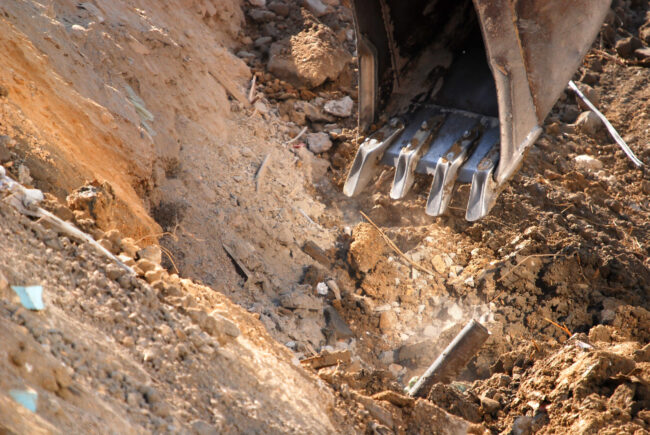
    Not the rock bands of the 1960s–1980s, but the mining required to extract the heavy metals necessary for electric vehicles and other renewable energy solutions.  So, what is a heavy metal and why do we care?

    Typically, “In science, a heavy metal is a metallic element which is toxic and has a high densityspecific gravity or atomic weight. However, the term means something slightly different in common usage, referring to any metal capable of causing health problems or environmental damage.”  Often these toxic elements are carcinogenic.
    For most readers this will not come as a surprise.  The heavy metals in batteries can be recycled, thus minimizing their negative impact on the environment and subsequently, humans and other life forms, i.e., the food chain.  However, smaller batteries are typically tossed into the trash.  Larger ones such as lead acid automotive batteries are usually reclaimed (for a fee to the consumer).

    From this pundit’s perspective, it is too early in the technology maturity to fully understand how millions of EV (electric vehicle) will be recycled effectively and economically.  Managing the lifecycle of these ‘elements’ from mining, use, recycling and reuse is a significant component of these renewables.  There is a cost associated with this process, both monetary and socially.

    Total Carbon Ownership

    In the business, the term TCO usually referees to the Total Cost of Ownership.  Updated, this Lifecycle metric may better reflect the Total Carbon impact of a product/solution, i.e., large scale batteries, solar panel, fossil fuels, etc.

    TCO = Carbon as a function of two major lifecycle elements; Operations and Decommissioning.

    For this purpose we define Operations (aka Use) as the lifecycle process from mineral extraction, manufacturing, deployment and maintenance.

    Decommissioning is the process of taking out of service, removal and appropriate disposal of components, including recycling.

    Follow on from our blog of November 2, 2021, where Milton Friedman detailed the complex supply chain required to manufacture a simple yellow graphite pencil, one can only imagine how complex the requirements are for a wind turbine.  Carbon neutral is not a simple problem to solve.

    Enter Structural Dynamics

    Many readers understand that Machine Learning Algorithms use the statistical multivariable method, Multiple Linear Regression–defined as, where “one variable is estimated by the use of more than one other variable.”  While this tool can be useful when assessing the impact and relationships of several independent variables, it does not necessarily help organizations to understand their TCO.

    Theoretically, every economic actor in the supply chain or the decommissioning process can calculate their carbon footprint for each​ product/step they control.  In the real world, such intangibles, i.e., safety are open to interpretation, ‘fudging’ or worse.  Moreover, we can expect large gaps or errors (inadvertent or otherwise) in carbon models that must be addressed if we are to realistically address the carbon problem.

    In the 1990s as a result of watching a number of systemic enterprise failures and/or poor performance, and wondering how this happened with such regularity the questions was raised–why?  This led this author coin the term with the subsequent book, Structural Dynamics: Foundation of Next Generation Management Science.

    Most do not understand the processes and structural changes at work on a daily basis.  Focused on near term performance metrics, they lose sight of the forest while concentrating on the trees.  The subsequent disruption caused is often rapid and economically cataclysmic.

    Structural Dynamics uses tools such as Structural Equation Modeling (SEM) to seek to identify the underlying process and structural movements.  It appears to be a useful tool to address the Total Carbon Ownership that organizations will have to address in the very near future.

    Dealing With Residuals

    Whether heavy metals or carbon, organizations must also assure ESG (Environmental, Social, and Governance) criteria are met throughout the energy lifecycle.  However, there is a cost associated with these and other organizational structures from the deployment and/or use of energy of all types.

    TCO is a decades long cost that can transcend actual corporate life, i.e., acquisition, bankruptcy, etc.  Currently, the oil and gas industry is littered with assets no one claims ownership.  Two cases follow:

    • Stranded assets are, “those investments which are made but which, at some time prior to the end of their economic life (as assumed at the investment decision point), are no longer able to generate an economic return, as a result of changes in the market and regulatory environment.”  These resources are no longer worth continued investment.
    • Abandoned assets have reached the end of life.  By one source, it is estimated that there are approximately 53,000 Gulf of Mexico offshore oil and gas well in this category.  Remediation costs range from $500k to $10 million per well–min $26.5 billion.

    It is reasonable to expect that all sources in the ‘energy basket’ will have similar end of life futures.  Green is therefore, not unique.

    “Forewarned is Forearmed”

    A Serious Assessment

    This pundit believes that scant attention has been paid to the lifecycle (economic and social) price of renewables and that the Total Carbon Ownership cost has never been calculated–certainly not published.  However, there are tools that will shed light on this going forward.

    TCO is a function of a detailed and long lifecycle, not unlike oil and gas assets that in some cases are over half a century old.  Any subsequent model of this process is by default complex, detailed and full of unknowns, or unmeasured latent variables.

    The approached this writer has developed using Structural Equation Modeling driven by Structural Dynamics seems well fitted to address this longitudinal and futuristic problem.

    For many, the so-called ‘green energy’ seems without consequences.  The history of energy suggests otherwise.  A full assessment using Structural Dynamics can reveal gaps, misunderstandings, errors and omissions.

    This model will advise management and even regulators what the true cost of an energy source is.  The approach is worthy of a serious discussion.  By the way, this model works for all sources of energy including coal and other fossil fuels as well as renewables.

    What is Your Firm’s TCO and How Can It be Lowered?

    For More Information

    Please note, RRI does not endorse or advocate the links to any third-party materials.  They are provided for education and entertainment only.

    Interested in Cross Cultural Engagement or DEI, check out our Cross Cultural Serious Game

    We presented, Should Cross Cultural Serious Games Be Included in Your Diversity Program: Best Practices and Lessons Learned at the Online Conference, New Diversity Summit 2020 the week of September 14, 2020.

    Contact the author for information on these and others subjects covered in the Critical Mass series.

  • How Bored Are You? – Adding Value During the Pandemic

    How Bored Are You? – Adding Value During the Pandemic

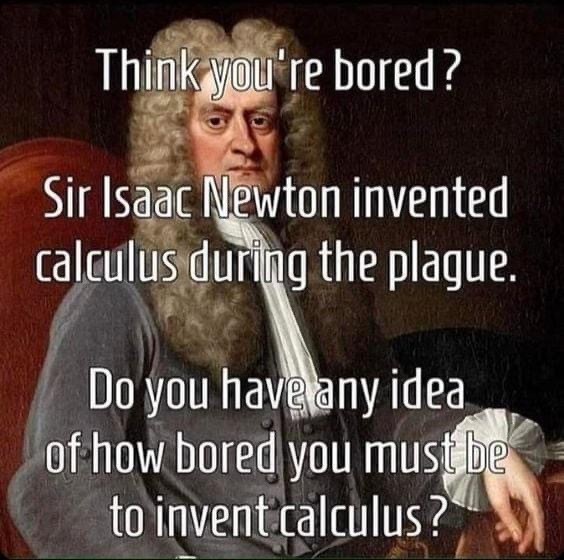
    A friend of mine sent me this uncited picture, so my apologies to the originator as I cannot give you the rightful credit deserved.  If you see this, let me know and I will update this blog.

    We are all enduring 2020 in our own way.  Sometimes positive but often negative.  Battling my own 2020 demons, I was never tempted to invent new mathematics.

    Other than the obvious humor of this likeness, what value add have we provided society since March?  For some dealing with job changes/loss and the kiddos at home may make developing calculus a seemingly easy task.  Some families have faced hospitalization and even the loss of loved ones.

    We all have been touched by this disease and personally, family and close friends have contracted it.  So far, all are recovering or have.

    With vaccines on the near horizon and with a pathogen (typical) lifecycle record of less than a couple of years, we may all move on and back to normal—in this pundit’s opinion not the new normal many prognosticate pontificate.  Likely, the old mask-less normal.

    We all have choices to make and in many cases have already made them.  While therapeutics and vaccines look very promising, the virus is still with us.  Personally, we have four choices.  Where we find ourselves at the end is a function of current behaviors.

    Note that developing new math is probably not one of them; however, new Apps are a distinct possibility.  New art, writing, music, businesses and a plethora of other options can be your contribution.  Carpe diem or make the most of your Isaac Newton moment.

    This virus is often compared to the 1918 so-call Spanish Flu; however, six pathogens have haunted the human race since then with another 14 in recorded history—not to mention polio that started circa 1916 and ran well into the 1950s..  Seems that one way or another we are all sentenced to live with this kind of scourge.

    How we make the best of it is up to each one of us.  Spend your time well—add value as opposed to waistline.

    What will you tell your kids you did during the 2020 pandemic?

    For More Information

    Please note, RRI does not endorse or advocate the links to any third-party materials.  They are provided for education and entertainment only.

    For more information on Cross Cultural Engagement, check out our Cross Cultural Serious Game

    We presented, Should Cross Cultural Serious Games Be Included in Your Diversity Program: Best Practices and Lessons Learned at the Online Conference, New Diversity Summit 2020 the week of September 14, 2020.  Check Out this timely event and contact the organizer for access to the presentations!!

    You can contact this author as well.

  • Linear Metrics in Non-Linear Times?

    Linear Metrics in Non-Linear Times?

    “If it disagrees with experiment, its wrong”

    Our point today is to assess how behavioral decisions are being made today; not about the politics of one candidate or the other.

    The race to the US presidential election has entered its final phase.  As of this writing, establishment wisdom holds the conventional candidate as the presumptive winner.

    Pollical polling is a linear straightforward process albeit with the inherent bias of ‘all’ behavioral instruments.  Effective surveys will take a statistically significant representative sample and project those results to the larger electorate.  A time-honored approach for product marketing as well.

    However, there is another school of thought.  When a new produce/idea is disruptive or not well understood, the firm needs to be proactive rather than simply reactive such as using a survey.  Steve Jobs stated, “You can’t just ask customers what they want and then try to give that to them.  By the time you get it built, they’ll want something new.

    One interpretation, ‘They don’t know what they don’t know.’  Echo the words of Donald Rumsfeld!

    Pollsters suggests that 2016 will not be repeated and they have modified their survey instrument control processes.  Recently one noted canvasser, Frank Luntz stated, “Pollsters did not do a good job in 2016.  So, if Donald Trump surprises people, if Joe Biden had a 5 or 6-point lead, my profession is done.”

    Our Lying Eyes

    When the world was the center of the universe with all the stars and galaxies rotating around us, linear projections confirmed the observed metrics.  However, famously, Nobel laureate, Richard Feynman taught us that, “If it disagrees with experiment, its wrong.”

    Galileo and Kepler among others experimented using the observable data differently.  They discovered that the universe does not revolve around our planet.

    Their assessments altered the given world forever and caused them significant personal angst in the process.  Established ‘science’ did not welcome this change readily.

    If the incumbent rallies and is elected for a second term despite expert projections using legacy linear tools, it maybe time to rethink how social beliefs and behaviors are measured.  Given the problems with Covid-19 data management, the same maybe said for that issue as well

    Hypothesis—Disruption cannot be accurately measured with traditional tools.

    Learnings

    Beyond politics and marketing, there are lessons for all of us.  Artificial Intelligence, Search Engines, Predictive, Big Data Analytics, Machine Learning, IoT et al are now all the rage.  But what if they are using the wrong algorithms?

    There are ramifications for our daily lives.  In March 2019, the Boeing Max 8 was grounded and has yet to return to service.  Will driverless automobiles put us all at risk?

    This survey question maybe answered on November 3 or whenever the final results are tabulated.  Other questions about the use of other metrics will remain unanswered; at least for now.

    How are you certain your decision supports processes and tools are providing valid and reliable data?

    For More Information

    Please note, RRI does not endorse or advocate the links to any third-party materials.  They are provided for education and entertainment only.

    For more information on Cross Cultural Engagement, check out our Cross Cultural Serious Game

    We presented, Should Cross Cultural Serious Games Be Included in Your Diversity Program: Best Practices and Lessons Learned at the Online Conference, New Diversity Summit 2020 the week of September 14, 2020.  Check Out this timely event and contact the organizer for access to the presentations!!

    You can contact this author as well.

  • 10, 20, 30, 40, 50 or More!

    10, 20, 30, 40, 50 or More!

    The advent of 5 G so soon after 4 G—Humm.  What’s next?  How many G’s are there?

    In 1965, Gordon Moore put forth the construct that the density of transistors in integrated circuits doubled each year.  The so-called Moore’s Law has governed technology growth ever since.  However; over 50 years later, some argue that we may be far up that power curve.  One conjectures if the latter statement is correct.

    In 1899, Charles H. Duell then the Commissioner of US patent is purported to have said, “Everything that can be invented has been invented.”  Mr. Duell died in 1920 so he missed many of the ‘new’ things we now take for granted.

    Marketers tend to categorize in buckets; Boomers, Gen Xers, Millennials and so forth.  Do any of these labels matter?  Probably not.  The same is true for technology tags as well.

    Life, technology, knowledge et al marches on, just like it has throughout human history.  Will we see the advent of 50 G networks?  Most likely; with 100 G hot on its heels!

    Less we forget, the current version of the cell phone (iPhone and its equivalents) was first released in 2007.  Much has changed in the last 13 years and we can expect that arc to continue with disruptive new mobile technology crashing in at some point.

    Agility

    Most think of an ‘agile enterprise’ as information technology driven.  In this writer’s opinion, this is a narrow perspective.  The word ‘agility’ is defined in terms of power and thinking.  In other words, the ability to make good decisions with the capacity to implement them.

    In this hyper-technology environment, it is not the adoption of a particular rendition, but the capability to incorporate the appropriate new in an economic manner.  This is true whether the organization is an ‘early adopter’ or even a ‘laggard.’

    For decades, organizational strategy has been enabled by technology.  There is no reason to change that model with many G’s to follow!

    How Does Your Organization Ingest New Technologies?


    Enjoy this flash back to the 1960’s.

    For More Information

    Please note, RRI does not endorse or advocate the links to other third-party materials.  They are provided for education and entertainment only.

    For more information on Cross Cultural Engagement, check out our Cross Cultural Serious Game

    You can contact the author as well.

    End Notes

      https://en.wikipedia.org/wiki/4G

      https://en.wikipedia.org/wiki/Moore%27s_law

      https://www.dictionary.com/browse/agility

      https://en.wikipedia.org/wiki/Technology_adoption_life_cycle

  • 2020 Vision: Are Your Stars Aligned This Year?

    2020 Vision: Are Your Stars Aligned This Year?

    Depending on one’s perspective, 2020 is either the end of the last decade or the beginning of this one.  One can argue that our actual birthday is the day we were born and 12 months later we are one year old.  This suggests that on our tenth birthday we have lived a decade and a new one begins.  Probably this conundrum will still be a subject of discussion in 3020.

    Going to our favorite breakfast cafe the Sunday after New Year’s Day, the parking lot was overflowing from patrons of the local gym in the strip center.  New Year’s resolutions in full force.  History suggests we will not have a parking problem by sometime in February.

    Another Failure of Change Management?

    Perhaps, but good intentions without an execution plan and realistic metrics play a role too.  Clarity of vision is important during times of transformation.

    Organizational lucidity is also important.  The annual Letter from the Chairman of every US public company will extol virtues for their coming fiscal year.  Note to those in sales—this is what is important to management, i.e., the organization’s value proposition so read it and act accordingly.

    Vision Duality

    We all have a vision about the future of our career.  However, another vision is emerging—machines.  One topical subject is the so-called Digital Twin or a representation of reality as a 3D graphic.

    This pundit and others have espoused this tool in support of Operational Excellence initiatives.  This extends human vision in ways that were not available in the past.

    One can surmise as this year progresses, clarity in operations may get much better.  It follows that those willing to take advantage and ‘change’ how they see the world will progress faster and farther than those who choose not to.

    Is the Future in the Stars?

    Probably, but not as many astrologers would have us believe.

    Stars will align this year for each individual who takes the initiative to make that happen.  Not astrological destiny, but proactive leadership with new ‘star’ management systems.

    The Year is Almost Three Percent Old, What Have You Done So Far?

    For More Information

    Please note, RRI does not endorse or advocate the links to other third-party materials.  They are provided for education and entertainment only.

    For more information on Cross Cultural Engagement, check out our Cross Cultural Serious Game

    You can contact the author as well.

    End Notes

      https://www.farmersalmanac.com/new-decade-2020-or-2021-100900

  • Safety Santa: Another Case of Operational Excellence Success

    Safety Santa: Another Case of Operational Excellence Success

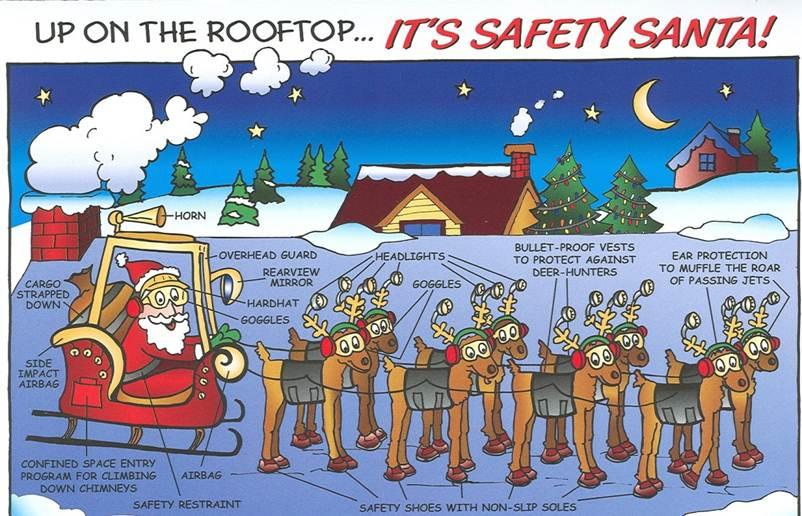
    A year ago, it was the pleasure of this blogger to report that Santa Clause completed yet another successful global fulfillment process AND importantly, the process was in compliance with the US Federal Aviation Authority’s (FAA) regulations.  A great deal of progress since the advent of one red light on the nose of the lead reindeer!

    This year we are once again pleased to report that not only have the flying sled and its power plants remained in compliance with the FAA but has now taken additional steps forward.  Incorporating new technologies and processes, safety has been enhanced in the following manner:

    • Addressing Slips, Trips and Fails with new safety/skip proof landing gear
    • A new Confined Space program along with appropriate personal safety gear
    • An alarm Klaxon and Better Lighting
    • Enhance Safety Restraints such as airbags and an overhead guard
    • Extensive Head, Vision, and Hearing Protection systems
    • Better Work Place Violence technology enabled processes
    • A new Cargo Restraint system

    It looks like the arctic region of the Occupational Safety and Health Administration (OSHA) outreach program is having great success.  Interested readers are invited to review the above safety Infographic for further details and perhaps new insights.

    Simplified Business Model

    There are a lot of lessons herein for those who don’t live at a mythical north pole.  First, it seems that much if not all the safety improvements made are inexpensive and easily implemented.

    Next, change management and new policies appear to be welcomed by those affected.  Answering the, “What’s In It For Me” question when adopting new technologies.

    Management is also ‘walking the walk’ with employees by driving the sled and taking the same risks as the rest of the team fulfilling customer requirements, i.e., snow covered rooftops and chimneys.  One can argue that this entire team is the Customer Facing part of the system.  Finally, customers have high expectations that must be met, and late delivery is not an option—this project has a fixed deadline!

    Stakeholder Value

    With billions of children waiting and using a complex and global logistics system, this team does not disappoint.  Earlier competitors have long dropped off the map.

    So why with a clear monopoly does this organization still seek greater Operational Excellence with its transformational Safety Culture?

    Simple—safe and excellent operational performance is good business!  Less unplanned downtime increases the bottom line.  Few incidents increase morale and the bottom line.

    Fewer legal issues, regulatory matters, and so forth and so on positively impact the bottom line.  With such significant ROI, what’s a stakeholder not to like?

    Is Your Operational Safety on Par with Ole Saint Nick?

    For More Information

    Please note, RRI does not endorse or advocate the links to other third-party materials.  They are provided for education and entertainment only.

    For more information on Cross Cultural Engagement, check out our Cross Cultural Serious Game

    You can contact the author as well.