
Category: Change Management

  • And Just Like That!

    And Just Like That!

    Often attributed to the movie character, Forest Gump the title phrase can be interpreted as an abrupt change in one’s life.

    The past few years have brought significant changes to many of us.  Illness, job change, moving to a new location, kids out of school and so it goes.  Disruption can be intimidating, yet it need not be so.

    Life is all about change.  We move from infancy to youth, adulthood and so on.  In each phase our interests and environment are different.  Moreover, we often seek change.  The celebration upon one’s 16th birthday and getting a driver’s license.  In my case turning 25 when my car insurance cost was lowered.

    Society is moving into an era whereby an individual can expand his or her horizon.  No longer is a college degree seen as the price of entry.  Non graduates now have access to IT positions as well as management and other high paying skills.  The focus is moving from having mountains of college debt to having the desire to achieve.  Additionally, the Great Resignation movement is taking root too.

    So What Happens Now?

    In our 2oo9 White Paper, Rapid Response Management: Thriving in the New World Order we coined the term, Velocity of Information which we defined as, “Similar to the economic theory, Velocity of Money, it is the frequency at which information is exchanged.”  Who would have dreamed today’s volumes would be so massive.  Now we are awash in information and disinformation.  Decisions that depend on valid and reliable data are more difficult, not less.

    However, life’s disruptive moments can force us to move forward in another direction.  The recession in 1974 required that this then young individual to more to Louisiana and enter the oil and gas sector.  This was not on my radar at all as late as two months earlier when a recruiter called.

    This life changing moment was not based on valid and reliable data as ‘I did not have clue’ what I was getting into.  Rather the decision was made with almost no knowledge of the subject.  Fifty years later, the rest as they say is history.

    When one door closes, another opens.

    New Relationships

    We have previously discussed the RBC Framework; Relationships, Behaviors, Conditions (aka the situation).  This straightforward model was developed in 1993 to study International Negotiations and we have found it convenient for all manner of human interaction assessments.

    The military refers to the (true)knowledge of one’s environment as Situational Awareness.  In other words if one has a good understanding of what is happening around them, their behaviors should reflect that knowledge.  Subsequently, relationships may change including making new one or leaving old ones.  In my case, the move to Louisiana and entering a new sector is a good example.

    Going Forward

    Forest Gump embraced change and excelled at a number of things despite his handicap.  Disruption was not a threat but an opportunity.  Like Louis Pasteur, one can prepare for change even if the next step is not immediately clear.

    Finally, “The economist Joseph Schumpeter was the first to coin the term “creative destruction.”  Creative destruction is the destruction of old markets and those active in them through innovation, & inventing of new markets, this can be new technologies, methods, business models, services, or products.”  One can argue that the creative destruction cycle time is very short today.

    What are you doing to prepare for your next step?

    For More Information

    Please note, RRI does not endorse or advocate the links to any third-party materials herein.  They are provided for education and entertainment only.

    The author’s credentials in this field are available on his LinkedIn page.  Moreover, Dr. Shemwell is a coauthor for an in press book (to be released in Spring 2023) titled, “Smart Manufacturing: Integrating Transformational Technologies for Competitiveness and Sustainability.”  His focus is on Operational Technologies.

    “People fail to get along because they fear each other; they fear each other because they don’t know each other; they don’t know each other because they have not communicated with each other.” (Martin Luther King speech at Cornell College, 1962).  For more information on Cross Cultural Engagement, check out our Cross Cultural Serious Game.  You can contact this author as well.

    For those start-up firms addressing energy (including renewables) challenges, the author is a member of Global Energy Mentors which provide no-cost mentoring services from energy experts.  If interested, check it out and give us a shout.

  • Are Your DEI Wheels Spinning?

    Are Your DEI Wheels Spinning?

    Originally published as a LinkedIn article on July 6, 2021, this updated version is reprinted here with the permission of the author.  Links to relevant sources are added.

    Lately, many LinkedIn posts bemoan the state of Diversity, Equity, Inclusion (DEI) initiatives. The seeming slow take up of great ideas.

    Some argue that DEI initiatives are no more than window dressing or organizational efforts to stave-off litigation. To others, they have the appearance of one more management initiative that if waited out will simply go away like so many others before.

    Fundamentally, DEI initiatives require change. A change of (B)ehaviors in the face of seemingly new situations or influencing (C)onditions (Circumstances, Capabilities, Cultures, Environments). When these two variables evolve, so do exiting (R)elationships. The RBC model is well established in social science and was first used to model Cross-Cultural (international business) Negotiations.

    It is multi-dimensional including a temporal schema capable of addressing numerous aspects of human behavior. Furthermore, it encompasses cultural as well as other situational aspects such as individual backgrounds.

    We tested this model using Japanese and American executives. This culturally diverse group needed to develop a level of trust if negotiation outcomes were to be successful.

    Likewise, successful DEI initiatives require that culturally diverse groups develop a high level of trust among those working together and/or members of teams.

    “Tell Me and I Forget. Teach Me and I Remember. Involve Me and I Learn”

    Attributed to Benjamin Franklin, this quote tells us all we need to know. The so-called Death by PowerPoint lecture long in vogue are often forgettable. Instruction, along with the homework prerequisite and tests are traditional methods. Finally, engaging individuals, teams, departments and even entire organizations can create long standing sustainable knowledge that is the basis for behavioral transformation.

    Paper based serious games or “games whose purpose is other than entertainment” originated in the late 1960-70s. In a nutshell, this is an interactive training solution. Subsequently, online serious games can incorporate actual scenarios designed to immerse players solving real world challenges.

    Rather than a video game whereby players engage with electronic decision trees, human-to-human serious games train players/teams to deal with diverse yet real colleagues. Collaborative scenarios direct participants to collectively solve problems while learning how their culturally dissimilar counterparts address the same challenge.

    Scenarios can drive engagement by all players including those who may not be typically involved in decision making processes. This is also a safe, no-harm no-foul environment with little to no individual decision-making risk.

    Transformation

    Any successful ‘change’ initiative must answer the What’s in It for Me? question. Humans may resist change if they do not see personal value from such actions. Moreover, while senior executive leadership is required, heavy handed top down My Way or The Highway may result in direct resistance, and/or a more crowed freeway to the exit ramp.

    For example, the current version of the smart phone was first available circa 2007. According to Statista, approximately 1.38 billion smartphones were sold in 2020. Likewise, over 46 percent of the global population own these devices.

    What does this have to do with DEI? In 2006 cellphones were great and becoming ubiquitous. No one knew they needed a smartphone. Our collective Behavioral transformation was caused because the What’s in it for Me question was answered.

    One component of the Conditions criteria, Capability changed as this technology enabled individuals to drive new behaviors based on Apps that emerged. The resulting transformation in our Relationships is well documented, i.e., the use of text as opposed to voice.

    Sustained transformation requires continued energy. The term ‘initiative’ implies a short-term event and one that will pass.

    Trust must be established and maintained. Over time, sustained energy will result in critical mass, or the (statistically significant) number of individuals engaged and trusting each other. This self-sustaining energy is transformation.

    Reframing DEI Initiatives into the RBC Framework can enable dramatic and rapid transformation. Take advantage of these types of cross-cultural models.

    For More Information

    Please note, RRI does not endorse or advocate the links to any third-party materials.  They are provided for education and entertainment only.

    For more information on Cross Cultural Engagement, check out our Cross Cultural Serious Game

    We presented, Should Cross Cultural Serious Games Be Included in Your Diversity Program: Best Practices and Lessons Learned at the Online Conference, New Diversity Summit 2020 the week of September 14, 2020.  Check Out this timely event and contact the organizer for access to the presentations!!

    You can contact this author as well.

  • Open Sesame

    Open Sesame

    A Year of Leadership–Or Not!

    On March 2, 2021 the Governor of Texas announced its 100% reopening–effectively proclaiming an end of the Covid-19 crisis.  Needless to say in our hyper-partisan world, many widely decried the decision and even accused him or bringing physical death to the state population.

    Mississippi announced a similar rollback of virus driven constraints.  Likewise, Connecticut is rapidly easing similar restrictions.  These state join others with loose Covid-19 protocolsThis pundit expects this trend to gain speed quickly and worldwide.

    Meanwhile, the President of the United States accuses these decisions as being made by Neanderthals, while the Director of NIAID position has move from NO mask to wearing MUTIPLE masks.  The political divide regarding the path forward remains wide.

    Consent of the Governed

    “You can fool all the people some of the time, and some of the people all the time, but you cannot fool all the people all the time,” is attributed to Abraham Lincoln.  This oft quote is usually seen through a political lens.  More importantly, it is a position from a Leader!

    Driven by suspect data we were told that this virus had an Armageddon like quality.  At one point over 2 million Americans were projected to die and the hospital systems would be overwhelmed, perhaps irrevocably.  Hospital ships were mobilized and economies brought to their knees all to save lives.  Perhaps, even our own.

    To be clear, many did succumb and many lives were destroyed or at least changed forever.  We mourn those and recognize the serious of this pathogen.


    A few of my family and friends have been infected but fortunately with only minor symptoms and limited hospitalization.  In this we are very fortunate.

    Crises can happen at any time, hurricane, winter storms, hostilities are part of the human conditions.  How we respond it the difference between chaos and inconvenience.  Leadership determines the outcome!

    If you have lost someone to Covid-19, cancer, accident, fire (I lost two family members) or other tragedies, statistical arguments are meaningless as the probability is 100%.  However, for the overall population likelihood of recovering from the coronavirus has always been quite high.

    Many questions have been raised regarding the myriad of conflicting “authoritative” information and misinformation the public has endured for 12 months.  With no conclusive or definitive game plan put forth by authorities, we were left to fend for ourselves.

    A resident of the Houston metropolitan area, this writer has noted that traffic is almost back to normal.  This suggests that the governed no longer have faith in political or medical leadership demanding yet another year under their ‘knowledgeable’ thumb.

    Once that credibility is lost, game over for leaders pontificating that to be safe we must hunker down forever.  Not sure even the Londoners did that during the Blitz.

    The Future is Bright

    Rulers attempt to dictate through a never ending series of edicts.  Knowledgeable governed conduct reasonable due diligence and make there own risk adjusted behavioral decisions.

    Likely, recent events are driven by the political class learning that enough is enough.  After all, we are adults and capable of living our own lives.

    Agree that the pathogen is still with us and we must address it.  Vaccines have a long history of success and processes are in place for safe openings.

    Society is opening with or without the politicians.  Remember the Speakeasies during Prohibition of the 1920s?

    Expect more to run to a microphone and claim leadership.  Ultimately, this process is irrelevant.  Getting out ahead of a parade and claiming to be the Grand Marshal does not make it so.

    Regardless, 2020 is over and there is NO interest in repeating it in 2021.  Message from the governed–we will take our chances going forward!  Our  R B C Framework model at work.

    Covid-19 is not over but seems to be getting to remission thanks to the army of men an women who have risen to the challenge in less than a year and saved countless lives.

    How are you leading your organization to recapture Normal?

    For More Information

    Please note, RRI does not endorse or advocate the links to any third-party materials.  They are provided for education and entertainment only.

    For more information on Cross Cultural Engagement, check out our Cross Cultural Serious Game

    We presented, Should Cross Cultural Serious Games Be Included in Your Diversity Program: Best Practices and Lessons Learned at the Online Conference, New Diversity Summit 2020 the week of September 14, 2020.  Check Out this timely event and contact the organizer for access to the presentations!!

    You can contact this author as well.

  • I Didn’t Do It, He Did — I Didn’t Do It Either, Someone Else Did

    I Didn’t Do It, He Did — I Didn’t Do It Either, Someone Else Did

    “When converted into productive thought and action, the energy it takes to blame, shame, and game is enough to launch anyone into heights of real success and happiness.”

     – Charles F Glassman

    Entrée

    It is not often that an entire geographically LARGE state loses power and water simultaneously.  Now we know it can happen!  Welcome to Texas (ERCOT) circa the dawn of the 21st Century.

    The finger pointing and claims, ‘not my responsibility’ surfaced immediately at all political levels.  As I sat in my power free, cold, waterless house, I was moved that political leadership was focused on saving their own hides.

    Benjamin Franklin’s words, “We must all hang together, or, most assuredly, we shall all hang separately” are lost on our hyper partisan world.  Earth to all polls, there is enough blame on this one to go around.  This society loves to Share and Like and is quick to find fault.

    The usual suspects will pontificate about blaming others and legal initiatives have already surfaced.  Good media, but who actually cares?

    This blog post is not about politics or the blame game.  It rather posits a solution that sees that this never happens again–anywhere.

    Operational Excellence Platform

    Excellent performance requires a conscious effort at all levels of an organization and its ecosystem.  We embodied a approach for heavy industry in our 2012 article, High Reliability Management in Process Industries: Sustained by Human Factors.  In that piece we put forth the argument that High Reliability Management is a strong methodology for management large complex systems such as the Texas Electric Power Grid.  HRM provides organizations with Agility, Resiliency and Sustainability in the face of large complex incidents.

    As we have previously put forth, Normal Accident Theory (NAT) posits, “that some accidents are inevitable because of system complexity.”  While logical, this model has its critics and lacks empirical evidence.

    The Texas electricity power grid got into process/technological/engineering trouble rather quickly.  Debate will rage for years as to what actually happened.  However, it seems practitioners at all levels practiced NAT.  Like Deepwater Horizon, this event did not have to happen.

    Safety Culture

    At the core of High Impact Performance is a strong safety culture.

    Systemic Safety Culture as the Core Set of Values and Behavioral Economics of ALL participants of the extended organization and its Enterprise Risk Management strategy that reflect a Strong Bond Governance commitment to behaving as a High Reliability Enterprise Ecosystem in a safe and environmentally responsible manner.

    Going Forward

    The over used phrase, ‘teachable moment’ suggests that we learn from our history so as not to repeat it.  Most likely oxen will be gored, witch hunts abound and the likelihood of little tangible progress will be made.

    Career losses will most like exceed the six board members who have already resigned.  All because the reactive NAT model was followed.  One is well advised not to follow this lead.

    How are you making sure that your operations processes are proactive?

    For More Information

    Please note, RRI does not endorse or advocate the links to any third-party materials.  They are provided for education and entertainment only.

    For more information on Cross Cultural Engagement, check out our Cross Cultural Serious Game

    We presented, Should Cross Cultural Serious Games Be Included in Your Diversity Program: Best Practices and Lessons Learned at the Online Conference, New Diversity Summit 2020 the week of September 14, 2020.  Check Out this timely event and contact the organizer for access to the presentations!!

    You can contact this author as well.


  • Covid-19 Positive: Telemedicine Kicked into High Gear

    Covid-19 Positive: Telemedicine Kicked into High Gear

    Crisis Drives Change

    In 2001 this writer approached the Houston medical community, post tropical storm Allison which flooded many basements in the Houston Medical Center with the loss of experimental data and other records.  We proposed the development of an Internet based solution to hold and manage medical records of all types.  The response to my organization’s offer to digitize records was met with disbelief and ultimate rebuke.

    At the time I was employed by a major corporation with the technology and financial resources to accomplish this task.  Sales Objections included privacy, doctors will not ‘buy in,’ insurance will not pay for it and a host of other lame excuses.

    Flash forward to 2020.  Why are thing so different now and the idea of ‘digitalization’ almost universally accepted?

    Twenty years is a career for many, yet it took a crisis this year to kick the medical sector into action at critical mass—Coronavirus, aka Covid-19.  As often the case large organizations are content to stay with the status quo.  Culture, processes, and even individual bonuses incent lethargy and complacency.  This common trait is not limited to one sector.

    Moreover, advances in online telemetry support the physician’s ability to treat many aliments remotely.  The industry did not just ‘jump’ to the current state, it evolved over time.  For example, remote and inaccessible areas such as Antarctica have taken advantage of telemedicine including remotely directed surgeries.

    Democratization

    We may look back on 2020 as the seminal moment when medicine was digitalized.  Despite current access issues such as we are finding with K-12 education, most will have the ability to interact online in the near future.  Moreover, a number of COTS (commercial off the shelf) health solutions such as found in a variety of Smart phone products enable remote diagnosis and monitoring on a global basis.

    The catalyst for taking telemedicine to the next level is Covid-19!  A good Positive.

    How is your organization taking advantage of remote operational technologies?

    For More Information

    Please note, RRI does not endorse or advocate the links to any third-party materials.  They are provided for education and entertainment only.

    For more information on Cross Cultural Engagement, check out our Cross Cultural Serious Game

    We presented, Should Cross Cultural Serious Games Be Included in Your Diversity Program: Best Practices and Lessons Learned at the Online Conference, New Diversity Summit 2020 the week of September 14, 2020.  Check Out this timely event and contact the organizer for access to the presentations!!

    You can contact this author as well.

  • Pressure Differential

    Pressure Differential

    Managing Tension at the Margin

    As September draws to a close the Houston metropolitan area has dodged two hurricane bullets; Laura and Beta.  Fingers crossed that this very active season draws to an early and quiet close.  The beauty and downside of the 24/7 news and weather reporting is that lay people learn more jargon then we ever new possible.  Take for example, the term Pressure Differential.

    One broadcaster used this phrase to describe the low at the eye-of-the-storm and circulating higher pressure.  In other words, the ‘tension at the margin’ or stress between competing bodies—the engine of power.

    Humans constantly deal with this phenomenon and sometimes the stress caused by this dichotomy can seem to be overwhelming.  Sometimes, it seems this powerful internal engine races without a governor.

    The Power of Change

    The pandemic, storm season, economy, job, family and a host of other issues tug at our margins constantly.  When writing about stress, Winston Churchill famously stated, “But the element which is constant and common in all of them is Change.”

    Mark Twain is credited with, “If you don’t like the weather, wait five minutes (and it will change).”  Hurricane pressure differentials subside and the sun shines again.  Yet, the hurricane engine does not change of its own accord.

    In the case of Beta, dry air at its margin was one element that sapped it of its strength.  Storms change as a result of exogenous events.  Humans can also incorporate endogenous actions as change agents.

    Use Case

    Recently, I commented on a LinkedIn post where the author was reminding recruiters that hospitality workers have great and transferable skills.  The example I suggested was around events.

    The traditional conference event sector has been hit hard by the pandemic with most conferences cancelled.  The toll on those employees and supporting contractors must be horrendous.

    However, there is a surge in online event like activity.  Many of the same activities for in person conferences are the same.

    The program must be developed and marketed.  Speakers, panelists, participants and others must be recruited.  Wouldn’t those sales, planners and others from the traditional sector bring immediate and significant value to the digital venue?

    The power of change is within all of us.  Govern that engine properly and your pressure differential will nullify.

    What’s Your Change Plan for these Transformative Times?

    For More Information

    Please note, RRI does not endorse or advocate the links to any third-party materials.  They are provided for education and entertainment only.

    For more information on Cross Cultural Engagement, check out our Cross Cultural Serious Game

    We presented, Should Cross Cultural Serious Games Be Included in Your Diversity Program: Best Practices and Lessons Learned at the Online Conference, New Diversity Summit 2020 the week of September 14, 2020.  Check Out this timely event and contact the organizer for access to the presentations!!

    You can contact this author as well.

  • Radar: Technology Game Changer!

    Radar: Technology Game Changer!

    The battle of Leyte Gulf in 1944 with over 200,000 individuals involved is possibly the largest naval battle in history.  Hopefully, one of the last ones.

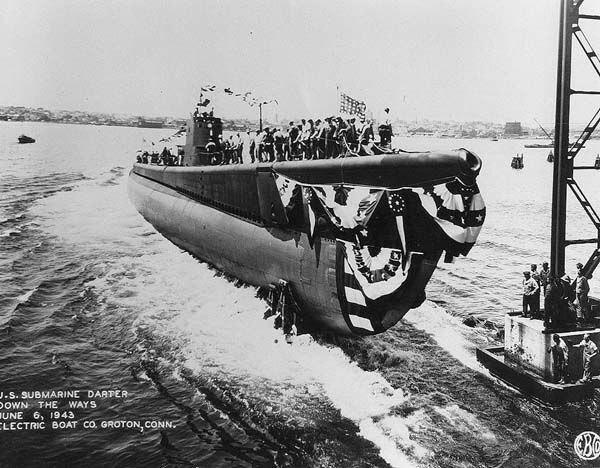
    In that battle, the submarine USS Darter initially detected (on radar) the Japanese task force early on October 23.  Other US naval vessels spotted that armada shortly thereafter on their radar screens.  This advanced knowledge enabled to US Navy to seize the initiative.  After the battle, the Japanese never stood up an equivalent naval force again.

    Technological advantage can be a game changer.  There is evidence of this phenomenon throughout history.  In this instance, the result was the elimination of the adversary’s ability to recover and reengage in a meaningful way.

    History’s Lessons

    Another game changer from that era was the proximity fuse developed by the Applied Physics Laboratory of Johns Hopkins University.  This technology enabled anti-aircraft rounds to explode within 75 feet of an attacking enemy aircraft instead of requiring physical contact which had a poor track record.  Referred to as, “The real secret weapon of World War II,” it is credited with shorting the war.

    Adversity has always led to rapid technological development.  There are indications that the Covid-19 pandemic is fueling an explosion of new ideas that directly address the infection as well as drive performance when the threat has passed.

    Capturing Value

    The conventional approach is to follow the Technology Adoption Life Cycle.  But is that still the realistic model today?  In our article published in 2004 Calculus of Value Model, we argue that the exact opposite is true.

    Advantage can go to those organizations that deploy technology early and codify knowledge obtained as a result.  The resulting ‘unfair advantage’ can change an industry.

    Previously we have made the case that while the concept of Minimum Viable Product aka MVP; a product that Early Adopters will find satisfactory, “The assessment of such technological solutions needs to be robust and thought through.  Not the knee jerk response often seen.”  Meaning that certain risks must be factored in the Value Proposition, but these can be manageable.

    According to Oracle’s Larry Ellison, “If you do everything that everyone else does in business, you’re going to lose.  The only way to really be ahead, is to ‘be different’.”  So Be Different—Start Early!

    How Can You Make New Technologies Your Organizational Game Changer?

    For More Information

    Please note, RRI does not endorse or advocate the links to third-party materials.  They are provided for education and entertainment only.

    For more information on Cross Cultural Engagement, check out our Cross Cultural Serious Game

    We are presenting, Should Cross Cultural Serious Games Be Included in Your Diversity Program: Best Practices and Lessons Learned at the Online Conference, New Diversity Summit 2020 the week of September 14, 2020.  Check Out this timely event!!

    You can contact the author as well.

  • Home for a While?

    Home for a While?

    It appears that issues associated with the Covid-19 pandemic will remain for some time.  Hopefully, the emerging vaccines will be readily available in the coming months.  That said, one of the disruptive changes that may codify is Working from Home.

    In our March 16, 2020 piece, Home Base During a Crisis: ‘get up, clean up and dress up’ we addressed some of the problems one uncovers when working from home during a crisis.  In that piece, we conjectured “Is this a paradigm shift or just a short-term inconvenience?  Reality; probably a bit of both.”

    The virus and its propagation remain serious.  However, from the perspective of a new normal working remotely is becoming an accepted model.  Many organizations have announced long-term and even permanent distant working plans.

    As we move from a short-term crisis to a ‘way of life,’ we must make changes as well.  The need for a daily structured process must become our approach to the job as does the need to find meaningful engagement with others.

    As with other change models, new process should not just happen.  An attainable action plan must be put in place and followed.

    Some Ideas

    In no order, these thoughts might be helpful.

    • When we transitioned from school to our first ‘real’ job, changes in our daily life were perhaps dramatic. It is useful to think of this paradigm shift from that perspective.
    • One of the challenges faced by retirement is often the sudden stop in activities. Going from Business @ the Speed of Thought to “I wonder what I will do today” has literally killed many retirees at a very young age.

    One way to make this a soft landing is a transition process.  Many I have known have taken new positions that were not as stressful prior to full retirement.  Try this approach when moving to 80+% working from home.

    Another example; restaurants opening after Stay at Home orders were lifted started at 25% capacity and then to 50% and so on.  This allows staff to adopt policy and guidelines into their formal work process.

    • Think of this as a ‘Life Stage Transition.’ Marriage, birth of a child, divorce, moving, etc. lead to significant changes in our daily schedule.

    An article in Psychology Today recounts “10 Ways to Make it Through Your Life’s Transitions.”  This is a good quick perusal and readers will see useful coping mechanisms (especially for those where a transition is unwanted).

    Moreover, with school openings uncertain children as well as parents may learn from the points made herein.  Working from Home has good stages and not so good junctures.  Capitalize on the former.

    What is Your Personal Business Model for Working from Home Permanently?

    For More Information

    Please note, RRI does not endorse or advocate the links to third-party materials.  They are provided for education and entertainment only.

    For more information on Cross Cultural Engagement, check out our Cross Cultural Serious Game

    We presented, Should Cross Cultural Serious Games Be Included in Your Diversity Program: Best Practices and Lessons Learned at the Online Conference, New Diversity Summit 2020 on April 9, 2020.  The summit will be offered again soon.  Check it Out!!

    You can contact the author as well.

  • Next or Back to the Future?

    Next or Back to the Future?

    Current events may have us all longing for the ‘good ole days.’  Sounds good on paper but not something any of us can realize.  Nostalgia aside we all must continue to slog on.  It is after all a one-way trip and there is no Delorean to help us.

    The Challenge of Change

    People change all the time and we have covered this before in this series a number of times.  However, some change is not without transformational difficulties.  The literature is replete with case studies where organization/industry transformation failed and sometimes spectacularly.

    Depending on one’s perspective sometime during February or March of this year, the global population became generally aware of a new and potentially devastating pathogen.  Dramatic (even draconian) measures were taken, and we were all convinced of the potential for global devastation.  Global Stay-At-Home orders wrecked economies but most of us dutifully obeyed.

    As of this writing, in a world of almost 8 billion people, according to a credible source, Johns Hopkins:

    • Cumulative Cases; Less than 8 million
    • Deaths; Less than 500k
    • Recovered; Approximately 3.7 million

    Rarely, emphasized math suggests that there are approximately 3.7 million Active cases.

    For those of you in the US (~330 million) like I am, the math looks like this:

    • Cumulative Cases; Just over 2 million
    • Deaths; Approximately 116k
    • Recovered; Approximately 560k

    Active US cases are approximately 1.4 million.

    Credibility Factor

    We have been told Covid-19 Armageddon was at hand.  Hospitals would be overwhelmed, etc.  No Mask and now Mask.  Most show few if any symptoms.  Now asymptomatic will kill the elderly and so it goes.  This list of contradictory positions goes on and change is justified by our “New Knowledge” about the pathogen.

    So What?

    Now we are told a new wave is coming from Memorial Day celebrations, protests and more from the phasing out of the lockdown.  How is the population reacting to these new pronouncements of doom?

    By engaging in normal human interactions.  Mask free in many cases to the chagrin of the medical experts.  One expert suggested that the United States does not have a coherent Covid-19 national policy.

    From my high school Civics, class, ”Enumerated powers are specific powers granted to Congress by the United States Constitution.  The framers of the Constitution wanted to ensure the new federal government would not become an overreaching entity that might subject the people to the oppression from which they had fled.  To that end, they listed, in Article 1, Section 8 of the Constitution, the authority over certain specific things.  Authority over every issue not enumerated, or assigned to Congress, is reserved for the individual states.”

    My interpretation, States are the governing body for most activities including a pandemic.

    Therefore, each state is charged with managing this process within federal law, taking guidance from resources such as the Center for Disease Control.  This is 200+ year-old policy.

    Failure to Launch

    In recent days, this writer has encountered numerous individuals seemingly in violation of the tenets of Covid-19 response.  After months of predicting the end of human interaction as we have known it and in the face of numbers that just don’t add up, we are told it isn’t over yet.  Seemingly entrenched positions prevail although data and subsequent rationale are fungible.

    Lessons Learned

    Much is being said about fundamental changes to industry, i.e., oil and gas, airlines, and others.  Societal change is presented as fait accompli and the time is now!

    The history of transformation does not support these hypotheses.

    Sustained change requires significant ongoing energy from catalysis.  Not the continuation of exogenous events but continued commitment to answer the What’s In It for Me question we all ask when confronted with a new model.

    Current events will fade and life as we knew it will likely continue.  To be sure, there will be some change but disruptive transformation in the social fabric pundits are predicting are unlikely based on the past and typical human behavior.

    How will You Assure Transformation is Sustained?

    For More Information

    Please note, RRI does not endorse or advocate the links to third-party materials.  They are provided for education and entertainment only.

    For more information on Cross Cultural Engagement, check out our Cross Cultural Serious Game

    We presented, Should Cross Cultural Serious Games Be Included in Your Diversity Program: Best Practices and Lessons Learned at the Online Conference, New Diversity Summit 2020 on April 9, 2020.  The summit will be offered again soon.  Check it Out!!

    You can contact the author as well.

  • Agility, Resiliency, Sustainability

    Agility, Resiliency, Sustainability

    In a recent Harvard Business Review, I was struck by an article about Best Practices for small businesses.  From that piece, “To successfully navigate Volatile, Uncertain, Complex and Ambiguous (VUCA) challenges like Covid-19, family business leaders can look to best practices from another organization that specializes in VUCA situations—the U.S. military’s Special Operations Forces (SOF)” (emphasis added).  There are a lot of good ideas in the article that organizations can implement immediately.  Moreover, we have long recognized that properly vetted and adjusted as necessary, Best Practices from others can add significant value to organizations in other industries.

    Out of the Darkness

    It is easy to be overwhelmed these days.  Mildly put, most if not all organizations were thrown into chaos in less than a month.  Depending on your business you are either partially operating or still waiting to open-up.

    Regardless, how you work in June will be different than early March (~60 days as of this writing).  Traditional recession management and recovery techniques may not be applicable this time.

    There are lots of ideas about how to use technology going forward.  Digitalization, IoT, IT-OT, among others are hawked as THE solution.  Problem is, it is not that simple, and it takes time and money to implement.  Many midsize firms do not have those privileges/resources.

    There are a lot of actions most organizations can take without major CAPEX investments in time and money.

    Years ago, we recognized that certain industrial sectors, particularly those with a high-risk profile such as energy or others deemed to be part of Critical Infrastructures face unique challenges.  Some have a tendency towards incremental change or even the status quo.  Change is often slow with setbacks.

    Moreover, for every major firm there can be thousands of organizations in the supply chain ecosystems all of which must work well if total costs and profitability for all are to be effectively addressed.

    This seemingly daunting task yet it need not be.  There is a solution set available that can help organizations manage through this dark period and into the light, thriving.

    The mission of The Rapid Response Institute is;

    “Helping Clients Achieve Organizational Agility, Resiliency and Sustainability”

    To that end, we have developed solutions, methodologies, and tools enabling enterprises of all sizes to not just survive but thrive after disruptive events.  Much of this is either free or at low cost.

    Rapid Response

    In our 2009 White Paper, Rapid Response Management: Thriving in the New World Order we posited our new approach to managing your business.  “Rapid Response Management (RRM) is an organizational construct or mental model that enables the organization and its key partners to rapidly sense changes and respond accordingly–quickly.  While it maximizes the effectiveness of management knowledge to address change, it is not simply gut feel.  Rather it is a simple yet sophisticated, methodical paradigm any organization can quickly and inexpensively implement.”

    RRM is a creative and well documented method for running your business.  The thinking was well advanced by 2009 and has been further ‘stress tested’ over the past decade.

    We have updated RRM with our Operational Excellence Platform and interested readers are invited to check that out as well.  Our offerings are designed to help our clients get through crises such as Covid-19.

    We are updating this white paper and it will be available as an e-book in the near future.  If you would like to reserve a free copy, Contact us.

    We are here to shed some light during this dark period.  For no cost, no obligation discussion contact us.  We can put decades of experience dealing with business cycle adversity on your team.

    Feel like your trapped?  You’re NOT!

    For More Information

    Please note, RRI does not endorse or advocate the links to third-party materials.  They are provided for education and entertainment only.

    For more information on Cross Cultural Engagement, check out our Cross Cultural Serious Game

    We presented, Should Cross Cultural Serious Games Be Included in Your Diversity Program: Best Practices and Lessons Learned at the Online Conference, New Diversity Summit 2020 on April 9, 2020.  The summit will be offered again soon.  Check it Out!!

    You can contact the author as well.

  • Disrupting Disruption!

    Disrupting Disruption!

    Let me understate, ‘working in the petroleum sector has always been challenging.’  Now we find ourselves in a major economic downturn caused by a Covid-19 pandemic and aided and abetted by an international crude oil price war.

    Once again, many thousands have lost their livelihood and possibly not return to a similar job as the industry consolidates and restructures both organizationally and operationally.  However, much has changed and for the better since this writer first experienced a major retraction in the 1980s.

    Back in the day, choices then included sending hundreds of hardcopy resumes hoping the right person would find/like it out of an overflowing inbox or leave the sector and look for better pastures.  Collectively, impacted individuals tried both.  Certainly, there was not a feeling that we were in command of our destiny, even if we knew someone who could help us.

    Today, we are the Master and Commander of our voyage!

    I See Things

    Visions of armies of energy workers becoming software programmers are probably hallucinations.  Some might but many will not have the ability, temperament or interest in such a feat.

    There are always winners and losers in any disruption.  Already, there are signs that the traditional retail sales processes are accelerating on a path they were already on.  Upscale restaurants now feature ‘take out.’

    Some who once worked for manufacturers, oil producers and other core companies will most likely find new careers with suppliers to those firms.  This may be especially true of supply chain, business process and technologies such as IT and engineering.  For example, operators will look to Subject Matter Experts (SMEs) and qualified suppliers to implement their Digitalization business models.

    Those with technical skills such as Science, Technology, Engineering, Mathematics (STEM) will be in demand for both recall to older business models but more likely to enable new ones.  Other emerging energy sectors include renewables and their derivatives.

    Entire, global business models are under scrutiny and change is inevitable.  Older sluggish companies will be replaced with new agile entrants.  Just look at how Amazon evolved from an online book seller to their current position.

    How to Disrupt

    What if I want to strike out?  For those who feel alone and not sure which way to turn, there is help available right now!  As far as I know everything listed below is at no cost and RRI knows these resources directly—no third parties.

    • “Esri, the global leader in location intelligence, announced that it would provide free access to its ArcGIS platform and training resources to professionals worldwide who are impacted by work furloughs during the COVID-19 outbreak.
    • Do you have a great idea for an energy-based startup company, but not sure where to start? I am on the leadership team of the Global Energy Mentors and we provide free mentoring services.  Check us out and you do not have to reside in the Houston metro area!
    • Looking for help from the Small Business Administration and again, don’t know who to call? Let us know and will put you in contact with the Houston office.
    • There are other opportunities available where we can help you. For example, the BBL Ventures Energy & Industrial Tech Challenge and Eunike Ventures it’s Alliance Partners are seeking innovative technologies via our 2020 Technology Open Call.  There are others as well and to date, the Innovation and Acceleration sector remains active.
    • Got a quick question? Contact us for 30 minutes of free online/email consulting limited to the first 50 and perhaps more.  We know of numerous additional resources and hopefully can direct you.

    Moreover, almost anyone can develop an App about any subject or issue.  What’s bugging you for which there is NO App or other solution?  Guess what, you now the Subject Matter Expert in that field.  Search App Development for all manor of free or low cost tools and help.

    Changes of the magnitude discussed herein can be daunting but there is no reason for any of us to fail in this transformation.  When faced with few or no options in your current career environment—What do you have to lose?

    Why let this disruption control you?  You control it!

    For More Information

    Please note, RRI does not endorse or advocate the links to third-party materials.  They are provided for education and entertainment only.

    For more information on Cross Cultural Engagement, check out our Cross Cultural Serious Game

    We presented, Should Cross Cultural Serious Games Be Included in Your Diversity Program: Best Practices and Lessons Learned at the Online Conference, New Diversity Summit 2020 on April 9, 2020.  The summit will be offered again soon.  Check it Out!!

    You can contact the author as well.

  • 10, 20, 30, 40, 50 or More!

    10, 20, 30, 40, 50 or More!

    The advent of 5 G so soon after 4 G—Humm.  What’s next?  How many G’s are there?

    In 1965, Gordon Moore put forth the construct that the density of transistors in integrated circuits doubled each year.  The so-called Moore’s Law has governed technology growth ever since.  However; over 50 years later, some argue that we may be far up that power curve.  One conjectures if the latter statement is correct.

    In 1899, Charles H. Duell then the Commissioner of US patent is purported to have said, “Everything that can be invented has been invented.”  Mr. Duell died in 1920 so he missed many of the ‘new’ things we now take for granted.

    Marketers tend to categorize in buckets; Boomers, Gen Xers, Millennials and so forth.  Do any of these labels matter?  Probably not.  The same is true for technology tags as well.

    Life, technology, knowledge et al marches on, just like it has throughout human history.  Will we see the advent of 50 G networks?  Most likely; with 100 G hot on its heels!

    Less we forget, the current version of the cell phone (iPhone and its equivalents) was first released in 2007.  Much has changed in the last 13 years and we can expect that arc to continue with disruptive new mobile technology crashing in at some point.

    Agility

    Most think of an ‘agile enterprise’ as information technology driven.  In this writer’s opinion, this is a narrow perspective.  The word ‘agility’ is defined in terms of power and thinking.  In other words, the ability to make good decisions with the capacity to implement them.

    In this hyper-technology environment, it is not the adoption of a particular rendition, but the capability to incorporate the appropriate new in an economic manner.  This is true whether the organization is an ‘early adopter’ or even a ‘laggard.’

    For decades, organizational strategy has been enabled by technology.  There is no reason to change that model with many G’s to follow!

    How Does Your Organization Ingest New Technologies?


    Enjoy this flash back to the 1960’s.

    For More Information

    Please note, RRI does not endorse or advocate the links to other third-party materials.  They are provided for education and entertainment only.

    For more information on Cross Cultural Engagement, check out our Cross Cultural Serious Game

    You can contact the author as well.

    End Notes

      https://en.wikipedia.org/wiki/4G

      https://en.wikipedia.org/wiki/Moore%27s_law

      https://www.dictionary.com/browse/agility

      https://en.wikipedia.org/wiki/Technology_adoption_life_cycle

  • Safety Santa: Another Case of Operational Excellence Success

    Safety Santa: Another Case of Operational Excellence Success

    A year ago, it was the pleasure of this blogger to report that Santa Clause completed yet another successful global fulfillment process AND importantly, the process was in compliance with the US Federal Aviation Authority’s (FAA) regulations.  A great deal of progress since the advent of one red light on the nose of the lead reindeer!

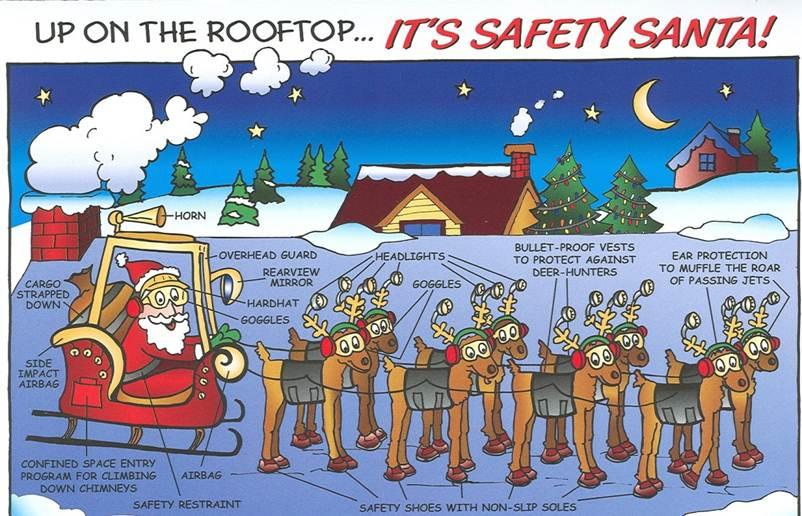
    This year we are once again pleased to report that not only have the flying sled and its power plants remained in compliance with the FAA but has now taken additional steps forward.  Incorporating new technologies and processes, safety has been enhanced in the following manner:

    • Addressing Slips, Trips and Fails with new safety/skip proof landing gear
    • A new Confined Space program along with appropriate personal safety gear
    • An alarm Klaxon and Better Lighting
    • Enhance Safety Restraints such as airbags and an overhead guard
    • Extensive Head, Vision, and Hearing Protection systems
    • Better Work Place Violence technology enabled processes
    • A new Cargo Restraint system

    It looks like the arctic region of the Occupational Safety and Health Administration (OSHA) outreach program is having great success.  Interested readers are invited to review the above safety Infographic for further details and perhaps new insights.

    Simplified Business Model

    There are a lot of lessons herein for those who don’t live at a mythical north pole.  First, it seems that much if not all the safety improvements made are inexpensive and easily implemented.

    Next, change management and new policies appear to be welcomed by those affected.  Answering the, “What’s In It For Me” question when adopting new technologies.

    Management is also ‘walking the walk’ with employees by driving the sled and taking the same risks as the rest of the team fulfilling customer requirements, i.e., snow covered rooftops and chimneys.  One can argue that this entire team is the Customer Facing part of the system.  Finally, customers have high expectations that must be met, and late delivery is not an option—this project has a fixed deadline!

    Stakeholder Value

    With billions of children waiting and using a complex and global logistics system, this team does not disappoint.  Earlier competitors have long dropped off the map.

    So why with a clear monopoly does this organization still seek greater Operational Excellence with its transformational Safety Culture?

    Simple—safe and excellent operational performance is good business!  Less unplanned downtime increases the bottom line.  Few incidents increase morale and the bottom line.

    Fewer legal issues, regulatory matters, and so forth and so on positively impact the bottom line.  With such significant ROI, what’s a stakeholder not to like?

    Is Your Operational Safety on Par with Ole Saint Nick?

    For More Information

    Please note, RRI does not endorse or advocate the links to other third-party materials.  They are provided for education and entertainment only.

    For more information on Cross Cultural Engagement, check out our Cross Cultural Serious Game

    You can contact the author as well.

  • Want – Like – Need

    Want – Like – Need

    Years ago, as part of a never-ending series of company reorganizations, a team of our change management consultants headed to the ‘field’ to interview users.  Upon their return, they presented an extensive list of technology investments deemed necessary to remain competitive.

    Their list focused on technology and not business concerns.  Wondering, I asked who they interviewed.  Proudly, they proclaimed the “field engineers.”  When queried–did they talk with district managers, regional engineers and others with P&L or other managerial responsibilities, the answer was “no.”

    This very expensive process by a major professional services organization simply generated a wish list of junior employees.  It was what they thought they WANTED.

    In our current jargon, “cool stuff.”  Needless to say, none of these projects were funded.  Wasted time and money by those not familiar with our business!

    Today, we are driven to LIKE everything!  CRM systems demand input before we have even procured the product or service.  Log on to any given website and the request to complete a survey will hit you before you read the first line.  Five stars or thumbs-up emojis appears to be the goal.

    Do wants and likes add value?  Perhaps a like is a statement of preference, but perhaps the consumer wants the digital driven question to just go away without the hassle of someone begging for a higher ranking like.  Fibbing to surveys has become a national pastime.

    Business should be most concerned about what a prospect or returning customer NEED.  What pain point or problem does your product/service solve?  If you can’t answer that question, no amount of wants and likes will add to your bottom line.

    I may want a hamburger and go to a fast food restaurant with lots of likes.  However, if I am in a hurry and their preference is clearly to move cars via the drive-through faster than those of us waiting inside, my need to eat quickly will not be met.  I may leave without my meal or most likely not respond to a survey seeking likes.  Then never return!

    That lost customer will never surface in any analysis—not even one star.  Enough of those responses and the business will be in jeopardy and management my not even know why.  Collecting likes should never be a Key Performance Indicator (KPI).

    Finding the Pain

    In a recent Global Energy Mentors leadership meeting, an investment group recounted their business model as one that focused on identifying organizational ‘pain’ points.  Once a specific pain was articulated, the search for new technologies that would address/resolve that pain was undertaken.

    This model flies in the face of Steve Job’s, “A lot of times, people don’t know what they want until you show it to them.”  That may be and sometimes unknown needs are uncovered.

    However, in critical infrastructure sectors where failure is not be an option because it can be very expensive solving a known need is usually most important.  Without exception, this entrepreneur’s success has been focusing on addressing industrial client known pain points.  As an example, our EVPM modeling process demands input from customer groups.

    In this blog series, we have referred to successful change management that comes from addressing the—what’s in it for me question.  From a customer perspective; freeing ‘me’ from known pain is often more valuable than alleviating pain I did not know I had.

    Does Your Value Proposition Solve a Need, Address a Want, or Simply Generate a Like?

    For More Information

    Please note, RRI does not endorse or advocate the links to other materials.  They are provided for education and entertainment only.

    You can contact the author more information as well.

    End Notes

      http://globalenergymentors.org/

      https://www.helpscout.com/blog/why-steve-jobs-never-listened-to-his-customers/

      https://therrinstitute.com/brand-your-digital-oilfield-culture-internalize-its-transformation/

  • I Hate These Things: Why Does This Always Happen to Me?

    I Hate These Things: Why Does This Always Happen to Me?

    We have long argued that people will change if they understand the new idea/technology value proposition—what’s in it for me?  For some, this question is more difficult to answer than others.

    Moreover, we are all stuck!  This age of digitalization may pass a few ‘off the grid’ hermits by, but for the rest of us there is no turning back.  So, what if I hate these computers and they never work as they should?  What’s a person to do?

    All of us have expressed some frustration with technology.  It doesn’t work well.  It does not appear that Human Factors were considered in the development process.  Various ‘Screens of Death,’ and so forth and so on.  Of course, glitches occur at the least opportune time.

    Turns out this frustration with technology is understood.  Dystechnia is defined as, “A barrier to organizational performance—a condition of flawed or failed efficacy in the use, deployment, or logistics of technology.”  Akin to other disorders of capacity, i.e., dyslexia it is basically the impairment of the ability to control a skill.

    In other words, the inability to manage a Condition.  This becomes a reason to resist technological advancements as ‘nothing is in it for me.’  In fact, it makes my life worse!

    The Technology Acceptance Model (TAM), circa 1989 addressed two perceptions driving adoption Behavior, ‘Perceived Usefulness’ and ‘Perceived Ease of Use.’  The what’s in it for me question.

    To change the Relationship that individuals have with technology, management must understand that those who resist may exhibit two traits:

    • Impaired capacity to apply the ‘new’ to daily tasks
    • Perception that it does not help them

    Those regular readers of this blog are aware of the R B C model (Relationship, Behavior, Condition).  From our Cross-Cultural Serious Game, the model was originally developed to address issues around cross cultural (international) negotiation processes.  Relationships are the focal point of this perspective, reflecting commonality of interest, balance of power and trust as well as intensity of expressed conflict.

    Behavior in this model is defined as a broad term including multi-dimensions and intentional as well as unintentional.  Finally, Conditions are defined as active and including circumstances, capabilities and skills of the parties, culture, and the environment.  Of course, time is a variable in this model as well.

    One key feature of the R B C Framework is its emphasis on interactive relationships while providing an environment for multiple levels of behavioral analysis.

    This makes it a useful tool to better understand technology take up resistance.  As with any forensic assessor, once we understand the Structural Dynamics we can implement approaches that will resolve efforts to thwart the ‘new.’

    How Does Your Organization Overcome Resistance to Change?

      https://www.urbandictionary.com/define.php?term=dystechnia

      https://en.wikipedia.org/wiki/Technology_acceptance_model

      www.rri-ccgame.com

      https://therrinstitute.com/wp-content/uploads/2017/10/structural_dynamics_-__version.pdf

  • Resolution: Celebrating a New Operational Start–One More Time

    Resolution: Celebrating a New Operational Start–One More Time

    It is hard to believe we are now 19 years into the century.  Seems like only yesterday we were worried whether the lights would stay on at Y2K.

    Each year many of us promise to do better at a list of things, some personal and some professional.  Some days or weeks later, some or all of our resolutions go unmet.

    For many heavy industry sector firms, January 1st is also the start of a new fiscal year.  New budgets will be released, and management will extol their workforce to meet new (possibly stretch) targets.

    If the equity markets are a barometer of things to come (leading indicator), then the Conditions organizations will find themselves in will most likely be volatile and some segments may even face significant challenges.

    For example, WTI crude oil closed on January 4th at US$ 47.96/bbl.  Some are bullish on this sector, with an expectation higher prices in the future.  History has shown this faith may not bear out.

    Regardless, organizational Behavior will need the flexibility to adjust in a process relevant time frame as conditions change.  The resulting Relationship with the firm’s ecosystem is a function of the behavior in the conditions or market circumstance.

    In other words, the R B C Framework is applicable in our everyday corporate life.  Why is this important?

    One way to view the global marketplace is one of continual change.  Often purveyors of Change Management/Organizational Transformation present this as a point in time.  Statements about continuous improvement are seemingly afterthoughts.

    We have developed an Operational Excellence Platform, as depicted in the following figure.  Please note that it is built upon the R B C Framework.

    Since the nature of Relationships across the organizational ecosystem will continuously evolve based on the marketplace, it follows that maintaining Operational Excellence depends on these tree factors.  Safe and profitable operations on strong, positive relationships.

    How well does your organization understand the R B C Framework for its ecosystem?

    Further Reading

    The author and others have published extensively on this subject.  The list of appropriate articles and papers is too extensive to list here.  However, readers are invited to peruse Dr. Shemwell’s extensive list of blogs and publications.

    See our Economic Value Proposition Matrix® (EVPM) for additional information and a free version to build your own EVPM.

    For further information Contact Us.

  • Command and Control: Is this the Way to Run the modern Railroad?

    Command and Control: Is this the Way to Run the modern Railroad?

    The managerial model, Command and Control (C&C) dates back to the dawn of humanity when tribal chieftains dictated the behavior of the group.  It survives to this day in many forms.  Typically, one thinks of military operations as the current manifestation of C&C in the western world.

    According to Wikipedia, by one definition found in The US Department of Defense (DOD) Dictionary of Military and Associated Terms, “command and control functions are performed through an arrangement of personnel, equipment, communications, facilities, and procedures employed by a commander in planning, directing, coordinating, and controlling forces and operations in the accomplishment of the mission.”  This definition has evolved from a more simplistic version found in the Cambridge Dictionary, ”situation in which managers tell employees everything that they should do, rather than allowing them to decide some things for themselves.”

    One suspects that most laypeople believe the latter definition to be to be the typical approach to C&C in their organizations.  In today’s complex (often global) organizational ecosystem, that version is outdated.

    The International Command and Control Institute, publication (circa 2005) , Understanding Command and Control develops this management construct in great detail.  As the following figure suggests, even a simple C&C structure such as a heating/AC system is driven by a set of KPIs.

    This is indicative of the digitalization of the system versus the analog controls many of us can recall from our youth.  Adding another layer, today’s ‘Smart’ thermostat operates within a well-defined governance schema such as the Internet of Things.

    Strong Bond Governance

    We first made the case for “Strong Bond Governance” in our September 17, 2013 Governing Energy blog, Strong vs. Weak?  In Critical Infrastructure sectors such as energy, medicine, etc. as defined by the US Department of Homeland Security we make the case for the construct of High Reliability Management (HRM).

    The Strong Bond Governance (SBG) paradigm enables HRM.  SBG demands Board of Directors and C Suite engagement in operations.

    Not directly but by putting in place a governance structure.  This has not always been the case with a number of catastrophic man-made disasters as the result.

    In some ways, C&C mimics HRM.  However, there are some significant differences.  HRM sets in place a structure designed to meet the test of adversities.

    • Preoccupation with Failure—a recognition that ‘failure is an option’ and the organization must respond quickly and effectively to mitigate exposure and recover. C&C does not directly address is concern.


    • Reluctance to Simplify—today’s organizational ecosystems are complex. Reducing operational decisions to the so-called Power Point three bullets, High, Likely, Low is completely unsatisfactory and potentially exposes the firm to business or technical process catastrophe.  Likewise, C&C models do not directly address this approach.


    • Operational Sensitivity—the field is where organizational action is, and senior management must have a focus on this critical component of the business. C&C also has a focus on operations, especially in the military sector.


    • Resiliency—things will go ‘bump in the night.’ Organizations must but in place the processes and expertise to rapidly respond to goblins that will be encountered.  C&C does not address this process.


    • Deference to Expertise—engage those who have the ‘know how’ to solve problems and that is mostly likely not the management team. This is substantially difference than the C&C model

    HRM allows management to look at computer dashboard and get a snapshot of most if not all aspects of the organization.  However, this does not mean that these individuals can manage from afar.  Those closed to and more knowledge about this issue must take the lead.

    Concluding Thoughts

    Watching the news, History Channel and/or various movies, one can see that even the military no longer uses simplistic C&C.  Small semi-autonomous teams take on the bad guys.  To be sure there is a Mission, Rules of Engagement and other governance controls in place.

    This provides local commanders the latitude needed to accomplish the mission at a minimum of human (good guy/non-combatants) and other collateral damages.  Additionally, military aircraft employ ‘High Reliability Management’ techniques where the expertise of the entire crew is used rather than the Captain dictating operational performance.

    Asiana Flight 214 crashed attempting a landing at San Francisco in July 2013.  One causal component was deemed to be the C&C culture of the Korean pilots.  Cockpit Management might have saved this aircraft and the lives lost.

    Likewise, those organizations and their ecosystems in critical infrastructure sectors that use HRM enjoy safer and more productive track records than those that do not—better bottom line.  The October 2014 Ebola scare is an example where the public health sector employed HRM and limited the impact of a highly contagious deathly pathogen.

    There is a tendency when the stakes are high for management to take the ‘reigns.’  In other words, engage in micromanagement.  The usual results are often sub-optimal.  The ‘gut instinct’ towards simplistic C&C is a strong urge and this addiction must be put into remission.

    A well-established Strong Bond Governance, High Reliability Organization can weather any storm the markets or nature can throw at it.  However, this organization transformation must precede the advent of major challenges!

    Traditional C&C is not an OE Imperative