Category: Methodology

  • Crisis Management: The Need for Internal Consistency

    Crisis Management: The Need for Internal Consistency

    Attributed to former US Senator and Governor Rhode Island, Lincoln Chafee, “Trust is built with consistency.”  Moreover, from statistics we know that Internal Consistency, “measures whether several items that propose to measure the same general construct produce similar scores.”  The follow on definition statistical reliability, “is the consistency of a set of measurements or measuring instrument, often used to describe a test.”

    In our July 20, 2021 post, Are Your DEI Wheels Spinning? we posited that positive behavioral change as a result of a new situation/condition must result in relationships built on trust.  Without said trust, positive behavioral change is unlikely.

    Situational Change and Differences of Opinion

    Responsible individuals, organizations, and even industrial sectors can disagree.  In fact, ‘academic argument’ is a key component of the Scientific Method and science is never settled.  Moreover, most situations are fluid and those in crisis tend to be agitated.

    That said, crisis management techniques demand well defined processes with identified owners.  Moreover, data must be shared and meet the dual tests of ‘valid and reliable.’  There is no room for sloppiness or data bias as was found in more than one occasion during the Covid-19 pandemic.

    Some argue that Covid-19 data issues are unique and due the global nature of the problem.  However, we are told that Big Data is the future or actually is now.  Solving Climate Change, enabling driverless electric vehicles and so on and so forth.  Based on current performance, it would appear we have a ways to go.  Despite statements to the contrary it is possible implement decision support systems quickly and with success.  This is actually not a new process.

    Street Cred

    Often viewed from the perspective of the colloquial.  One attains credibility based on perceived performance and not necessarily as a function of actual accomplishment.  Usually, highly visible this Influencer can hold sway in larger ways than are actually justified.  However, in their orbit these individuals hold the trust of their followers.  Those holding contrary views will lack trust from this group but may hold significant trust from others skeptical of said leader.

    Both sides can loose trust and cred if ‘holes’ appear in the story line, narrative or agenda.  If the internal consistency of each position is weak, internal group pressures may ultimately destroy any impression of belief and trust.

    This is somewhat where the world is with the established Public Health authorities.  Many hold the perception of perhaps actual misinterpretation, analysis and presentation of the Covid-19 data sets.  The counter position lacks credibility as well.

    R B C

    We have been a proponent of the Relationships, Behaviors, Conditions model for almost thirty years.  Simply put, when situations or conditions change, human behavior changes and vis-à-vis.  This directly impacts on the relationships between individuals or groups, even societies.

    Large, controversial conditional movements, often with poor and even incompetent supporting data can lead to the erosion and even the complete breakdown of trust among affected parties.  Emotional, hyperbole, draconian and biased positions can accelerate the breakdown of trust.

    Once this bond is broken, rebuilding trust is a very lengthy process.  Rebuilding trust is an act of leadership!

    What is your organization doing to keep trust intact?

    For More Information

    Please note, RRI does not endorse or advocate the links to any third-party materials.  They are provided for education and entertainment only.

    For more information on Cross Cultural Engagement, check out our Cross Cultural Serious Game

    We presented, Should Cross Cultural Serious Games Be Included in Your Diversity Program: Best Practices and Lessons Learned at the Online Conference, New Diversity Summit 2020 the week of September 14, 2020.  Check Out this timely event and contact the organizer for access to the presentations!!

    You can contact this author as well.

  • Are Your DEI Wheels Spinning?

    Are Your DEI Wheels Spinning?

    Originally published as a LinkedIn article on July 6, 2021, this updated version is reprinted here with the permission of the author.  Links to relevant sources are added.

    Lately, many LinkedIn posts bemoan the state of Diversity, Equity, Inclusion (DEI) initiatives. The seeming slow take up of great ideas.

    Some argue that DEI initiatives are no more than window dressing or organizational efforts to stave-off litigation. To others, they have the appearance of one more management initiative that if waited out will simply go away like so many others before.

    Fundamentally, DEI initiatives require change. A change of (B)ehaviors in the face of seemingly new situations or influencing (C)onditions (Circumstances, Capabilities, Cultures, Environments). When these two variables evolve, so do exiting (R)elationships. The RBC model is well established in social science and was first used to model Cross-Cultural (international business) Negotiations.

    It is multi-dimensional including a temporal schema capable of addressing numerous aspects of human behavior. Furthermore, it encompasses cultural as well as other situational aspects such as individual backgrounds.

    We tested this model using Japanese and American executives. This culturally diverse group needed to develop a level of trust if negotiation outcomes were to be successful.

    Likewise, successful DEI initiatives require that culturally diverse groups develop a high level of trust among those working together and/or members of teams.

    “Tell Me and I Forget. Teach Me and I Remember. Involve Me and I Learn”

    Attributed to Benjamin Franklin, this quote tells us all we need to know. The so-called Death by PowerPoint lecture long in vogue are often forgettable. Instruction, along with the homework prerequisite and tests are traditional methods. Finally, engaging individuals, teams, departments and even entire organizations can create long standing sustainable knowledge that is the basis for behavioral transformation.

    Paper based serious games or “games whose purpose is other than entertainment” originated in the late 1960-70s. In a nutshell, this is an interactive training solution. Subsequently, online serious games can incorporate actual scenarios designed to immerse players solving real world challenges.

    Rather than a video game whereby players engage with electronic decision trees, human-to-human serious games train players/teams to deal with diverse yet real colleagues. Collaborative scenarios direct participants to collectively solve problems while learning how their culturally dissimilar counterparts address the same challenge.

    Scenarios can drive engagement by all players including those who may not be typically involved in decision making processes. This is also a safe, no-harm no-foul environment with little to no individual decision-making risk.

    Transformation

    Any successful ‘change’ initiative must answer the What’s in It for Me? question. Humans may resist change if they do not see personal value from such actions. Moreover, while senior executive leadership is required, heavy handed top down My Way or The Highway may result in direct resistance, and/or a more crowed freeway to the exit ramp.

    For example, the current version of the smart phone was first available circa 2007. According to Statista, approximately 1.38 billion smartphones were sold in 2020. Likewise, over 46 percent of the global population own these devices.

    What does this have to do with DEI? In 2006 cellphones were great and becoming ubiquitous. No one knew they needed a smartphone. Our collective Behavioral transformation was caused because the What’s in it for Me question was answered.

    One component of the Conditions criteria, Capability changed as this technology enabled individuals to drive new behaviors based on Apps that emerged. The resulting transformation in our Relationships is well documented, i.e., the use of text as opposed to voice.

    Sustained transformation requires continued energy. The term ‘initiative’ implies a short-term event and one that will pass.

    Trust must be established and maintained. Over time, sustained energy will result in critical mass, or the (statistically significant) number of individuals engaged and trusting each other. This self-sustaining energy is transformation.

    Reframing DEI Initiatives into the RBC Framework can enable dramatic and rapid transformation. Take advantage of these types of cross-cultural models.

    For More Information

    Please note, RRI does not endorse or advocate the links to any third-party materials.  They are provided for education and entertainment only.

    For more information on Cross Cultural Engagement, check out our Cross Cultural Serious Game

    We presented, Should Cross Cultural Serious Games Be Included in Your Diversity Program: Best Practices and Lessons Learned at the Online Conference, New Diversity Summit 2020 the week of September 14, 2020.  Check Out this timely event and contact the organizer for access to the presentations!!

    You can contact this author as well.

  • I Didn’t Do It, He Did — I Didn’t Do It Either, Someone Else Did

    I Didn’t Do It, He Did — I Didn’t Do It Either, Someone Else Did

    “When converted into productive thought and action, the energy it takes to blame, shame, and game is enough to launch anyone into heights of real success and happiness.”

     – Charles F Glassman

    Entrée

    It is not often that an entire geographically LARGE state loses power and water simultaneously.  Now we know it can happen!  Welcome to Texas (ERCOT) circa the dawn of the 21st Century.

    The finger pointing and claims, ‘not my responsibility’ surfaced immediately at all political levels.  As I sat in my power free, cold, waterless house, I was moved that political leadership was focused on saving their own hides.

    Benjamin Franklin’s words, “We must all hang together, or, most assuredly, we shall all hang separately” are lost on our hyper partisan world.  Earth to all polls, there is enough blame on this one to go around.  This society loves to Share and Like and is quick to find fault.

    The usual suspects will pontificate about blaming others and legal initiatives have already surfaced.  Good media, but who actually cares?

    This blog post is not about politics or the blame game.  It rather posits a solution that sees that this never happens again–anywhere.

    Operational Excellence Platform

    Excellent performance requires a conscious effort at all levels of an organization and its ecosystem.  We embodied a approach for heavy industry in our 2012 article, High Reliability Management in Process Industries: Sustained by Human Factors.  In that piece we put forth the argument that High Reliability Management is a strong methodology for management large complex systems such as the Texas Electric Power Grid.  HRM provides organizations with Agility, Resiliency and Sustainability in the face of large complex incidents.

    As we have previously put forth, Normal Accident Theory (NAT) posits, “that some accidents are inevitable because of system complexity.”  While logical, this model has its critics and lacks empirical evidence.

    The Texas electricity power grid got into process/technological/engineering trouble rather quickly.  Debate will rage for years as to what actually happened.  However, it seems practitioners at all levels practiced NAT.  Like Deepwater Horizon, this event did not have to happen.

    Safety Culture

    At the core of High Impact Performance is a strong safety culture.

    Systemic Safety Culture as the Core Set of Values and Behavioral Economics of ALL participants of the extended organization and its Enterprise Risk Management strategy that reflect a Strong Bond Governance commitment to behaving as a High Reliability Enterprise Ecosystem in a safe and environmentally responsible manner.

    Going Forward

    The over used phrase, ‘teachable moment’ suggests that we learn from our history so as not to repeat it.  Most likely oxen will be gored, witch hunts abound and the likelihood of little tangible progress will be made.

    Career losses will most like exceed the six board members who have already resigned.  All because the reactive NAT model was followed.  One is well advised not to follow this lead.

    How are you making sure that your operations processes are proactive?

    For More Information

    Please note, RRI does not endorse or advocate the links to any third-party materials.  They are provided for education and entertainment only.

    For more information on Cross Cultural Engagement, check out our Cross Cultural Serious Game

    We presented, Should Cross Cultural Serious Games Be Included in Your Diversity Program: Best Practices and Lessons Learned at the Online Conference, New Diversity Summit 2020 the week of September 14, 2020.  Check Out this timely event and contact the organizer for access to the presentations!!

    You can contact this author as well.

     

  • What Is Your Opinion Based On?

    What Is Your Opinion Based On?

    “Without data, you’re just another person with an opinion.”

    ~ W. Edwards Deming

    Data and its use is a very hot topic these days.  Significant controversy exists over decision making regarding Covid-19 strategies and the quality or lack there of the data supporting government policies.  Scientific disagreements and so called ‘academic arguments‘ are appropriate, especially when facing the NEW.  However, the way some data is being used should give us all pause.

    We will learn a lot from this pandemic, one important opportunity is to understand how incomplete and competing data can/must be used in important decision processes.  By definition, every decision is made with incomplete and/or poor quality data.  Moreover, all data is not revealed by traditional data analysis–Latent variables play a major role in any assessment process.

    Opinions Are Like …

    There are a number of ways to complete the above sentence and we will leave that to the reader.  As Deming mentioned, if the data supporting a position is not valid and reliable, it enters the arena of “FAKE.”  According to Accenture, “Fake data is data that is unverified, maliciously tampered with, or just plain wrong.”

    Unfortunately, much of what is passed today, especially on social media might be classified in the fake category.  With no quality assurance, even by institutional resources, positions are advanced as gospel and are often not just wrong but driven by agendas.

    For example, months ago, hydroxychloroquine was vilified by an on air journalist, yet a world leading medical expert posited that it helped.  Presently, the pendulum has swung against this drug.  Questions of the efficacy of the data have been resurrected.

    It is beyond the scope of this piece to address data nuances. Interested parties may find the Public Health Research Guide: Primary & Secondary Data Definitions useful.  Moreover, it is not necessary to become a data expert or data scientist.  The construct, Wisdom of the Crowds suggest that the knowledge and decision of a large group can be better than experts.

    If you have expertise in data, ask this simple question “Is the data reliable and valid?”  Also, follow the wisdom of physicist Richard Feynman, “If it disagrees with experiment, its wrong.”

    With so many claiming to follow The Science, it is important that individuals have a level of understanding about the data that supports The Science.  Sadly, from this physicist’s perspective secondary, unvetted data is often the weak foundation of their positions.

    So, What Are Your Statements Based On?

    For More Information

    Please note, RRI does not endorse or advocate the links to any third-party materials.  They are provided for education and entertainment only.

    For more information on Cross Cultural Engagement, check out our Cross Cultural Serious Game

    We presented, Should Cross Cultural Serious Games Be Included in Your Diversity Program: Best Practices and Lessons Learned at the Online Conference, New Diversity Summit 2020 the week of September 14, 2020.  Check Out this timely event and contact the organizer for access to the presentations!!

    You can contact this author as well.

  • Covid-19 Positive: Telemedicine Kicked into High Gear

    Covid-19 Positive: Telemedicine Kicked into High Gear

    Crisis Drives Change

    In 2001 this writer approached the Houston medical community, post tropical storm Allison which flooded many basements in the Houston Medical Center with the loss of experimental data and other records.  We proposed the development of an Internet based solution to hold and manage medical records of all types.  The response to my organization’s offer to digitize records was met with disbelief and ultimate rebuke.

    At the time I was employed by a major corporation with the technology and financial resources to accomplish this task.  Sales Objections included privacy, doctors will not ‘buy in,’ insurance will not pay for it and a host of other lame excuses.

    Flash forward to 2020.  Why are thing so different now and the idea of ‘digitalization’ almost universally accepted?

    Twenty years is a career for many, yet it took a crisis this year to kick the medical sector into action at critical mass—Coronavirus, aka Covid-19.  As often the case large organizations are content to stay with the status quo.  Culture, processes, and even individual bonuses incent lethargy and complacency.  This common trait is not limited to one sector.

    Moreover, advances in online telemetry support the physician’s ability to treat many aliments remotely.  The industry did not just ‘jump’ to the current state, it evolved over time.  For example, remote and inaccessible areas such as Antarctica have taken advantage of telemedicine including remotely directed surgeries.

    Democratization

    We may look back on 2020 as the seminal moment when medicine was digitalized.  Despite current access issues such as we are finding with K-12 education, most will have the ability to interact online in the near future.  Moreover, a number of COTS (commercial off the shelf) health solutions such as found in a variety of Smart phone products enable remote diagnosis and monitoring on a global basis.

    The catalyst for taking telemedicine to the next level is Covid-19!  A good Positive.

    How is your organization taking advantage of remote operational technologies?

    For More Information

    Please note, RRI does not endorse or advocate the links to any third-party materials.  They are provided for education and entertainment only.

    For more information on Cross Cultural Engagement, check out our Cross Cultural Serious Game

    We presented, Should Cross Cultural Serious Games Be Included in Your Diversity Program: Best Practices and Lessons Learned at the Online Conference, New Diversity Summit 2020 the week of September 14, 2020.  Check Out this timely event and contact the organizer for access to the presentations!!

    You can contact this author as well.

  • Linear Metrics in Non-Linear Times?

    Linear Metrics in Non-Linear Times?

    “If it disagrees with experiment, its wrong”

    Our point today is to assess how behavioral decisions are being made today; not about the politics of one candidate or the other.

    The race to the US presidential election has entered its final phase.  As of this writing, establishment wisdom holds the conventional candidate as the presumptive winner.

    Pollical polling is a linear straightforward process albeit with the inherent bias of ‘all’ behavioral instruments.  Effective surveys will take a statistically significant representative sample and project those results to the larger electorate.  A time-honored approach for product marketing as well.

    However, there is another school of thought.  When a new produce/idea is disruptive or not well understood, the firm needs to be proactive rather than simply reactive such as using a survey.  Steve Jobs stated, “You can’t just ask customers what they want and then try to give that to them.  By the time you get it built, they’ll want something new.

    One interpretation, ‘They don’t know what they don’t know.’  Echo the words of Donald Rumsfeld!

    Pollsters suggests that 2016 will not be repeated and they have modified their survey instrument control processes.  Recently one noted canvasser, Frank Luntz stated, “Pollsters did not do a good job in 2016.  So, if Donald Trump surprises people, if Joe Biden had a 5 or 6-point lead, my profession is done.”

    Our Lying Eyes

    When the world was the center of the universe with all the stars and galaxies rotating around us, linear projections confirmed the observed metrics.  However, famously, Nobel laureate, Richard Feynman taught us that, “If it disagrees with experiment, its wrong.”

    Galileo and Kepler among others experimented using the observable data differently.  They discovered that the universe does not revolve around our planet.

    Their assessments altered the given world forever and caused them significant personal angst in the process.  Established ‘science’ did not welcome this change readily.

    If the incumbent rallies and is elected for a second term despite expert projections using legacy linear tools, it maybe time to rethink how social beliefs and behaviors are measured.  Given the problems with Covid-19 data management, the same maybe said for that issue as well

    Hypothesis—Disruption cannot be accurately measured with traditional tools.

    Learnings

    Beyond politics and marketing, there are lessons for all of us.  Artificial Intelligence, Search Engines, Predictive, Big Data Analytics, Machine Learning, IoT et al are now all the rage.  But what if they are using the wrong algorithms?

    There are ramifications for our daily lives.  In March 2019, the Boeing Max 8 was grounded and has yet to return to service.  Will driverless automobiles put us all at risk?

    This survey question maybe answered on November 3 or whenever the final results are tabulated.  Other questions about the use of other metrics will remain unanswered; at least for now.

    How are you certain your decision supports processes and tools are providing valid and reliable data?

    For More Information

    Please note, RRI does not endorse or advocate the links to any third-party materials.  They are provided for education and entertainment only.

    For more information on Cross Cultural Engagement, check out our Cross Cultural Serious Game

    We presented, Should Cross Cultural Serious Games Be Included in Your Diversity Program: Best Practices and Lessons Learned at the Online Conference, New Diversity Summit 2020 the week of September 14, 2020.  Check Out this timely event and contact the organizer for access to the presentations!!

    You can contact this author as well.

  • Can Never Be Proved Right!

    Can Never Be Proved Right!

    “If it disagrees with experiment, its wrong”—Richard Feynman

    Full Disclosure: this author holds a Bachelor of Science degree in Physics with a minor in Mathematics.  My doctoral dissertation developed a new Game Theory based practical solution.

    For those unfamiliar with this discipline, check out the movie Beautiful Mind or the work of John von Neumann who is also the father of the modern computing architecture.  Our approach is based on these integrated disciplines.

    This follows on the last blog and was inspired by a weekend conversation with my brother who holds a Ph.D. in physics and has invented products making the aviation world much safer.

    The incomparable (Nobel Prize in Physics) Richard Feynman knew how to teach physics to laypeople.  One of his most notable moments was when he showed the shuttle Challenger committee that freezing o-rings made them more brittle—something most living in the north intuitively know but somehow was lost during cold snaps in Florida (not entirely as some warned of this potential).  The other option was “get-there-itis” or the need to fulfill a mission no matter what.  Time, money and reputation at risk.  For more information, check out the final report on the Challenger.

    Instead of taking your time to read this pundit’s opinion, spend 10 minutes to hear what this Nobel Laurate has to say regarding the definition of Science and the Scientific Method.  He also argues that with ‘Vague Theory’ you can get multiple results, aka pseudo-science.

    I think this model works for Covid-19 as well.  After all, addressing this pathogen is largely technology based.

    “For a successful technology, reality must take precedence over public relations, for Nature cannot be fooled”

    —R. Feynman, Challenger Report

    For More Information

    Please note, RRI does not endorse or advocate the links to any third-party materials.  They are provided for education and entertainment only.

    The Short Version of this Feynman lecture.

    For more information on Cross Cultural Engagement, check out our Cross Cultural Serious Game

    We presented, Should Cross Cultural Serious Games Be Included in Your Diversity Program: Best Practices and Lessons Learned at the Online Conference, New Diversity Summit 2020 the week of September 14, 2020.  Check Out this timely event and contact the organizer for access to the presentations!!

    You can contact this author as well.

  • They Blinded Me with Science

    They Blinded Me with Science

    Thoughts from a Scientist

    Full Disclosure: this author holds an undergraduate degree in Physics with a minor in Mathematics.  My doctoral dissertation developed a new Game Theory based practical solution.  For those unfamiliar with this discipline, check out the movie Beautiful Mind or the work of John von Neumann who is also the father of the modern computing architecture.  Our approach is based on these integrated disciplines.

    Belief in ‘The Science’

    The multiple disciplines often called ‘Science’ incorporate a wide set of specialties.  At the fundamental level all life depends on science.  Gravity, medicine, chemistry, electronics, are all dependent on basic scientific understanding.  If it was not so, our iPhones would not work.

    The phrase, “Everything that can be invented has been invented” Charles H. Duell Commissioner of US patent office (perhaps jokingly) supposedly said in 1899.  Needless to say, ‘The Science’ continues to evolve.

    When treated as fait accompli, (Settled Science) pundits pronouncing The Science says “. . .,” do their audience a disservice.  Since human first started discovering their world and its place in the universe science has been an ongoing process.  Those interested in additional details should check out the Timeline of Scientific Discoveries.  A very compelling read.

    A final point, science is usually the subject of often great debate—sometimes for decades or more.  In this sense, there is no such thing as settled science—there is always something new to discover in any field.

    Pseudo-Science

    Lies, darn lies and statistics is a phase often heard.  Its meaning?  The use of numbers can be very persuasive bolstering diametrically opposed positions or academic arguments.  This is one way to look at the differences between science and pseudo-science.

    According to Scientific American, “Scientific claims are falsifiable—that is, they are claims where you could set out what observable outcomes would be impossible if the claim were true—while pseudo-scientific claims fit with any imaginable set of observable outcomes.  What this means is that you could do a test that shows a scientific claim to be false, but no conceivable test could show a pseudo-scientific claim to be false.  Sciences are testable, pseudo-sciences are not.”

    These two terms are often confused or deliberately conflated in support of positions based on ‘The Science.’  Caveat Usor or ‘let the user (of information) beware’ of the agenda and/or purpose of its purveyor.

    Enter Covid

    Covid-19 has presented some interesting challenges.  From the public discourse, one can assume both science and pseudo-science are at work.  A vigorous dialogue is ongoing at all levels of society from the political and medical classes to the so-called man (or woman) on the street.

    The public is not used to seeing such open scientific debate by knowledgeable (scientists) parties and it often appears they are in total disagreement about various aspects of the pathogen.  In this, they are correct as they are seeing the so-called ‘sausage making’ of this discipline.

    Likewise, a wide variety of agendas seem to be driving the use of pseudo-science to support positions and action plans.  This seeming chaos, especially in a US presidential election cycle has cast a long shadow of Fear, Uncertainty and Doubt (FUD).

    Data integrity, statistical models and medicine have all been called into question this year.  Beyond this pandemic, we are all now faced with the politicization of ‘The Science.’

    Guidelines in the Era of Hyper-Technology

    Approximately twenty years ago, the chemical company Dupont changed its long standing tag line from “Better Living Through Chemistry” to “The Miracles of Science.”  This suggests that everyone living today has seen science at the forefront of our existence.

    Technology, the delivery mechanism of science to consumers has expanded at an exponential rate and is seeming driving even faster.  Therefore, a hypothesis from the Scientific Method is that ‘we consumers are knowledgeable buyers.’

    So, why not use the Scientific Method yourself?  Here is one approach:

    • Pose a Testable Question—Ask yourself how can I measure the response?
    • Conduct Background Research—Google search et al, recognizing the probably of bias on the part of authors
    • State your Hypothesis—Question with NO pre-conceived outcome (Pseudo-Science)
    • Design Experiment—How can I test my hypothesis?
    • Perform your Experiment—Test your idea
    • Collect Data—Write down anything that you learn
    • Draw Conclusions—What makes logical sense (Mr. Spoke)?
    • Publish Findings—Tell your colleagues, write a blog or more

    This need not be an arduous task.  In fact, much of it you’re doing already when you make a decision to procure technology devices.

    Think about what you hear pundits arguing about using this approach.  You will likely arrive at your personal conclusion that you are either hearing about science or pseudo-science.

    Either answer may be fine, but now you will know more about what you are consuming.  This is an important distinction.

    How Can You Assure Yourself That You Are Not Blinded by Science?

    For More Information

    Please note, RRI does not endorse or advocate the links to any third-party materials.  They are provided for education and entertainment only.

    For more information on Cross Cultural Engagement, check out our Cross Cultural Serious Game

    We presented, Should Cross Cultural Serious Games Be Included in Your Diversity Program: Best Practices and Lessons Learned at the Online Conference, New Diversity Summit 2020 the week of September 14, 2020.  Check Out this timely event and contact the organizer for access to the presentations!!

    You can contact this author as well.
  • Data Bias: The Latent or Unobserved

    Data Bias: The Latent or Unobserved

    In statistics a Latent Variable can be defined as, ‘a variable inferred from observed or measured data.’ Its analysis is often used psychology, economics, and predictive modeling.  This author used Structural Equation Models (SEM) in his 1996 doctoral dissertation, Cross Cultural Negotiations Between Japanese and American Businessmen: A Systems Analysis (Exploratory Study).

    From that abstract, “The use of sophisticated statistical techniques such as structural equation modeling and game theory is becoming increasing more important.  Traditional techniques are known to be limited, particularly in the context of cross-cultural behavioral studies.”

    Survival Bias

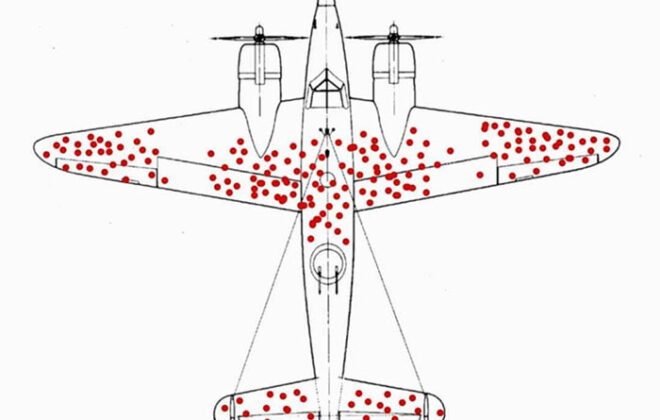
    A recent LinkedIn post alerted this writer to the inimitable perspective statistician Abraham Wald brought to the assessment of World War II Allied bomber damage upon return from missions.  He argued that observed anti-aircraft damage was non-crippling since the aircraft remained airworthy and was able to return.

    He surmised that planes that did not come home may have suffered damage to other areas making them unairworthy and hence their data was unobserved.  Based on this analysis, the U.S. Navy beefed-up armor in the less or unaffected areas and this was credited with saving lives and aircraft.

    This type of analysis came to known as Survival Bias which has its proponents and detractors.  On the surface, it seemed intuitively obvious that areas of damage need addressing while not necessarily those statistically showing fewer issues.

    It is not our intent herein to assess its merits and applicability.  Rather to help readers better understand the very nature of big data and its use, especially in predictive and behavioral models.

    Covid-19

    Today, policy and other decision makers are tasked with dealing with a deadly global pathogen.  Apparently developing quickly and spreading exponentially—a super spreading event.  As of this writing has afflicted millions in 188 countries/region in much less than 12 months.

    In this pundit’s opinion, much of the concern, confusion and clearly wrong information regarding this disease and mitigation protocols can be traced to data collection and analysis.  By now most readers will have some familiarity with the chaos associated with these predictive models.

    For example, according to the US National Library of Medicine, National Institute of Health, “A key fact for us all to remember is that, for the majority of countries, we’re not actually counting how many people have the virus—instead were counting the reports of how many people have the virus, and, like all metrics, those numbers vary according to how they’re measured.  An increase in the number of tests being carried out will result in an increase in the number of infections detected.”

    In addition to the Herculean efforts to tame this tiger from the vast medical, scientific, technology and many other disciplines, Structural Equation Modeling is being used to shed additional light on the latent variables.

    Final Thoughts

    The 2020 Coronavirus is an early test of Big Data analysis in support of decision makers both for public policy and non-government organizations.  While performance so far has been weak, this pundit believes great value can come from this effort.

    Data quality must be highly reliable and valid.  Moreover, models must assess what is not seen, the latent variables such as found in Survival Bias.  These two aspects of strong decision support models are crucial.  These are lessons for all of us.

    Where Didn’t the Bullets Hit Your Business Model?

    For More Information

    Please note, RRI does not endorse or advocate the links to third-party materials.  They are provided for education and entertainment only.

    For more information on Cross Cultural Engagement, check out our Cross Cultural Serious Game

    We are presenting, Should Cross Cultural Serious https://rri-ccgame.com/Games Be Included in Your Diversity Program: Best Practices and Lessons Learned at the Online Conference, New Diversity Summit 2020 the week of September 14, 2020.  Check Out this timely conference!!

    You can contact the author as well.

  • Agility, Resiliency, Sustainability

    Agility, Resiliency, Sustainability

    In a recent Harvard Business Review, I was struck by an article about Best Practices for small businesses.  From that piece, “To successfully navigate Volatile, Uncertain, Complex and Ambiguous (VUCA) challenges like Covid-19, family business leaders can look to best practices from another organization that specializes in VUCA situations—the U.S. military’s Special Operations Forces (SOF)” (emphasis added).  There are a lot of good ideas in the article that organizations can implement immediately.  Moreover, we have long recognized that properly vetted and adjusted as necessary, Best Practices from others can add significant value to organizations in other industries.

    Out of the Darkness

    It is easy to be overwhelmed these days.  Mildly put, most if not all organizations were thrown into chaos in less than a month.  Depending on your business you are either partially operating or still waiting to open-up.

    Regardless, how you work in June will be different than early March (~60 days as of this writing).  Traditional recession management and recovery techniques may not be applicable this time.

    There are lots of ideas about how to use technology going forward.  Digitalization, IoT, IT-OT, among others are hawked as THE solution.  Problem is, it is not that simple, and it takes time and money to implement.  Many midsize firms do not have those privileges/resources.

    There are a lot of actions most organizations can take without major CAPEX investments in time and money.

    Years ago, we recognized that certain industrial sectors, particularly those with a high-risk profile such as energy or others deemed to be part of Critical Infrastructures face unique challenges.  Some have a tendency towards incremental change or even the status quo.  Change is often slow with setbacks.

    Moreover, for every major firm there can be thousands of organizations in the supply chain ecosystems all of which must work well if total costs and profitability for all are to be effectively addressed.

    This seemingly daunting task yet it need not be.  There is a solution set available that can help organizations manage through this dark period and into the light, thriving.

    The mission of The Rapid Response Institute is;

    “Helping Clients Achieve Organizational Agility, Resiliency and Sustainability”

    To that end, we have developed solutions, methodologies, and tools enabling enterprises of all sizes to not just survive but thrive after disruptive events.  Much of this is either free or at low cost.

    Rapid Response

    In our 2009 White Paper, Rapid Response Management: Thriving in the New World Order we posited our new approach to managing your business.  “Rapid Response Management (RRM) is an organizational construct or mental model that enables the organization and its key partners to rapidly sense changes and respond accordingly–quickly.  While it maximizes the effectiveness of management knowledge to address change, it is not simply gut feel.  Rather it is a simple yet sophisticated, methodical paradigm any organization can quickly and inexpensively implement.”

    RRM is a creative and well documented method for running your business.  The thinking was well advanced by 2009 and has been further ‘stress tested’ over the past decade.

    We have updated RRM with our Operational Excellence Platform and interested readers are invited to check that out as well.  Our offerings are designed to help our clients get through crises such as Covid-19.

    We are updating this white paper and it will be available as an e-book in the near future.  If you would like to reserve a free copy, Contact us.

    We are here to shed some light during this dark period.  For no cost, no obligation discussion contact us.  We can put decades of experience dealing with business cycle adversity on your team.

    Feel like your trapped?  You’re NOT!

    For More Information

    Please note, RRI does not endorse or advocate the links to third-party materials.  They are provided for education and entertainment only.

    For more information on Cross Cultural Engagement, check out our Cross Cultural Serious Game

    We presented, Should Cross Cultural Serious Games Be Included in Your Diversity Program: Best Practices and Lessons Learned at the Online Conference, New Diversity Summit 2020 on April 9, 2020.  The summit will be offered again soon.  Check it Out!!

    You can contact the author as well.

  • Is Big Data Analysis Being Applied?

    Is Big Data Analysis Being Applied?

    We have been hearing for years how, Big Data Analysis will help us optimize our businesses and generate performance at levels here to for never hear of.  So where is it now?

    Two major sources for data on the Covid-19 virus are Johns Hopkins University and the Centers for Disease Control and Prevention.  This is fine at one level.  Living in the Houston, Texas metropolitan area, this pundit can see a general (real time) overview of the situation from either.

    However, my home is on the west side of the city.  I was recently surprised to learn that most of the local exposure is on the east side; 30+ miles from my domicile.  Is my risk lower than I am being told by the authorities?  Or is it the same or higher?

    Why am I staying at home?  Perhaps the result of a blunt policy instrument?

    It appears to me that most medical professionals are not Data Scientists.  Absolutely knowledgeable in their field, including pathogens (I personally know many in the field including a pathologist).  Is that system taking help from data scientists?  I have not heard that it is.

    Additionally, if the argument is we don’t yet have enough data, this holder of a doctoral degree will argue that Small Data set modeling can be effective as well.  My doctoral dissertation was founded on these statistics.

    I have no doubt that the best minds are working this problem.  However, if policy makers take a hammer to the nail, when perhaps a series of tacks is appropriate, significant economic damage will continue.

    The tack approach appears to be what we are hearing about certain parts of the United States coming back online in a week or so.  The concept of months some advocate makes no sense to this writer.  We will see social unrest long before that.

    The Big Data Analysis sector has been pressing their value proposition and software/solutions for years as a way of optimizing businesses.  Why is the sector quiet regarding coronavirus?

    If we can parse data and sell web advertisements based on ‘clicks’ why can’t we figure this out a level of granularity that allows the economy to restart (at least in some geographies)?  Get to work guys and prove my concerns wrong!

    Finally, what is the role for Artificial Intelligence (AI)?  Its advocates suggest it has magical powers and it  has been used to solve other problems.  Prove it on this global stage!

    Where are Big Data and AI in this fight?

    For More Information

    Please note, RRI does not endorse or advocate the links to third-party materials.  They are provided for education and entertainment only.

    For more information on Cross Cultural Engagement, check out our Cross Cultural Serious Game

    We will be presenting, Should Cross Cultural Serious Games Be Included in Your Diversity Program: Best Practices and Lessons Learned at the Online Conference, New Diversity Summit 2020 beginning April 5, 2020.  Check it Out!!

    You can contact the author as well.

  • Hanging App?

    Hanging App?

    By one measure, the US presidential primary season is off to a rough start.  In a small state, counting the ballots became a challenge.  Wasn’t technology supposed to solve the problems of past confusions?

    Yet the mechanism seemingly failed—again!  How is this different from the Boeing Max 8 disaster?  In one sense it isn’t.

    Disclaimer:  The only information this author has on the recent electoral IT problem is publicly available and he is not aware of anyone involved in that process that he may know personally.  This piece is only an opinion about a technology issue.

    Technology Adoption Process

    App developers strive to get to MVP as rapidly as possible.  Wikipedia defines a Minimum Viable Product as, “A version of a product with just enough features to satisfy early customers and provide feedback for future product development.  Gathering insights from an MVP is often less expensive than developing a product with more features, which increases costs and risk if the product fails, for example, due to incorrect assumptions.”

    Speed is of the essence in software development.  Yet, a rapid time to market should not sacrifice adequate analysis and assurance the software is robustly ‘stress tested.’

    Apps are moving from simple tools designed to call an independent driver of transport or order a burger.  They are now integral parts of enterprise solutions with broad implications if they fail.  This changes the fundamental project development process and benchmarks for release.  This is true for all App developers, even if their employee base is one or the development process is outsourced entirely.

    Release Maturity

    Most new technologies start is some’s ‘garage.’  Whether Steve Jobs’ or 3M, the processes are ad hoc and getting a so-called ‘Alpha’ product is the goal.  Those third parties who accept and test it know their risks and exposure.  Such customers would never use that release in a production environment.

    Other maturity models include Technology Readiness Levels (TRLs) by NASA and the European Association of Research and Technology Organisations.  At a minimum, testing must assure it is fit-for-purpose and that the product can ‘scale’ to meet the expected demand.

    Technology vendors to ‘critical infrastructure’ sectors such as oil and gas often express exasperation at the sometime slow take up of new solutions.  Individuals that take excessive risks deploying new technology may literally be putting their career at risk as well as their critical processes.  Therefore, they tend to be risk averse.

    There are many examples of what not to do rolling out new technology.  This month’s primary election is just the latest.  The adage, ‘no one wants to make the front page of The Wall Street Journal’ has a lot of truth to it.  Make sure you and your customer get media coverage for the right reasons.

    How Do You Know Technology is Ready for Enterprise Wide Deployment?

    For More Information

    Please note, RRI does not endorse or advocate the links to other third-party materials.  They are provided for education and entertainment only.

    For more information on Cross Cultural Engagement, check out our Cross Cultural Serious Game

    You can contact the author as well.

    End Notes

      https://en.wikipedia.org/wiki/Technology_readiness_level

      https://therrinstitute.com/critical-infrastructure-sectors/

  • Reflection: Are We Near a Digital Tipping Point?

    Reflection: Are We Near a Digital Tipping Point?

    Generally, this time of year humans are wont to look back on the closing year and assess the good and the bad, and dare I say the ugly?  We celebrate successes, review the not so successes, and what is left undone.  This process prepares us for the New Year’s resolutions that are often then broken.

    Today, we will see lots of stories on the accomplishments of the year, notables that passed from this life and other celebrations and questions about the waning hours.  In this piece, let us ask another question.

    The subject of the Man—Machine relationship has long been the subject of comment and speculation.  It remains so.  Where are we along this path?

    But as the march on a continuum towards the future, it is time to assess the level of Maturity of our Operational Excellence as a function of IT-OT.

    Challenges remain.  Recently, the Boeing’s Starliner space vehicle failed to reach its planned orbit.  The glitch is apparently in the capsule’s clock where a programming error misinterpreted the stage of the mission.

    News media reporting suggests that if astronauts had been on board, they may have been able to override the system and correct the problem.  This is an area we have addressed herein on several occasions.  When does the human act?  Recent articles include:

    The decision model whether to override the computer remains elusive.  Likely, it will for some time.

    In this writer’s opinion, it is currently difficult to develop an appropriate governance model for this emerging man-machine interface.  That said, the task is upon society and individuals and organizations must proactively engage.

    Not Just Digitalization

    There is much ado about the promise of digitalization and speculation about its ability to be a game changer.  One wonders how any technology available to all warrants such status?

    Since the advent of the Turing machine, circa 1936 and its enablement of the winning of Word War II (at least in Europe), there has been a level of trust in information technology that is not always warranted.  Today, how many of us will sit with our children in the backseat of a driverless automobile?

    Human factors must be considered when new technology models are put forth.  After all, humans still govern, right?

    Maturity Assessment

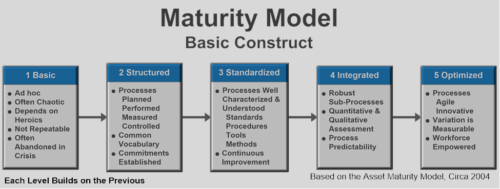
    Building on the CMMI and our own maturity model development methodology we put forth a set of constructs.  Beginning in 2004, when we released our Roadmap study.  It was one of the earliest, if not the first industry wide assessment of the so-called digital oilfield and guide for organizations to transform themselves with this enabling technological model.

    As part of that study we posited a maturity model that still has applicability for heavy industry and its use of information technologies to manage the business.  An updated version is shown in the following figure.

    For many organizations, Level 3 is satisfactory and accomplished the required.  One can argue that an airline autopilot would be at least Level 4.

    The current issues Boeing has with is space capsule and 737 suggests that may not be the case.  By the way, this is not limited to this manufacturer, others have similar issues as well.

    In the opinion of this writer, as a society we are at best Level 2 when it comes to digitalization.  What do readers think?

    Paraphrasing a famous election cycle quote, “It’s the software, stupid.”  Are we near a digital tipping point?  Perhaps not.

    Much work is yet to be done.  Fear not for the robots taking your job—at least for the moment.

    What is Your Digitalization Management Maturity Level?

    For More Information

    Please note, RRI does not endorse or advocate the links to other third-party materials.  They are provided for education and entertainment only.

    For more information on Cross Cultural Engagement, check out our Cross Cultural Serious Game

    You can contact the author as well.

    End Notes

      https://www.space.com/boeing-starliner-oft-fails-to-reach-correct-orbit.html

      https://en.wikipedia.org/wiki/Turing_machine

      https://therrinstitute.com/maturity-models/

      (2004, September). Roadmap to Enterprise Optimization: A Guide to the Impact of Information Driven Field Operations on the Petroleum Corporation.

      https://www.popularmechanics.com/flight/airlines/a26854898/plane-automation-crashes-incidents/

  • Want – Like – Need

    Want – Like – Need

    Years ago, as part of a never-ending series of company reorganizations, a team of our change management consultants headed to the ‘field’ to interview users.  Upon their return, they presented an extensive list of technology investments deemed necessary to remain competitive.

    Their list focused on technology and not business concerns.  Wondering, I asked who they interviewed.  Proudly, they proclaimed the “field engineers.”  When queried–did they talk with district managers, regional engineers and others with P&L or other managerial responsibilities, the answer was “no.”

    This very expensive process by a major professional services organization simply generated a wish list of junior employees.  It was what they thought they WANTED.

    In our current jargon, “cool stuff.”  Needless to say, none of these projects were funded.  Wasted time and money by those not familiar with our business!

    Today, we are driven to LIKE everything!  CRM systems demand input before we have even procured the product or service.  Log on to any given website and the request to complete a survey will hit you before you read the first line.  Five stars or thumbs-up emojis appears to be the goal.

    Do wants and likes add value?  Perhaps a like is a statement of preference, but perhaps the consumer wants the digital driven question to just go away without the hassle of someone begging for a higher ranking like.  Fibbing to surveys has become a national pastime.

    Business should be most concerned about what a prospect or returning customer NEED.  What pain point or problem does your product/service solve?  If you can’t answer that question, no amount of wants and likes will add to your bottom line.

    I may want a hamburger and go to a fast food restaurant with lots of likes.  However, if I am in a hurry and their preference is clearly to move cars via the drive-through faster than those of us waiting inside, my need to eat quickly will not be met.  I may leave without my meal or most likely not respond to a survey seeking likes.  Then never return!

    That lost customer will never surface in any analysis—not even one star.  Enough of those responses and the business will be in jeopardy and management my not even know why.  Collecting likes should never be a Key Performance Indicator (KPI).

    Finding the Pain

    In a recent Global Energy Mentors leadership meeting, an investment group recounted their business model as one that focused on identifying organizational ‘pain’ points.  Once a specific pain was articulated, the search for new technologies that would address/resolve that pain was undertaken.

    This model flies in the face of Steve Job’s, “A lot of times, people don’t know what they want until you show it to them.”  That may be and sometimes unknown needs are uncovered.

    However, in critical infrastructure sectors where failure is not be an option because it can be very expensive solving a known need is usually most important.  Without exception, this entrepreneur’s success has been focusing on addressing industrial client known pain points.  As an example, our EVPM modeling process demands input from customer groups.

    In this blog series, we have referred to successful change management that comes from addressing the—what’s in it for me question.  From a customer perspective; freeing ‘me’ from known pain is often more valuable than alleviating pain I did not know I had.

    Does Your Value Proposition Solve a Need, Address a Want, or Simply Generate a Like?

    For More Information

    Please note, RRI does not endorse or advocate the links to other materials.  They are provided for education and entertainment only.

    You can contact the author more information as well.

    End Notes

      http://globalenergymentors.org/

      https://www.helpscout.com/blog/why-steve-jobs-never-listened-to-his-customers/

      https://therrinstitute.com/brand-your-digital-oilfield-culture-internalize-its-transformation/

  • It’s the Economics Stupid!

    It’s the Economics Stupid!

    Since it was first uttered in the early 1990s, the phrase “It’s the economy stupid” has been used and misused extensively.  Let’s squander the lexicon one more time.

    The US ‘silly’ political season is well underway and forecast to last almost 13 more months—no telling what voodoo economics will emerge.  Those of us with our business noses to the grindstone must ride this stormy weather to a safe port next November.

    Most have an interest in the macroeconomic policies nation states put forth but other than voting and perhaps lobbying, there is little many can do to materially impact the economy.  What we can do is focus on the economics of our business—CAPEX.  Hence, our daily mantra should be, “It’s the Economics Stupid.”

    What Is Your Value to the Customer?

    For over the fifteen our organization has been, “Helping Clients Achieve Organizational Agility, Resiliency and Sustainability.”  Assisting clients develop and articulate a viable economic value proposition has been one of the most elusive and vexing challenges.

    There is a strong tendency to make statements that are Overstated, Not Demonstrable, and Not Defendable.  Declarations such as, “Enhanced credit control system for partners through increased information visibility” are effectively meaningless—yes, this is an actual quotation from a software company.  Customers are left with the question, “What does that mean for me?”

    Translate Technology into the Language of Business

    If you leave your customer with the above and/or other questions regarding your value to their enterprise, likely the sale will not close.  Probably, a more coherent competitor will leave with the deal.

    CAPEX always undergoes extensive scrutiny; even at the Board level in some cases.  While new and cool technology may ultimately be disruptive and of extremely high value, peddlers must speak the language of the Chief Financial Officer and her staff.  These are ‘green’ deals!

    Those tasked with generating revenue from technological solutions must also take on the role of translator.  Bridging the cultural differences between cool stuff and the bottom line requires a Rosetta Stone.

    The Economic Value Proposition Matrix® model (EVPM) was originally developed with a Super Independent oil and gas operator at the first part of the century to become that Rosetta Stone.  Working with customers, technology providers can now prepare for the inevitable decision by the CFO.  Usually, the vendor will not attend said meeting but preparing the customer staff to make the case is mandatory.

    This video tells the whole story in less than 43 minutes.  Is winning your next deal worth an investment of three quarters of an hour?  If not, keep doing what your doing and hope for a different result.

    The video makes the case that technology offerings often seems similar.  The same buzzwords and euphemisms often confused clients and make it appear that since the solutions are basically the same, just go with the low dollar.  Rising above this clutter is required to be successful.

    How is Your Value Proposition Better Than Your Competitors’?

    For More Information

    Please note, RRI does not endorse or advocate the links to third party materials.  They are provided for education and entertainment only.

    You can contact the author more information as well.

    End Notes

      https://en.wikipedia.org/wiki/It%27s_the_economy,_stupid

      https://www.forbes.com/sites/briandomitrovic/2018/12/02/george-h-w-bushs-voodoo-rhetoric/#26f9ad21798a

      https://www.investopedia.com/ask/answers/042415/what-difference-between-operating-expense-and-capital-expense.asp

     https://en.wikipedia.org/wiki/Rosetta_Stone

  • Brand Your Digital Oilfield Culture: Internalize Its Transformation

    Brand Your Digital Oilfield Culture: Internalize Its Transformation

    Our recent article, “The Digital Oilfield Culture: Transformation Value for the Organizational Ecosystem” (pp.24-26) takes a somewhat different change management approach.  Why not brand your digital oilfield culture?

    Most consumers are familiar with the so-called ‘Brand Name.’  These are names so ubiquitous that in some cases that we take them for granted.  Soft drinks, beer, fast food and automobiles are only a small sample of ‘product/service’ brands most can immediately relate to; even subconsciously.

    Hearing a brand name elicits a response, usually positive but possible negative as well.  This is the way organizations seek to have their product become part of the lexicon.  Examples include Xeroxing and Googling among others.

    Digital Oilfield Culture

    “Systemic Digital Oilfield Culture can be defined as the Core Set of Values and Behavioral Economics of ALL participants of the extended organization and its Enterprise Risk Management strategy that reflect a Strong Bond Governance commitment to behaving as a High Reliability Enterprise Ecosystem in a Safe and Environmentally responsible manner.”

    Ok, while accurate, this author’s definition of a Systemic Digital Oilfield Culture may be stiff and boring to some.  What does it mean to me and why do I care?

    As noted in past blogs and written pieces, a successful cultural transformation must address the. “What’s in it for ME” question.  Moreover, the answer must make sense to me if I am to internalize it.

    Taken from consumer marketing a, “Brand Essence is the emotional heart of a brand, summed up in a few words.  The Brand Essence Wheel is a format for capturing and communicating the conceptual subtleties of the brand.” (Chung and Doran, 2016).

    Successful brand strategies can create fierce lifelong loyalties, i.e., the cola wars of the 1970’s attempts to capture the emerging Baby Boomer demographic.  So why not take advantage of this marketing strategy when transforming the culture of an organization?  Create these fierce loyalties for your organization’s success!

    Brand Wheel Construct

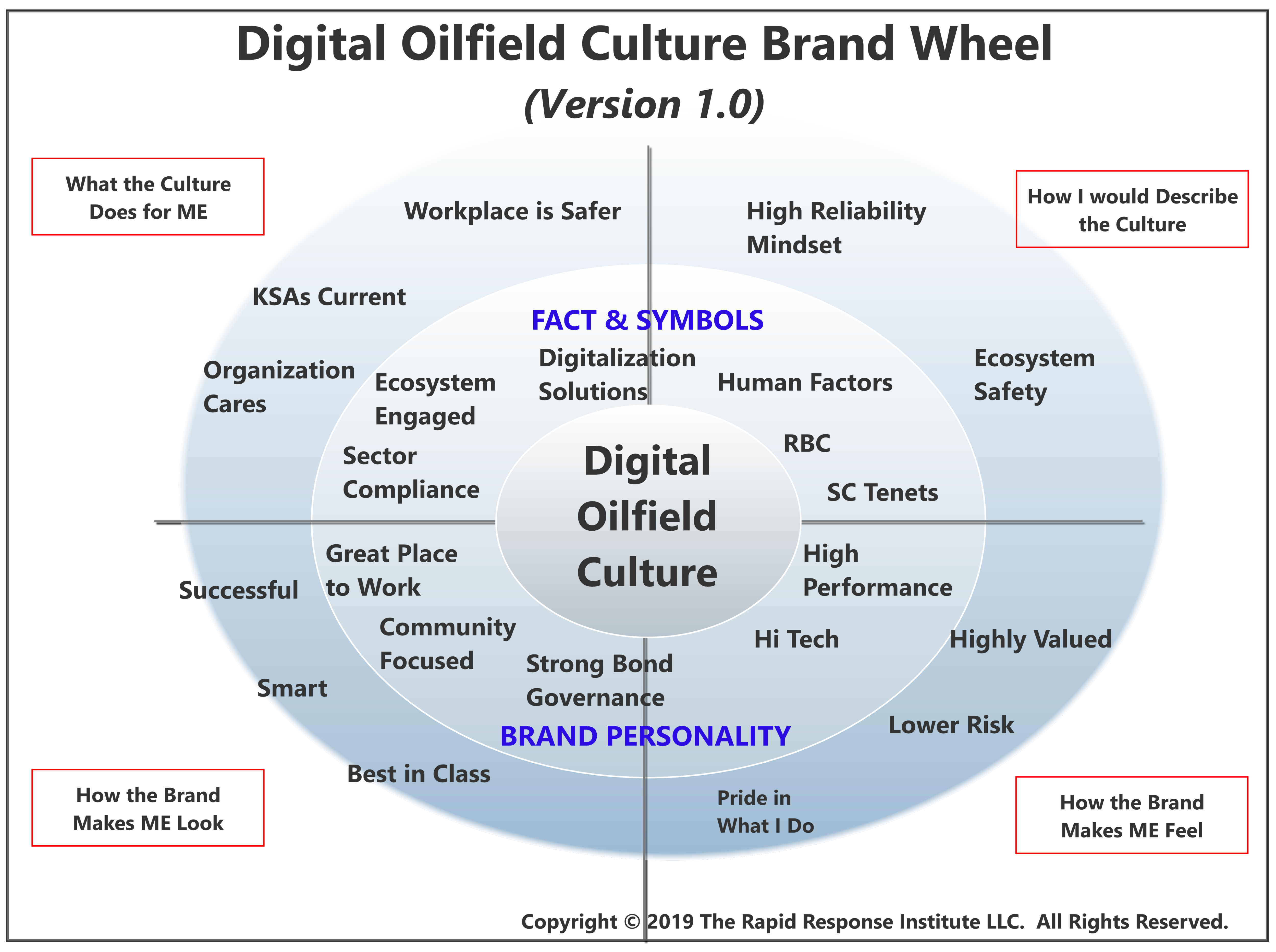
    In accordance with the theory, the Digital Oilfield Culture Brand Wheel (First Draft) is composed of two major categories:

    Facts & Symbols or those components of the Brand that address the “hard” and often more measurable aspects.

      • What the Culture does do for ME
      • How I would Describe the Culture

    Brand Personality addresses the more emotional side of the Brand

      • How the Brand make ME look
      • How the Brand makes ME feel

    The wheel is then populated with those criteria of interest to the organization (generally developed through a series of workshops at all levels of the firm and its ecosystem).  One example is depicted in the following (Version 1.0) graphic.

    Final Thoughts

    There is a significant body of knowledge about the highs and lows of organizational transformation/change management.  The preponderance of the evidence suggests the transformation of a digitalized organization is difficult and often fleeting.

    The B2C sector has demonstrated repeated and sustained success creating perceived value to the individual (ME).  In B2B sectors, Rah Rah, executive sponsorship, training, etc. all have their place with change.  Yet, this is approach has proved wanting.

    Most importantly, strong Brands are sustained when the Rah-Rah fades.  Just Do It is the tag line of one major brand.  Betting most readers know what firm that is.

    Is Digital Oilfield Cultural Branding in Your Organization’s Future?

    For More Information

    The complete article is available from Petroleum Africa magazine and a ‘for fee’ copy can be downloaded.  In addition to a more detailed discussion of the branding process, it contains a high-level Implementation Plan.

    You can also contact the author as well.

    End Notes

      Shemwell, Scott M. (2019, May/June). The Digital Oilfield Culture: Transformational Value for the Organizational Ecosystem. Petroleum Africa Magazine. Issue 3. pp. 24-26.

    Petroleum Africa magazine has graciously allowed the re-publication of this edition.  See our full article.

      Ibid.

      https://en.wikipedia.org/wiki/Cola_wars

  • What Lies Beneath the Surface of Your Organization: Structural Dynamics?

    What Lies Beneath the Surface of Your Organization: Structural Dynamics?

    As the officers, seamen and passengers of the Titanic came to understand, it is not what you can see that gets you but what is below the visible surface.  Visualizing the unseen remains a continuing challenge.

    The current president of the United States is by many accounts the most unlikely political victor.  He is not from the ‘industry’ and has limited experience in this field of endeavor.  None-the-less, he holds the office.

    The results of the US presidential election of 2016 is the subject of innumerable discussions.  Most center around the performance of his opponent and missed opportunities by the opposing party.  This pundit argues that neither of these are the prime reason for his election.

    Almost 30 years ago this writer was a member of the Leadership Team for a major publicly traded company.  Multiple reorganizations and the advice of numerous consulting firms did not enhance our position in a difficult market.

    Something we did not understand was at work.  Why couldn’t those with decades of managerial/industry experience and all the experts fathom the forces at work?  Unless, we could no action taken would be effective.

    What are Structural Dynamics?

    During this period, management theories abounded.  Examples included The New Realities by Drucker, The Fifth Discipline by Senge and Economic Value Added (EVA) to name a few.  None seemed to be able to help us understand the latent forces that eluded us.

    As part of the doctoral dissertation, assessing cross cultural negotiations and the relationship between human Relationships, Behaviors, and Conditions (RBC) we enhanced existing theory into an actionable methodology, Structural Dynamics.

    The fundamental premise upon which the theory of Structural Dynamics is developed is the belief that structures are not static and that more often than not, these dynamics are not directly observable.

    Over time, the very nature of the structure and the very nature of the component parts of the structure may be radically different from today’s composition.

    In other words, Structural Dynamics is defined as “the morphology or patterns of motion towards process equilibrium of interpersonal systems.”  While this sounds academic, the implementation is straightforward.  Think of this as an iceberg.

    The Iceberg Principle—90% of any system’s structure is below the surface or hidden from direct observation.  This latent component controls all the processes associated with the system.

    Implementation

    While there is a quantitative aspect to Structural Dynamics, analysts can use this qualitative approach.  There is plenty of information available; however, it can be challenging to shift through it and separate actionable data from noise.

    For example, while it was evident for all to see most prognosticators wrote off the Trump rallies and the size of the crowds.  Similarly, Xerox had most of the technology for today’s PC, but it took Apple and others to realize the value.

    Think these are remote and one-off events?  Only 60 companies that were members of the Fortune 500 in 1955 were still members in 2017.  Some mergers for sure, but why did the others not see the waves that swept them away?  Sears is a recent example.

    Assessment

    Structural Dynamics analysts can use the following checklist as guidelines.  This list is not all-inclusive, nor is it meant to be a list that one simply puts a check mark next to and tallies up the number of checks versus not check.

    It is more accurately a framework for developing a Structural Dynamics model for any given industry environment.  The following criteria provide a preliminary checklist of set of questions that should be addressed when one seeks a better understanding of the latent variables associated with an industry segment or emerging environment, such as new technologies.

    1. Not obvious or normally thought of as industry driver
    2. Usually not directly related to standard industry practices
    3. Becomes more visible over time or repeated measurement
    4. Often not specific to a single industry or economy
    5. Cannot be determined by analysis of best practices
    6. Typically, not associated with a single or few number of processes
    7. Not associated with processes in a single firm
    8. Can be cyclical or seasonal in nature
    9. Not necessarily random or chaotic events in nature
    10. Not necessarily economic variables in nature
    11. Tend to be long term variables with limited reaction to specific current events
    12. Can remain dormant for long periods of time, but when they become visible the impact can be significant and swift
    13. Demographics may provide insight into emerging or future Structural Dynamics, they should not be used exclusively
    14. Often small niche (or new) players may benefit from Structural Dynamics These niches are often outside of the industry of interest, but are subsequently imported into the industry of interest
    15. Technological developments may forecast future competitive events, i.e., the impact of cellular phones on the pay phone industry
    16. Not all technology is useful in the near term. The technology developed by Xerox, Palo Alto in the 1960s was not commercialized for almost 20 years.

    Computer icon and windows technology was not commercially viable until Steve Jobs (founder of Apple Computer), and Bill Gates (Microsoft) expanded hobbyist’s niches into the personal computer revolution of the 1980s.

    Knowledge of Structural Dynamics variables can defeat the brute force of large deep-pockets organization, although this is not guaranteed.  As this construct evolves, we expect to develop a more robust set of tools, so managers and other practitioners will be better able to visualize their Structural Dynamics environment.  In the meantime, it is useful to define latent variables.

    Latent Variables Are impacting Your Organization.  What Will You Do About it?

    For More Information

    Much of this blog is taken from our monograph, Structural Dynamics: Foundation of Next Generation Management Science.  The Kindle version is available from Amazon https://www.amazon.com/gp/product/B00U0JKMT0/ref=dbs_a_def_rwt_bibl_vppi_i1

    Fundamental to our Operational Excellence Platform, also see https://therrinstitute.com/structural-dynamics/

    End Note

      http://www.aei.org/publication/fortune-500-firms-1955-v-2017-only-12-remain-thanks-to-the-creative-destruction-that-fuels-economic-prosperity/

  • Operational Complexity: Risk Model Insufficiency

    Operational Complexity: Risk Model Insufficiency

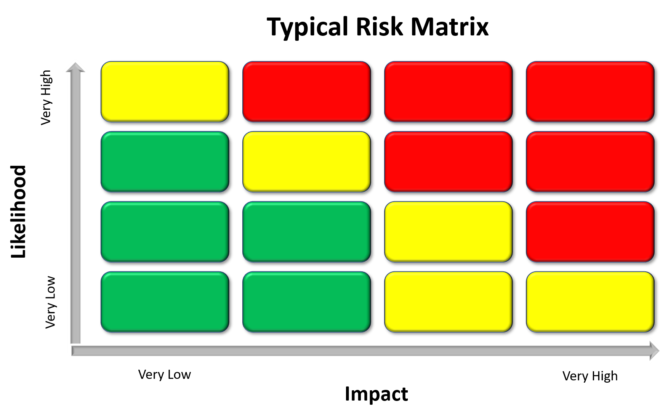
    Most readers will be familiar with the above linear Risk Matrix Model.  This graphical representation of risk exposure is useful but strict adherence to it can lead to a false sense of security.

    Systemic Risk Management

    The real world is very complex with many moving parts.  The potential interaction of processes, events and other challenges can lead to disaster.  It is often the case that the combination of a number of seemingly unrelated and in and of themselves potentially minor events can lead to catastrophe.

    A systemic approach to risk exposure is appropriate.  Field operations usually involves several to many somewhat disparate processes and individuals.

    Typically, the operator will have individuals in the field as well as the office working together.  Contractors and sub-contractors are similarly constructed.  The number of interactions can grow exponentially in a large project or program.

    Therefore, it is important to ‘see’ risk as a dynamic interacting model.  For example, the following quotation is a straightforward presentation of the actual risk field operators face.

    “Planning for the abandonment of Macondo was extremely complex.  The fundamental source of that complexity was a phenomenon well known to systems engineers: the number of potential pairwise interactions among a set of N elements grows as N times N-1, divided by 2.  That means that if there are two elements in the set, there is one potential interaction; if there are five elements, there are ten potential interactions; ten elements and there are forty-five; and so forth.  If the interactions are more complex, such as when more that two things combine, the number is larger.  Every potential interaction does not usually become an actual one, but adding the elements to a set means that complexity grows much more rapidly than ordinary intuition would expect.”

    The authors’ note that NOT all combinations can happen, but the possibility of several is likely.  Many decision makers do not expect exposures as great as they likely are in a complex environment.

    Interactive Model

    So how great is your risk?  The following calculator will give you a perspective on your organization’s exposure.  It is straightforward and easy to use.

    You are only required to input two variables:

    n = the number of elements

    m = elements from n in certain order, it is arrangement

    Taken from the Macondo model above, if n=10 and m=2, the number of combinations of m from n equals 45.


    [planetcalc cid=”977″ language=”en” code=”” label=”PLANETCALC, Combinatorics. Combinations, arrangements and permutations” colors=”#263238,#435863,#090c0d,#fa7014,#fb9b5a,#c25004″ v=”3275″]

    Addition data the calculator provides:

    Each ordered set of n is a permutation

    Generally, the number of combinations of m from n with repetitions is not useful for our purposes other than the recognition that repetition is possible.

    This calculator does not indicate where risk lies.  As the authors of Deepwater Horizon: A Systems Analysis of the Macondo Disaster suggest, it helps decision makers better understand the nature of their complex environment.

    Final Thoughts

    Simple risk models may have their place.  They are useful for presentation purposes.  However, they are insufficient when assessing the exposure of today’s complex operational situations.

    High Reliability Management requires that decision makers NOT simplify the complex.  Understanding the level of exposure using systemic risk management techniques can help clarify organizational threats.

    Are Your Organization’s Risk Management Techniques Robust Enough?

    For more information on Risk Mitigation check out our Operational Excellence Platform.

      Boebert, Earl and Blossom, James M. (2016). Deepwater Horizon: A Systems Analysis of the Macondo Disaster. Cambridge, MA: Harvard University Press. pp. 65-66.

    Appendix–The Math

    For those interested, this is the math for the calculator. It is taken directly from the Planetcalc website.

    So, assume we have a set of n elements.

    Each ordered set of n is called permutation.

    For example, we have set of three elements – А, В, and С.
    Example of ordered set (one permutation) is СВА.
    Number of permutations from n is

    P_n = n!

    Example: For set of А, В, С number of permutations is 3! = 6. Permutations: АВС, АСВ, ВАС, ВСА, САВ, СВА

    If we choose m elements from n in certain order, it is arrangement.

    For example, arrangement of 2 from 3 is АВ, and ВА is the other arrangement. Number of arrangements of m from n is

    A_{n}^m=frac{n!}{(n-m)!}

    Example: For set of А, В, С number of arrangements of 2 from 3 is 3!/1! = 6.
    Arrangements: АВ, ВА, АС, СА, ВС, СВ

    If we choose m elements from n without any order, it is combination.

    For example combination of 2 from 3 is АВ. Number of combinations of m from n is

    C_{n}^m=frac{n!}{m!(n-m)!}

    Example: For set of А, В, С number of combinations of 2 from 3 is 3!/(2!*1!) = 3.
    Combinations: АВ, АС, СВ

    Here is the dependency between permutations, combinations and arrangements

    C_{n}^m=frac{A_{n}^m}{P_m}
    Note Pm – number of permutations from m
  • Beat the Market: Can Operational Excellence Increase EPS?

    Beat the Market: Can Operational Excellence Increase EPS?

    In a recent Houston Chronicle article, its author puts forth the premise that while oil and gas companies should do well in the stock market this year, don’t expect the energy services sector to fare as well.  As those who are either in the sector or track it (stock analysts) know all to well that when the price of oil dips, so do the Returns of those companies that provide equipment, labor and other services to the E&P sector.

    The crude oil commodity price has always been cyclical.  Often Boom—Bust, this leads to the hiring and firing of tens of thousands of employees and contractors.

    As many as 750,000 in the 1980s were fired (not to mention those businesses that provided products/services to these individuals and companies).  A lousy career choice that may limit new entrants who will not be guaranteed a salary during a short-term “shut down.”

    For years, this pundit has held the belief that due to technology advancements in both engineered products/services and information management that a return to the good ole days of $100 oil is not likely.  Economic actors in the sector must continue to adopt new business models and processes, not just to remain competitive but to stay in business.

    For example, Weatherford International, founded in the 1940s is endangered of being delisted by the New York Stock Exchange.  Baker Hughes continues to struggle as General Electric has announced its divestiture.

    We remain committed to the belief that oil is probably well within a trading range that will not provide price relief to the service sector.  That said, how can energy service survivors return shareholders reasonable value?

    The traditional business model of layoffs and equipment stacking is well underway.  Short term Stop the Bleeding which makes one wonder why this sector added 10,000 in just the last two years during a ‘weak’ recovery.

    The Future is Now

    The concept of the so-called digital oilfield has been around for decades.  This author was first formally involved with construct in the early 1990s when it was titled the Digital Oilfield of the Future.  Hasn’t the future arrived?

    In 2004 we released an industry supported research project, Roadmap to Enterprise Optimization: A Guide to the Impact of Information Driven Field Operations on the Petroleum Corporation.  Other articles, white papers, blogs and workshops continue to date.

    In the recent Houston Chronicle article, one interviewee believes that the energy service sector needs to Collaborate and Digitalize if they are to generate higher Earnings per Share. 

    This leads one to question, why after all these years is the disconnect the same as two decades ago?  We can no longer blame the Baby Boom generation as the brake on digitalization.  The Boomers have largely left the sector building.  Moreover, we can no longer blame the cost and maturity of information technology.

    So, if the blame game is over how can the sector attain and sustain these laudable process goals?  One can make a case that business/technology models and their value propositions were either fragmented or not understood by management.

    Having attended countless conferences, seminars, et al. over the years there does tend to be a narrow focus on each business need.  For example, downhole, big data, safety, decommissioning, digital oilfield, offshore, drones, onshore and so the list goes.  All vying for the same CAPEX.

    Those days may be over.  The Operational Excellence construct directly addresses all the field driven processes and technologies necessary to assure profitable performance.

    As with other initiatives, what is needed is an actionable methodology with a well understood value proposition.  Today, even smaller energy services companies can implement Operational Excellence.  A solution is available!

    Operational Excellence is the key to higher Earnings per Share and greater investor interest in the firm.  This is true for both public companies as well as private and their banking/investor relationships.

    What is Your Organizations Excuse for Not becoming Operationally Excellent?

    For more information about how to solve the weak Earnings per Share problem, check out our new Operational Excellence Platform.


      https://www.houstonchronicle.com/business/energy/article/Several-major-changes-on-the-horizon-for-troubled-13556827.php

      https://therrinstitute.com/wp-content/uploads/2019/01/Dr-Scott-M-Shemwell-Publications-and-Interviews-January-2019.pdf