Tag: World War II

  • Scam Leadership

    Scam Leadership

    It seems the world is awash in scams, those attempts to steal from all of us.  Couched in nice words like spam, these are attempts to destroy you.  Likewise, there are scam leaders who would do the same, only worse.

    In 1978, the scam by the so-called pastor, Jim Warren Jones slaughtered more than 900 people including over 300 children.  He told his followers, couched in religion that he would lead them to utopia and convinced them to kill (poison) themselves.

    Leaders take on a mantel of leadership by proclaiming themselves to be prophets, pastors, and even leaders.  However, stating to be a leader does not make one a leader.  As Christians have been told for eons and from Matthew 7:15: “Beware of false prophets, which come to you in sheep’s clothing, but inwardly are ravening wolves. Wherefore by their fruits, ye shall know them.”

    False leaders present themselves constantly.  If you follow me and do thus-and-so, I will reward you.  This is not normal product marketing by credible organizations of all sizes, these are the deliberate criminal attempts by wolves to destroy their targets, even to the point of suicide.

    Beyond Outright Criminals

    Even more difficult to detect and defend oneself against than criminal spammers are legitimate people in positions of authority.  These can include the office bully, fellow employees and management, as well as elected officials and government employees and even family members and acquittances.  This is a long list of those who actively work against constituents and people they know or who can be influenced to commit figurative suicide.

    Sales 101 teaches that when trying to convince people to follow your lead, it is not the best idea to call them derogatory names.  It continues to amaze this successful sales executive how many talk down to those they seek to persuade, almost like your dumb and I am smart thinking.

    Meeting the Test of Actual Leadership

    This quote is attributed to General Douglas MacArthur, “A true leader has the confidence to stand alone, the courage to make tough decisions, and the compassion to listen to the needs of others.  He does not set out to be a leader, but becomes one by the equality of his actions and the integrity of his intent.”  This pundit would like to add that during the World War II period, significantly large numbers of women also rose to the leadership challenges MacArthur espoused.

    How many self proclaimed leaders we see in our daily life live by MacArthur’s code?  Not many during my long life, I am afraid.

    BS Detector

    There is not much we can do about some exalted individuals.  We must obey laws and organizational policies, or else there may be consequences.  We should activate our leadership radar aka BS detector.

    There are many false prophets we can choose not to follow.  Those who do not bring out our best are not servant leaders they are self-servicing aggrandizers.  Do not drink their Kool-Aid.  When you see those on the media mouthing out crap, advocating violence or worse, failing to condemn the condemnable, cancel them!  If you get cancelled, celebrate the liberation.  Finally, the ole saying, “If it sounds too good to be true, it probably is” or no free lunch when a Santa Claus politician is loose.

    The worst thing that can happen to these losers is the loss of ‘likes’ and lack of followers.  That way they cannot lead lemmings over their figurative cliff.  Scammers come from all walks of life, not just online.  See this class of Bozos for who they are and reject the clown car they are driving.

    How fine tuned is your leadership radar?

    Our new book is Now Available


    Navigating the Data Minefields:

    Management’s Guide to Better Decision-Making

    We are living in an era of data and software exponential growth.  A substantive flood hitting us every day.  Geek heaven!  But what if information technology is not your cup of tea and you may even have your kids help with your smart devices?  This may not be a problem at home; however, what if your job depends on Big Data and Artificial Intelligence (AI)?

    For More Information

    Please note, RRI does not endorse or advocate the links to any third-party materials herein.  They are provided for education and entertainment only.

    See our Economic Value Proposition Matrix® (EVPM) for additional information and a free version to build your own EVPM.

    The author’s credentials in this field are available on his LinkedIn page.  Moreover, Dr. Shemwell is the coauthor of the 2023 book, “Smart Manufacturing: Integrating Transformational Technologies for Competitiveness and Sustainability.”  His focus is on Operational Technologies.

    We are also pleased to announce the released by CRC Press of our new book, Navigating the Data Minefields: Management’s Guide to Better Decision-Making.  This is a book for the non-IT executive who is faced with making major technology decisions as firms acquire advanced technologies such as Artificial Intelligence (AI).

    “People fail to get along because they fear each other; they fear each other because they don’t know each other; they don’t know each other because they have not communicated with each other.” (Martin Luther King speech at Cornell College, 1962).  For more information on Cross Cultural Engagement, check out our Cross-Cultural Serious Game.  You can contact this author as well.

    For more details regarding climate change models, check out Bjorn Lomborg and his book, False Alarm: How Climate Change Panic Costs Us Trillions, Hurts the Poor, and Fails to Fix the Planet.

    Regarding the economics of Climate Change, check out our blog, Crippling Green.

    For those start-up firms addressing energy (including renewables) challenges, the author can put you in touch with Global Energy Mentors which provide no-cost mentoring services from energy experts.  If interested, check it out and give me a shout.

  • Trading: The Art of the Bridge

    Trading: The Art of the Bridge

    “For the only way in which a durable peace can be created is by world-wide restoration of economic activity and international trade.”  – James Forrestal

    A recent article reviewed games that might be akin to the international trading process, chess, poker and bridge.  That author argues that so much of our rhetoric is militaristic.  We are going to “target” and, “fighting” for you, “outmaneuvering,” and so on sends the message that somehow, we are in a battle?

    If we are in a battle, who wins and what is the prize?  Typically, a military victory results in the destruction of the foe(s).  This pundit is not sure this is a good global model.  The approach has been tried many times in history, the Greek Alexander the Great, the Roman Empire, various European colonization, parties from Word War I and World War II, the Cold War, etc.  The result is always the same–a continuation of tensions leading to the next and more violent conflict.  If the goal is to limit the global population, we seem to be getting pretty good at it.

    All of these classic games have a winner or at least a stalemate.  So, in this context, how do we define Winner?

    Win-Win

    A more satisfactory global engagement can lead to the world that the first US Secretary of Defense sought.

    Game theory is the study of mathematical models of strategic interactions.  It has applications in many fields of social science, and is used extensively in economics, logic, systems science and computer science.  Initially, game theory addressed two-person zero-sum games, in which a participant’s gains or losses are exactly balanced by the losses and gains of the other participant.  In the 1950s, it was extended to the study of non zero-sum games, and was eventually applied to a wide range of behavioral relations.  It is now an umbrella term for the science of rational  decision making in humans, animals, and computers.”

    In the 1990s, this author used game theory to assess international business negotiations, Cross-cultural negotiations between Japanese and American businessmen: A systems analysis (exploratory study).  One of the influences for that study was the early 1980s book, Getting to Yes – Negotiating Agreement Without Giving In.  In their book, Roger Fisher and William Ury set out Four Principles of Effective Negotiation, summarized as follows.

    • Separate the People from the Problem
    • Focus on Interests not Positions
    • Invent Options for Mutual Gain
    • Insist on Using Objective Criteria upon which to Base Agreement

    A common theme among these points it the de-escalation of personal animosity that might exist/develop.  By focusing on the common or mutual goal(s), the win-win outcome is possible.

    All Can Win

    Winning is ingrained in our human psychic. Survival of the fittest has served our evolutionary development process well.  However, collaboration is not mutually exclusive with winning.  Humans have banded together for the common good since the beginning.  It is possible for both or multiple parties to a ‘deal’ to feel that their best interests are served.  Isn’t this the basis of a successful marriage?

    The quote “Winning isn’t everything, it’s the only thing” by the legendary NFL coach, Vince Lombardi is not as singular as it first appears.  It has additional dimensions, “Resonates with a competitive spirit and the desire to be the best, it is crucial to recognize that life is not solely about winning.  This interpretation aligns with a broader perspective on success, one that focuses on personal growth, resilience, and the lessons gained along the way.”

    Classic games and military jargon are useful tools for today’ so-called business road warriors.  They stand the test of time because we all can relate to conflict.  Even after hostilities cease, countries and societies must be rebuilt in a useful way.  After World War II, both Germany and Japan were rebuilt and became the positive global influences they are today.

    We addressed this recovery process in a LinkedIn post, Trump’s Marshall Plan in February 2025.  Out of the depths of despair a new and better world emerged.  This writer believes we can still help the defeated and even crushed Bridge to a Long-Term Win in the Lombardi spirit.

    How are you helping assure your organization and its ecosystem participants are Winning?

    Pre order our new book, Now Available

    Navigating the Data Minefields:

    Management’s Guide to Better Decision-Making

    We are living in an era of data and software exponential growth.  A substantive flood hitting us every day.  Geek heaven!  But what if information technology is not your cup of tea and you may even have your kids help with your smart devices?  This may not be a problem at home; however, what if your job depends on Big Data and Artificial Intelligence (AI)?

    Preorder May 23, 2025

    We are also pleased to advise our loyal readers that CRC Press has accepted our proposal for this forthcoming book, Nonlinear Big Data and AI-Enabled Problem-Solving: Transforming From A Spreadsheet Society.  Publication 2026.  Stay tuned for more details.

    For More Information

    Please note, RRI does not endorse or advocate the links to any third-party materials herein.  They are provided for education and entertainment only.

    See our Economic Value Proposition Matrix® (EVPM) for additional information and a free version to build your own EVPM.

    The author’s credentials in this field are available on his LinkedIn page.  Moreover, Dr. Shemwell is the coauthor of the 2023 book, “Smart Manufacturing: Integrating Transformational Technologies for Competitiveness and Sustainability.”  His focus is on Operational Technologies.

    We are also pleased to announce our forthcoming book to be released by CRC Press in June 2025, Navigating the Data Minefields: Management’s Guide to Better Decision-Making.  This is a book for the non-IT executive who is faced with making major technology decisions as firms acquire advanced technologies such as Artificial Intelligence (AI).

    “People fail to get along because they fear each other; they fear each other because they don’t know each other; they don’t know each other because they have not communicated with each other.” (Martin Luther King speech at Cornell College, 1962).  For more information on Cross Cultural Engagement, check out our Cross-Cultural Serious Game.  You can contact this author as well.

    For more details regarding climate change models, check out Bjorn Lomborg and his book, False Alarm: How Climate Change Panic Costs Us Trillions, Hurts the Poor, and Fails to Fix the Planet.

    Regarding the economics of Climate Change, check out our blog, Crippling Green.

    For those start-up firms addressing energy (including renewables) challenges, the author can put you in touch with Global Energy Mentors which provide no-cost mentoring services from energy experts.  If interested, check it out and give me a shout.

  • Tariffs Tariffs, Tariffs

    Tariffs Tariffs, Tariffs

    According to the economist, Paul Craig Roberts, “Tariffs protect ill-considered government policies, such as costly regulations and high taxes on labor and capital that make our goods uncompetitive in international markets.”

    Young and emerging countries may want tariffs to protect nascent industries and other local protections to help assure employment and rise of a strong commercial base.  Advanced (OECD) countries seek to protect existing sectors for a number of reasons including employment and political/military power.

    Once in place both exporting and importing countries develop a sense of normalcy and change becomes difficult for all parties involved.  They become part of the business culture of the exporter and importer.  As with other cultural change, engrained habits are stubborn.

    Policy Disruption

    The Trump Administration is arguing that an unlevel trading system has existed, at least since the end of World War II in 1945.  Their tariff policy seeks to update the partner relationship with countries and their companies that are no longer rebuilding form that devastating conflict.  The protections afforded nascent rebuilt from that era are no longer necessary or relevant.

    As might be expected, many prefer the status quo and vehemently argue the unfairness of it all and other rationales for not changing practices and policies that are 80 years old.  This is no difference than those that have been made redundant due to a reorganization make the case for their value add, usually in vain.

    Comparative Advantage

    Over two decades ago this author postulated, “Economists usually think of comparative advantage as a function of the raw material or strategic position a country holds.  In the knowledge age, comparative advantage goes to those who hold the knowledge necessary to achieve strategic posture.”  Moreover, “Thought leadership and subsequent comparative/competitive advantage usually goes to those that see things differently, earlier, or both.  Seeing is one thing, believing another, and implementation still another.  Leaders do not just postulate, they make things happen.  This is the tough part.  Many people have good ideas, but most do not implement and even fewer follow through to the end.”

    In May 2025, President Trump signed over $2 Trillion in business deals with Saudi Arabia, Qatar and the United Arab Emirate.  These were not traditional oil and gas investments that this part of the world is known for, but commitments in defense, aerospace, AI and other advanced technologies.

    In addition to aircraft and other defense products and solutions, these countries focused on the development of emerging capabilities such as AI.  A classic example of the position taken almost a quarter of a century ago.

    Are Humans Being Replaced?

    This has been the question raised by every dramatic technological introduction.  The general consensus, in this writer’s opinion is, we adapt and adopt to the new when it is beneficial and reject it when it does not add value to our personal life–the ‘What’s in it for ME question.

    This is the contemporary question all of us are reacting to with the advent of Artificial Intelligence.  Accordingly, “The rise of artificial intelligence has reinforced the belief that transformations across various domains can be primarily achieved through digital technology.  However, the creative potential for change of people’s  cognitive, emotional and imaginative powers often loses importance and gives way to  creative technology.   Many therefore see humans as having arrived in the age of post and transhumanism.  But is the human being as such really a kind of obsolete model?  According to such a view, it seems to have become ‘normal’ for people to leave their own fate, as well as the fate of humanity and the environment, to technical transformation possibilities.  This implies accepting that technology increasingly becomes an instrument of control rather than a tool to be used and directed, as individuals become subject to a technology and capitalist artificial intelligence industry that surpasses their own capabilities, leading them to be controlled by it.”

    One can assume that these concerns will cause many to fight for existing international trade rules to remain in place.  This is true, not only for tariffs, readers may remember that in 2024, “The ILA’s ( International Longshoremen’s Association) initial proposal was for a 77% salary increase over the six-year duration of their contract with USMX, as well as a complete ban on the automation of gates, cranes and container-moving trucks at its ports.”

    Short-Term Pain, Long-Term Gain

    Cultural Disruption can be sharp and quick, like a knife cutting into the skin.  It will take some time and perhaps a long time for transformation to take hold, and wounds to heal.

    However, this parade is marching by.  We can all chose to join in, become a bandleader, or hope it will just go away.  Change can be painful, but without it we cease to grow and will eventually whither and our value to organizations will no longer exist.

    Get with the program!  Tariffs were never meant to be generational, but only a short-term economic band aid.

    How are you and your loved ones preparing for ongoing technological convulsions?


    Pre order our new book, May 23, 2025

    Navigating the Data Minefields:

    Management’s Guide to Better Decision-Making

    We are living in an era of data and software exponential growth.  A substantive flood hitting us every day.  Geek heaven!  But what if information technology is not your cup of tea and you may even have your kids help with your smart devices?  This may not be a problem at home; however, what if your job depends on Big Data and Artificial Intelligence (AI)?

    Preorder May 23, 2025

    We are also pleased to advise our loyal readers that CRC Press has accepted our proposal for this forthcoming book, Nonlinear Big Data and AI-Enabled Problem-Solving: Transforming From A Spreadsheet Society.  Publication 2026.  Stay tuned for more details.

    For More Information

    Please note, RRI does not endorse or advocate the links to any third-party materials herein.  They are provided for education and entertainment only.

    See our Economic Value Proposition Matrix® (EVPM) for additional information and a free version to build your own EVPM.

    The author’s credentials in this field are available on his LinkedIn page.  Moreover, Dr. Shemwell is the coauthor of the 2023 book, “Smart Manufacturing: Integrating Transformational Technologies for Competitiveness and Sustainability.”  His focus is on Operational Technologies.

    We are also pleased to announce our forthcoming book to be released by CRC Press in June 2025, Navigating the Data Minefields: Management’s Guide to Better Decision-Making.  This is a book for the non-IT executive who is faced with making major technology decisions as firms acquire advanced technologies such as Artificial Intelligence (AI).

    “People fail to get along because they fear each other; they fear each other because they don’t know each other; they don’t know each other because they have not communicated with each other.” (Martin Luther King speech at Cornell College, 1962).  For more information on Cross Cultural Engagement, check out our Cross-Cultural Serious Game.  You can contact this author as well.

    For more details regarding climate change models, check out Bjorn Lomborg and his book, False Alarm: How Climate Change Panic Costs Us Trillions, Hurts the Poor, and Fails to Fix the Planet.

    Regarding the economics of Climate Change, check out our blog, Crippling Green.

    For those start-up firms addressing energy (including renewables) challenges, the author can put you in touch with Global Energy Mentors which provide no-cost mentoring services from energy experts.  If interested, check it out and give me a shout.

  • Agility, Resiliency and Sustainability: Needed Now More than Ever

    Agility, Resiliency and Sustainability: Needed Now More than Ever

    This pundit and his firm have long been proponents of building organizational cultures that provide firm the capability of adjusting to ‘events on the ground’ quickly with strong Situational Awareness.  Moreover, when adversity raises its ugly head, the response of a High Reliability Organization enables the resilience to adjust and go forward.  Finally, stakeholder value is destroyed if the organization does not have a viable economic future.

    In the last few editions of this series, we addressed a number of high impact and potentially negative situations and the forces at work.  We continue to make the point, that organizations ignore these signals at their peril.

    First Contact

    The German field marshal, known as Moltke the Elder, believed in developing a series of options for battle instead of a single plan, saying “No plan of operations extends with certainty beyond the first encounter with the enemy’s main strength.”  Today, “no plan survives contact with the enemy” is the popular reconfiguration of this concept.”

    In such an environment, P:lan B.,C, D et al. may not be fluid enough.  Having the ability to jump to Plan Z or no previous option, is what wins military and organizational battles.  In 1944, George Patton famously turned an entire army, in the middle of winter 90 degrees to relive defenders known as the Battle of the Bulge.  It was tis type of audacious decision making and effective action that won World War II.  This is a model for contemporary organizational behavior, and the basis of our Relationships, Behaviors, Conditions (RBC) approach to agility, resiliency and sustainability in today’s world.

    Elite Athletics

    In addition to military models, athletics is another allegory for business executives to follow.  In 2009 we released our White Paper, Rapid Response Management: Thriving in the New World Order.  In that document, we developed the Rapid Response Management Matrix.

    In this model we compared organizational Fitness Maturity as a function of its ability to Recover (catch your breath and move on to the next play).  Value of course is highest for those that are in the best ‘shape.’

    Preparation, Preparation, Preparation

    We have discussed this issue before.  In our June 22, 2018 blog, we quoted race car driver Bobby Unser, “Success is where preparation and opportunity meet.”  Additionally, Louis Pasteur taught us.  “Chance favors the prepared mind.”

    Sports teams, the military and dance troupes as well as others practice incessantly.  It is the only way to keep at the top of ‘your game.’  Businesses, not so much.

    Choreography

    Much like a Broadway musical, organizations need to understand and assure all the moving pieces (and people) work together.  For example, a decade or so ago an energy services company sought to understand how NASCAR choreographed ‘pit stops.’  There goal was to see if best practices could be used by the field operations teams.

    Into 2023

    Years ago in the middle of yet another oil bust, a colleague paraphrased the old Chinese curse by saying, “May we live in less interesting times.”  Be that as it may we live in interesting times and must respond accordingly.

    How are you and your organization preparing for the uncertainty of the near future?

    For More Information

    Please note, RRI does not endorse or advocate the links to any third-party materials herein.  They are provided for education and entertainment only.

    The author’s credentials in this field are available on his LinkedIn page.

    “People fail to get along because they fear each other; they fear each other because they don’t know each other; they don’t know each other because they have not communicated with each other.” (Martin Luther King speech at Cornell College, 1962).  For more information on Cross Cultural Engagement, check out our Cross Cultural Serious Game.  You can contact this author as well.

    For more insight regarding the economics of Climate Change, check out our recent blog, Crippling Green.

    For those start-up firms addressing energy (including renewables) challenges, the author is a member of Global Energy Mentors which provide no-cost mentoring services from energy experts.  If interested, check it out and give us a shout.

  • The Power of Synergies

    The Power of Synergies

    An oil and gas industry group, the U.S. Energy Workforce & Technology Council recently released a survey which stated, “companies with a higher percentage of women in executive positions have a 34 percent higher total return to shareholders than those that do not and companies with ethnic diversity on their executive team are 25 percent more likely to have above-average profitability and 27 percent likelihood of outperforming peers in value creation.”  This is a powerful statement!

    Frankly, this should come as a surprise to No One.

    On the Shoulders of Giants

    While not the first time, a well known diversity/inclusion synergy occurred during World War II on the American side.  The Tuskegee Airmen were a group of fighter pilots largely composed of Black men whose mission was to protect bombers (most manned by White men) whose mission was to help defeat Nazi Germany.  According to the US National Park Service, “The airmen flew over 180 combat sorties (missions) without losing a single bomber.”  While many held their prejudices, one cannot deny the success of the “Red Tails” which led to some minds being changed.

    In another high impact case, Vivien Thomas an African American medical lab assistant to a white physician, was instrumental in the pioneering work at the dawn of cardiac surgery.  Together, they developed a procedure to save infants with the Blue Baby Syndrome.  Mr. Thomas is credited as playing a pivotal role in this and other surgical processes.  Likewise, this history has been made into a movie, ‘Like Something the Lord Made.”

    Such a list would be remise if it did not include the women of Hidden Figures.  In an era of segregation (ethnic and sex), these Black women were entrusted with the human ‘computing’ of the complex mathematics necessary at the beginning of the United States (NASA) efforts to launch astronauts into space, ultimately the moon as well as the Space Shuttle.  One can surmise that President Kennedy’s commitment to get to the moon by the end of the decade could not have been met without this team.  Watching the movie, Hidden Figures is worth your time.

    There are many other case studies where a diverse group of people have worked together and significantly contributed to the advancement of human kind.  There is no reason to believe this will not continue.

    Governance

    Post Enron and other corporate malignancies, the question of good corporate governance needed to be addressed.  One approach was The Sarbanes Oxley Act of 2002.  Largely, this act spoke to financial management and reporting.

    However, another phenomenon was noticed that same year.  “McKinsey & Company in conjunction with the Global Corporate Governance Forum conducted a study and found that over 75% of over 200 fund managers would value a stock at a higher price point if the company could demonstrate it had strong governance in place.  Moreover, the study also revealed that for western markets, firms with strong shareholder rights averaged 12-14% higher stock prices.”  This 20 year old study is a powerful statement as well.

    We discuss this point in more detail in our June 21, 2022 blog, Why Corporate Initiatives Fail.  Interested parties are invited to review that material for more details regarding governance models and similar issues such as ESG.

    Capitalizing on Synergy

    Cambridge Dictionary defines synergy as, “the combined power of a group of things when they are working together that is greater than the total power achieved by each working separately.”  This definition says it all!

    Individuals such as the Tuskegee Airmen and Hidden Figures ‘flew’ the way for today’s successful team synergies.  Not just the energy sector but all sectors are benefiting greatly from the work of pioneers and can enjoy the financial and social results of diverse teams.

    There is clear evidence that well run and governed organizations add higher value to their stakeholders.  These organizations take advantage of all the talents at their disposal.  Therefore, as my math professor used to say, ‘it follows that synergic firms are leaders in their sectors.’

    How is Your Organization Capitalizing on the Power of Synergies?

    For More Information

    Please note, RRI does not endorse or advocate the links to any third-party materials herein.  They are provided for education and entertainment only.

    The author’s credentials in this field are available on his LinkedIn page.

    For more information on Cross Cultural Engagement, check out our Cross Cultural Serious Game.  You can contact this author as well.

    Interested parties can also find more information at the Tuskegee Airmen Inc. (TAI) website.

    For those start-up firms addressing energy challenges, the author is a member of Global Energy Mentors which provide no-cost mentoring services from energy experts.  If interested, check it out and give us a shout.

  • So Here We Go Again?

    So Here We Go Again?

    Will gas lines return?

    Recent geopolitical events have driven the price of gasoline sky high–again!  As of this writing it is difficult to say where this will all lead.  What is known is that the cost of all things related to petroleum have significantly increased and may go even higher.

    According to the U.S. Department of Energy, in addition to transportation and heating, oil and gas are used in over 6,000 everyday products.  In other words, their use is pervasive in all societies and economies.

    As a response to the oil shock of 1973, in 1975 the Energy Policy and Conservation Act (EPCA) developed the Strategic Petroleum Reserve (SPR).  According to the DOE, as of December 2021 the current inventory was approximately 600 million barrels of crude oil.  It is designed to be a buffer or in digital terms a cache in case of disruption or other requirements.

    Furthermore, according to the U.S. Energy Information Administration (EIA), in 2021 the US consumed approximately 20 million barrels of oil per day.  Assuming Russia exports 8% or approximately 1.6 million barrels (including refined products) per day to the US, this shortfall can be replaced with SDR withdraws as well as increases from both domestic producers and other exporters.

    What Do We Do Now?

    Oil and Gas are commodities and are therefore subject to the same Supply and Demand processes inherent to that segment.  Other examples include, gold, cattle, pork bellies and orange juice, etc.

    Today’s global markets perceive that the demand for gasoline is higher than the available supply.  Therefore, sellers can command higher prices.

    The apparent supply can be brought into balance with demand in two fundamental ways.  First, and easiest is to cut back on consumption, i.e., work from home, carpool, mass transit, etc.

    Second, which will take some time is for domestic production to increase.  ‘Small’ increases from trading partners and domestic operators (along with government regulatory assistance) will add up as well.

    One of the worst things that can happen is hording.  Think back to the great Toilet Paper hording in the early days of Covid-19.  It was unlikely that the daily demand for bathroom tissue suddenly increased.

    In effect, households ‘held’ the inventory (instead of stores) until it was worked down.  Manufacturers did not increase production albeit retailers began to ration individual purchases.

    The gas lines of the 1970s were also an example of hording.  Once the Odd and Even license plate model went into effect, they dissipated almost immediately.

    We need NOT go through this experience again!  We all have the tools necessary to change that narrative and not relive history.

    Dealing With the Issue

    For almost two decades we have modeled large scale economic procurement initiatives, both in the public and private sectors.  Attempts to attain 25% or more in value from initiatives are almost always destined to fail.  On the other hand, finding small components of economic value across a number of processes and departments can easily exceed pronouncements of singular, overall great value to be obtained.

    For example if several areas each find 2-5% of value opportunities, 25% can be quickly exceeded.  This works for large and small organizations.  It can work for individual households too.  One need not find the Silver Bullet or make Herculean efforts to overcome difficult challenges.

    Where Can You Find Eight One-Percent Opportunities to Decrease Your Petroleum Footprint?

    For More Information

    Please note, RRI does not endorse or advocate the links to any third-party materials.  They are provided for education and entertainment only.

    Photo Source: NPR

    For more information on Cross Cultural Engagement, check out our Cross Cultural Serious Game.  You can contact this author as well.


  • Beware The Guns of March?

    Beware The Guns of March?

    Readers know that as of this writing there is geopolitical and military tension in eastern Europe.  Hopefully, the situation will resolve peacefully.

    This piece is not about those politics.  Rather it is about the potential for accidental engagement and how that risk can be mitigated.

    President Kennedy is famously cited for the comment that referred to the origin of the War to End All Wars, “Perhaps the greatest contribution historians have made to humanity, at least as historians sometimes tell it, came during the Cuban Missile Crisis when Barbara Tuchman’s book, The Guns of August, saved the world from nuclear war.  The book is Tuchman’s narrative of the origins of the First World War, an account that, in President John F. Kennedy’s reading, showed how miscalculation and inflexible military planning could force great powers into catastrophic conflicts against their leaders’ wishes.”  We might add, against the wishes of the populations that must endure the unbearable cost of stupid interventions.  As noted by Herbert Hoover.

    “Older men declare war. But it is the youth that must fight and die.”

    While the Cuban Missile Crisis worked out well for both parties, including the world in general, it was not necessarily a given.  Miscalculations such as the US lack of knowledge regarding nuclear weapons onboard Soviet submarines or the ‘launch’ upon the invasion of the island of Cuba order could have been disastrous.

    Misunderstanding during the 1983 military exercise Able Archer is another example of a near nuclear catastrophe.  And then there all the Broken Arrows,  nuclear weapon incidents (that we know of).

    Complex Systems’ Behaviors

    This blog series has commented on complex interconnected systems a number of times.  The  Risk Profile is dramatically increased in such systems.  Geopolitical and military systems must be viewed through this lens as well.  However, we know complex systems can be properly managed and thus reduce the likelihood of major global impact events.

    This process is grounded in High Reliability Management (HRM).  Wikipedia defines, “A high reliability organization (HRO) is an organization that has succeeded in avoiding catastrophes in an environment where normal accidents can be expected due to risk factors and complexity.

    This author believes that geopolitical and military complex systems can benefit from this model.  Given that the cost of these type failures is incalculable they certainty fits HRM profile.

    Folly Revisited

    In the 1930s Brinksmanship did not end well.  Following historical patterns, especially from World War I, Europe plunged into the abyss for the second time in two decades.  Miscalculations on the side of multiple parties in both conflicts let to unthinkable destruction and loss of life.

    Today’s militaries are much more powerful than ever.  Hopefully, from Shakespeare, “Beware the ides of March” does not portend this year.

    Geopolitical miscalculations, brinksmanship and other aggressive negotiations can go badly.  This is especially the case when adversaries are not in direct and frequent communication with all parties.

    Even then cultural differences put discussions at risk.  Temperance, communication and though is what saves the world from the unthinkable.  Hopefully, cooler heads will continue to prevail during the current crisis.

    Cross Cultural Negotiation

    The importance of cross cultural understanding cannot be overstated as geopolitics and businesses deal with complex, multi-faceted issues across many nations, ethnicities and cultures.  Old international negotiation models are no longer relevant.

    Behavioral Economics is foremost today.  All parties dealt with are by definition diverse.  They are composed of different genders, ethnicities and ages etc.  This is a more accurate model that reflects the reality of organizations today.

    Also, keep in mind that no nation is homogeneous.  Each is composed of separate regions, cities, with local backgrounds, cultures and more.  So when one talks about two or more geopolitical entities to be at odds over an issue(s), that model is too simplistic and can lead to greater risks as described earlier.

    These are more contributing factors for misunderstanding and miscalculation.  Most of us never ‘step in the other’s shoes.’  However, we can recognize the differences in perspectives, behavior and cultures.

    Changing the Playing Field

    We have often discussed the Relationships, Behaviors and Conditions (RBC) construct among economic actors.  The model argues that new Conditions or Situations and Behaviors change the Relationship among parties.  This applies at all levels of human interactions from two individuals to many nations.  It is applicable here as knowledge to help diffuse difficult situations.  For an in-depth review of the model, check the linked blog.

    No Guns this Time?

    The cascading events following the assassination of the Austrian, Archduke Franz Ferdinand by a small terrorist group is widely believed to have led to the beginning of World War I.  The sceptic must put forth, “you have got to be kidding me.”  Yet, it did happen.

    Our point here is that it does not take much to launch the horrible.  How many American doughboys died for that nonsense?  It can happen again and most likely will at some point given human nature.

    Business Contingency

    Geopolitical risk has always been one component of an organization’s risk profile.  What will be the impact on your business if the unthinkable happens in Europe again?  Other risk mitigation tools include social media.

    In 2013 we published ” Mitigating Operational Risk Using the Power of Social Media” that identified a methodology to better understand the beliefs and behaviors of local populations.  From the footnoted piece, “Large global enterprises can augment existing security and risk management with the same solutions used by the government entities in the defense sector at commercial price points.  The real question is not why, but why not?”

    Since that time, there have been significant advances in these capabilities.  Other readily available tools can assist as well.  Use inexpensive technology to protect global stakeholder interests.

    How Robust is Your Firm’s Contingency Plans for Geopolitical Uncertainties?

    For More Information

    Please note, RRI does not endorse or advocate the links to any third-party materials.  They are provided for education and entertainment only.

    For more information on Cross Cultural Engagement, check out our Cross Cultural Serious Game.  You can contact this author as well.

    Footnote

    Kuiper, Marcus A. and Shemwell, Scott M. (2013, February). Mitigating Operational Risk Using the Power of Social Media. Petroleum Africa Magazine. pp. 28-31.

  • The 1950s Were So Good Because the 1930s & 40s Were So Very Bad

    The 1950s Were So Good Because the 1930s & 40s Were So Very Bad

    An early Baby Boomer, born in 1948 this post war pundit watched (pun intended) the beginning of the broadcast television age, featuring I Love Lucy, The Honeymooners, The Ozzie and Harriet show, Leave It To Beaver, Disney’s Mickey Mouse Club, The Roy Rogers Show, Superman, Looney Tunes, Captain Kangaroo, The Howdy Doody Show and more.  A technological wonder, no less an important marvel than today’s Smart devices.

    The 1950s were a time of a non-existent (TV) American family that has never been reproduced.  My generation was raised watching June Cleaver cleaning her house all dressed up and wearing pearls.  I do not recall my mother (of that peer group) dressed as such doing daily chores.

    After the horrors of World War II and coming off the Great Depression era, America needed a pause.  Europe and Asia needed to rebuild themselves after their self imposed stupidity.  The so-called Happy Days established an Americana right up there with Norman Rockwell‘s vision.

    The 1950s set the stage for our 21st Century.  It established a ‘can do’ approach that persists to this day.  Many do not know that the transistor, the basis of all modern Cloud solutions was invented in the late 1940s and came into fruition during the 1950s.  Enabling the Apollo moonshot ten years later.

    On the down side, the Korean War draw and the Cold War with potential Nuclear Holocaust loomed large and set the stage for defeat in Vietnam.  This first American rout would not be our last.  Afghanistan!

    “Déjà Vu All Over Again”

    Apologies to Yogi Berra, it does feel sometimes like we are in a pre-1950s era.  Economic uncertainty, global political unrest, domestic turmoil, Covid-19, even pending European military hostilities, Asia etc. are all taking their toll on our collective psychic.  It all seems so similar to the late 1930s.

    The British Minister at the time, Neville Chamberlain, perceived as the appeaser did not live to the see the rout of 1940’s totalitarianism.  Had he, he might offer some thoughts about our current situation.  Winston Churchill most certainly would as would Ronald Reagan, Harry Truman, Dwight Eisenhower, Abraham Lincoln and others.

    Economically, the world fell apart.  Since the safety nets of today that did not exist back then, the impact was massive.  However, our safety nets are under attack.  Inflation may destroy the middle and other classes.  Just like it did in the 1970sStagflation.  The worst of all possible economic worlds.

    Our parents and grandparents survived significant and in some cases life threatening problems.  Collectively, society emerged stronger and perhaps happier.  Paraphrasing from the TV series Mission Impossible, “Our mission, should we choose to accept it is to rise to the challenge and makes this world a better place for those who follow.”

    We also remember the 1950s as so good because the 60s and 70s were subsequently very bad.  This does not need to be the case with this social/economic cycle.  We are not doomed to repeat that history and can change our destiny.

    Seems that we are not really trying.  Have we become the nanny state?  Making our parents and grandparents so proud.

    And Yet

    The 1950s were by no means perfect.  Long simmering civil rights tensions began to manifest and certainly many did not enjoy the environment many of us fondly look back upon.  However, this period was a pause that would be rudely awakened, perhaps when JFK was assassinated on November 22, 1963.  Or maybe earlier when Rosa Parks took her stand (or seat) on a bus in Montgomery, Alabama in 1955 about the time Martin Luther King Jr. was coming into prominence.

    Throughout the 1960s a number of horrendous crimes would be committed against innocent children, activists and others–ultimately leading the assassination of Dr. King.  Moreover, the 1970s would start with Kent State and the Jackson State killings.

    Lessons Learned

    For many, the 1950s were happy days, for others not so much.  Guessing most readers were not alive during this period and perhaps even their parents were too young.

    History is the ultimate task master.  Dooming new generations to relive the past.  However, this need not be the case.  We can and should learn from the follies and successes of those who precede us.

    The 1950s were unique in many ways.  Many in my generation believe that to be true.  However, it seems we are reliving the 1930-1950s era and the outcome might be similar.

    Our challenge is to make sure that does not happen.  History need not repeat itself.  It is up to us.

    What Are Your Organization’s Future/Contingency Plans?

    For More Information

    Please note, RRI does not endorse or advocate the links to any third-party materials.  They are provided for education and entertainment only.

    For more information on Cross Cultural Engagement, check out our Cross Cultural Serious Game

    We presented, Should Cross Cultural Serious Games Be Included in Your Diversity Program: Best Practices and Lessons Learned at the Online Conference, New Diversity Summit 2020 the week of September 14, 2020.  Check Out this timely event and contact the organizer for access to the presentations!!

    For more on DEI Standards, see the newly released ISO-30415.

    You can contact this author as well.

  • Welcome to the 70s—Again!

    Welcome to the 70s—Again!

    This Baby Boomer graduated from college in 1970.  Just in time for Saturday Night Fever and Grease, Avocado colored refrigerators and Harvest Gold dinnerware.  Plus, the best friend a then bachelor ever had–the microwave oven!

    Not to forget the Gasoline Lines and Hyper Inflation, Vietnam, Peace/Race Protests/Riots, a Major Recession, Stagflation and other wonderful (not) youthful memories–ugly political and economic time not wished on future generations.  Adjusted for inflation a gallon of gasoline was $0.36 in 1970.  By 1980 it was $1.19–greater than a 330% increase.

    Seems like as Yoga Berra once said, “It’s like déjà vu all over again,” or ‘Those who do not learn history are doomed to repeat it.”  Yet here we are again, or so it seems.

    While I am not dusting off my leisure suit or growing what’s left of my hair, if as this boomer believes we are beginning to relive the 1970s economy, so what should we do?  How should we respond to this new, yet old situation?

    Most financial planners, corporate executives, academics, regulators and others were either not old enough or even alive when the economic and political shocks of the 1970s engulfed the globe.  Without this experienced knowledge, many maybe ill equipped to deal with the current  tsunami that is building.  Perhaps a critical concern for everyone’s 401K retirement investments?

    Hyper inflation is a cancer.  It destroys economies and even societies, not to mention families and individuals in its wake.  Real estate may be a winner if anyone can afford to purchase your house.  However, equities struggle and cash is toast.  From 1970 to 1980 the Dow Jones Industrial Average advanced a scant 5 percent.

    How does this compare with an over 300% increase in the gasoline we all needed for our automobiles?  Short answer, it does not and individual households went backward during that period.

    So What Do We Do Now?

    Flight to quality.  But what represents quality?  Big Tech comes to mind but what is the underlying value proposition of a web based database?  The outage of a major player blamed on a network issue and a number of (internal) cascading issues–the plague of many industrial incidents including Deepwater Horizon questions that proposition.

    Are companies this vulnerable in our age of digitalization, or was this a sign of something else?  As with many IT oriented decisions, “It depends.”  The fact that one of the world’s largest, high profile web based companies suffered a significant outage, not as a result of a cyber attack but apparently its own technical incompetency is not reassuring in a Cloud based global economy.

    The something else–we have discussed the need for High Reliability for complex sectors including the 16 sectors the US Homeland Security deems as Critical Infrastructure.  Social media is not on that list, but manufacturing is.  In our forthcoming (2022) book, “Smart Manufacturing: Integrating Transformational Technologies for Competitiveness and Sustainability,” we address risk mitigation strategies that can inoculate organizations from such catastrophic IT failures.

    Heavy industries such as oil and gas are routinely criticized when a catastrophic incident occurs.  These need no longer happen and we have put forth strategies routinely for more than a decade including in our 2014 book, Implementing a Culture of Safety: A Roadmap to Performance-Based Compliance.

    As we move into the ‘Smart’ era, it will be incumbent on organizations to take steps to mitigate what happened to a web based chat room provider.  The exogenous risk of critical infrastructure failing is significant, per the recent Colonial Pipeline ransomware attack and the systemic damage done to the US east coast.

    The 1970s were marked by turmoil and follow on from the late 1960s.  Richard Nixon took the country off the Gold Standard opening up significant economic and individual distress.  We appear to be on the cusp of Yogi’s cautionary tale.  It does not have to be, but appears likely.  Is the US dollar no longer the world’s reserve currency in a era of bitcoin?  If so, what are the ramifications?

    Finally, as the son of parents from the Greatest Generation, I admit I never faced the challenges they endured.  During my 20s, the period was an inconvenience, yet one I do not care to relive in my 70s.  The graphic was taken from the Internet without citation.  The author is unknown but we acknowledge his/her sense of humor.  AND I can relate to it!

    The Fed has indicated Inflation (Stagflation?) is here to stay.  To this individual, this is a scary statement even though it posited as essentially ‘no big deal.’  We will see in a year if it was as big a deal as it was in the 1970s.

    How will You Manage in this Environment?

    For More Information

    Please note, RRI does not endorse or advocate the links to any third-party materials.  They are provided for education and entertainment only.

    Interested in Cross Cultural Engagement or DEI, check out our Cross Cultural Serious Game

    We presented, Should Cross Cultural Serious Games Be Included in Your Diversity Program: Best Practices and Lessons Learned at the Online Conference, New Diversity Summit 2020 the week of September 14, 2020.

    For more information on these and others subjects covered in the Critical Mass series contact this author.

  • Passing of the Greatest Generation

    Passing of the Greatest Generation

    Salute Ladies and Gentlemen!

    December 7, 1941 was 79 years ago.  A twenty-year-old at the time would be 99 today, almost a centenarian.  My father is 98 and not likely to see 2021.

    We live in a technological age, and despite the pandemic it is relatively easy living for many.  No one is asking our youth to go to foreign lands with the likelihood of not returning.

    If the Twentieth Century has taught us anything, it is that youth has stood up repeatedly despite the dithering of politicians.  Many of this century’s young warfighters continue this proud tradition of defending our nation and our freedoms.

    Born at the dawn of the last century, this generation saw the Great Depression and volunteered for the (hopefully) final global conflict; World War II.  Since Pearl Harbor, our world has changed dramatically and quickly.

    They saw the transformation of the United States into a global Super Power and slogged through some 45 years of the Cold War.  China moved from the backward nation occupied by Japan to its current position.

    The (possible) Chinese saying/curse, “May You Live In Interesting Times” applies to this selfless generation who laid the ground work for our modern world.  On way they invented the transistor in 1947—the foundation of our “Smart Technologies.”

    As they pass from the scene, in the words of Abraham Lincoln at Gettysburg, “It is for us the living, rather, to be dedicated here to the unfinished work which they who fought here have thus far so nobly advanced.”

    We must pick up their gauntlet.  In one sense it is a heavy lift; however, those who came before us have lightened our load.

    What Are You Doing to Make Your Parents and Grandparents Proud?

    For More Information

    Please note, RRI does not endorse or advocate the links to any third-party materials.  They are provided for education and entertainment only.

    For more information on Cross Cultural Engagement, check out our Cross Cultural Serious Game

    We presented, Should Cross Cultural Serious Games Be Included in Your Diversity Program: Best Practices and Lessons Learned at the Online Conference, New Diversity Summit 2020 the week of September 14, 2020.  Check Out this timely event and contact the organizer for access to the presentations!!

    You can contact this author as well.

  • How Dare You!!

    How Dare You!!

    Lessons in Leadership—how dare you put young people in jeopardy for loss of life or failures they will live with the rest of their life?

    As we end Veteran’s Week, we are reminded of President Herbert Hoover’s comment, “Older men declare war.  But it is the youth that must fight and die.”  Hoover was president in the late 1920s and died in 1964.  How many wars has the United States been in since 1930?

    Don’t bother to count—too many.  Probably more to come from political hawks who have never served much less been in combat nor have members of their family.  Not leadership but only positioning for personal gain.

    Disclosure: I have been in the military but not combat.  My father on the other hand was awarded the Silver Star during WW II.

    This piece is not about war or politics, it is about leadership or lack thereof.  After BP Horizon in 2010, this writer attended a conference where a VP responsible for operations from a well-known public oil & gas company admitted that he had never been on an offshore drilling rig but he and his colleagues were making arrangements to visit one soon.

    Dah!  What was he doing for 20 years—home office political parlor games?  Same is true for many Washington Generals/Admirals—check their resumes.

    You’ve Got to Be Kidding Me?  Yet it was true.

    This pundit repeatedly worked on drilling rigs during his 20s.  Begs the question, how can you ‘lead from behind’ when you do not have a clue what your people are dealing with?  How Dare You send young people in an operational grinder you know nothing about?

    Decision making, by definition is made with limited and incomplete data and information.  However, informed decisions are made by those who can put things in context.

    In today’ operationally intense environment, so called ‘ground truth’ is imperative.  Executives owe their employees, contractors and partners their very best and not just organizational politicly correct thinking.

    YOU are responsible for the lives and careers of your team and by extension their families.  There are countless suppliers of training, coaching, and all manner of consulting.  However, bottom line—Lead from the Front!

    The celebrated veterans of this week have blazed your trail.  The US infantry motto, “Follow Me” is not the vision of a desk bound manager espousing leadership consulting mantra.

    Admiral Chester Nimitz is credited with statement, “When you’re in command, command.”  Not the words of a manager but a leader.  I would take his dare.

    But you need to know what you are doing before you send young men and women into harm’s way, whether the military, oil field operation or any critical infrastructure mission or task.

    You owe it to them.  How Dare You if you don’t have the required expertise!  Bonuses don’t mean anything if members of your team are killed.

    Do Your People Respect Your Leadership?

    For More Information

    Please note, RRI does not endorse or advocate the links to any third-party materials.  They are provided for education and entertainment only.

    For more information on Cross Cultural Engagement, check out our Cross Cultural Serious Game

    We presented, Should Cross Cultural Serious Games Be Included in Your Diversity Program: Best Practices and Lessons Learned at the Online Conference, New Diversity Summit 2020 the week of September 14, 2020.  Check Out this timely event and contact the organizer for access to the presentations!!

    You can contact this author as well.

  • Radar: Technology Game Changer!

    Radar: Technology Game Changer!

    The battle of Leyte Gulf in 1944 with over 200,000 individuals involved is possibly the largest naval battle in history.  Hopefully, one of the last ones.

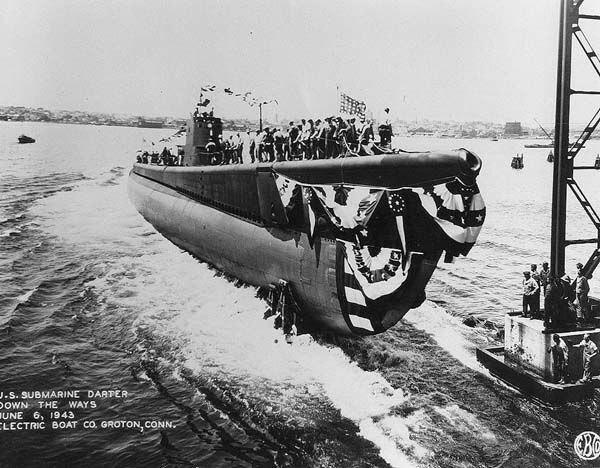
    In that battle, the submarine USS Darter initially detected (on radar) the Japanese task force early on October 23.  Other US naval vessels spotted that armada shortly thereafter on their radar screens.  This advanced knowledge enabled to US Navy to seize the initiative.  After the battle, the Japanese never stood up an equivalent naval force again.

    Technological advantage can be a game changer.  There is evidence of this phenomenon throughout history.  In this instance, the result was the elimination of the adversary’s ability to recover and reengage in a meaningful way.

    History’s Lessons

    Another game changer from that era was the proximity fuse developed by the Applied Physics Laboratory of Johns Hopkins University.  This technology enabled anti-aircraft rounds to explode within 75 feet of an attacking enemy aircraft instead of requiring physical contact which had a poor track record.  Referred to as, “The real secret weapon of World War II,” it is credited with shorting the war.

    Adversity has always led to rapid technological development.  There are indications that the Covid-19 pandemic is fueling an explosion of new ideas that directly address the infection as well as drive performance when the threat has passed.

    Capturing Value

    The conventional approach is to follow the Technology Adoption Life Cycle.  But is that still the realistic model today?  In our article published in 2004 Calculus of Value Model, we argue that the exact opposite is true.

    Advantage can go to those organizations that deploy technology early and codify knowledge obtained as a result.  The resulting ‘unfair advantage’ can change an industry.

    Previously we have made the case that while the concept of Minimum Viable Product aka MVP; a product that Early Adopters will find satisfactory, “The assessment of such technological solutions needs to be robust and thought through.  Not the knee jerk response often seen.”  Meaning that certain risks must be factored in the Value Proposition, but these can be manageable.

    According to Oracle’s Larry Ellison, “If you do everything that everyone else does in business, you’re going to lose.  The only way to really be ahead, is to ‘be different’.”  So Be Different—Start Early!

    How Can You Make New Technologies Your Organizational Game Changer?

    For More Information

    Please note, RRI does not endorse or advocate the links to third-party materials.  They are provided for education and entertainment only.

    For more information on Cross Cultural Engagement, check out our Cross Cultural Serious Game

    We are presenting, Should Cross Cultural Serious Games Be Included in Your Diversity Program: Best Practices and Lessons Learned at the Online Conference, New Diversity Summit 2020 the week of September 14, 2020.  Check Out this timely event!!

    You can contact the author as well.

  • Data Bias: The Latent or Unobserved

    Data Bias: The Latent or Unobserved

    In statistics a Latent Variable can be defined as, ‘a variable inferred from observed or measured data.’ Its analysis is often used psychology, economics, and predictive modeling.  This author used Structural Equation Models (SEM) in his 1996 doctoral dissertation, Cross Cultural Negotiations Between Japanese and American Businessmen: A Systems Analysis (Exploratory Study).

    From that abstract, “The use of sophisticated statistical techniques such as structural equation modeling and game theory is becoming increasing more important.  Traditional techniques are known to be limited, particularly in the context of cross-cultural behavioral studies.”

    Survival Bias

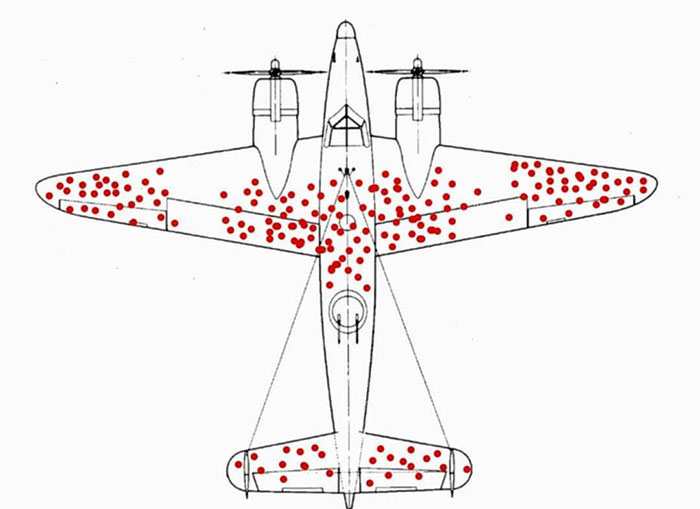
    A recent LinkedIn post alerted this writer to the inimitable perspective statistician Abraham Wald brought to the assessment of World War II Allied bomber damage upon return from missions.  He argued that observed anti-aircraft damage was non-crippling since the aircraft remained airworthy and was able to return.

    He surmised that planes that did not come home may have suffered damage to other areas making them unairworthy and hence their data was unobserved.  Based on this analysis, the U.S. Navy beefed-up armor in the less or unaffected areas and this was credited with saving lives and aircraft.

    This type of analysis came to known as Survival Bias which has its proponents and detractors.  On the surface, it seemed intuitively obvious that areas of damage need addressing while not necessarily those statistically showing fewer issues.

    It is not our intent herein to assess its merits and applicability.  Rather to help readers better understand the very nature of big data and its use, especially in predictive and behavioral models.

    Covid-19

    Today, policy and other decision makers are tasked with dealing with a deadly global pathogen.  Apparently developing quickly and spreading exponentially—a super spreading event.  As of this writing has afflicted millions in 188 countries/region in much less than 12 months.

    In this pundit’s opinion, much of the concern, confusion and clearly wrong information regarding this disease and mitigation protocols can be traced to data collection and analysis.  By now most readers will have some familiarity with the chaos associated with these predictive models.

    For example, according to the US National Library of Medicine, National Institute of Health, “A key fact for us all to remember is that, for the majority of countries, we’re not actually counting how many people have the virus—instead were counting the reports of how many people have the virus, and, like all metrics, those numbers vary according to how they’re measured.  An increase in the number of tests being carried out will result in an increase in the number of infections detected.”

    In addition to the Herculean efforts to tame this tiger from the vast medical, scientific, technology and many other disciplines, Structural Equation Modeling is being used to shed additional light on the latent variables.

    Final Thoughts

    The 2020 Coronavirus is an early test of Big Data analysis in support of decision makers both for public policy and non-government organizations.  While performance so far has been weak, this pundit believes great value can come from this effort.

    Data quality must be highly reliable and valid.  Moreover, models must assess what is not seen, the latent variables such as found in Survival Bias.  These two aspects of strong decision support models are crucial.  These are lessons for all of us.

    Where Didn’t the Bullets Hit Your Business Model?

    For More Information

    Please note, RRI does not endorse or advocate the links to third-party materials.  They are provided for education and entertainment only.

    For more information on Cross Cultural Engagement, check out our Cross Cultural Serious Game

    We are presenting, Should Cross Cultural Serious https://rri-ccgame.com/Games Be Included in Your Diversity Program: Best Practices and Lessons Learned at the Online Conference, New Diversity Summit 2020 the week of September 14, 2020.  Check Out this timely conference!!

    You can contact the author as well.

  • Three Years—Ten Months: How did they do it?

    Three Years—Ten Months: How did they do it?

    The United States officially entered World War II on December 8, 1941.  The war in the Pacific formally ended on September 2, 1945.

    A recent documentary on one of the history channels chronicled the path the United States took from a nation with an underdeveloped military to global dominance over this period.  What struck this author was the technological distance covered.  Not just marshaling the military and civilian workforce, but how heavy industry, including maritime (ships), aircraft, and weapons advanced so quickly.

    Some might say that this period was unique in human history with a strong focus on the survival of the nation.  No doubt this line of thinking persisted at the time, but perhaps something else was driving this behavior.

    Crisis Management is appropriate when nations, industrial sectors, organizations and even individuals are in times of stress.  By some accounts, the managerial prowess of this period stems from the knowledge of industrial manufacturing and logistical processes. 

    While the ‘War Agencies of the Executive Branch of the Federal Government’ played important roles in this wartime effort, it was not this alone that caused a juggernaut to appear.  The size of the United States, “prewar technological industrial base” and “large population” were also contributing factors.

    Large scale hostilities brings a spotlight that is not normally held during peace time.  The fight or flight instincts of all humans help bring focus in times of trial.  However, organization and management are important for societal success for either option.

    Attaining and sustaining Critical Mass in those Critical Success Factors (CSFs) were key to enabling the rapid ascent to industrial might.  Has anything changed?

    Parallels to Today

    A recent article, The Oils Shock That Never Was, reflected on the advancements the upstream oil and gas sector made during the recent downturn.  The piece makes the case that while most prognosticators predicted so-called doom and gloom often associated with downturns, the opposite seems to have happened, particularly in the shale space.

    In a previous blog, we put forth the rationale that Operational Excellence is the key to strong financial performance.  The Oil Shock article documents the transformation of the overall industry Cost Structure.  Operators are also focusing on sectors where profits are possible at current commodity price points.

    Moreover, firms are capitalizing on existing infrastructures that are supported by new technologies.  This sounds familiar to the behaviors of economic actors almost eighty years ago!

    However, challenges remain for service sector providers.  Could these firms utilize World War II business models employed by shipbuilders in the 1940s?

    Does Your Organization have Critical Mass for its CSFs?

    For more information:


      https://www.files.ethz.ch/isn/23588/mcnair50.pdf

      https://www.rigzone.com/news/the_oil_shock_that_never_was-30-jan-2019-158034-article/?utm_campaign=WEEKLY_2019_02_01&utm_source=GLOBAL_ENG&utm_medium=EM_NW_F1

      https://therrinstitute.com/beat-the-market-can-operational-excellence-increase-eps/