
Tag: systemic risk

  • Tumultuous Decade: What’s Next for Oil & Gas?

    Tumultuous Decade: What’s Next for Oil & Gas?

    April 20, 2020 marks the tenth anniversary of one of the most horrific incidents in the upstream oil and gas sector—Deepwater Horizon.  In addition to the tragic loss of eleven lives, the sector forever changed.  Immediate restructuring of federal oversight resulted in the establishment of the Bureau of Safety and Environmental Enforcement (BSEE) and their subsequent Safety Culture Policy.

    The industry changed too.  One of the first efforts following Macondo was the formation of the Marine Well Containment Company.  Its mission is to rapidly respond to Deepwater incidents in the Gulf of Mexico.  Subsequent organizations are also positioned around the world.

    Moreover, the industry embraced Safety Culture and continues to improve based upon Systemic Safety Cultures across organizational ecosystems.  These processes are incorporated into Operations Management Systems that incorporate SEMS as part of Operational Excellence Initiatives.

    In 2014, the sector faced another slap in the face with the collapse of oil prices, yet again.  Now it is the double whammy of the Covid-19 pandemic coupled with the price war between Russia and Saudi Arabia.

    Darkest Before the Dawn

    Each time the industry is forced to retrench, it follows a predictable pattern.  Reduction in force (layoffs), corporate restructuring and turning to technology are among the most common steps.

    This chart from the Federal Reserve Bank of St. Louis shows the employment levels for the upstream sector since the early 1970s.  One can make the case that the level of employment in the sector is flat at best.  One likely cause is automation and the extensive use of information technology to manage the business.

    Note: This chart is current as of March 2020

    In 1970, the US population was a little more than 205 million.  Now it tops 330 million.  This supports a hypothesis that the per capita employment by the sector is decreasing.  We expect this to continue.

    The Digital Oilfield marches on with the advent of IT-OT Convergence, Digitalization, etc.  This process has been underway since at least the late 1970s with the advent of the first computerized data acquisition systems.  Likely, much longer if one considers for example, the invention of electric well logging by the Schlumberger brothers in 1926.

    Certainly, other technological advances have contributed as well.  The often maligned fracturing the rock traces its roots back the beginning of the industry (circa 1862).  Contemporary hydraulic fracturing was started by Halliburton in 1949 and shale ‘fracing’ by Mitchell Energy & Development Corporation during the 1990s.

    While we have not done the detailed research, historically oil companies have outsourced to engineering firms, IT companies and others that provide a service as opposed to full time employees.  Today’s disrupted employees may find better careers in the emerging sectors that support petroleum operations as well as other sectors.

    Schumpeter’s Creative Destruction is a work in ‘the patch’ today.  A lot has happened in the Deepwater Horizon incident.  Here’s to calmer waters this next ten years!

    How Are You Positioning Your Career to Capitalize on Disruption?

    For More Information

    Please note, RRI does not endorse or advocate the links to third-party materials.  They are provided for education and entertainment only.

    For more information on Cross Cultural Engagement, check out our Cross Cultural Serious Game

    We presented, Should Cross Cultural Serious Games Be Included in Your Diversity Program: Best Practices and Lessons Learned at the Online Conference, New Diversity Summit 2020 on April 9, 2020.  The summit will be offered again soon.  Check it Out!!

    You can contact the author as well.

  • Restoring the Global Economy: Starting Today!

    Restoring the Global Economy: Starting Today!

    Prognosticators of the future, including this one are speculating on the Post-Covid-19 world.  As with every disruptive crisis, things change going forward.  This one will be no different and will probably accelerate certain trends, end some and generate many new opportunities.  Some industry sectors and many organizations will need to transmute the way they do business.

    One thing that will not change is our dependencies on one another both for business and the global society in general.  We may modify our supply chain procedures, work more remotely, change training and education processes and so forth and so one.

    The use of certain information technologies and the need to protect them from maleficent (computer) viruses will most likely explode.  The oil and gas sector will restructure itself as it has many times over its history.  Winners and losers will emerge.

    There is a major underpinning for all of this—Cross Cultural Interactions.  In this new world order successful organizations (including governments) that develop and sustain a Strong Bond Governance model can thrive.  Others that do not will most likely struggle.  We first made this case when the oil and gas Deepwater sector was struggling post Deepwater Horizon and again during the last oil price crash.

    Building a Strong Remote Working Culture and Brand

    Probably the trend towards more Remote Working will accelerate after the Covid-19 crisis passes.  To the extent an organization prepares its ecosystem for this transformation it may secure competitive value.

    Many industrial organizations are not early adopters of technology.  Their preference is to let others lead and implement later in the technology life cycle.  While this approach worked for many in the past, it may not be the best strategy going forward.

    In 2004, we posited that Early Adopters actually captured the most value from new technology.  Integral “Calculus tells us that the area under the curve is approximately the sum of the areas of inscribed rectangles.”

    Adjusted for risk, this hypothesis is supported by mathematics.  Check it out, it might work for your organization.

    As stated in our last blog, there are underly concerns when vast numbers are working remotely for long periods of time.  One suspects there will be some media reporting on not just the technical difficulties but the human issues working remotely.

    At one level, there appears to be a clash between the value of early adoption and human challenges of remote work.  Management must be aware of this challenge and put processes in place to address real human concerns.

    Enhanced Cross Cultural & Diversity Training

    Organizations continue to be diverse including a number of cross-cultural characteristics based on geography, division, etc.  Managing diversity and cultural challenges are more acute when working remotely.

    To build this strong culture and be known as a ‘thought leadership’ organization requires training.  As we know, training can be online and not just workshop or classes.

    We humans can interact with each other in a meaningful way playing a serious game.  Our Cloud based Cross Cultural Serious Game enables diverse individuals and teams to engage in real world scenarios from remote locations.  We have found this type of training to be invaluable for diverse and remote team interaction.

    The expected increase in organizational restructuring will lead the merger and acquisition activity in the near future.  This cross-cultural training tool can add value therein as well.

    How will YOU position yourself for the next step?

    For More Information

    Please note, RRI does not endorse or advocate the links to third-party materials.  They are provided for education and entertainment only.

    For more information on Cross Cultural Engagement, check out our Cross Cultural Serious Game

    We will be presenting, Should Cross Cultural Serious Games Be Included in Your Diversity Program: Best Practices and Lessons Learned at the Online Conference, New Diversity Summit 2020 beginning April 5, 2020.  Check it Out!!

    You can contact the author as well.

  • To KISS or Not?

    To KISS or Not?

    According to legend, the term KISS or ‘Keep It Simple, Stupid’ was coined by Kelly Johnson, lead engineer at the Lockheed Skunk Works and noted by the US Navy as early as 1960.  Subsequent phrases such as ‘Less is More’ followed.

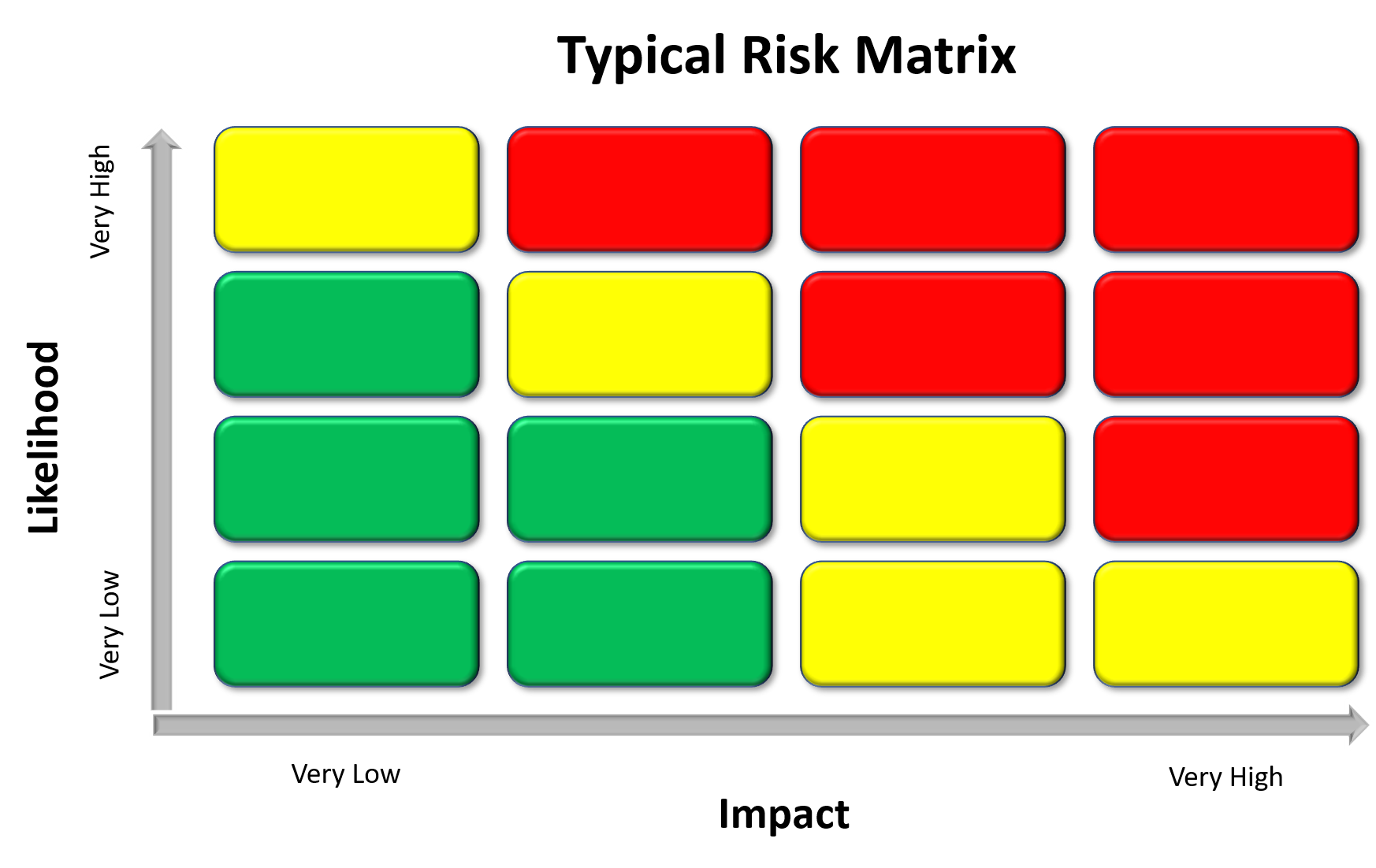
    At first glance, it makes sense not to overly complicate a product, process or project.  Certainly, a non-technical audience such as senior management will need to the issue and risk management strategy explained in terms they understand.  However, in our search for Red. Yellow, Green ratings are we overly simplifying complex environments?

    Albert Einstein is created with saying, “Everything should be made as simple as possible, but not simpler.”  This begs the questions, where is that line and how do you know if you’ve crossed it?

    One of the mantras of the High Reliability Organization Mindfulness is, Preoccupation with Failure.  This is not defined as with Normal Accident Theory, where failures are inevitable.  Rather, it is an understanding the modern complex systems one must be resolute in one’s focus on operational issues and rapidly move to normalize out of limit situations.

    In 2016 (and earlier) we made the case that after the Ebola outbreak in Dallas, the Public Health sector was resilient and that issue was contained quickly (links to all three parts of this series provided below).  In this writer’s opinion, this was not possible if the process was ‘worked’ at a too simple level.  Lessons learned from that and other contagion incidents may be useful combating Coronavirus Disease 2019 (COVID-19).

    The overused phrase, “failure is not an option” is the root of contemporary Operational Excellence business models.  In fact, failure happens but mitigating its impact and rapidly recovering are the hallmark of successful organizations.

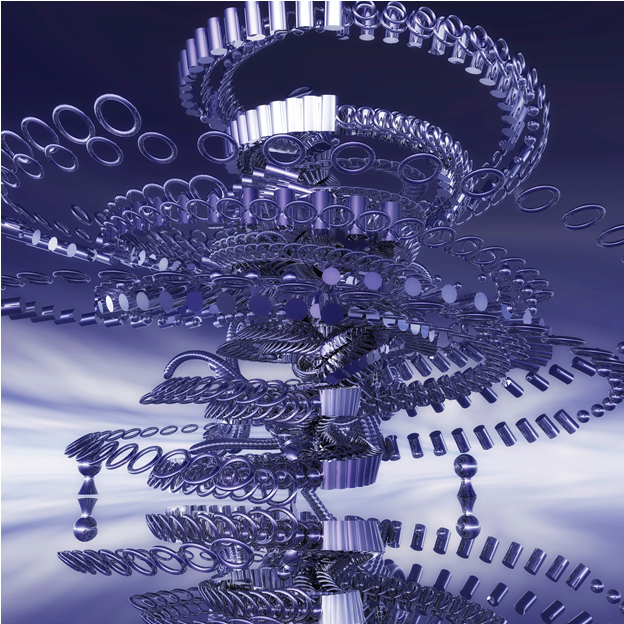
    The graphic is a fractal.  From the Fractal Foundation, “A fractal is a never-ending pattern.  Fractals are infinitely complex patterns that are self-similar across different scales.  They are created by repeating a simple process over and over in an ongoing feedback loop.  Driven by recursion, fractals are images of dynamic systems – the pictures of Chaos.  Geometrically, they exist in between our familiar dimensions.  Fractal patterns are extremely familiar, since nature is full of fractals.  For instance: trees, rivers, coastlines, mountains, clouds, seashells, hurricanes, etc.”

    Our world is a complex place.  Processes and technologies must deal with that fact.  Successful risk management strategies must take Einstein’s wisdom into consideration.

    Does Your Organization Have a Robust Enterprise Risk Mitigation Strategy?

    For More Information

    The Three-Part Series Referred to in this blog:

    Please note, RRI does not endorse or advocate the links to third-party materials.  They are provided for education and entertainment only.

    For more information on Cross Cultural Engagement, check out our Cross Cultural Serious Game

    You can contact the author as well.

  • Hanging App?

    Hanging App?

    By one measure, the US presidential primary season is off to a rough start.  In a small state, counting the ballots became a challenge.  Wasn’t technology supposed to solve the problems of past confusions?

    Yet the mechanism seemingly failed—again!  How is this different from the Boeing Max 8 disaster?  In one sense it isn’t.

    Disclaimer:  The only information this author has on the recent electoral IT problem is publicly available and he is not aware of anyone involved in that process that he may know personally.  This piece is only an opinion about a technology issue.

    Technology Adoption Process

    App developers strive to get to MVP as rapidly as possible.  Wikipedia defines a Minimum Viable Product as, “A version of a product with just enough features to satisfy early customers and provide feedback for future product development.  Gathering insights from an MVP is often less expensive than developing a product with more features, which increases costs and risk if the product fails, for example, due to incorrect assumptions.”

    Speed is of the essence in software development.  Yet, a rapid time to market should not sacrifice adequate analysis and assurance the software is robustly ‘stress tested.’

    Apps are moving from simple tools designed to call an independent driver of transport or order a burger.  They are now integral parts of enterprise solutions with broad implications if they fail.  This changes the fundamental project development process and benchmarks for release.  This is true for all App developers, even if their employee base is one or the development process is outsourced entirely.

    Release Maturity

    Most new technologies start is some’s ‘garage.’  Whether Steve Jobs’ or 3M, the processes are ad hoc and getting a so-called ‘Alpha’ product is the goal.  Those third parties who accept and test it know their risks and exposure.  Such customers would never use that release in a production environment.

    Other maturity models include Technology Readiness Levels (TRLs) by NASA and the European Association of Research and Technology Organisations.  At a minimum, testing must assure it is fit-for-purpose and that the product can ‘scale’ to meet the expected demand.

    Technology vendors to ‘critical infrastructure’ sectors such as oil and gas often express exasperation at the sometime slow take up of new solutions.  Individuals that take excessive risks deploying new technology may literally be putting their career at risk as well as their critical processes.  Therefore, they tend to be risk averse.

    There are many examples of what not to do rolling out new technology.  This month’s primary election is just the latest.  The adage, ‘no one wants to make the front page of The Wall Street Journal’ has a lot of truth to it.  Make sure you and your customer get media coverage for the right reasons.

    How Do You Know Technology is Ready for Enterprise Wide Deployment?

    For More Information

    Please note, RRI does not endorse or advocate the links to other third-party materials.  They are provided for education and entertainment only.

    For more information on Cross Cultural Engagement, check out our Cross Cultural Serious Game

    You can contact the author as well.

    End Notes

      https://en.wikipedia.org/wiki/Technology_readiness_level

      https://therrinstitute.com/critical-infrastructure-sectors/

  • Reflection: Are We Near a Digital Tipping Point?

    Reflection: Are We Near a Digital Tipping Point?

    Generally, this time of year humans are wont to look back on the closing year and assess the good and the bad, and dare I say the ugly?  We celebrate successes, review the not so successes, and what is left undone.  This process prepares us for the New Year’s resolutions that are often then broken.

    Today, we will see lots of stories on the accomplishments of the year, notables that passed from this life and other celebrations and questions about the waning hours.  In this piece, let us ask another question.

    The subject of the Man—Machine relationship has long been the subject of comment and speculation.  It remains so.  Where are we along this path?

    But as the march on a continuum towards the future, it is time to assess the level of Maturity of our Operational Excellence as a function of IT-OT.

    Challenges remain.  Recently, the Boeing’s Starliner space vehicle failed to reach its planned orbit.  The glitch is apparently in the capsule’s clock where a programming error misinterpreted the stage of the mission.

    News media reporting suggests that if astronauts had been on board, they may have been able to override the system and correct the problem.  This is an area we have addressed herein on several occasions.  When does the human act?  Recent articles include:

    The decision model whether to override the computer remains elusive.  Likely, it will for some time.

    In this writer’s opinion, it is currently difficult to develop an appropriate governance model for this emerging man-machine interface.  That said, the task is upon society and individuals and organizations must proactively engage.

    Not Just Digitalization

    There is much ado about the promise of digitalization and speculation about its ability to be a game changer.  One wonders how any technology available to all warrants such status?

    Since the advent of the Turing machine, circa 1936 and its enablement of the winning of Word War II (at least in Europe), there has been a level of trust in information technology that is not always warranted.  Today, how many of us will sit with our children in the backseat of a driverless automobile?

    Human factors must be considered when new technology models are put forth.  After all, humans still govern, right?

    Maturity Assessment

    Building on the CMMI and our own maturity model development methodology we put forth a set of constructs.  Beginning in 2004, when we released our Roadmap study.  It was one of the earliest, if not the first industry wide assessment of the so-called digital oilfield and guide for organizations to transform themselves with this enabling technological model.

    As part of that study we posited a maturity model that still has applicability for heavy industry and its use of information technologies to manage the business.  An updated version is shown in the following figure.

    For many organizations, Level 3 is satisfactory and accomplished the required.  One can argue that an airline autopilot would be at least Level 4.

    The current issues Boeing has with is space capsule and 737 suggests that may not be the case.  By the way, this is not limited to this manufacturer, others have similar issues as well.

    In the opinion of this writer, as a society we are at best Level 2 when it comes to digitalization.  What do readers think?

    Paraphrasing a famous election cycle quote, “It’s the software, stupid.”  Are we near a digital tipping point?  Perhaps not.

    Much work is yet to be done.  Fear not for the robots taking your job—at least for the moment.

    What is Your Digitalization Management Maturity Level?

    For More Information

    Please note, RRI does not endorse or advocate the links to other third-party materials.  They are provided for education and entertainment only.

    For more information on Cross Cultural Engagement, check out our Cross Cultural Serious Game

    You can contact the author as well.

    End Notes

      https://www.space.com/boeing-starliner-oft-fails-to-reach-correct-orbit.html

      https://en.wikipedia.org/wiki/Turing_machine

      https://therrinstitute.com/maturity-models/

      (2004, September). Roadmap to Enterprise Optimization: A Guide to the Impact of Information Driven Field Operations on the Petroleum Corporation.

      https://www.popularmechanics.com/flight/airlines/a26854898/plane-automation-crashes-incidents/

  • Safety Santa: Another Case of Operational Excellence Success

    Safety Santa: Another Case of Operational Excellence Success

    A year ago, it was the pleasure of this blogger to report that Santa Clause completed yet another successful global fulfillment process AND importantly, the process was in compliance with the US Federal Aviation Authority’s (FAA) regulations.  A great deal of progress since the advent of one red light on the nose of the lead reindeer!

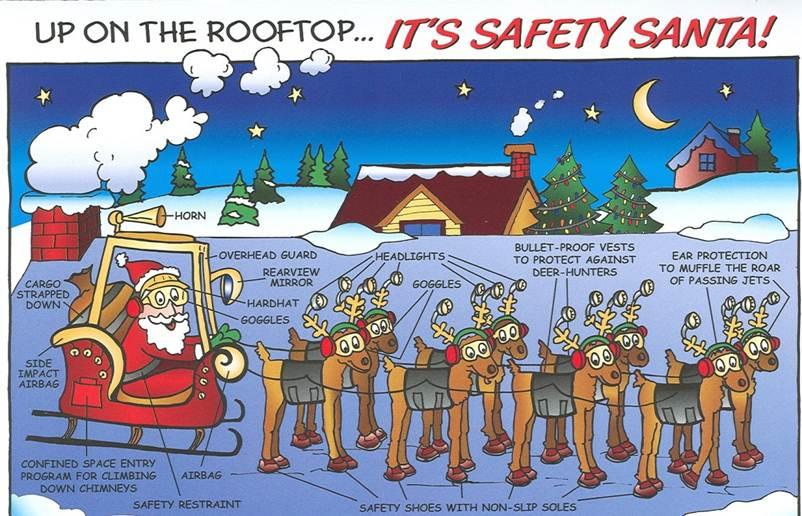
    This year we are once again pleased to report that not only have the flying sled and its power plants remained in compliance with the FAA but has now taken additional steps forward.  Incorporating new technologies and processes, safety has been enhanced in the following manner:

    • Addressing Slips, Trips and Fails with new safety/skip proof landing gear
    • A new Confined Space program along with appropriate personal safety gear
    • An alarm Klaxon and Better Lighting
    • Enhance Safety Restraints such as airbags and an overhead guard
    • Extensive Head, Vision, and Hearing Protection systems
    • Better Work Place Violence technology enabled processes
    • A new Cargo Restraint system

    It looks like the arctic region of the Occupational Safety and Health Administration (OSHA) outreach program is having great success.  Interested readers are invited to review the above safety Infographic for further details and perhaps new insights.

    Simplified Business Model

    There are a lot of lessons herein for those who don’t live at a mythical north pole.  First, it seems that much if not all the safety improvements made are inexpensive and easily implemented.

    Next, change management and new policies appear to be welcomed by those affected.  Answering the, “What’s In It For Me” question when adopting new technologies.

    Management is also ‘walking the walk’ with employees by driving the sled and taking the same risks as the rest of the team fulfilling customer requirements, i.e., snow covered rooftops and chimneys.  One can argue that this entire team is the Customer Facing part of the system.  Finally, customers have high expectations that must be met, and late delivery is not an option—this project has a fixed deadline!

    Stakeholder Value

    With billions of children waiting and using a complex and global logistics system, this team does not disappoint.  Earlier competitors have long dropped off the map.

    So why with a clear monopoly does this organization still seek greater Operational Excellence with its transformational Safety Culture?

    Simple—safe and excellent operational performance is good business!  Less unplanned downtime increases the bottom line.  Few incidents increase morale and the bottom line.

    Fewer legal issues, regulatory matters, and so forth and so on positively impact the bottom line.  With such significant ROI, what’s a stakeholder not to like?

    Is Your Operational Safety on Par with Ole Saint Nick?

    For More Information

    Please note, RRI does not endorse or advocate the links to other third-party materials.  They are provided for education and entertainment only.

    For more information on Cross Cultural Engagement, check out our Cross Cultural Serious Game

    You can contact the author as well.

  • Chain of Custody: Is Your Management System Ready?

    Chain of Custody: Is Your Management System Ready?

    This eliminates the possibility for human error.”  This is an actual quote taken from one of the many blockchain ‘credible’ websites readily available—citation withheld to protect the guilty.    And, the Titanic was unsinkable!

    From another credible sources, “Is blockchain secure for my business?  Simply put, it can be.  But, not by just turning the key.  Security will depend on a variety of factors, none sic (not) the least of which requires a robust risk management framework?”

    In their white paper, KPMG argues that while the current blockchain frenzy is focused on the new technology, the question of its applicability to a business solution remains elusive.  Falling in love with a ‘shiny new software object’ has been seen before.  Most recently, digitalization and IoT.

    The organization’s economic buyer requires more depth in the decision-making process.  Has a valid Business Use Case been developed for its implementation?  This can be a time-consuming activity as the various constituencies must be queried to assess their assessment of the Economic Value of this CAPEX.  Unfortunately, there are no shortcuts to this risk mitigation process.

    This blogger has focused on the need for Governance and appropriate Management Systems for many years.  Historically it has been a challenge for business and government entities to keep up with the explosion of technology.

    While third parties are often the weakest link in supply chain management and this is one of the problems that Chain of Custody solutions address, technology alone is not a solution.  As with any transformational initiative, the broader impact, unintended consequences as well as other tangible and intangible exposures must be understood and managed accordingly.

    Just for the record, human error can never be eliminated.  It is human folly to believe that a technology can free us from our human nature.  High Reliability Organizations (HRO) recognize this frailty and respond accordingly.

    The promised of today’s technology suites can be of high value.  History teaches us that this value may not be realized if the problem being addressed, their implementation and sustained (maturity) processes are inadequately formulated.

    How Will Your Organization Assure It Will Realize the Value from Blockchain Investments?


    https://advisory.kpmg.us/articles/2017/securing-the-chain.html

    Shemwell, Scott M. (2018, October). How to make the case to the C-Suite: Selling Large Scale Data Management Projects to the C Suite. Foundations: The Journal of the Professional Petroleum Data Management Association. Volume 5 Issue 2. pp. 6-8.

    https://sceweb.uhcl.edu/helm/RationalUnifiedProcess/process/modguide/md_bucm.htm

    https://therrinstitute.com/economic-value-proposition-matrix/

    https://therrinstitute.com/are-organizational-governance-models-broken-why-cant-management-get-a-handle-on-things/

  • What Lies Beneath the Surface of Your Organization: Structural Dynamics?

    What Lies Beneath the Surface of Your Organization: Structural Dynamics?

    As the officers, seamen and passengers of the Titanic came to understand, it is not what you can see that gets you but what is below the visible surface.  Visualizing the unseen remains a continuing challenge.

    The current president of the United States is by many accounts the most unlikely political victor.  He is not from the ‘industry’ and has limited experience in this field of endeavor.  None-the-less, he holds the office.

    The results of the US presidential election of 2016 is the subject of innumerable discussions.  Most center around the performance of his opponent and missed opportunities by the opposing party.  This pundit argues that neither of these are the prime reason for his election.

    Almost 30 years ago this writer was a member of the Leadership Team for a major publicly traded company.  Multiple reorganizations and the advice of numerous consulting firms did not enhance our position in a difficult market.

    Something we did not understand was at work.  Why couldn’t those with decades of managerial/industry experience and all the experts fathom the forces at work?  Unless, we could no action taken would be effective.

    What are Structural Dynamics?

    During this period, management theories abounded.  Examples included The New Realities by Drucker, The Fifth Discipline by Senge and Economic Value Added (EVA) to name a few.  None seemed to be able to help us understand the latent forces that eluded us.

    As part of the doctoral dissertation, assessing cross cultural negotiations and the relationship between human Relationships, Behaviors, and Conditions (RBC) we enhanced existing theory into an actionable methodology, Structural Dynamics.

    The fundamental premise upon which the theory of Structural Dynamics is developed is the belief that structures are not static and that more often than not, these dynamics are not directly observable.

    Over time, the very nature of the structure and the very nature of the component parts of the structure may be radically different from today’s composition.

    In other words, Structural Dynamics is defined as “the morphology or patterns of motion towards process equilibrium of interpersonal systems.”  While this sounds academic, the implementation is straightforward.  Think of this as an iceberg.

    The Iceberg Principle—90% of any system’s structure is below the surface or hidden from direct observation.  This latent component controls all the processes associated with the system.

    Implementation

    While there is a quantitative aspect to Structural Dynamics, analysts can use this qualitative approach.  There is plenty of information available; however, it can be challenging to shift through it and separate actionable data from noise.

    For example, while it was evident for all to see most prognosticators wrote off the Trump rallies and the size of the crowds.  Similarly, Xerox had most of the technology for today’s PC, but it took Apple and others to realize the value.

    Think these are remote and one-off events?  Only 60 companies that were members of the Fortune 500 in 1955 were still members in 2017.  Some mergers for sure, but why did the others not see the waves that swept them away?  Sears is a recent example.

    Assessment

    Structural Dynamics analysts can use the following checklist as guidelines.  This list is not all-inclusive, nor is it meant to be a list that one simply puts a check mark next to and tallies up the number of checks versus not check.

    It is more accurately a framework for developing a Structural Dynamics model for any given industry environment.  The following criteria provide a preliminary checklist of set of questions that should be addressed when one seeks a better understanding of the latent variables associated with an industry segment or emerging environment, such as new technologies.

    1. Not obvious or normally thought of as industry driver
    2. Usually not directly related to standard industry practices
    3. Becomes more visible over time or repeated measurement
    4. Often not specific to a single industry or economy
    5. Cannot be determined by analysis of best practices
    6. Typically, not associated with a single or few number of processes
    7. Not associated with processes in a single firm
    8. Can be cyclical or seasonal in nature
    9. Not necessarily random or chaotic events in nature
    10. Not necessarily economic variables in nature
    11. Tend to be long term variables with limited reaction to specific current events
    12. Can remain dormant for long periods of time, but when they become visible the impact can be significant and swift
    13. Demographics may provide insight into emerging or future Structural Dynamics, they should not be used exclusively
    14. Often small niche (or new) players may benefit from Structural Dynamics These niches are often outside of the industry of interest, but are subsequently imported into the industry of interest
    15. Technological developments may forecast future competitive events, i.e., the impact of cellular phones on the pay phone industry
    16. Not all technology is useful in the near term. The technology developed by Xerox, Palo Alto in the 1960s was not commercialized for almost 20 years.

    Computer icon and windows technology was not commercially viable until Steve Jobs (founder of Apple Computer), and Bill Gates (Microsoft) expanded hobbyist’s niches into the personal computer revolution of the 1980s.

    Knowledge of Structural Dynamics variables can defeat the brute force of large deep-pockets organization, although this is not guaranteed.  As this construct evolves, we expect to develop a more robust set of tools, so managers and other practitioners will be better able to visualize their Structural Dynamics environment.  In the meantime, it is useful to define latent variables.

    Latent Variables Are impacting Your Organization.  What Will You Do About it?

    For More Information

    Much of this blog is taken from our monograph, Structural Dynamics: Foundation of Next Generation Management Science.  The Kindle version is available from Amazon https://www.amazon.com/gp/product/B00U0JKMT0/ref=dbs_a_def_rwt_bibl_vppi_i1

    Fundamental to our Operational Excellence Platform, also see https://therrinstitute.com/structural-dynamics/

    End Note

      http://www.aei.org/publication/fortune-500-firms-1955-v-2017-only-12-remain-thanks-to-the-creative-destruction-that-fuels-economic-prosperity/

  • Systemic Reasoning Errors: Stink’en Think’en

    Systemic Reasoning Errors: Stink’en Think’en

    The April 13-14, 2019 edition of the Wall Street Journal featured an opinion piece by Holman W. Jenkins, Jr., Russiagate and the Media’s News Denial.  The author makes the point, “Judgement is teachable.  Long ago, in relation to the Enron debacle, I pointed to the work of Harvard’s Max Bazerman and Northwestern’s David Messick, who theorized how systematic reasoning errors can lead to unethical business judgments.”  He goes on to discuss how the journalism sector may be suffering from this problem, vis-à-vis the Trump Administration.

    Cognitive bias errors impact the way people process and interpret information.  Our attempt to simplify can lead to nonobjective, illogical and poor decision making.  So, do these poor judgement issues concern me?

    The emerging digitalization model to attain and sustain Operational Excellence by definition is systemically complex.  A highly integrated ecosystem coupled with tens of thousands of data sensors and quasi-independent processing systems support field operations.  Moreover, risk mitigation models in such an environment are themselves complex.

    Human decision-making processes in this new environment will necessarily change from the traditional management of automated systems and data analysis.  Extensive training must be part of the transformational process.

    Additionally, Governance models may need revision as well.  What is the role of the Board and ‘C’ Suite (CIO vs. COO?) with the digitalization of the organization?

    Clarification.  The term ‘stinking thinking’ refers to tactics either unintentionally or insidiously used to create expectation biases.  The title uses a colloquial term Stink’en Think’en as a function of lousy thought processes; nothing more.

    The challenges we face are much more than technology driven.  As always, human Behaviors are at the core and Conditions in the near future may be dramatically different from the present.

    New Relationships will emerge as well.  We have previously discussed the R B C model.  It is good guidance for this transformation.

    How Does Your Organization Mitigate Systemic Reasoning Errors by Its Decision Makers?

    For More Information

    How Cognitive Biases Influence How You Think and Act is a very good article on this subject.  Interested readers may want to check it out.

    You can contact the author more information as well.

    End Notes

      https://www.psychologytoday.com/us/blog/the-media-psychology-effect/201311/stinking-thinking-and-expectation-bias

      https://www.amazon.com/gp/product/B00U0JKMT0/ref=dbs_a_def_rwt_bibl_vppi_i1

  • You Have 10 Minutes: Maybe

    You Have 10 Minutes: Maybe

    Over the past couple of weeks this writer has been part of several conversations regarding the value proposition of technology for established as well as startup companies and how to articulate it.

    This remains a tough subject and we have been addressing it over the years.  However, there is an approach that is successful when properly executed.

    As part of master’s level course, one graded test for my students goes along these lines.  You have been given the opportunity to ‘pitch’ your CAPEX/Technology Sale to the Chief Financial Officer.  In the current market environment, she is skeptical about new capital investments.  She is the economic buyer, very busy and has allocated no more than ten minutes for this meeting?  How will you close the deal?

    Students are offered the opportunity to select their own project or sales initiative, so they are very familiar with the background.  This also allows them the opportunity to ‘rehearse’ with the instructor before the actual meeting with the CFO.

    First, What Not to Do

    Sadly, many sales representatives/internal project advocates view the selling process through the following lens:

    The merits of this project or technology solution are obvious.  After all, everyone agrees we must move forward.

    The Return on Capital Employed (ROCE) or Net Present Value (NPV) is clear on the chart presented.  The justifications (spreadsheets) support our plan.

    Moreover, senior executives only want the single PowerPoint slide and high-level risk overview.  After all, she doesn’t want the details and has been briefed by her staff.  How much can be discussed in ten minutes anyway?

    Hit–Lost Deal Button!!

    If this scenario sounds far fetched, it is based on reality.  At an Internet of Things conference, one panel moderator from a major professional services firm advocated that IoT investments must be made to remain competitive because everyone else is doing it.  When this attendee asked about project governance and risk mitigation planning, was told it was outside the scope of the discussion.

    What Drives Decisions?

    One of the first things this sales guy does when preparing for a meeting with senior executives is to read the Letter to Shareholders in the customer’s Annual Report.  Typically, the strategy, challenges and priorities of the firm are easily discerned.

    If the project/solution is not aligned with business, success is much less likely.  Also, how does it fit in the firm’s portfolio of projects/technologies?

    Often risks are not as well understood as they could be with simple models suggesting exposures are low and unlikely.  Many sale representatives do not even think about the governance issues associated with the ‘spend.’

    Expect a senior executive to be engaged and ask insightful even tough questions.  They have to be answered—with authority!  Can’t wing this, only homework will prepare for this meeting!

    Finally, what drives her?  Not the company; the individual.

    Hit–Won the Deal Button!!

    Is this in the ‘too hard to do’ category?  Not at all, and processes and means are available to guide this course.  Several tools are available such as our Economic Value Proposition Matrix® and the white paper Asset/Equipment Integrity Governance: Operations—Enterprise Alignment.  These can help guide your closing efforts.

    Not a typical sales model but it works—several billion dollars later!

    Lessons from the Classroom

    As might be expected in an academic environment, many students struggled to reduce the data into a ten-minute compelling pitch.  Mark Twain is credited with saying “I didn’t have time to write a short letter, so I wrote a long one instead.”

    It takes significant effort to succinctly address complex multi-faceted problems.  A classic; when tasked to write a one-page executive summary one student submitted a multi-page report with appendices.  His retort was that the subject was too important to only write one page on it.  This response defeated the learning objective of the exercise.

    CFO’s do not make trivial decisions.  If you would have her take time to listen to you.  Be prepared!

    Is the Deal Worth Winning?

    For more information check out our Value Proposition Matrix® and the Digital Oilfield Case Study.

  • Operational Complexity: Risk Model Insufficiency

    Operational Complexity: Risk Model Insufficiency

    Most readers will be familiar with the above linear Risk Matrix Model.  This graphical representation of risk exposure is useful but strict adherence to it can lead to a false sense of security.

    Systemic Risk Management

    The real world is very complex with many moving parts.  The potential interaction of processes, events and other challenges can lead to disaster.  It is often the case that the combination of a number of seemingly unrelated and in and of themselves potentially minor events can lead to catastrophe.

    A systemic approach to risk exposure is appropriate.  Field operations usually involves several to many somewhat disparate processes and individuals.

    Typically, the operator will have individuals in the field as well as the office working together.  Contractors and sub-contractors are similarly constructed.  The number of interactions can grow exponentially in a large project or program.

    Therefore, it is important to ‘see’ risk as a dynamic interacting model.  For example, the following quotation is a straightforward presentation of the actual risk field operators face.

    “Planning for the abandonment of Macondo was extremely complex.  The fundamental source of that complexity was a phenomenon well known to systems engineers: the number of potential pairwise interactions among a set of N elements grows as N times N-1, divided by 2.  That means that if there are two elements in the set, there is one potential interaction; if there are five elements, there are ten potential interactions; ten elements and there are forty-five; and so forth.  If the interactions are more complex, such as when more that two things combine, the number is larger.  Every potential interaction does not usually become an actual one, but adding the elements to a set means that complexity grows much more rapidly than ordinary intuition would expect.”

    The authors’ note that NOT all combinations can happen, but the possibility of several is likely.  Many decision makers do not expect exposures as great as they likely are in a complex environment.

    Interactive Model

    So how great is your risk?  The following calculator will give you a perspective on your organization’s exposure.  It is straightforward and easy to use.

    You are only required to input two variables:

    n = the number of elements

    m = elements from n in certain order, it is arrangement

    Taken from the Macondo model above, if n=10 and m=2, the number of combinations of m from n equals 45.


    [planetcalc cid=”977″ language=”en” code=”” label=”PLANETCALC, Combinatorics. Combinations, arrangements and permutations” colors=”#263238,#435863,#090c0d,#fa7014,#fb9b5a,#c25004″ v=”3275″]

    Addition data the calculator provides:

    Each ordered set of n is a permutation

    Generally, the number of combinations of m from n with repetitions is not useful for our purposes other than the recognition that repetition is possible.

    This calculator does not indicate where risk lies.  As the authors of Deepwater Horizon: A Systems Analysis of the Macondo Disaster suggest, it helps decision makers better understand the nature of their complex environment.

    Final Thoughts

    Simple risk models may have their place.  They are useful for presentation purposes.  However, they are insufficient when assessing the exposure of today’s complex operational situations.

    High Reliability Management requires that decision makers NOT simplify the complex.  Understanding the level of exposure using systemic risk management techniques can help clarify organizational threats.

    Are Your Organization’s Risk Management Techniques Robust Enough?

    For more information on Risk Mitigation check out our Operational Excellence Platform.

      Boebert, Earl and Blossom, James M. (2016). Deepwater Horizon: A Systems Analysis of the Macondo Disaster. Cambridge, MA: Harvard University Press. pp. 65-66.

    Appendix–The Math

    For those interested, this is the math for the calculator. It is taken directly from the Planetcalc website.

    So, assume we have a set of n elements.

    Each ordered set of n is called permutation.

    For example, we have set of three elements – А, В, and С.
    Example of ordered set (one permutation) is СВА.
    Number of permutations from n is

    P_n = n!

    Example: For set of А, В, С number of permutations is 3! = 6. Permutations: АВС, АСВ, ВАС, ВСА, САВ, СВА

    If we choose m elements from n in certain order, it is arrangement.

    For example, arrangement of 2 from 3 is АВ, and ВА is the other arrangement. Number of arrangements of m from n is

    A_{n}^m=frac{n!}{(n-m)!}

    Example: For set of А, В, С number of arrangements of 2 from 3 is 3!/1! = 6.
    Arrangements: АВ, ВА, АС, СА, ВС, СВ

    If we choose m elements from n without any order, it is combination.

    For example combination of 2 from 3 is АВ. Number of combinations of m from n is

    C_{n}^m=frac{n!}{m!(n-m)!}

    Example: For set of А, В, С number of combinations of 2 from 3 is 3!/(2!*1!) = 3.
    Combinations: АВ, АС, СВ

    Here is the dependency between permutations, combinations and arrangements

    C_{n}^m=frac{A_{n}^m}{P_m}
    Note Pm – number of permutations from m