Tag: inclusion

  • Teaming Realities

    Teaming Realities

    Why are Diversity, Equity and Inclusion (DEI) initiatives failing?

    In previous blogs, we have addressed the challenges of turning organizational initiatives into culture.  Moreover, we discussed DEI and the shortcomings of those institutional efforts as well as broached the construct of Teams incorporating DEI.

    In this edition, we will expand on those subjects and develop a realistic approach toward team building that fully incorporates the precepts of DEI in a realistic manner.
    Five Elements

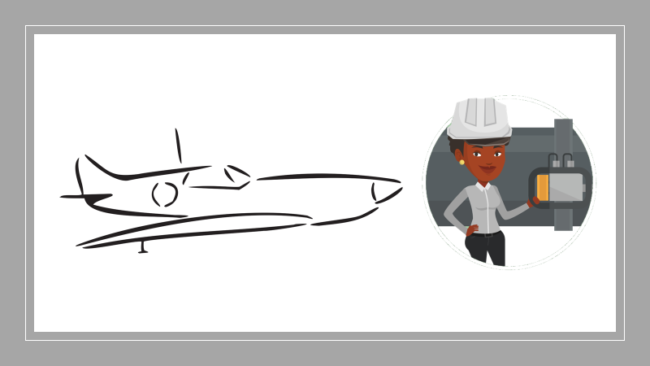
    As depicted in the title graphic, organizational cross-cultural interactions incorporate one or more of these dynamic components.

    • The Individual defined as a single human being or perhaps other entity with whom others collaborate
    • The Internal Organization defined the (legal) entity one or more individuals associate with on a daily basis
    • The Government defined elected officials as all levels of the Federal, State and Local governance bodies including any and all regulatory bodies or other agencies
    • The Public defined as communities and other interest groups including the media as well as its social aspect
    • The Ecosystem defined as the broad group of constituents which includes clients/customers, the supply chain as well a professional services engaged with the organization

    Note that sub-cultures abound across the four elements other than the individual.  Four example, a taskforce or team may be formed to implement a global IT system.  In this case, the team may be composed of individual from several countries as well as  Internal and External IT professionals..  In this case this would be an Internal Organization Sub-Culture.  Another Sub-Culture might be the NYC office with a distinct local flavor.

    These five elements are built upon a pretty straightforward peer reviewed behavioral framework.   

    The RBC Framework

    The Relationships, Behaviors, Conditions (RBC) Framework was originally developed to address the International Cross-Cultural Negotiation process.  Briefly, this is a dynamic model with emphasis on interactive relationships resulting from multiple levels of behavioral analysis.

    • Relationship dynamics are the focus including, commonality of interest, trust, balance of power and conflict intensity
    • Behaviors are defined from a broad multi-dimensional perspective and includes intentional as well as unintentional
    • Conditions include circumstances, capabilities and competencies of the parties, cultural considerations and the environment

    For almost 30 years we have been expanding and enhancing this model.  It is now used for ANY human interaction as well as Machine-Human interfaces, i.e. Artificial Intelligence (AI).

    Finally, we see this construct as very fabric of the modern organizational Team.

    What is a Team?

    By one definition a team is, “a group of people who perform interdependent tasks to work toward accomplishing a common mission or specific objective.”  As a general rule, teams are composed of individuals either appointed politically or assigned based on talent and expertise.

    When politically assigned to meet somewhat arbitrary DEI driven goals, one can expect such teams to fail–often visibly as a great calamity.  Thus driving survivors and others away from new similar teams.

    Thirty years ago this pundit witnessed the implementation of the then new Enterprise Resource Planning (ERP) IT systems.  Most were late and way over budget.  They rightfully earned the badge of ‘Career Killer.’  Not surprisingly, no one wanted to be assigned to this type of project.  Most consulting firms implementing these systems wanted someone with knowledge of the business on the project as well as IT professionals.  Key personnel could not be spared from operations and often junior or less qualified IT employees were assigned.  Needless to say, some level of disappointing performance was almost certainty guaranteed.  These were diverse teams composed of third party consultants, operations and finance individuals as well as internal IT people.

    These were not effective teams.  Many were even destructive.

    Creating an Effective Team

    A Google search of the term ‘teambuilding’ generates 160 million hits.  It is a well documented process, so why are successful teams so elusive?

    Most critical teams undergo a selection process as described previously with some training.  The project commences often with significant time and budget constraints.  In many cases the team malfunctions from the ‘get go.’  So why would DEI efforts end differently?  One suspects most do not.

    When students participate in active learning, they learn more.  This has been known for some time.  Sadly, and often in the DEI space, workshops do not address the actual issue organizations are facing.  However, their is a more successful learning model.

    Organizational Team Truths

    As noted above, organizations build teams to solve critical problems.  They do not group Individuals by category or classification.  High Performance Teams are anything but homogeneous.  

    • First, teams must form.  A mission/goal(s), set of deliverables, budget (if appropriate) and time frame must be developed and agreed to by management.
    • Then, members must get to know each other, roles and tasks assigned, etc.
    • What does success look like?  Metrics established.

    Most teams do not live in a vacuum so if they are to collaborate with one or more other teams (Internal or Ecosystem) this process is extended.  In many cases such as a merger or safety initiative, Government and even the Public will need to be engaged.

    Now a collaborative negotiation between ‘semi-independent’ parties to arrive at mutual success.  This is generally an iterative process.

    To create an active learning environment to cost effectively train new teams in a timely manner, simulations and game theory play a critical role.

    Moreover, to maximize effectiveness, such a Serious Game must be based on a Behavioral Science Framework.  This type of Team-to-Team interaction is available using video conferencing to engage teams meaningful training using ‘real world’ scenarios.

    The graphic below depicts this process.  Readers will also note a number of metrics will provide feedback to students to further enhance their learning experience.

    DEI ROI

    One comment routinely heard regarding DEI is the lack of return on the effort.  Not necessarily monetary return but the learning does not ‘stick.’

    Benjamin Franklin is credited with the quotation, “Tell me and I forget, teach me and I may remember, involve me and I learn.”  When these teams are composed of a variety of Individuals working to solve realistic collective problems the result better reflects actual organization life.  All aspects of DEI can be incorporated into the game scenario.  All students benefit from a much better learning experience and by extension the organizations they represent.

    The following short video is aligned with this discussion.  Well worth the few minutes it will take to watch it.

    Realizing DEI

    Simon makes the point that strong Organizations are more diverse.  In this pundit’s long international career, I support his contention. Moreover, true strength from a diverse Organization and its Ecosystem cannot be reached if individuals are not treated fairly and included in the process.  The serious game scenarios help assure all individuals participate.

    Want some help upping your DEI game?  Contact Us.

    For More Information

    Please note, RRI does not endorse or advocate the links to any third-party materials herein.  They are provided for education and entertainment only.

    The author’s credentials in this field are available on his LinkedIn page.  Moreover, Dr. Shemwell is a coauthor for an in press book (to be released in Spring 2023) titled, “Smart Manufacturing: Integrating Transformational Technologies for Competitiveness and Sustainability.”  His focus is on Operational Technologies.

    “People fail to get along because they fear each other; they fear each other because they don’t know each other; they don’t know each other because they have not communicated with each other.” (Martin Luther King speech at Cornell College, 1962).  For more information on Cross Cultural Engagement, check out our Cross Cultural Serious Game.  You can contact this author as well.

    The video by Simon Sinek is from YouTube.

    For more details regarding climate change models, check out Bjorn Lomborg ands his latest book, False Alarm: How Climate Change Panic Costs Us Trillions, Hurts the Poor, and Fails to Fix the Planet.

    Regarding the economics of Climate Change, check out our recent blog, Crippling Green.

    For those start-up firms addressing energy (including renewables) challenges, the author can put you in touch with Global Energy Mentors which provide no-cost mentoring services from energy experts.  If interested, check it out and give me a shout.

  • The Power of Synergies

    The Power of Synergies

    An oil and gas industry group, the U.S. Energy Workforce & Technology Council recently released a survey which stated, “companies with a higher percentage of women in executive positions have a 34 percent higher total return to shareholders than those that do not and companies with ethnic diversity on their executive team are 25 percent more likely to have above-average profitability and 27 percent likelihood of outperforming peers in value creation.”  This is a powerful statement!

    Frankly, this should come as a surprise to No One.

    On the Shoulders of Giants

    While not the first time, a well known diversity/inclusion synergy occurred during World War II on the American side.  The Tuskegee Airmen were a group of fighter pilots largely composed of Black men whose mission was to protect bombers (most manned by White men) whose mission was to help defeat Nazi Germany.  According to the US National Park Service, “The airmen flew over 180 combat sorties (missions) without losing a single bomber.”  While many held their prejudices, one cannot deny the success of the “Red Tails” which led to some minds being changed.

    In another high impact case, Vivien Thomas an African American medical lab assistant to a white physician, was instrumental in the pioneering work at the dawn of cardiac surgery.  Together, they developed a procedure to save infants with the Blue Baby Syndrome.  Mr. Thomas is credited as playing a pivotal role in this and other surgical processes.  Likewise, this history has been made into a movie, ‘Like Something the Lord Made.”

    Such a list would be remise if it did not include the women of Hidden Figures.  In an era of segregation (ethnic and sex), these Black women were entrusted with the human ‘computing’ of the complex mathematics necessary at the beginning of the United States (NASA) efforts to launch astronauts into space, ultimately the moon as well as the Space Shuttle.  One can surmise that President Kennedy’s commitment to get to the moon by the end of the decade could not have been met without this team.  Watching the movie, Hidden Figures is worth your time.

    There are many other case studies where a diverse group of people have worked together and significantly contributed to the advancement of human kind.  There is no reason to believe this will not continue.

    Governance

    Post Enron and other corporate malignancies, the question of good corporate governance needed to be addressed.  One approach was The Sarbanes Oxley Act of 2002.  Largely, this act spoke to financial management and reporting.

    However, another phenomenon was noticed that same year.  “McKinsey & Company in conjunction with the Global Corporate Governance Forum conducted a study and found that over 75% of over 200 fund managers would value a stock at a higher price point if the company could demonstrate it had strong governance in place.  Moreover, the study also revealed that for western markets, firms with strong shareholder rights averaged 12-14% higher stock prices.”  This 20 year old study is a powerful statement as well.

    We discuss this point in more detail in our June 21, 2022 blog, Why Corporate Initiatives Fail.  Interested parties are invited to review that material for more details regarding governance models and similar issues such as ESG.

    Capitalizing on Synergy

    Cambridge Dictionary defines synergy as, “the combined power of a group of things when they are working together that is greater than the total power achieved by each working separately.”  This definition says it all!

    Individuals such as the Tuskegee Airmen and Hidden Figures ‘flew’ the way for today’s successful team synergies.  Not just the energy sector but all sectors are benefiting greatly from the work of pioneers and can enjoy the financial and social results of diverse teams.

    There is clear evidence that well run and governed organizations add higher value to their stakeholders.  These organizations take advantage of all the talents at their disposal.  Therefore, as my math professor used to say, ‘it follows that synergic firms are leaders in their sectors.’

    How is Your Organization Capitalizing on the Power of Synergies?

    For More Information

    Please note, RRI does not endorse or advocate the links to any third-party materials herein.  They are provided for education and entertainment only.

    The author’s credentials in this field are available on his LinkedIn page.

    For more information on Cross Cultural Engagement, check out our Cross Cultural Serious Game.  You can contact this author as well.

    Interested parties can also find more information at the Tuskegee Airmen Inc. (TAI) website.

    For those start-up firms addressing energy challenges, the author is a member of Global Energy Mentors which provide no-cost mentoring services from energy experts.  If interested, check it out and give us a shout.

  • ESG Explained

    ESG Explained

    According to Investopedia, “Environmental, social, and governance (ESG) criteria are a set of standards for a company’s operations that socially conscious investors use to screen potential investments.”  Definitions of the three components are pretty straightforward:

    • Environmental–Generally refers to the stewardship of the planet and how organizations facilitate that responsibility.
    • Social–Facilitating organizational responsibility to the global society, at all levels from the globe to the local communities firms operate in.
    • (Corporate) Governance–Typically, the umbrella organizations put in place to assure issues such as transparency, fraud, safety culture and ethics are in compliance with social norms and local regulations.

    Since the Deepwater Horizon incident of April 2020, operators (oil and gas companies) have extended and enhanced the above criteria to their supply chain ecosystem and in some cases even customers with a Safety and Environmental Management System (SEMS).  This is true of most other Critical Infrastructure sectors as well.

    Likewise, the Sarbanes-Oxley Act of 2002 enhanced transparency and increased fraud protection after the Enron (and other) scandals.  Other incidents have triggered governance changes as well and some are referred to in linked materials.

    Why Is ESG Important?

    By one account, approximately $12 trillion in investments made in 2018 were driven by those who consider themselves socially responsible.  According to Forbes, in 2019 this accounted for almost 25% of total investments and are seen through the lens of sustainability.  Moreover, between 2016 to 2018, the growth rate in such firms grew at 38 percent.

    These numbers confirm our research going back to the turn of the century and perhaps earlier.  In 1993 we controversially posited that the Principles of Scientific Management were applicable to software development by Knowledge Workers.  Developed by Frederick Taylor, his monograph was published circa 1911.

    In other words, owners (investors) have always demanded top notch, legal and ethical performance.  Activist investors, i.e. Carl Icahn are not new.  As always, they have a very important role to play in the current markets.

    Asset/Equipment Integrity Governance

    There is a buzz of newness to ESG; however, from a contrarian perspective, this is not necessarily the case.  After the Deepwater Horizon failure with significant loss of live and many billions in economic losses to many parties including BP, it became clear that traditional Governance models did not have a focus on operations and the management of capital assets, i.e., manufacturing plants, marine vessels and other revenue producing sources.

    In our book we addressed a New Risk Environment from large corporate operations in which ‘failure is really not an option.”  We stated as a risk element, “Escalation of Consequences: The level of consequences of a disaster in the energy industry can now be larger than from the accidental release of a multi-megaton nuclear weapon.”

    Still governance models continued to struggle.  We believe that in the critical infrastructure sectors there is a lack of strong bonding, in other words top management is still hands off and operating from historical ‘control’ models that are no longer relevant or applicable.

    We do not believe this will change until a Strong Bond (tightly coupled) model is adopted.  We define the term as, “A strong model is used by High Reliability Organizations (HRO) and as part of that model, trained; knowledgeable personnel are empowered to make the right decisions in the field.  The strong model provides an organization with the capability to become and remain and HRO.”

    In 2011, we released our monograph, Asset/Equipment Integrity Governance: Operations–Enterprise Alignment; A Case for Board Oversight (AEIG).  In addition to developing a financial model documenting the Return on Investment (ROI) from strong governance, a Compliance Model, as well as a robust AEIG Matrix which incorporates an Asset Maturity Model are part of the solution.

    The AEIG extends the enterprise governance model to include the full ecosystem including subcontractors to its primary supply chain partners.  While not directly addressed at the time, Diversity, Equity and Inclusion (DEI) is implicit in the model.

    This roadmap is comprehensive and is a good starting point for developing and implementing a vigorous ESG initiative.  Other monographs in our Changing the Dialogue series (exploring our New Business Dynamics) include Structural Dynamics and Rapid Response Management are available online.

    Relationships, Behaviors, Conditions

    Scroll down on The Rapid Response Institute, Operational Excellence Platform page and you will find our R B C Framework Cultural Transformation model.  Shown below for ease of readership.

    The R B C model was originally developed to research international (cross cultural) negotiations.  We have extended it to support the transformation process to a robust and model organization culture such discussed herein.  Readers should note that this model is focused on Operational Excellence and is comprised on Processes & Methods supported by Enabling Tools.

    Built on Structural Dynamics which was developed as part of Dr. Shemwell’s doctoral dissertation in 1996.  It is defined as, “The morphology or patterns of motion towards process equilibrium of interpersonal systems.”

    This proven Framework is grounded in Management Science yet is a useful tool (Roadmap) that real originations can successfully and cost effectively implement.  We believe it is the best approach for attaining ESG.

    Summary

    One can view the current ESG status as part of a continuum to hold organizations accountable as appropriate and frankly, increase their Operational Excellence.  We have long known that firm’s that are well managed command superior stock market multiples and greater equity value.

    Many ‘self-serving’ consultants and pundit would have us believe ESG is breakthrough Thought Leadership in need of their help.  Nothing could be further from the truth.

    In the early 1990s, we document the history and evolution of Management Science/Thinking.   It is not written in stone, like most human endeavors it evolves and has for thousands of years.  ESG is a step in this continuum.

    How is Your Organization Addressing the Requirements of Active Investors?

    For More Information

    Please note, RRI does not endorse or advocate the links to any third-party materials.  They are provided for education and entertainment only.

    For more information on Cross Cultural Engagement, check out our Cross Cultural Serious GameTwo current online games; Safety Culture and Diverse Teams specifically address issues raised by ESG Criteria.  If you have any questions, please contact this author as well.

    Graphic Source: The Rapid Response Institute derived from a Storyblocks image under license.

  • Getting to Diverse and Inclusive Teams

    Getting to Diverse and Inclusive Teams

    Diversity, Equity, and Inclusion (DEI) Team Models

    There is a tendency to see DEI through the lens of initiatives or often a process semi-outside the daily ‘organizational’ grind.  Does this represent reality?

    Organizations spend countless sums training employees and others they depend on for Operational Excellence performance.  They often trust global Teams to add stakeholder value.

    No less than Microsoft names a software product, Teams.  A tool designed to foster collaboration.

    The Way We Do Business

    Culture is often defined as ‘who we are.’  The approach an organization takes towards its ecosystem.  If this model is an accurate representation, it suggests that when organizations launch initiatives meant to address current social mores, they likely fail or at least do not live up to full potentials.

    Change management, often referred to as transformation often takes on the mantel of ‘you will be changed.’  Contemporarily, take the Covid-19 vaccine or you will be fired!  Not surprisingly, this mandate is resisted and seemingly increasingly with each new warning.

    As of this writing, the all out war (on decrees) has been declared by the likes of the Navy Seals, Health Care Workers, Law Enforcement and others with the demands from the Feds.  Likely, the result will be a draw at best, with the administration quietly acquiescing.  Too many critical, non-replaceable positions are at risk.  Not to mention votes.

    Governance

    In October 2011, we published our first draft of, Asset/Equipment Integrity Governance: Operations–Enterprise Alignment.  We recognized that traditional organizational Governance models were strictly focused on finance and maleficence therein.  The reality is that revenue is generate by operations and as such governance is critical as well.  Safety Culture, is intangible but now required by most organizations in Critical Infrastructure sectors.

    Flash forward to today and Environmental, Social, and Governance (ESG) is the model most organizations use.  Effectively, this expands governance to include a broad range of non-financial commitments.  From this blogger’s perspective, likely DEI will fall under this governance model.  Therefore, moving it from the ‘initiative status’ to the ‘way we do business.’

    Team Building

    This dynamic environment requires workforce upskilling.  The need to constantly assure that individuals have current Knowledge, Skills and Abilities (KSAs) necessary to meet current challenges.  KSAs now include the ability/necessity to work across cultural/diverse lines.

    When one thinks of a ‘team’ it is not a homogenous collection of like minded and ‘like’ individuals.  Teams are a collection of hopefully, ‘fit for purpose’ individuals who comprise the KSAs needs to accomplish the task(s) at hand.  Teams can mirror the discrete views of its members.

    For example, our early research on the subject assessed the different approaches Japanese nationals took when negotiating with white American males.  In each case, the individual players were deemed to be homogenous.

    Nothing could be further from the truth.  Each individual, in this case all males were of different ages, different education, from different regions of their respective countries, married or not and so forth and so on.

    The reality is that individuals do not negotiate deals.  Teams do.   Members of teams, like juries need to arrive at the same place prior to engaging with other collaborative counterparts.

    Juries need to be arrive at consensus.  Likewise, organizational team members must arrive at a similar place internally prior to going forward.  This not to say that individuals must cave to the will of the majority or the Tyranny of the Minority.  It is to say, a common position that all must accept as part of collaboration or consensus.

    Inclusive?

    There is no doubt that token individuals and in some case high profile figureheads have been put forth to ‘prove’ inclusivity.  Thankfully, those days are fading.

    Teams need to have the input of all members, even contrarians.  Often it is the outlier that has the most insight into a difficult problem.  Differences of opinion need to be resolved and a go forward plan agreed upon.

    Often, individuals do not speak up.  Perhaps they are new to the environment, shy or unsure of themselves.  Whatever the reason their input must be sought and at least given a fair hearing.

    Training can help elicit input from the reticent.  Moreover, they help dominate individuals acknowledge and accept said input.

    How Does Your Organization Assure Real Inclusion?

    For More Information

    Please note, RRI does not endorse or advocate the links to any third-party materials.  They are provided for education and entertainment only.

    For more information on Cross Cultural Engagement, check out our Cross Cultural Serious Game

    We presented, Should Cross Cultural Serious Games Be Included in Your Diversity Program: Best Practices and Lessons Learned at the Online Conference, New Diversity Summit 2020 the week of September 14, 2020.  Check Out this timely event and contact the organizer for access to the presentations!!

    For more on DEI Standards, see the newly released ISO-30415.

    You can contact this author as well.

  • Are Your DEI Wheels Spinning?

    Are Your DEI Wheels Spinning?

    Originally published as a LinkedIn article on July 6, 2021, this updated version is reprinted here with the permission of the author.  Links to relevant sources are added.

    Lately, many LinkedIn posts bemoan the state of Diversity, Equity, Inclusion (DEI) initiatives. The seeming slow take up of great ideas.

    Some argue that DEI initiatives are no more than window dressing or organizational efforts to stave-off litigation. To others, they have the appearance of one more management initiative that if waited out will simply go away like so many others before.

    Fundamentally, DEI initiatives require change. A change of (B)ehaviors in the face of seemingly new situations or influencing (C)onditions (Circumstances, Capabilities, Cultures, Environments). When these two variables evolve, so do exiting (R)elationships. The RBC model is well established in social science and was first used to model Cross-Cultural (international business) Negotiations.

    It is multi-dimensional including a temporal schema capable of addressing numerous aspects of human behavior. Furthermore, it encompasses cultural as well as other situational aspects such as individual backgrounds.

    We tested this model using Japanese and American executives. This culturally diverse group needed to develop a level of trust if negotiation outcomes were to be successful.

    Likewise, successful DEI initiatives require that culturally diverse groups develop a high level of trust among those working together and/or members of teams.

    “Tell Me and I Forget. Teach Me and I Remember. Involve Me and I Learn”

    Attributed to Benjamin Franklin, this quote tells us all we need to know. The so-called Death by PowerPoint lecture long in vogue are often forgettable. Instruction, along with the homework prerequisite and tests are traditional methods. Finally, engaging individuals, teams, departments and even entire organizations can create long standing sustainable knowledge that is the basis for behavioral transformation.

    Paper based serious games or “games whose purpose is other than entertainment” originated in the late 1960-70s. In a nutshell, this is an interactive training solution. Subsequently, online serious games can incorporate actual scenarios designed to immerse players solving real world challenges.

    Rather than a video game whereby players engage with electronic decision trees, human-to-human serious games train players/teams to deal with diverse yet real colleagues. Collaborative scenarios direct participants to collectively solve problems while learning how their culturally dissimilar counterparts address the same challenge.

    Scenarios can drive engagement by all players including those who may not be typically involved in decision making processes. This is also a safe, no-harm no-foul environment with little to no individual decision-making risk.

    Transformation

    Any successful ‘change’ initiative must answer the What’s in It for Me? question. Humans may resist change if they do not see personal value from such actions. Moreover, while senior executive leadership is required, heavy handed top down My Way or The Highway may result in direct resistance, and/or a more crowed freeway to the exit ramp.

    For example, the current version of the smart phone was first available circa 2007. According to Statista, approximately 1.38 billion smartphones were sold in 2020. Likewise, over 46 percent of the global population own these devices.

    What does this have to do with DEI? In 2006 cellphones were great and becoming ubiquitous. No one knew they needed a smartphone. Our collective Behavioral transformation was caused because the What’s in it for Me question was answered.

    One component of the Conditions criteria, Capability changed as this technology enabled individuals to drive new behaviors based on Apps that emerged. The resulting transformation in our Relationships is well documented, i.e., the use of text as opposed to voice.

    Sustained transformation requires continued energy. The term ‘initiative’ implies a short-term event and one that will pass.

    Trust must be established and maintained. Over time, sustained energy will result in critical mass, or the (statistically significant) number of individuals engaged and trusting each other. This self-sustaining energy is transformation.

    Reframing DEI Initiatives into the RBC Framework can enable dramatic and rapid transformation. Take advantage of these types of cross-cultural models.

    For More Information

    Please note, RRI does not endorse or advocate the links to any third-party materials.  They are provided for education and entertainment only.

    For more information on Cross Cultural Engagement, check out our Cross Cultural Serious Game

    We presented, Should Cross Cultural Serious Games Be Included in Your Diversity Program: Best Practices and Lessons Learned at the Online Conference, New Diversity Summit 2020 the week of September 14, 2020.  Check Out this timely event and contact the organizer for access to the presentations!!

    You can contact this author as well.

  • Roadmap to Decision Making In the ‘Smart’ Era

    Roadmap to Decision Making In the ‘Smart’ Era

    “Nothing is more difficult, and therefore more precious, than to be able to decide.”

    Napoleon Bonaparte

    Volumes have been written on decision-making and this pundit has offered his share of insight and comment on the subject as well.  Some of our comments regard the appropriateness of the human intercession in electronic decision making.  Others raise questions regarding algorithm fallibility.  Moreover, Human Factors must be considered for any technology initiative which are becoming increasingly important.

    If one unpacks the previous paragraph a substantial level of complexity emerges.  As complexity increases so does risk and the need from proper governance.  However, many still see this potential transformation through the lens of just another IT initiative.

    Roadmap

    The oil and gas industry faced a similar dilemma at the dawn of the 21st Century.  At the time, referred to as DOFF or Digital Oilfield of the Future, a plethora of technologies became available.  The task was to transform 100 plus years of traditional operation to what is now referred to as the Digital Oilfield, aka Integrated Operations and a number or synonyms.  While this processes continues to evolve as new solutions emerge, i.e., Cloud, at the time much was trial and error.

    In conjunction with industry leadership, we released our Roadmap to Enterprise Optimization: A Guide to the Impact of Information Driven Field Operations on the Petroleum Corporation in the fall of 2004.  We believe it was the first industry (POSC) supported effort that was not simply research but a ‘bona fide’ action plan or roadmap to success based on industry/other knowledge, standards, economic value and best practices.

    Click for full size Integrated Operations Framework or graphic

    Since then, we have updated this roadmap into an Operational Excellence Platform.  Note that Integrated Operations is a key component.  The platform is a robust detailed solution that is available not just to the energy sector but all sectors identified by Homeland Security as Critical Infrastructure.  These sectors were recently identified as susceptible to hacking by the US government.

    Getting Smart

    Enormous corporate (shareholder) wealth has been destroyed implementing ‘game changing’ technology enabled transformation efforts.  Are we about to do that again, getting smart?  The easy answer is yes, but it does not have to be.

    Roadmap constructs are well understood and provide guidance.  In some models the step by step process provide practitioners with well defined models that can lead to success–defined as on time and under budget performance against Key Performance Indicators (KPIs).

    We are in the process of writing a book, to be released in 2022.  One chapter will define a roadmap for the transformation to ‘Smart’ for a major industrial segment.  As with earlier works, it will focus on the human element aligned with a technology assessment process.

    Get Smart was a comedic TV show spoofing the Cold War ‘spy’ environment of the 1960s.  Getting Smart today may not be a lot different.  The goal under a ‘Cone of Silence‘ was to attain and sustain competitive advantaged achieving superior stakeholder returns.

    Getting smart in 2021 will require a ‘Roadmap to Smart.’  A set of ‘to do’ processes that assures success.

    What is your Organization’s Plan to put Smart Decisioning Making Processes in Place?


    For More Information

    Please note, RRI does not endorse or advocate the links to any third-party materials.  They are provided for education and entertainment only.

    For more information on Cross Cultural Engagement, check out our Cross Cultural Serious Game

    We presented, Should Cross Cultural Serious Games Be Included in Your Diversity Program: Best Practices and Lessons Learned at the Online Conference, New Diversity Summit 2020 the week of September 14, 2020.  Check Out this timely event and contact the organizer for access to the presentations!!

    You can contact this author as well.

  • Its the Heart

    Its the Heart

    “A good, quick, small team can beat a big, slow team any time.”

    Paul William “Bear” Bryant, legendary college football coach

    In the early 1990s my former wife and I, both avid sailors decorated our boat for the local Christmas Boat Lane Parade.  While we had some help, most of the work was performed by the two of us.  That 27 foot sailboat, one of the smallest in the fleet that year won the overall Best In Fleet Grand Prize.  During the presentation, we were asked how many worked decorating the boat which had over 10,000 Christmas tree lights mounted on several three dimensional frames.  At the awards ceremony, when we told them that it was a very small team–this explanation was met with disbelief.

    During World War II, the mathematician, Alan Turing led a small tightly knit team breaking the German Enigma code, saving upwards to several million people.  A dramatization of his team’s challenges were captured in the 2014 movie, The Imitation Game.

    These two very different examples have one thing in common–Coach Bryant’s admonition.  Entrepreneurs such as Steve Jobs, Sir Richard Branson, Elon Musk and others have long argued that one should hire the best people and turn them loose.  Looks like sound advise.  This may be the reason start up firms consistently beat established larger organizations with greater resources.

    Inclusion

    Teams often appear to be cliques.  Much like the kids game where teams are divided up based on favoritism as ‘buddies’ are selected.  Any non-buddy can be effectively excluded since he or she may not be part of the in-crowd.

    In the movie, Turning was initially shunned by both team members as well as his superior.  He did not fit in.  In a large team he may have drifted into the background where his perspectives might not even be heard.  However, as a key ‘different’ member of a small team, his views could not be easily dismissed although they were disagreed with and even hated.  Yet they became part of the discussion and eventually the entire team supported him and ‘now their’ solution saved millions.

    During this period, the Tuskegee Airmen faced even greater challenges.  While some individuals and units may have been forced to accept them, their highly visible contributions could not be denied by those directly benefiting from their inclusion into the air bombardment task force.  Likely, this would not be as conspicuous if they were part of a larger organization.

    Bottom Line

    Not only are small high performance teams usually more successful, they offer all team members a better opportunity to be included in the activity.  This is even more true virtually when it is often difficult to prevent one party from attempting to dominate meetings.  Talking over people and/or raising one’s voice is a tried and true way to bully in a meeting and it is almost impossible to control virtually with a large group.

    Similar to atomic energy, it is not the amalgamation of large quantities of dynamite that makes the biggest bang.  It is the release of the smallest that is the Big Bang!  Harness the power of your team atom.

    What is Your Organization’s Small Team Strategy?

    For More Information

    Please note, RRI does not endorse or advocate the links to any third-party materials.  They are provided for education and entertainment only.

    For more information on Cross Cultural Engagement, check out our Cross Cultural Serious Game

    We presented, Should Cross Cultural Serious Games Be Included in Your Diversity Program: Best Practices and Lessons Learned at the Online Conference, New Diversity Summit 2020 the week of September 14, 2020.  Check Out this timely event and contact the organizer for access to the presentations!!

    You can contact this author as well.

  • Teaming Safely

    Teaming Safely

    “For safety is not a gadget but a state of mind”


    Second only to the basic need for food, water and what is required to sustain physical life, safety and security are the next step in Maslow’s Hierarchy of Needs.  In other words one cannot love or feel belonging or achieve a level of esteem without having the warmth of safety much less attain self-actualization.

    More recently, team safety has come to be defined as Inclusive.

    There are three components of team safety:

    • Sociological — “developing and maintaining friendly social bonds is a fundamental organizing principle of human behavior”
    • Psychological — “defined as a shared belief that the team is safe for interpersonal risk taking”
    • Physiological — “relating to the way in which a living organism or bodily part functions”

    If members do not feel ‘safe’ then the team is not capable of high performance.  Moreover, the synergistic value that can be derived from team diversity can not be captured.

    Attaining Safety

    While the need to be safe is coded in our DNA so to speak, we are not inherently safe.  Individuals as well as teams must be proactive to reach situational safety.

    We are Mindful when we are in touch with ourselves and the environment through nurturing feelings.  Interesting, being mindful is a major requirement of High Reliability Organization/Team.  High reliability is a necessary ingredient for an organization’s Safety Culture and by extension its Teams (including third party ecosystem members).

    Safety is a learned behavior.  Therefore, effective training and ongoing reinforcement are necessary. Moreover, realistic scenarios are mandatory making the learning process relevant.

    Take the following maturity assessment and implement your team training program!

    What is your Team’s Culture of Safety Maturity?

    For More Information

    Please note, RRI does not endorse or advocate the links to any third-party materials.  They are provided for education and entertainment only.

    For more information on Cross Cultural Engagement, check out our Cross Cultural Serious Game

    We presented, Should Cross Cultural Serious Games Be Included in Your Diversity Program: Best Practices and Lessons Learned at the Online Conference, New Diversity Summit 2020 the week of September 14, 2020.  Check Out this timely event and contact the organizer for access to the presentations!!

    You can contact this author as well.


  • Is Your Remote Team Aligned?

    Is Your Remote Team Aligned?

    Recently, my team and I were tasked with a delicate decision making process.  Due to its nature and signatory level, team members were only authorized to explore and present options.  The final decision was mine alone.  Our project governance model clearly defined this decision making process.

    One day I received a call from remote members explaining they were going to a vendor site to assess our options–I concurred.  Several hours later they let me know that they had made a decision and signed a contract.  When challenged about their actions they informed me that the vendor had demanded that they ‘act fast.’

    Twice in my career I was the C level executive responsible for global operations.  In one case, one of my direct reports was in a different office along with my boss, the CEO.  I received multiple calls from the CEO over a period that ‘so and so’ had stopped by to talk and decisions were made about my operations.  “Well you were not here was the excuse and it seemed like a good idea to me.”  Would it surprise anyone that ‘so and so’ was relieved shortly thereafter?

    In another, the software development operation was in a different part of town.  Development plans were agreed to and then in some cases materially changed with without authority or even informing management.  Needless to say, projects were late or not completed.  After a few weeks of this, the development lead was terminated.

    Remote Management Governance

    Based on the above paragraphs, some may argue that I am not a very good manager.  Perhaps, they are right; however, the point is remote management can be very difficult.  Empowered individuals and teams must have boundaries.

    Yes, hire smart people and get out of the way.  However, there are limits as even Steve Jobs, the micromanager would agree.

    Evidence suggests that working remotely has its challenges and not everyone is well suited for it.  Some individuals will need additional support.

    There is a great deal of information available about remote management.  Some is sound, but this Though Leader on the subject disagrees with much the advice.  It seems for many, this is their ‘first rodeo’ while remote management goes back to antiquity.  While not the first, the Roman Empire functioned well from a bureaucratic or management perspective.

    Inclusive Teams

    Currently, much of the discussion focuses on the Inclusion of team members.  We are recognizing that Diversity is not enough if not every one participates.

    Previously, we had put forth the construct that cross cultural teams have many of the same characteristics of diverse groups.  We can extend this model and success that Inclusive Teams include those individual who are not as well suite for remote teams as others.

    Managing diverse remote teams and assuring that all team members are valued contributors requires a level of managerial engagement that is constant, consistent and appropriately empowering.  ALL members must be encouraged to participate and their input must be acknowledged by the others.  Only then can Steve Jobs and Elon Musk like decisions be taken and not by those who tend to dominate groups unilaterally.

    D&I in a Post-Pandemic World

    Typically, D&I has been defined as a function of ethnicity and/or gender.  Last year we put forth the construct that Cross-Cultural and D&I are similar models of human behavior and best practices from both could add value to the other.

    Diversity must now include those are not well suited for new business models; however, flawed they may be–jury is still out regarding the effectiveness and efficiency of full time remote teamsInclusion means they must be actively involved.  Leaders at all levels must assure this model is successful.

    How Do You Assure the Reluctant Remote Team Members are Included?

    For More Information

    Please note, RRI does not endorse or advocate the links to any third-party materials.  They are provided for education and entertainment only.

    For more information on Cross Cultural Engagement, check out our Cross Cultural Serious Game

    We presented, Should Cross Cultural Serious Games Be Included in Your Diversity Program: Best Practices and Lessons Learned at the Online Conference, New Diversity Summit 2020 the week of September 14, 2020.  Check Out this timely event and contact the organizer for access to the presentations!!

    You can contact this author as well.