
Category: Economic Value Proposition Matrix

  • ESG Implementation–Strong v Weak Revisited

    ESG Implementation–Strong v Weak Revisited

    “A healthy corporation acts on the interests of its stakeholders and customers”

    — Ari Melber, Journalist

    Currently, organizations are being implored to implement Environmental, Social, and Governance (ESG) driven business models.   Proponents even suggest that investment in organizations that do not have this imprimatur should be avoided or even divested.

    However, one wonders what has changed?  Successful firms, private and public have long understood that they must add value to their constituencies.  One example, a few decades ago an energy services provider used its high volume oilfield pumps to help a small town in Kansas where it had a district office drain flood waters.  Why would they do this?  Perhaps because employees lived in this community or perhaps it was just the right thing to do.
    Flash forward and we find organizational largess still in place.  During the recent Texas freeze, a local furniture retailer opened its doors to dispossessed individuals and families.  The owner has a long record of supporting the community and his responses to local disasters is legendary.

    After the Deepwater Horizon incident in April 2010, our firm started to look at Asset Integrity issues in oilfield operations.  Our discoveries transcended several Critical Infrastructure segments.  The recent failure of the Colonial Pipeline is a manifestation of issues uncovered yet not resolved more than a decade ago!

    Focus on Operations

    In 2011, we posited that organizational governance was not just a financial issue at the ‘C’ level.  Rather its true focus should be at the revenue generating asset level.  This led to our 2011 groundbreaking monograph, Asset/Equipment Integrity Governance: Operations–Enterprise Alignment.  Therein, we posited a new governance model that incorporated the ESG components widely discussed today.

    Moreover, in 2014 our book, IMPLEMENTING A CULTURE of SAFETY: A ROADMAP FOR PERFORMANCE BASED COMPLIANCE identified the requirement for organizations in the Critical Infrastructure space to change governance models to one of Strong Bond.

    Following the release of our AIG model, we put forth a Strong v Weak governance model to manage High Reliability Organizations (HRO) necessary for firms in Critical Infrastructure sectors.  Strong Bond is appropriate for organizations in Critical Infrastructure segments, while Weak Bonds may be better for retail.

    One suspects that ESG is another tick in the box.  If ten years (or earlier) from now another critical system fails, it will not be because HRM processes were not followed or ESG verbiage was in the annual report Letter to Shareholders; it will be because nothing really changed.  As of this writing the US Federal government is advising organizations in Critical Infrastructure sectors to more aggressively address cybersecurity risks.

    Why is this? Do Boards and CEOs need politicians and bureaucrats to tell them about the details of running a business?  If they do, investors may want to revisit their portfolios.

    One suspects that the ESG fad will fade. There will always be a new management mantra that consultants will put forth.  Well run organizations will remain well run.  Others not so much.

    Governance models come and go.  Regardless, how will you assure your organization is well run?

    For More Information

    Please note, RRI does not endorse or advocate the links to any third-party materials.  They are provided for education and entertainment only.

    For more information on Cross Cultural Engagement, check out our Cross Cultural Serious Game

    We presented, Should Cross Cultural Serious Games Be Included in Your Diversity Program: Best Practices and Lessons Learned at the Online Conference, New Diversity Summit 2020 the week of September 14, 2020.  Check Out this timely event and contact the organizer for access to the presentations!!

    You can contact this author as well.

  • Radar: Technology Game Changer!

    Radar: Technology Game Changer!

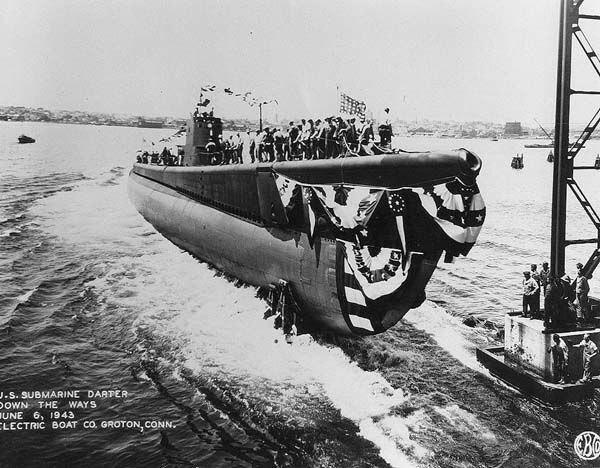
    The battle of Leyte Gulf in 1944 with over 200,000 individuals involved is possibly the largest naval battle in history.  Hopefully, one of the last ones.

    In that battle, the submarine USS Darter initially detected (on radar) the Japanese task force early on October 23.  Other US naval vessels spotted that armada shortly thereafter on their radar screens.  This advanced knowledge enabled to US Navy to seize the initiative.  After the battle, the Japanese never stood up an equivalent naval force again.

    Technological advantage can be a game changer.  There is evidence of this phenomenon throughout history.  In this instance, the result was the elimination of the adversary’s ability to recover and reengage in a meaningful way.

    History’s Lessons

    Another game changer from that era was the proximity fuse developed by the Applied Physics Laboratory of Johns Hopkins University.  This technology enabled anti-aircraft rounds to explode within 75 feet of an attacking enemy aircraft instead of requiring physical contact which had a poor track record.  Referred to as, “The real secret weapon of World War II,” it is credited with shorting the war.

    Adversity has always led to rapid technological development.  There are indications that the Covid-19 pandemic is fueling an explosion of new ideas that directly address the infection as well as drive performance when the threat has passed.

    Capturing Value

    The conventional approach is to follow the Technology Adoption Life Cycle.  But is that still the realistic model today?  In our article published in 2004 Calculus of Value Model, we argue that the exact opposite is true.

    Advantage can go to those organizations that deploy technology early and codify knowledge obtained as a result.  The resulting ‘unfair advantage’ can change an industry.

    Previously we have made the case that while the concept of Minimum Viable Product aka MVP; a product that Early Adopters will find satisfactory, “The assessment of such technological solutions needs to be robust and thought through.  Not the knee jerk response often seen.”  Meaning that certain risks must be factored in the Value Proposition, but these can be manageable.

    According to Oracle’s Larry Ellison, “If you do everything that everyone else does in business, you’re going to lose.  The only way to really be ahead, is to ‘be different’.”  So Be Different—Start Early!

    How Can You Make New Technologies Your Organizational Game Changer?

    For More Information

    Please note, RRI does not endorse or advocate the links to third-party materials.  They are provided for education and entertainment only.

    For more information on Cross Cultural Engagement, check out our Cross Cultural Serious Game

    We are presenting, Should Cross Cultural Serious Games Be Included in Your Diversity Program: Best Practices and Lessons Learned at the Online Conference, New Diversity Summit 2020 the week of September 14, 2020.  Check Out this timely event!!

    You can contact the author as well.

  • Tumultuous Decade: What’s Next for Oil & Gas?

    Tumultuous Decade: What’s Next for Oil & Gas?

    April 20, 2020 marks the tenth anniversary of one of the most horrific incidents in the upstream oil and gas sector—Deepwater Horizon.  In addition to the tragic loss of eleven lives, the sector forever changed.  Immediate restructuring of federal oversight resulted in the establishment of the Bureau of Safety and Environmental Enforcement (BSEE) and their subsequent Safety Culture Policy.

    The industry changed too.  One of the first efforts following Macondo was the formation of the Marine Well Containment Company.  Its mission is to rapidly respond to Deepwater incidents in the Gulf of Mexico.  Subsequent organizations are also positioned around the world.

    Moreover, the industry embraced Safety Culture and continues to improve based upon Systemic Safety Cultures across organizational ecosystems.  These processes are incorporated into Operations Management Systems that incorporate SEMS as part of Operational Excellence Initiatives.

    In 2014, the sector faced another slap in the face with the collapse of oil prices, yet again.  Now it is the double whammy of the Covid-19 pandemic coupled with the price war between Russia and Saudi Arabia.

    Darkest Before the Dawn

    Each time the industry is forced to retrench, it follows a predictable pattern.  Reduction in force (layoffs), corporate restructuring and turning to technology are among the most common steps.

    This chart from the Federal Reserve Bank of St. Louis shows the employment levels for the upstream sector since the early 1970s.  One can make the case that the level of employment in the sector is flat at best.  One likely cause is automation and the extensive use of information technology to manage the business.

    Note: This chart is current as of March 2020

    In 1970, the US population was a little more than 205 million.  Now it tops 330 million.  This supports a hypothesis that the per capita employment by the sector is decreasing.  We expect this to continue.

    The Digital Oilfield marches on with the advent of IT-OT Convergence, Digitalization, etc.  This process has been underway since at least the late 1970s with the advent of the first computerized data acquisition systems.  Likely, much longer if one considers for example, the invention of electric well logging by the Schlumberger brothers in 1926.

    Certainly, other technological advances have contributed as well.  The often maligned fracturing the rock traces its roots back the beginning of the industry (circa 1862).  Contemporary hydraulic fracturing was started by Halliburton in 1949 and shale ‘fracing’ by Mitchell Energy & Development Corporation during the 1990s.

    While we have not done the detailed research, historically oil companies have outsourced to engineering firms, IT companies and others that provide a service as opposed to full time employees.  Today’s disrupted employees may find better careers in the emerging sectors that support petroleum operations as well as other sectors.

    Schumpeter’s Creative Destruction is a work in ‘the patch’ today.  A lot has happened in the Deepwater Horizon incident.  Here’s to calmer waters this next ten years!

    How Are You Positioning Your Career to Capitalize on Disruption?

    For More Information

    Please note, RRI does not endorse or advocate the links to third-party materials.  They are provided for education and entertainment only.

    For more information on Cross Cultural Engagement, check out our Cross Cultural Serious Game

    We presented, Should Cross Cultural Serious Games Be Included in Your Diversity Program: Best Practices and Lessons Learned at the Online Conference, New Diversity Summit 2020 on April 9, 2020.  The summit will be offered again soon.  Check it Out!!

    You can contact the author as well.

  • Want – Like – Need

    Want – Like – Need

    Years ago, as part of a never-ending series of company reorganizations, a team of our change management consultants headed to the ‘field’ to interview users.  Upon their return, they presented an extensive list of technology investments deemed necessary to remain competitive.

    Their list focused on technology and not business concerns.  Wondering, I asked who they interviewed.  Proudly, they proclaimed the “field engineers.”  When queried–did they talk with district managers, regional engineers and others with P&L or other managerial responsibilities, the answer was “no.”

    This very expensive process by a major professional services organization simply generated a wish list of junior employees.  It was what they thought they WANTED.

    In our current jargon, “cool stuff.”  Needless to say, none of these projects were funded.  Wasted time and money by those not familiar with our business!

    Today, we are driven to LIKE everything!  CRM systems demand input before we have even procured the product or service.  Log on to any given website and the request to complete a survey will hit you before you read the first line.  Five stars or thumbs-up emojis appears to be the goal.

    Do wants and likes add value?  Perhaps a like is a statement of preference, but perhaps the consumer wants the digital driven question to just go away without the hassle of someone begging for a higher ranking like.  Fibbing to surveys has become a national pastime.

    Business should be most concerned about what a prospect or returning customer NEED.  What pain point or problem does your product/service solve?  If you can’t answer that question, no amount of wants and likes will add to your bottom line.

    I may want a hamburger and go to a fast food restaurant with lots of likes.  However, if I am in a hurry and their preference is clearly to move cars via the drive-through faster than those of us waiting inside, my need to eat quickly will not be met.  I may leave without my meal or most likely not respond to a survey seeking likes.  Then never return!

    That lost customer will never surface in any analysis—not even one star.  Enough of those responses and the business will be in jeopardy and management my not even know why.  Collecting likes should never be a Key Performance Indicator (KPI).

    Finding the Pain

    In a recent Global Energy Mentors leadership meeting, an investment group recounted their business model as one that focused on identifying organizational ‘pain’ points.  Once a specific pain was articulated, the search for new technologies that would address/resolve that pain was undertaken.

    This model flies in the face of Steve Job’s, “A lot of times, people don’t know what they want until you show it to them.”  That may be and sometimes unknown needs are uncovered.

    However, in critical infrastructure sectors where failure is not be an option because it can be very expensive solving a known need is usually most important.  Without exception, this entrepreneur’s success has been focusing on addressing industrial client known pain points.  As an example, our EVPM modeling process demands input from customer groups.

    In this blog series, we have referred to successful change management that comes from addressing the—what’s in it for me question.  From a customer perspective; freeing ‘me’ from known pain is often more valuable than alleviating pain I did not know I had.

    Does Your Value Proposition Solve a Need, Address a Want, or Simply Generate a Like?

    For More Information

    Please note, RRI does not endorse or advocate the links to other materials.  They are provided for education and entertainment only.

    You can contact the author more information as well.

    End Notes

      http://globalenergymentors.org/

      https://www.helpscout.com/blog/why-steve-jobs-never-listened-to-his-customers/

      https://therrinstitute.com/brand-your-digital-oilfield-culture-internalize-its-transformation/

  • It’s the Economics Stupid!

    It’s the Economics Stupid!

    Since it was first uttered in the early 1990s, the phrase “It’s the economy stupid” has been used and misused extensively.  Let’s squander the lexicon one more time.

    The US ‘silly’ political season is well underway and forecast to last almost 13 more months—no telling what voodoo economics will emerge.  Those of us with our business noses to the grindstone must ride this stormy weather to a safe port next November.

    Most have an interest in the macroeconomic policies nation states put forth but other than voting and perhaps lobbying, there is little many can do to materially impact the economy.  What we can do is focus on the economics of our business—CAPEX.  Hence, our daily mantra should be, “It’s the Economics Stupid.”

    What Is Your Value to the Customer?

    For over the fifteen our organization has been, “Helping Clients Achieve Organizational Agility, Resiliency and Sustainability.”  Assisting clients develop and articulate a viable economic value proposition has been one of the most elusive and vexing challenges.

    There is a strong tendency to make statements that are Overstated, Not Demonstrable, and Not Defendable.  Declarations such as, “Enhanced credit control system for partners through increased information visibility” are effectively meaningless—yes, this is an actual quotation from a software company.  Customers are left with the question, “What does that mean for me?”

    Translate Technology into the Language of Business

    If you leave your customer with the above and/or other questions regarding your value to their enterprise, likely the sale will not close.  Probably, a more coherent competitor will leave with the deal.

    CAPEX always undergoes extensive scrutiny; even at the Board level in some cases.  While new and cool technology may ultimately be disruptive and of extremely high value, peddlers must speak the language of the Chief Financial Officer and her staff.  These are ‘green’ deals!

    Those tasked with generating revenue from technological solutions must also take on the role of translator.  Bridging the cultural differences between cool stuff and the bottom line requires a Rosetta Stone.

    The Economic Value Proposition Matrix® model (EVPM) was originally developed with a Super Independent oil and gas operator at the first part of the century to become that Rosetta Stone.  Working with customers, technology providers can now prepare for the inevitable decision by the CFO.  Usually, the vendor will not attend said meeting but preparing the customer staff to make the case is mandatory.

    This video tells the whole story in less than 43 minutes.  Is winning your next deal worth an investment of three quarters of an hour?  If not, keep doing what your doing and hope for a different result.

    The video makes the case that technology offerings often seems similar.  The same buzzwords and euphemisms often confused clients and make it appear that since the solutions are basically the same, just go with the low dollar.  Rising above this clutter is required to be successful.

    How is Your Value Proposition Better Than Your Competitors’?

    For More Information

    Please note, RRI does not endorse or advocate the links to third party materials.  They are provided for education and entertainment only.

    You can contact the author more information as well.

    End Notes

      https://en.wikipedia.org/wiki/It%27s_the_economy,_stupid

      https://www.forbes.com/sites/briandomitrovic/2018/12/02/george-h-w-bushs-voodoo-rhetoric/#26f9ad21798a

      https://www.investopedia.com/ask/answers/042415/what-difference-between-operating-expense-and-capital-expense.asp

     https://en.wikipedia.org/wiki/Rosetta_Stone

  • Home Improvement Case Study: What’s the Value Proposition of Service Providers and Why Does It Matter to My Business?

    Home Improvement Case Study: What’s the Value Proposition of Service Providers and Why Does It Matter to My Business?

    This blog is focused on business issues and not retail services such as home repair/upgrade.  However, in recent months this writer has been in numerous discussions regarding the development and presentation to customers of a Value Proposition.

    This is an ongoing issue for each organization, product, service and other processes whereby an organization seeks to influence a market segment.  Usually the goal is to generate revenue but that is not always the case, i.e., charitable giving to any number of causes.

    The fundamental question marketers must address.  Why would a customer buy from us versus one of our many competitors?

    One of the challenges every firm face is the differentiation of their offering in a crowded space.  Buzzwords abound and are often used by all economic players.  Examples include, IT, Safety, Cloud, Virtual Reality, Online and the list goes on.

    Recent television advertisements include several firms that offer home improvement services to individuals.  Not B2B, but possibly instructive for those in the industrial segments.

    While this is a crowded fragmented space, three companies are routinely pitching their solutions.  These companies appear to this observer to be direct competitors.

    Angie’s List has been around for a long time (Internet years), while HomeAdvisor and TAKL appear to be newer entrants.  Ads for Angie’s List feature the founder, HomeAdvisor uses an actress, and TAKL has a catchy tune song by a celebrity spokesperson (and apparent investor).  All appear to be selling the same services.

    Exercise—Assessing Value to Me

    As mentioned, most of us struggle developing and articulating a believable, defendable and demonstrable value proposition.  Our focus is often inward.  Let’s look elsewhere.

    Assume you’re a home owner.  You have three projects.  You need a handyman for about six hours doing various tasks.  You also want to replace three old ceiling fans with ones that can be remotely controlled.  Finally, your roof needs replacing.

    Which of these three firms will you retain for these jobs and why?  What is your due diligence process and decision criteria?

    We invite readers to answer these questions.  The point being, why are you buying from any of these firms?

    In the answer lies the rationale—why do your customers buy from you?  If you can answer the home improvement question, hopefully that decision making process will provide insight into your selling process.

    Why Do Customers Buy From Your Company?


    For more information on Economic Value Propositions.

  • Elevator: Going Up or Going Down?

    Elevator: Going Up or Going Down?

    True Story!  A couple of decades ago when I was the sales manager of a technology line of business that was part of a much larger organization, an excited young sales representative rushed into my office.  He just had to tell me that he just rode up the elevator and an older gentleman wearing a suit who had asked him about his business.

    He explained in the short time it took to get to our floor he had essentially ‘cored dumped’ everything he knew to this stranger.  When asked if he got his name, the answer was no.  Turns out the individual was the CEO of our division.

    While this was a discussion in an elevator, it was far from an elevator pitch.  Talking fast to get as much as you can in a short period is usually not an effective sales pitch.

    Plus, as always qualify who you are talking to and why they have a need to know.  Could have been a competitor!

    Unfortunately, we see this all the time.  Individuals try to jam in as much as they can in funding Pitch Competitions and political pundits in the media feel the same pressure to talk fast and then talk all over each other.

    However, and perhaps the worst of all selling transgressions.  We had attained a long-coveted meeting with a senior decision maker at a process plant.  We completed the pitch for our solution.  The customer team asked a couple of good questions which we apparently answered satisfactory.

    Then the senior director said words to the effect, “I can see how this can help my problem. . .” but did get a chance to complete his statement before one of our technical people ‘talked over him’ to explain blah blah blah.

    The classic, don’t wait for the customer to complete his/her question before answering it.  This usually means that it will be answered incorrectly.

    The subject changed, and the meeting ended shortly afterwards.  We never did discover how our solution could have helped in the mind of that individual.

    In our zest to close deals, we often are our own worst enemy.  When presented with an opportunity to state your case to a buyer, state it succinctly and quickly.  Then shut up and let the individual respond!

    Elevator Pitch

    According to Wikipedia, “An elevator pitch, elevator speech, or elevator statement is a short summary used to quickly and simply define a person, profession, product, service, organization or event and its value proposition.

    The name “elevator pitch” reflects the idea that it should be possible to deliver the summary in the time span of an elevator ride, or approximately thirty seconds to two minutes.  The term itself comes from a scenario of an accidental meeting with someone important in the elevator.  If the conversation inside the elevator in those few seconds is interesting and value adding, the conversation will continue after the elevator ride or end in exchange of business card or a scheduled meeting.”

    Mark Twain famously quipped, “I didn’t have time to write a short letter, so I wrote a long one instead.”  It takes time and thought to succinctly and quickly state something that is very important to its writer.

    The tendency is to say as much and as fast as we can.  Surely, everyone will want to know what I know and in detail.  This is such an important subject!

    However, if a deal is on the line what is the Return on Investment (ROI) of the time it takes to develop and refine an elevator pitch?  Like any business deal, if it will be profitable then do it.  If not, then why do we have the product/service!

    The ‘I didn’t have time’ comment is insulting to those who you explain it to in this regard.  The sales representative’s livelihood and firm’ profitability depend on you the rep’s team’s time.

    How Do I Develop an Elevator Pitch?

    To develop an effective elevator pitch, one must understand the product/service they are selling and have a ‘compelling value proposition’ already developed.  Write down every major item you want to get across and then continue to refine it until it meets the criteria above.

    What are the three most important points a customer would care about?

    Pitch it internally and then to outsiders such as mentors.  Update it as you receive additional input, both positive and critical.  Then Practice, Practice, Practice.

    It must come across effectively, not stilted nor leave the listener with the feeling they have been the subject of a ‘core dump.’  Let them respond, answer questions and ask them, “What’s the Next Step” sort of closing question.

    One caveat, since you do not know who you are talking to be careful about providing any proprietary information.  So, unless you have publicly available market or financial figures leave them out.  They can come later at follow up meetings.

    However, in the appropriate setting such as a Pitch Competition non-proprietary market and financial information will most likely be required in the elevator pitch.  Use your good judgement.

    For most of us the so called ‘blank sheet of paper’ can be intimidating.  It helps to have precedents.

    An Example

    The following is an actual elevator pitched developed a few years ago—targeting 20-30 seconds in a public setting.  It has been redacted as noted within it.

    _______ is an __________ “Enterprise Platform” that addresses _________-issues in sectors with complex ______ and ______ requiring many ____ parties and their _____.

    It seamlessly incorporates _____ and ______ enabling a _______, efficiency and effectiveness in operations—including an automatic and comprehensive ______ process.

    This cloud-based collaborative ____ solution provides ____ engineers, technicians and ______ personnel with the data and information necessary to perform their tasks in compliance with all __________________.

    There are also several examples available on line that address different requirements, i.e. sales, investor, etc. and industry sectors.  A good pitch will pay significant dividends and is well worth the time and energy necessary to develop.

    How Effective is Your Elevator Pitch?

      https://en.wikipedia.org/wiki/Elevator_pitch

  • You Have 10 Minutes: Maybe

    You Have 10 Minutes: Maybe

    Over the past couple of weeks this writer has been part of several conversations regarding the value proposition of technology for established as well as startup companies and how to articulate it.

    This remains a tough subject and we have been addressing it over the years.  However, there is an approach that is successful when properly executed.

    As part of master’s level course, one graded test for my students goes along these lines.  You have been given the opportunity to ‘pitch’ your CAPEX/Technology Sale to the Chief Financial Officer.  In the current market environment, she is skeptical about new capital investments.  She is the economic buyer, very busy and has allocated no more than ten minutes for this meeting?  How will you close the deal?

    Students are offered the opportunity to select their own project or sales initiative, so they are very familiar with the background.  This also allows them the opportunity to ‘rehearse’ with the instructor before the actual meeting with the CFO.

    First, What Not to Do

    Sadly, many sales representatives/internal project advocates view the selling process through the following lens:

    The merits of this project or technology solution are obvious.  After all, everyone agrees we must move forward.

    The Return on Capital Employed (ROCE) or Net Present Value (NPV) is clear on the chart presented.  The justifications (spreadsheets) support our plan.

    Moreover, senior executives only want the single PowerPoint slide and high-level risk overview.  After all, she doesn’t want the details and has been briefed by her staff.  How much can be discussed in ten minutes anyway?

    Hit–Lost Deal Button!!

    If this scenario sounds far fetched, it is based on reality.  At an Internet of Things conference, one panel moderator from a major professional services firm advocated that IoT investments must be made to remain competitive because everyone else is doing it.  When this attendee asked about project governance and risk mitigation planning, was told it was outside the scope of the discussion.

    What Drives Decisions?

    One of the first things this sales guy does when preparing for a meeting with senior executives is to read the Letter to Shareholders in the customer’s Annual Report.  Typically, the strategy, challenges and priorities of the firm are easily discerned.

    If the project/solution is not aligned with business, success is much less likely.  Also, how does it fit in the firm’s portfolio of projects/technologies?

    Often risks are not as well understood as they could be with simple models suggesting exposures are low and unlikely.  Many sale representatives do not even think about the governance issues associated with the ‘spend.’

    Expect a senior executive to be engaged and ask insightful even tough questions.  They have to be answered—with authority!  Can’t wing this, only homework will prepare for this meeting!

    Finally, what drives her?  Not the company; the individual.

    Hit–Won the Deal Button!!

    Is this in the ‘too hard to do’ category?  Not at all, and processes and means are available to guide this course.  Several tools are available such as our Economic Value Proposition Matrix® and the white paper Asset/Equipment Integrity Governance: Operations—Enterprise Alignment.  These can help guide your closing efforts.

    Not a typical sales model but it works—several billion dollars later!

    Lessons from the Classroom

    As might be expected in an academic environment, many students struggled to reduce the data into a ten-minute compelling pitch.  Mark Twain is credited with saying “I didn’t have time to write a short letter, so I wrote a long one instead.”

    It takes significant effort to succinctly address complex multi-faceted problems.  A classic; when tasked to write a one-page executive summary one student submitted a multi-page report with appendices.  His retort was that the subject was too important to only write one page on it.  This response defeated the learning objective of the exercise.

    CFO’s do not make trivial decisions.  If you would have her take time to listen to you.  Be prepared!

    Is the Deal Worth Winning?

    For more information check out our Value Proposition Matrix® and the Digital Oilfield Case Study.

  • Beat the Market: Can Operational Excellence Increase EPS?

    Beat the Market: Can Operational Excellence Increase EPS?

    In a recent Houston Chronicle article, its author puts forth the premise that while oil and gas companies should do well in the stock market this year, don’t expect the energy services sector to fare as well.  As those who are either in the sector or track it (stock analysts) know all to well that when the price of oil dips, so do the Returns of those companies that provide equipment, labor and other services to the E&P sector.

    The crude oil commodity price has always been cyclical.  Often Boom—Bust, this leads to the hiring and firing of tens of thousands of employees and contractors.

    As many as 750,000 in the 1980s were fired (not to mention those businesses that provided products/services to these individuals and companies).  A lousy career choice that may limit new entrants who will not be guaranteed a salary during a short-term “shut down.”

    For years, this pundit has held the belief that due to technology advancements in both engineered products/services and information management that a return to the good ole days of $100 oil is not likely.  Economic actors in the sector must continue to adopt new business models and processes, not just to remain competitive but to stay in business.

    For example, Weatherford International, founded in the 1940s is endangered of being delisted by the New York Stock Exchange.  Baker Hughes continues to struggle as General Electric has announced its divestiture.

    We remain committed to the belief that oil is probably well within a trading range that will not provide price relief to the service sector.  That said, how can energy service survivors return shareholders reasonable value?

    The traditional business model of layoffs and equipment stacking is well underway.  Short term Stop the Bleeding which makes one wonder why this sector added 10,000 in just the last two years during a ‘weak’ recovery.

    The Future is Now

    The concept of the so-called digital oilfield has been around for decades.  This author was first formally involved with construct in the early 1990s when it was titled the Digital Oilfield of the Future.  Hasn’t the future arrived?

    In 2004 we released an industry supported research project, Roadmap to Enterprise Optimization: A Guide to the Impact of Information Driven Field Operations on the Petroleum Corporation.  Other articles, white papers, blogs and workshops continue to date.

    In the recent Houston Chronicle article, one interviewee believes that the energy service sector needs to Collaborate and Digitalize if they are to generate higher Earnings per Share. 

    This leads one to question, why after all these years is the disconnect the same as two decades ago?  We can no longer blame the Baby Boom generation as the brake on digitalization.  The Boomers have largely left the sector building.  Moreover, we can no longer blame the cost and maturity of information technology.

    So, if the blame game is over how can the sector attain and sustain these laudable process goals?  One can make a case that business/technology models and their value propositions were either fragmented or not understood by management.

    Having attended countless conferences, seminars, et al. over the years there does tend to be a narrow focus on each business need.  For example, downhole, big data, safety, decommissioning, digital oilfield, offshore, drones, onshore and so the list goes.  All vying for the same CAPEX.

    Those days may be over.  The Operational Excellence construct directly addresses all the field driven processes and technologies necessary to assure profitable performance.

    As with other initiatives, what is needed is an actionable methodology with a well understood value proposition.  Today, even smaller energy services companies can implement Operational Excellence.  A solution is available!

    Operational Excellence is the key to higher Earnings per Share and greater investor interest in the firm.  This is true for both public companies as well as private and their banking/investor relationships.

    What is Your Organizations Excuse for Not becoming Operationally Excellent?

    For more information about how to solve the weak Earnings per Share problem, check out our new Operational Excellence Platform.


      https://www.houstonchronicle.com/business/energy/article/Several-major-changes-on-the-horizon-for-troubled-13556827.php

      https://therrinstitute.com/wp-content/uploads/2019/01/Dr-Scott-M-Shemwell-Publications-and-Interviews-January-2019.pdf

  • Resolution: Celebrating a New Operational Start–One More Time

    Resolution: Celebrating a New Operational Start–One More Time

    It is hard to believe we are now 19 years into the century.  Seems like only yesterday we were worried whether the lights would stay on at Y2K.

    Each year many of us promise to do better at a list of things, some personal and some professional.  Some days or weeks later, some or all of our resolutions go unmet.

    For many heavy industry sector firms, January 1st is also the start of a new fiscal year.  New budgets will be released, and management will extol their workforce to meet new (possibly stretch) targets.

    If the equity markets are a barometer of things to come (leading indicator), then the Conditions organizations will find themselves in will most likely be volatile and some segments may even face significant challenges.

    For example, WTI crude oil closed on January 4th at US$ 47.96/bbl.  Some are bullish on this sector, with an expectation higher prices in the future.  History has shown this faith may not bear out.

    Regardless, organizational Behavior will need the flexibility to adjust in a process relevant time frame as conditions change.  The resulting Relationship with the firm’s ecosystem is a function of the behavior in the conditions or market circumstance.

    In other words, the R B C Framework is applicable in our everyday corporate life.  Why is this important?

    One way to view the global marketplace is one of continual change.  Often purveyors of Change Management/Organizational Transformation present this as a point in time.  Statements about continuous improvement are seemingly afterthoughts.

    We have developed an Operational Excellence Platform, as depicted in the following figure.  Please note that it is built upon the R B C Framework.

    Since the nature of Relationships across the organizational ecosystem will continuously evolve based on the marketplace, it follows that maintaining Operational Excellence depends on these tree factors.  Safe and profitable operations on strong, positive relationships.

    How well does your organization understand the R B C Framework for its ecosystem?

    Further Reading

    The author and others have published extensively on this subject.  The list of appropriate articles and papers is too extensive to list here.  However, readers are invited to peruse Dr. Shemwell’s extensive list of blogs and publications.

    See our Economic Value Proposition Matrix® (EVPM) for additional information and a free version to build your own EVPM.

    For further information Contact Us.

  • Selling Your Economic Value Proposition to the C Suite: Translating Technology to the Language of Business

    Selling Your Economic Value Proposition to the C Suite: Translating Technology to the Language of Business

    The challenge of building a Business Case for CAPEX investments with high intangible content, i.e., IoT, professional services and operational excellence, remains difficult.  Many also argue that disruptive new business models are making the old ways irrelevant.

    Hence, we simply must make the investment to remain competitive.  After all, everyone is doing it.  A matter of faith!  The returns are huge (just look at this white paper).

    To some extent technological based business model disruption has always been true, certainly throughout the industrial and cyber revolutions of the last 200 years or so.  However, one of the major issues with technological change is the nature of the cultural differences between the technologists and those who write the checks.

    We have previously described organizational culture as partly a function of an Interdisciplinary Common Vocabulary (ICV).  One can look at the gap between advocates of new technologies and/or business models and the “C” suite as the lack of shared ICV.  This gap may become egregious during economic downturns when financial concerns overtake strategy.

    Making Your Case

    As a junior sales representative and later ‘pitching’ CAPEX projects to management, I often presented the ‘Feature—Benefit’ of my suite of products and services.  My success rate was on par with my peers, but the case could be made that I was no better than average.  We all had weak value propositions.

    While I did not know it at the time, my sales ‘ah ha’ moment happened when the department of head for an Engineering, Procurement and Construction (EPIC) firm with a refinery rebuild project asked me if he would get promoted if he bought from me.  Dah, what did that have to do with anything I wondered.  I have great features and benefits.

    At least as good as my multiple competitors.  Moreover, I could lower my price and give him great value.

    Once we understood his CSFs, we won a multimillion dollar (high margin) deal.  His problem was not the technology.  All competitive specs and price points were tightly grouped.  Almost any reputable vendor would do.

    His key problem were project milestones!  He did not want a pile of products to be assembled.  He need solutions to meet deadlines and we could deliver against that critical path.  That was the value proposition he needed.  By the way, he got promoted!

    I have seen this phenomenon often, including earlier this month.  Sales people and internal proponents of new ideas often focus on the new hot stuff, for which many competitors vie.  The current crazes include IoT, Blockchain, Operational Excellence to name a few.

    How many suppliers of these technologies and methods are there and how are they differentiated?  Lots and poorly would be my bet and experience.

    C Suite Value

    The stereotypical ‘hard nose’ businessman or businesswoman is alive and well.  He and she live in the C suite and boardroom.  Preaching features and benefits, PPT bullet points of value or use case with glossary, poorly articulated and often unbelievable claims will make for a short meeting.

    Proponents of big, disruptive or simply expensive ideas can have their ‘ah ha’ moment too.  Who is the audience and what are their drivers that can you facilitate?  In a previous blog this author took umbrage with sales cold calls who wanted to meet, waste my time and “learn about my company.”

    In other words what I hear is, I don’t have time to do my homework before I meet the economic buyer.  Another deal closing strategy!  Not.

    In an invited Guest Editorial for the Professional Petroleum Data Management Association (PPDM) online magazine, Foundations we had the privilege to post a short article.  In How to Make The Case To the C-Suite: Selling Large Scale Data Management Project to the C Suite, we present a short overview of this process.  The magazine (Vol 5, Issue 2) is free; all one has to do is sign up as a Guest.

    The article tells the story of a hypothetical Chief Data Scientist as she prepares for a presentation to the Chief Financial Officer.  Readers will see that for some concerns management has, she has a lot of homework and preparation to do.  One would expect that much of this work is outside her comfort zone, but necessary.

    Driving Success

    In our hypothetical case, she has the prep work in addition to her so-called ‘day job,’ a problem most have.  Additionally, she must align with their ICV and move away from ‘data speak.’

    Since 2004, we have used our Economic Value Proposition Matrix ® (EVPM) to help guide this process for a wide range of large projects (including security).  A free version is available.  Your invited to check it out and contact us if you have any questions.

    When the economic cycle is at a low point, it is hard to sell new projects.  When the cycle is active, there are competing projects.  Throwing money at technology has failed time and time again and ruined many careers (the antithetical of ‘getting promoted’).  Building a solid business case in the ICV of senior executives is a step towards accelerating one’s career, closing a deal or enjoying a project rather than fighting every step.

    One final point, when one reads statements such as, “Our software will save you 50%” they are not true on their face and management never believes them.  So never make those claims no matter the authority of their source.  Sometimes the value can be greater.  To find out the secret look at our webpage for the answer.

    Good Selling to the Top Dogs!

    Further Reading

    The author and others have published extensively on this subject.  The list of appropriate articles and papers is too extensive to list here.  However, readers are invited to peruse Dr. Shemwell’s extensive list of blogs and publications.

  • Organizational Predators: Jackals, Hyenas, and Wolves in Managerial Clothing

    Organizational Predators: Jackals, Hyenas, and Wolves in Managerial Clothing

    Prologue

    In the author’s August 2004 edition of the then, Executive Briefing Newsletter (early online delivery) we addressed the impact on the firm of managerial misbehavior.  This article was one of a list of challenges put forth to that generation of management.

    Sadly, recent events have compelled us all to revisit this issue, although for some it is the first time.  Upon re-reading the document, we felt that it might add value to current management and those that work for them to release it again in the blog format.

    The text presented is original and only minor typographical changes have been made.  We firmly believe that historical documents need to be held to their original meaning and we invite the reader to decide its value in today’s context.

    One note, readers may feel passion seeping through.  As this author recalls, at the time one of the jackals had harassed someone close to me.

    Point of the piece, this behavior was inappropriate then and it remain inappropriate today for this kind of nonsense to exist in the workplace.  Shareholder value is destroyed by this stupid behavior.

    One would guess that over the next months and years shareholder value will be destroyed in court settlements because of the recent behaviors of Organizational Predators: Jackals, Hyenas, and Wolves in Managerial Clothing.  Won’t put the names here—Google it!

    The original text is available in Essays on Business and Information II: Maximizing Organizational Performance, pp. 85-87 of the printed edition.  Readers will find it in the Ethics Section.

    Reprint

    Originally published in August 2004

    I think I did something for the worst possible reason—just because I could. I think that’s the most, just about the most morally indefensible reason that anybody could have for doing anything.”

    – Bill Clinton

    Thank you, Mister President.  You have empowered another generation of Omega males in managerial positions who denigrate women “just because they could.”  In Bill’s case, Hillary emasculated him and moved on to become a U.S. Senator.  This option is not always available to others.

    Organizational leaders are role models for guidance in how managers relate to our female subordinates.  Dominant men (and sometimes women) are well positioned to do things just because they could.  If the organizational culture condones the just because they could model, in reality this conduct is what management offers shareholders.  As an investor, I am ready to sign up for that business model. Yah, Right—Perhaps NOT!

    Over the past three years, this newsletter has sought to put forth important and indeed even critical issues to the forefront of discussions.  I will tell readers up front, that this edition of the newsletter is different.  It is personal, and it comes about as the result of this author’s direct knowledge about how women in his professional and personal life are being treated.

    Therefore, I do not claim objectivity but seek to raise the thinking of those in similar situations as well and even the culprits themselves (and their spouses, usually wives).  In this writer’s humble opinion, this issue is not transit, but endemic.  In the list of those things that will not go away, this one is high.

    Corporate boards and CEOs should take note, as not only are there EEOC (Equal Employment Opportunity Commission) issues at stake (usually addressed by Human Resources and attorneys as background noise) but also Sarbanes Oxley exposure.  Sarbanes Oxley is usually couched along the lines of information flow to the CEO and Board, however, there is another dimension.

    The quality of management and their readiness to “hear” and incorporate the thinking of the best of the best, regardless of sex.  Just think if the CEO of Enron had actually listened to Ms. Sharon Watkins when she raised concerns instead of just blowing her off—he might still be enjoying his Aspen resort.

    You can outsource non-core activities, but you cannot outsource the corporate identity. How firm’s truly value every employee is who they are.  United States criminal law has a long history of prosecuting wife and child beating felons.  The principle is well established.

    Oh, the Humanity

    Men, more often than women, abuse the other sex and their offspring.  Predators prey upon the weak and the young, usually males dominating or destroying females and their young.  We see this in the wild animal kingdom and we see these predators on the Internet.

    We also find them inside corporate walls.  Boards and C levels often hide their heads in the sand and take a “don’t ask don’t tell” approach.  Guess what guys (and it usually is the ole boys club); the train has left the station without you.

    Fact is this train left a millennium or more ago.  Mothers are revered as the fount of life.  Regardless of ethnicity or religion, Mothers are central.

    That is until we get to corporate America or any other nation for that matter.  Once a woman choses or is forced to work, Mother’s Day goes out the window.

    Now Alpha (and those who think we are but have not yet been culled) males think we own these feminine prizes.  Guess what, you out of shape, overweight pathetic excuses for males, you do not.

    Do these women report to you and are their bonuses, promotions etc. depend on your stated and written opinion?  The answer is NO!

    Take that and shove it up your behind you legacies of the20th century.  There is a cataclysmic shift underway and while you may enjoy the short-term high of intimidating and even firing these women, Darwin rules.

    You are dead meat my friend, and probably at an age when you will least be able to afford it.  Mom is never irrelevant!

    Throughout the western United States, one can often see the skins of coyotes hanging on barbwire fences.  The clear message to other predators is this could be your fate as well.

    Similar symbolic gestures are necessary in publicly traded corporations.  Who gives some mid-level manager the right to denigrate hard working employees just as they put themselves out as bastions of righteousness?

    If these people were so smart, they would be top executives, and if they were the real comers, they think they are (with top level sponsors) petty crap would not be their forte.  Unless the organizational culture rewards the humiliation of women as part of the reward system.

    Truth is, most will never amount to anything.  While they have some short-term power, the organization does not really care about their efforts.  Fundamentally, they know this and this fact eats at them.

    Their anger is projected on their direct reports, and often the females in their organization.  This is a safe bet for an abuser!

    Who would challenge him?  Senior management demand results that he delivers for a while and his female direct reports are put through the grinder.  Pretty good gig if you can get one, especially if you are a predator by nature.

    Final Thoughts

    It is far past the time for a superior to have the audacity to state that I took advantage because I could.  This is not just a civil liberty, human rights, woman’s right, or Constitutional Amendment right.

    Organizations depend on the synergy of their organizational knowledge.  Not necessarily without friction, a necessary catalectic creative agent, but beyond retribution, physical and mental intimidation, fear of job loss or demotion, as well as physical threat posited by someone often 100 pounds or larger than his target.

    Sarbanes Oxley, global stock exchanges as well as common decency demand that our mothers, wives, sisters, nieces, and girlfriends be heard.  The rallying of the “ole boy” network does not have a place in the 21st century organization.

    Firms that overlook or down play these issues expose themselves to major lawsuits and the possibility that shareholder value may be decreased by BILLIONS.  There is no credible support for predator losers.

    The usual predator is an overweight male between 30-50 who attained his position through vigorous internal politicking or as the result of a merger where this individual had a title and thus perceived expertise.  Often, these individual distains women all the while being a pornographic connoisseur.

    This manager is impaired when dealing with women.  When a strong, woman subordinate questions his decision, this personality often retreats to his dominate position over this person and seeks to dictate.  This type of manager may have unresolved issues with his mother.

    I do not know about you, but I will not invest my hard-earned money in firms that condone, and even promote jackals.  In earlier times, these individuals would rape and pillage women unless/until challenged by a true Alpha male.  Today, as then these cowards retreat rapidly, only to reappear when they think the coast is clear—always hiding in the organizational shadows.

    When Boards and top management condone this behavior, they denigrate investor confidence. Billion-dollar class action lawsuits are not the fantasies of writers, they routinely occur.  Why should an investor support the pathetic disgusting behavior of reprehensible psychotics who usually make less than $250K? Is this the risk-reward trade off expected?

    Throw the bums out of the executive suite, but perhaps more importantly throw these true Nazis out of middle management.  Sarbanes Oxley demands nothing less.

    Proposition: All men and women are created equal.  No pathogen has the right to spend my money furthering his limitations.  A real man would just resign.

    But then again, these individuals are not men. They are Jackals, Hyenas, and Wolves in Managerial Clothing.  They may even be thieves as they destroy shareholder value.

    What a return on $250,000! CEOs, beware, SOX looms large over organizational incompetence.

    Finally, as true indictment of this testosterone starved wimps they take one of two paths in their personal life.  They either physically and emotionally beat the women (and children) in their lives (wives, daughters, nieces, step-daughters, aunts, mothers, et al) sometimes resulting in the death of these females or they kowtow to these same people and take their frustrations out on organizational female underlings.

    Regardless, these people are cowards and bullies.  There is no place for them in publicly traded corporations and I for one do not care to fund their criminal activities.

    The first CEO that tolerates or accommodates this behavior is yet to be sent to jail.  No doubt, we will soon read about such an individual.

    Earth to Wall Street. Enough is enough.  This piece is not the rambling of a female in an activist organization.  It comes from the pen of a white male born in 1948.  Demographically not high on the feminist hit parade.

    That is the point. This is not just a social issue it is an economic one.

    The psychological rape of our wives, sisters, and daughters by low life managerial predators can no longer be tolerated.  Fire these losers and put mothers in charge.

    The power of motherhood is not overrated.  We all have a mother and celebrate her wisdom every May.  Capitalize on this hidden downtrodden resource, and remove the cowardly scum whose manly prowess is limited, except perhaps in their own twisted ego.

    I for one do not care to fund such dysfunctional behavior.  I for one do not care to put my capital at risk at the hands of wife beaters and other predators.

    Set the traps, eliminate these vermin, and hang their skins on the corporate barbwire fence.  Corporate returns will surely be better without their “help.”

    Let the mothers, sisters, nieces and wives loose and let’s see if greater returns do not soon appear.  I am betting my money on Oprah and Carly and not Ken, Jeff and the others heading to jail who condoned managerial malfeasance.

    Further Reading

    Most of the issues discussed in this newsletter are part of a larger dialogue.  Readers are invited to explore additional thinking.  There are many books about abuse that you may wish to investigate.