
Tag: Vietnam

  • The Thirteen and The One

    The Thirteen and The One

    As of this writing, the situation in Ukraine is fluid at best.  Many see the Ukrainian people as heroes winning against all odds.  Other pundits predict they will be overwhelmed in the near future.  History suggests the later is a premature prognosis.

    In the 1940’s European resistance played a major role in the defeat of the Nazi Germany during World War II.  Later, the Vietnamese were able to overcome both France and the United States.  Afghanistan routed the Soviet Union and the United States.  However, the ultimate (modern era) David vs Goliath model lies elsewhere.

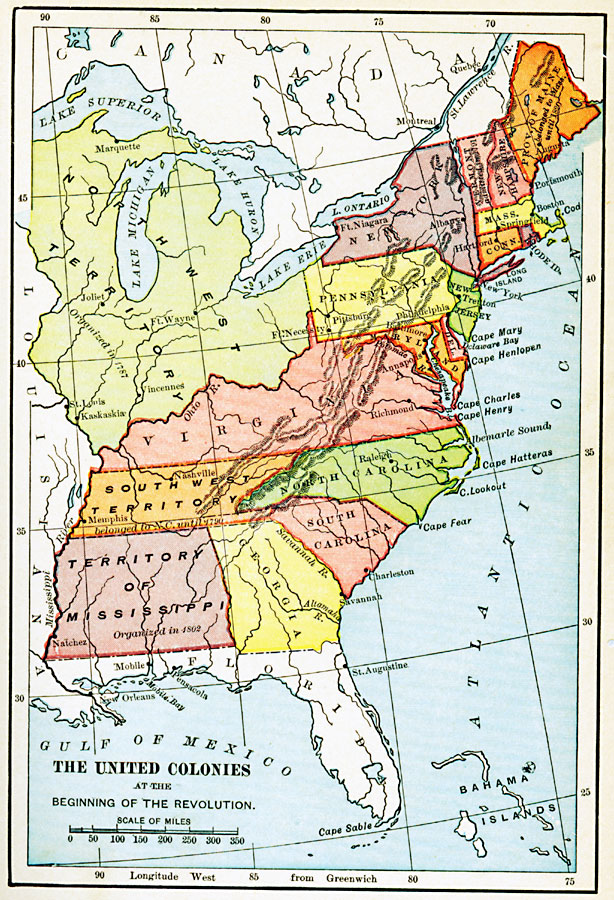
    During the 1770s Great Britain was the most powerful nation in the western world.  A rag tag band of farmers, frontiersmen,  city dwellers and other colonists inhabited a land far from the European continent.  One could argue, who even cared about that bunch?  Yet it was a vassal of European global expansion with perceived riches.

    Then the most powerful country in the world militarily acted, albeit assuming this crowd as weak and taken for granted.  The end result is the United States of America.

    Theoretically easily squashed, yet supported by France and Germany, the ‘shot heard around the world’ transformed the human trajectory significantly and forever.  Europe (including the UK) has been paid back a hundred fold for that investment for over 200 years.  Many others have also fought and attained sustained freedom.

    Do not underestimate the Will (power) of the One.  No one can argue that the Thirteen dramatically impacted the last two plus centuries.  Perhaps the One will change the next few generations.  As before, we may be witnessing the end of a centuries old power structure.

    Will the current investment in Ukraine will return similar dividends?  Odds are, yes.  Even when one does not prevail, i.e., Spartacus and the 300 at Thermopylae the world changed for the better because of their commitments.

    Not limited to conflict, other examples of the small taking on the giant include Microsoft v IBM.  This is a common to the universal human condition with a long track record of success with some failure.  Ukraine has shown themselves to the the Home of the Brave.  Hopefully, soon they will also the Land of the Free.

    Many of us in the global community are heirs of the Thirteen.  What are we doing for the One?

    For More Information

    Please note, RRI does not endorse or advocate the links to any third-party materials.  They are provided for education and entertainment only.

    For more information on Cross Cultural Engagement, check out our Cross Cultural Serious Game.  You can contact this author as well.

  • The 1950s Were So Good Because the 1930s & 40s Were So Very Bad

    The 1950s Were So Good Because the 1930s & 40s Were So Very Bad

    An early Baby Boomer, born in 1948 this post war pundit watched (pun intended) the beginning of the broadcast television age, featuring I Love Lucy, The Honeymooners, The Ozzie and Harriet show, Leave It To Beaver, Disney’s Mickey Mouse Club, The Roy Rogers Show, Superman, Looney Tunes, Captain Kangaroo, The Howdy Doody Show and more.  A technological wonder, no less an important marvel than today’s Smart devices.

    The 1950s were a time of a non-existent (TV) American family that has never been reproduced.  My generation was raised watching June Cleaver cleaning her house all dressed up and wearing pearls.  I do not recall my mother (of that peer group) dressed as such doing daily chores.

    After the horrors of World War II and coming off the Great Depression era, America needed a pause.  Europe and Asia needed to rebuild themselves after their self imposed stupidity.  The so-called Happy Days established an Americana right up there with Norman Rockwell‘s vision.

    The 1950s set the stage for our 21st Century.  It established a ‘can do’ approach that persists to this day.  Many do not know that the transistor, the basis of all modern Cloud solutions was invented in the late 1940s and came into fruition during the 1950s.  Enabling the Apollo moonshot ten years later.

    On the down side, the Korean War draw and the Cold War with potential Nuclear Holocaust loomed large and set the stage for defeat in Vietnam.  This first American rout would not be our last.  Afghanistan!

    “Déjà Vu All Over Again”

    Apologies to Yogi Berra, it does feel sometimes like we are in a pre-1950s era.  Economic uncertainty, global political unrest, domestic turmoil, Covid-19, even pending European military hostilities, Asia etc. are all taking their toll on our collective psychic.  It all seems so similar to the late 1930s.

    The British Minister at the time, Neville Chamberlain, perceived as the appeaser did not live to the see the rout of 1940’s totalitarianism.  Had he, he might offer some thoughts about our current situation.  Winston Churchill most certainly would as would Ronald Reagan, Harry Truman, Dwight Eisenhower, Abraham Lincoln and others.

    Economically, the world fell apart.  Since the safety nets of today that did not exist back then, the impact was massive.  However, our safety nets are under attack.  Inflation may destroy the middle and other classes.  Just like it did in the 1970sStagflation.  The worst of all possible economic worlds.

    Our parents and grandparents survived significant and in some cases life threatening problems.  Collectively, society emerged stronger and perhaps happier.  Paraphrasing from the TV series Mission Impossible, “Our mission, should we choose to accept it is to rise to the challenge and makes this world a better place for those who follow.”

    We also remember the 1950s as so good because the 60s and 70s were subsequently very bad.  This does not need to be the case with this social/economic cycle.  We are not doomed to repeat that history and can change our destiny.

    Seems that we are not really trying.  Have we become the nanny state?  Making our parents and grandparents so proud.

    And Yet

    The 1950s were by no means perfect.  Long simmering civil rights tensions began to manifest and certainly many did not enjoy the environment many of us fondly look back upon.  However, this period was a pause that would be rudely awakened, perhaps when JFK was assassinated on November 22, 1963.  Or maybe earlier when Rosa Parks took her stand (or seat) on a bus in Montgomery, Alabama in 1955 about the time Martin Luther King Jr. was coming into prominence.

    Throughout the 1960s a number of horrendous crimes would be committed against innocent children, activists and others–ultimately leading the assassination of Dr. King.  Moreover, the 1970s would start with Kent State and the Jackson State killings.

    Lessons Learned

    For many, the 1950s were happy days, for others not so much.  Guessing most readers were not alive during this period and perhaps even their parents were too young.

    History is the ultimate task master.  Dooming new generations to relive the past.  However, this need not be the case.  We can and should learn from the follies and successes of those who precede us.

    The 1950s were unique in many ways.  Many in my generation believe that to be true.  However, it seems we are reliving the 1930-1950s era and the outcome might be similar.

    Our challenge is to make sure that does not happen.  History need not repeat itself.  It is up to us.

    What Are Your Organization’s Future/Contingency Plans?

    For More Information

    Please note, RRI does not endorse or advocate the links to any third-party materials.  They are provided for education and entertainment only.

    For more information on Cross Cultural Engagement, check out our Cross Cultural Serious Game

    We presented, Should Cross Cultural Serious Games Be Included in Your Diversity Program: Best Practices and Lessons Learned at the Online Conference, New Diversity Summit 2020 the week of September 14, 2020.  Check Out this timely event and contact the organizer for access to the presentations!!

    For more on DEI Standards, see the newly released ISO-30415.

    You can contact this author as well.