
Tag: Safety Culture

  • Reputation, Reputation, Reputation

    Reputation, Reputation, Reputation

    “It takes 20 years to build a reputation and five minutes to ruin it.  If you think about that, you’ll do things differently.”

    – Warren Buffett

    It is fascinating how many accident videos get posted to social media.  Guess we all go to NASCAR races to see car wrecks.  In some cases, videos are personal disasters for those involved.  In some cases, they are downright funny and in the category of what were they thinking.

    Equipment and facilities damage, lost production/project time, personal injury litigation are just some obvious costs.  One hidden cost is reputational damage.  Would you hire a firm that hires, does not train, and/or tolerates some of this behavior?  Probably not, and in some case a strong safety record is part of the procurement decision process.

    Risk Mitigation

    Most of the social media video show failures in occupational safety.  Typically, in the United States these would fall under the Occupational Safety and Health Administration (OSHA) and/or state and local safety regulations.  This is laudable, but without a broader safety governance framework, a lackadaisical attitude can continue.

    Under a Strong Bond Governance Framework, a robust Operations Management System (OMS) enables both public and private firms to realize the Safety Culture they seek that will keep them off the social media most watched list.

    Strong Bond Governance

    An organizational governance model with the following attributes first put forth by the author in our seminal 2014 book, following the Deepwater Horizon incident.

    • Direct, defined relationships that enables open and valid information between governance members.
    • Led by authorities who are closely connected and strongly bonded.
    • Strong Governance, Risk, and Compliance (GRC) system.
    • Back office and field processes combined into a single information model (OT-IT).
    • Designed for application and use in Mission-Critical Environments. [i]

    [i] Holland, Winford “Dutch” E. and Shemwell, Scott M. (2014). Implementing a Culture of Safety: A Roadmap to Performance-Based Compliance. New York: Xlibris.

    Operational Excellence

    Operational Excellence is the execution of the business strategy more consistently and reliably than the competition, with lower operational risk, lower operating costs, and increased revenues relative to its competitor.  It is needed more than ever in today’s technology driven rapidly changing business models, which require organizations to undergo end-to-end business transformation. Operational Excellence can also be viewed as execution excellence. 

    However, the focus of Operational Excellence goes beyond the traditional continuous improvement methods to a long-term change in organizational culture.  Companies in pursuit of Operational Excellence do two things significantly differently than other companies: they manage their business and operational processes systematically and invest in developing the right culture. 

    Operational Excellence manifests itself through integrated performance across revenue, cost, and risk. It focuses on meeting customer expectation through the continuous improvement of the operational processes and the culture of the organization.  The goal is to develop one single, integrated enterprise level management system with ideal flow.  The second component, a culture of Operational Discipline, is commonly described as doing the right thing, the right way, every time.  This culture is built upon guiding principles of integrity, questioning attitude, always problem-solving, daily continuous improvement mind-set, level of knowledge, teamwork, and process driven.

    Organizations attain and sustain Operational Excellence using tools such as Operations Management System OMS).

    A Typical OMS Framework includes all the major areas involved in organizational processes such as shown in this graphic.

    OMS is a collection of processes and procedures enabling a company to effectively manage business practices and achieve the highest level of Operational Excellence in daily operations.

    One of the more notable examples is the Safety and Environmental Management System (SEMS).  SEMS embodies the Safety Culture into the organization’s OMS.  This systemic model is incorporated into a Strong Bond Governance Framework causing safety to become ‘the way we do business.’  In other words, the culture of the organization and by extension its Ecosystem.

    Systemic Safety Culture

    In a culture of safety, people are not merely encouraged to work toward change; they take action when it is needed.  Inaction in the face of safety problems is taboo, and eventually the pressure comes from all directions — from peers as well as leaders. There is no room in a culture of safety for those who uselessly point fingers or say, “Safety is not my responsibility, so I’ll file a report and wash my hands of it.” 

    — Institute for Healthcare Improvement

    Systemic Safety Culture is the Core Set of Values and Behavioral Economics of ALL participants of the extended organization and its Enterprise Risk Management strategy that reflect a Strong Bond Governance commitment to behaving as a High Reliability Enterprise Ecosystem in a safe and environmentally responsible manner.

    Most Safety Cultures have a set of tenets similar to the nine shown in the following list.  These are based on those developed by the Bureau of Safety and Environmental Enforcement’s (BSEE) for marine offshore oil and gas operations and are typical of those used in other Critical Infrastructure sectors.

    Nine Tenets of a Culture of Safety

    1. Leadership
    2. Problem Identification and Resolution
    3. Personal Accountability
    4. Work Processes
    5. Continuous Learning
    6. An Environment for Raising Concerns
    7. Effective Communications
    8. Trust and Respect
    9. Inquiring Attitude

    Finally, it is common practice for parties to refer to a singular industry ‘Safety Culture.’  In reality since each organization has its own culture, there are literally hundreds if not thousands of Safety Cultures in any critical infrastructure sector.  As shown in the above figure, each individual can interact routinely with a myriad of other cultures, both internal to their organization as well as with external economic players.

    After the Deepwater Horizon disaster in 2010, the authors quickly recognized that all economic players in the industry regardless of size would need to immediately adopt a Safety Culture if they were to survive.

    The resulting 2014 book, Implementing a Culture of Safety: A Roadmap for Performance Based Compliance remains one the few that readers can use as a roadmap to incorporate a Safety Culture into their Operational Excellence business model regardless of industry.

    Smart OpEx

    Fifteen years ago, large organizational Operations Management Systems were struggling to incorporate structural safety as more than the so-called, ‘slips, trips and falls’ of OSHA regulations to one where safety is endemic to the culture.  Smaller firms, often participants in the supplier ecosystem were largely forgiven.  The logic being that the major contractors and operators would assure that the final work product met Safety Culture requirements.  This is no longer the case.  Firms of all sizes in every business sector with an operations component now require an OMS to manage not just internal operations but third-party contractors as well.

    The Smart OpEx Operations Management System software solution is joint venture between The Rapid Response Institute LLC and Knowledge Ops, Inc.

    As Mr. Buffet mentions, reputations can be lost in an instant.  According to a 2007 Harvard Business Review article, “In an economy where 70% to 80% of market value comes from hard-to-assess intangible assets such as brand equity, intellectual capital, and goodwill, organizations are especially vulnerable to anything that damages their reputations.”  While almost 20 years old, the premise of the HBR piece remains the case as Boeing, Bud Light, and others can attest.

    Put systems with checks and balances in place that enable the organizational governance and protect the company from entering the Halls of the Disreputable.

    An individual’s and organization’s reputation are everything.  How are you assuring both are protected?

    Pre order our new book

    Navigating the Data Minefields:

    Management’s Guide to Better Decision-Making

    We are living in an era of data and software exponential growth.  A substantive flood hitting us every day.  Geek heaven!  But what if information technology is not your cup of tea and you may even have your kids help with your smart devices?  This may not be a problem at home; however, what if your job depends on Big Data and Artificial Intelligence (AI)?

    Available April 2025

    For More Information

    Please note, RRI does not endorse or advocate the links to any third-party materials herein.  They are provided for education and entertainment only.

    See our Economic Value Proposition Matrix® (EVPM) for additional information and a free version to build your own EVPM.

    The author’s credentials in this field are available on his LinkedIn page.  Moreover, Dr. Shemwell is the coauthor of the 2023 book, “Smart Manufacturing: Integrating Transformational Technologies for Competitiveness and Sustainability.”  His focus is on Operational Technologies.

    We are also pleased to announce our forthcoming book to be released by CRC Press in April 2025, Navigating the Data Minefields: Management’s Guide to Better Decision-Making.  This is a book for the non-IT executive who is faced with making major technology decisions as firms acquire advanced technologies such as Artificial Intelligence (AI).

    “People fail to get along because they fear each other; they fear each other because they don’t know each other; they don’t know each other because they have not communicated with each other.” (Martin Luther King speech at Cornell College, 1962).  For more information on Cross Cultural Engagement, check out our Cross-Cultural Serious Game.  You can contact this author as well.

    For more details regarding climate change models, check out Bjorn Lomborg and his book, False Alarm: How Climate Change Panic Costs Us Trillions, Hurts the Poor, and Fails to Fix the Planet.

    Regarding the economics of Climate Change, check out our blog, Crippling Green.

    For those start-up firms addressing energy (including renewables) challenges, the author can put you in touch with Global Energy Mentors which provide no-cost mentoring services from energy experts.  If interested, check it out and give me a shout.

  • How Effective at Multitasking are We?

    How Effective at Multitasking are We?

    According to no less than the Cleveland Clinic, ” Studies (regarding multitasking) show it makes us less efficient and more prone to errors.”

    Cleveland Clinic goes on to make the case:

    • When tasks are easy and routine such as, “like listening to music while walking, or folding laundry while watching TV,” these are generally not a problem.
    • However, when tasks are difficult and complex the situation changes dramatically and attempts at multitasking can be dangerous and even deadly.

    Many of us live in neighborhoods where drivers can be fined if they talk on a cell phone (even handsfree) in a school zone.  Another example is the Federal Aviation Administration’s (FAA) Sterile Cockpit Rule which states, ” requiring pilots to refrain from non-essential activities during critical phases of flight, normally below 10,000 feet (3,048 meters).”

    Moreover, multitasking does not just have to be balancing a number of concurrent tasks, it can also  include managing tasks against some criteria, i.e. budget constraints.

    Safety, Safety, Safety

    In the blog series, as well as a host of publications include our 2014 book,  Implementing a Culture of Safety: A Roadmap to Performance-Based Compliance we have sought to drive the need for ALL organizations in the Critical Infrastructure sectors to live have a strong Safety Culture coupled with High Reliability operating performance.

    Meetings, Meetings, Meetings

    Similarly, many executives seem to prefer to spend their days going from meeting to meeting.  The belief is often that keeping busy is a proxy for progress.  In reality, it usually is not.

    Final Thoughts

    The referenced Cleveland Clinic article goes on to say, “The more we multitask, the less we actually accomplish, because we slowly lose our ability to focus enough to learn.”  In this multitasker, this sentence says it all.

    It is easy to watch TV while doing daily chores.  I do this all the time.  It is an entirely different matter to managing an offshore drilling process multitasking.  The systemic mistakes made in 2010 on the Deepwater Horizon are capture in detail in the book, Deepwater Horizon: A Systems Analysis of the Macondo Disaster.  Lessons learned are applicable to all in complex working environments.

    Does your organization favor multitaskers over those who focus?  If so, stakeholder value is likely degrading.

    For More Information

    Please note, RRI does not endorse or advocate the links to any third-party materials herein.  They are provided for education and entertainment only.

    See our Economic Value Proposition Matrix® (EVPM) for additional information and a free version to build your own EVPM.

    The author’s credentials in this field are available on his LinkedIn page.  Moreover, Dr. Shemwell is a coauthor of the just published book, “Smart Manufacturing: Integrating Transformational Technologies for Competitiveness and Sustainability.”  His focus is on Operational Technologies.

    “People fail to get along because they fear each other; they fear each other because they don’t know each other; they don’t know each other because they have not communicated with each other.” (Martin Luther King speech at Cornell College, 1962).  For more information on Cross Cultural Engagement, check out our Cross Cultural Serious Game.  You can contact this author as well.

    For more details regarding climate change models, check out Bjorn Lomborg ands his latest book, False Alarm: How Climate Change Panic Costs Us Trillions, Hurts the Poor, and Fails to Fix the Planet.

    Regarding the economics of Climate Change, check out our blog, Crippling Green.

    For those start-up firms addressing energy (including renewables) challenges, the author can put you in touch with Global Energy Mentors which provide no-cost mentoring services from energy experts.  If interested, check it out and give me a shout.

  • When Does It End?

    When Does It End?

    Once Again Organizational Safety Cultures Have Failed.  Why Does This Keep Happening?

    The controversial Normal Accident Theory suggests that in complex systems accidents are enviable.  So it would seem with continued major disruptions in Critical Infrastructure Sectors.  We have argued that this is not necessarily correct.

    Systemic Safety Culture

    Following the Deepwater Horizon incident in 2010 and building off our 2014 book, IMPLEMENTING A CULTURE of SAFETY A ROADMAP FOR PERFORMANCE BASED COMPLIANCE, we continue to address the issues associated with safety failures and developed a Roadmap towards the High Reliability Organization (HRO).  An HRO faces the same challenges are its industry peers; however, it has robust processes in place to quickly mitigate safety and critical operational exposures.

    As part of our practice, we have developed a robust toolkit to facilitate the rapid transformation to an organizational Safety Culture without business disruption.  Many of the tools are provided at no cost and are easy to use–their details are available.

    Culture Eats Strategy

    The aircraft manufacture Boeing and its supply chain are undergoing increased scrutiny as result of the Alaskan Airline Max 9 inflight door failure.  This is entirely appropriate.

    As part of this process, the aircraft producer’s culture has come into question.  Some argue the firm moved away from an engineering culture to a safety culture.  This pundit believes that they are one in the same for this sector.

    A more appropriate argument is that the firm has recently exercised other values at the expensive of aircraft manufacturing technology.  Is this a loss of focus and a deviation from core values and capabilities?  Always a danger, i.e., New Coke and Bud Light.

    Get Smart

    In our recent book, “Smart Manufacturing: Integrating Transformational Technologies for Competitiveness and Sustainability, ” we make the case that the smart extended factory floor (including supply chain partners) adds significant value to organizations in that sector.  This approach supports engineering/safety cultures while enabling certain social behaviors.

    We believe that a simple Safety Culture is insufficient in complex environments.  It must be coupled with High Reliable Management.  Only then can organizations capitalize on ‘Smart’ coupled with new solutions such as Artificial Intelligence.

    Is your Safety Culture Adequate?  If not, what are you doing about it?

    For More Information

    Please note, RRI does not endorse or advocate the links to any third-party materials herein.  They are provided for education and entertainment only.

    See our Economic Value Proposition Matrix® (EVPM) for additional information and a free version to build your own EVPM.

    The author’s credentials in this field are available on his LinkedIn page.  Moreover, Dr. Shemwell is a coauthor of the just published book, “Smart Manufacturing: Integrating Transformational Technologies for Competitiveness and Sustainability.”  His focus is on Operational Technologies.

    “People fail to get along because they fear each other; they fear each other because they don’t know each other; they don’t know each other because they have not communicated with each other.” (Martin Luther King speech at Cornell College, 1962).  For more information on Cross Cultural Engagement, check out our Cross Cultural Serious Game.  You can contact this author as well.

    For more details regarding climate change models, check out Bjorn Lomborg ands his latest book, False Alarm: How Climate Change Panic Costs Us Trillions, Hurts the Poor, and Fails to Fix the Planet.

    Regarding the economics of Climate Change, check out our recent blog, Crippling Green.

    For those start-up firms addressing energy (including renewables) challenges, the author can put you in touch with Global Energy Mentors which provide no-cost mentoring services from energy experts.  If interested, check it out and give me a shout.

  • What a Turkey

    What a Turkey

    How many times have you seen someone do something incredibly stupid, even risking their life?  What a turkey!

    Story goes that Benjamin Franklin proposed the turkey as the American National Bird.  Almost 250 years later, this bird often carries a different connotation.  Often maligned, this tasty fowl has its day once a year.  Even two are granted a presidential pardon.

    Enter Safety Culture

    This pundit has spent his career around field operations and heavy equipment, first with the military and later as an oilfield field engineer going on to extensive international travel.  I have seen and done silly, stupid and often dangerous things, yet I emerged uninjured–lucky.

    As a physicist and MBA I started looking at business/technical process from a systems perspective.  A big influence was Peter Senge’s classic book, The Fifth Discipline: The Art and Practice of the Learning Organization.  I could relate to its view of behavior from functional structure perspective.  This led me to Systems Dynamics from which we build several models.

    Finally, in the early to mid 1990s (as part of my doctoral dissertation) we developed our construct of Structural Dynamics which we defined as Structural Dynamics is defined as the morphology or patterns of motion toward process equilibrium of interpersonal systems.

    All of this prepared me for what was to happen next.  In April 2010, Deepwater Horizon exploded in the Gulf of Mexico.  My colleagues and I started looking at this incident through the systems lens described above.  What we saw was very different than conventional wisdom.

    For decades Charles Perrow’s Normal Accident Theory posits that we can expect accidents from complex systems–they are inevitable.  Enter High Reliability Management in Process Industries: Sustained by Human Factors, which suggests that accidents are NOT inevitable and management systems can be put in place to adequately manage even the most complex system of systems.  Moreover, we now know that many disasters failures such as an airliner crash are of the function of many smaller issues happening concurrently.

    This led us to develop four major solutions for better safety in Critical Infrastructure sectors.

    This solution set enables organization of all sizes (public and private) to meet their high performance, high reliability goals while maintaining a sate workplace across their ecosystems.  Also check out our book, Implementing a Culture of Safety: A Roadmap for Performance Based Compliance and perform your own Self-Assessment of your organization’s ecosystem Culture of Safety Maturity.

    A final note.  One of the best books I have read in this regard is Deepwater Horizon: A Systems Analysis of the Macondo  Disaster.  The lesson therein are useful across industry sectors.

    We all know that ‘birds of a feather flock together.’  On a complex project there are many opportunities that might bring out the turkey in us.  Tools are available to limit or prevent the foul damage.

    What processes and procedure does your organization have in place to herd your flock?

    For More Information

    Please note, RRI does not endorse or advocate the links to any third-party materials herein.  They are provided for education and entertainment only.

    See our Economic Value Proposition Matrix® (EVPM) for additional information and a free version to build your own EVPM.

    The author’s credentials in this field are available on his LinkedIn page.  Moreover, Dr. Shemwell is a coauthor of the just published book, “Smart Manufacturing: Integrating Transformational Technologies for Competitiveness and Sustainability.”  His focus is on Operational Technologies.

    “People fail to get along because they fear each other; they fear each other because they don’t know each other; they don’t know each other because they have not communicated with each other.” (Martin Luther King speech at Cornell College, 1962).  For more information on Cross Cultural Engagement, check out our Cross Cultural Serious Game.  You can contact this author as well.

    For more details regarding climate change models, check out Bjorn Lomborg ands his latest book, False Alarm: How Climate Change Panic Costs Us Trillions, Hurts the Poor, and Fails to Fix the Planet.

    Regarding the economics of Climate Change, check out our recent blog, Crippling Green.

    For those start-up firms addressing energy (including renewables) challenges, the author can put you in touch with Global Energy Mentors which provide no-cost mentoring services from energy experts.  If interested, check it out and give me a shout.

  • Seems Like Yesterday

    Seems Like Yesterday

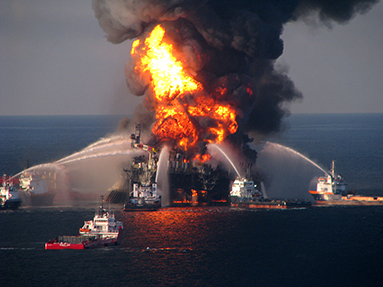
    Hard to believe that 13 years ago the offshore oil and gas industry changed forever.  On April 20, 2010 the Deepwater Horizon drilling rig exploded, later sank.  “Approximately 134 million gallons of oil had spilled into the Gulf, the largest offshore oil spill in U.S. history.”

    One recent LinkedIn comment suggested that nothing had changed regarding field operation safety.  The right referred to management’s position as SAC (Safety as Convenient).  In other words, business as usual.  This may be the case for some organizations but I think the larger issue is the industry transformation to one of a Culture of Safety aka Safety Culture.

    In the immediate aftermath, this pundit and his colleagues were directly involved in this change process.  Working with the aerospace industry, we put forth new ways of managing the work process to assure field processes were completed properly and in keeping with regulatory requirements.  As part of this effort, we worked with Human Factors experts to help process organizations to sustain High Reliability.

    We believe across a number of fronts the sector has made a lot of progress.  Moreover, in 2015 this pundit was invited to present ‘oil & gas lessons learned’ at the International Atomic Energy Agency Technical Meeting on Developing Improvement Programmes for Safety Culture in Vienna, Austria.

    The Center for Offshore Safety and its Good Practices and Safety and Environmental Management System (SEMS) Certification process has been widely accepted.  Additionally, deepwater well containment rapid response systems such as the Marine Well Containment Company (MWCC) are in place.

    There is always room for improvement; however, it is fair to say the industry has taken the Safety Culture seriously and has made great strides.

    Transformational Tools

    There are a wide variety of tools readily available for organizations interested in adopting a Safety Culture.  These include the Bureau of Safety and Environmental Enforcement’s (BSEE) Safety Culture Policy.

    A Safety Culture is not limited to a single sector or even to private enterprises.  Other examples include NASA, Healthcare and SHRM among others.

    In addition to our 2014 seminal book on the subject, IMPLEMENTING A CULTURE of SAFETY: A ROADMAP FOR PERFORMANCE BASED COMPLIANCE we offer a number tools designed with industry experts to assist with this transformation.  These include:

    Finally, our new book Smart Manufacturing: Integrating Transformational Technologies for Competitiveness and Sustainability can help as well even if your organization is not a manufacturer.

    If your organization does not have a Safety Culture, why not?

    For More Information

    The photograph source is NOAA.

    Please note, RRI does not endorse or advocate the links to any third-party materials herein.  They are provided for education and entertainment only.

    See our Economic Value Proposition Matrix® (EVPM) for additional information and a free version to build your own EVPM.

    The author’s credentials in this field are available on his LinkedIn page.  Moreover, Dr. Shemwell is a coauthor of the just published book, “Smart Manufacturing: Integrating Transformational Technologies for Competitiveness and Sustainability.”  His focus is on Operational Technologies.

    “People fail to get along because they fear each other; they fear each other because they don’t know each other; they don’t know each other because they have not communicated with each other.” (Martin Luther King speech at Cornell College, 1962).  For more information on Cross Cultural Engagement, check out our Cross Cultural Serious Game.  You can contact this author as well.

    For more details regarding climate change models, check out Bjorn Lomborg ands his latest book, False Alarm: How Climate Change Panic Costs Us Trillions, Hurts the Poor, and Fails to Fix the Planet.

    Regarding the economics of Climate Change, check out our recent blog, Crippling Green.

    For those start-up firms addressing energy (including renewables) challenges, the author can put you in touch with Global Energy Mentors which provide no-cost mentoring services from energy experts.  If interested, check it out and give me a shout.

  • Whoa Nellie–Delays in the Smart Horseless Carriage

    Whoa Nellie–Delays in the Smart Horseless Carriage

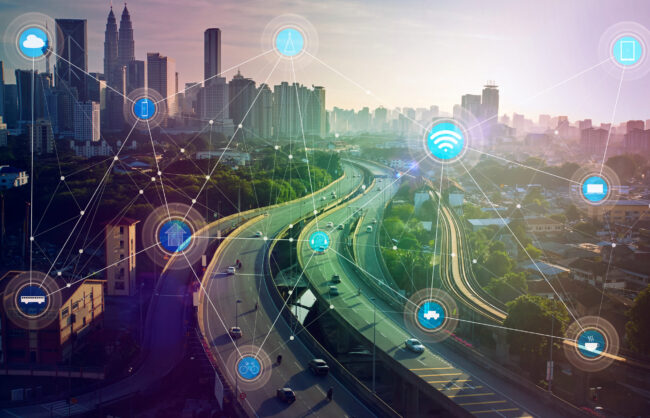
    In the just released NCHRP Research Report 1001/BTSCRP Research Report 2, a new framework provides government and non government parties and other stakeholders a tool for the assessment and risk management for emerging automated driving system (ADS) technologies.

    This Framework for Assessing Potential Safety Impacts of Automated Driving Systems reminds this reader with a sense that the challenge here is similar to other complex critical systems such as health care and energy.  This should not be surprising given the huge global ground transportation sector.

    ADS Maturity

    Maturity Models are useful tools helping management and others assess organizational processes and the value standardization can provide all stakeholders.  Likewise, the ADS Maturity Model follows a similar path of the established ones such as Capability Maturity Model Integration (CMMI).

    According to the automotive authority, J.D. Power Driving Automation Maturity Model contains these six steps (in reverse order):

    5 – Full Driving–Vehicle is self contained as an autonomous operation.

    4 – High Driving–Requires no human driver and most likely be used within geofence boundaries.

    3 – Conditional Driving–Significant step up this level incorporates various systems including Artificial Intelligence (AI).  As of 2021, these level of automation was not approved in the United States.

    2 – Partial Driving–Vehicles with Advanced Driving Assistance Systems (ADAS) but still requires the driver to  remain engaged.

    1 – Driver Assistance–Vehicle contains one or more systems designed to help steerage and/or braking etc.

    0 – No Driving Automation–No automation, driver entirely operates the vehicle.

    While there are some test exceptions, if as noted, Level 2 is the highest approved to date and the step to Level 3 is a big one, it appears we have a ways to go before any of us see an autonomous vehicle.  Not sure were we are on the Gartner Hype Cycle but likely there is some distance to go.

    SEMS

    Safety and Environmental Management Systems (SEMS) have been around for years.  Typically, SEMS requirements are usually integrated into Operations Management Systems.

    In this pundit’s opinion, similar integration will incorporate ADS into policies, processes and procedures for each organization.  As with other sectors, a number of Safety Cultures will emerge.  These will need to collaborate with other like minded but somewhat different business and technology models.

    The Hype

    We are often told that autonomous vehicles will be with us soon.  However, the evidence suggests otherwise.  According to the IT research firm, Gartner ““More than half of the technologies on this Hype Cycle are in the trough [of Disillusionment], which means that the hard work of commercializing many significant technologies is underway.”  Moreover, many advanced technologies necessary for Level 6 are even less developed.  Many may recall the autonomous breaking problems one manufacturer dealt with just three years ago.  Caveat Emptor in this field, at least for a while.

    How willing are you to trust your life to a Smart Vehicle?

    For More Information

    Please note, RRI does not endorse or advocate the links to any third-party materials herein.  They are provided for education and entertainment only.

    The author’s credentials in this field are available on his LinkedIn page.  Moreover, Dr. Shemwell is a coauthor for an in press book (to be released in Spring 2023) titled, “Smart Manufacturing: Integrating Transformational Technologies for Competitiveness and Sustainability.”  His focus is on Operational Technologies.

    “People fail to get along because they fear each other; they fear each other because they don’t know each other; they don’t know each other because they have not communicated with each other.” (Martin Luther King speech at Cornell College, 1962).  For more information on Cross Cultural Engagement, check out our Cross Cultural Serious Game.  You can contact this author as well.

    For those start-up firms addressing energy (including renewables) challenges, the author is a member of Global Energy Mentors which provide no-cost mentoring services from energy experts.  If interested, check it out and give us a shout.

  • ESG Explained

    ESG Explained

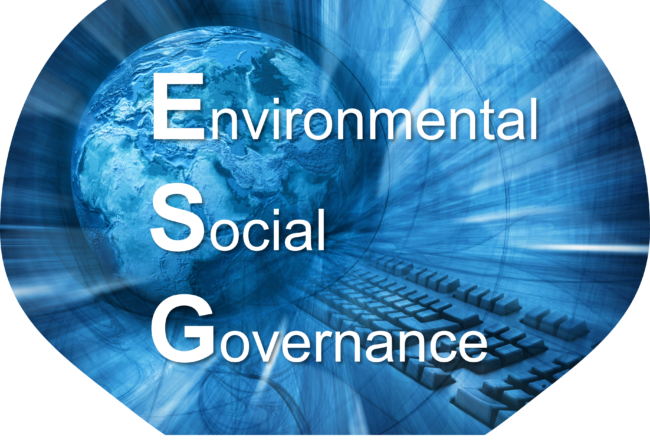
    According to Investopedia, “Environmental, social, and governance (ESG) criteria are a set of standards for a company’s operations that socially conscious investors use to screen potential investments.”  Definitions of the three components are pretty straightforward:

    • Environmental–Generally refers to the stewardship of the planet and how organizations facilitate that responsibility.
    • Social–Facilitating organizational responsibility to the global society, at all levels from the globe to the local communities firms operate in.
    • (Corporate) Governance–Typically, the umbrella organizations put in place to assure issues such as transparency, fraud, safety culture and ethics are in compliance with social norms and local regulations.

    Since the Deepwater Horizon incident of April 2020, operators (oil and gas companies) have extended and enhanced the above criteria to their supply chain ecosystem and in some cases even customers with a Safety and Environmental Management System (SEMS).  This is true of most other Critical Infrastructure sectors as well.

    Likewise, the Sarbanes-Oxley Act of 2002 enhanced transparency and increased fraud protection after the Enron (and other) scandals.  Other incidents have triggered governance changes as well and some are referred to in linked materials.

    Why Is ESG Important?

    By one account, approximately $12 trillion in investments made in 2018 were driven by those who consider themselves socially responsible.  According to Forbes, in 2019 this accounted for almost 25% of total investments and are seen through the lens of sustainability.  Moreover, between 2016 to 2018, the growth rate in such firms grew at 38 percent.

    These numbers confirm our research going back to the turn of the century and perhaps earlier.  In 1993 we controversially posited that the Principles of Scientific Management were applicable to software development by Knowledge Workers.  Developed by Frederick Taylor, his monograph was published circa 1911.

    In other words, owners (investors) have always demanded top notch, legal and ethical performance.  Activist investors, i.e. Carl Icahn are not new.  As always, they have a very important role to play in the current markets.

    Asset/Equipment Integrity Governance

    There is a buzz of newness to ESG; however, from a contrarian perspective, this is not necessarily the case.  After the Deepwater Horizon failure with significant loss of live and many billions in economic losses to many parties including BP, it became clear that traditional Governance models did not have a focus on operations and the management of capital assets, i.e., manufacturing plants, marine vessels and other revenue producing sources.

    In our book we addressed a New Risk Environment from large corporate operations in which ‘failure is really not an option.”  We stated as a risk element, “Escalation of Consequences: The level of consequences of a disaster in the energy industry can now be larger than from the accidental release of a multi-megaton nuclear weapon.”

    Still governance models continued to struggle.  We believe that in the critical infrastructure sectors there is a lack of strong bonding, in other words top management is still hands off and operating from historical ‘control’ models that are no longer relevant or applicable.

    We do not believe this will change until a Strong Bond (tightly coupled) model is adopted.  We define the term as, “A strong model is used by High Reliability Organizations (HRO) and as part of that model, trained; knowledgeable personnel are empowered to make the right decisions in the field.  The strong model provides an organization with the capability to become and remain and HRO.”

    In 2011, we released our monograph, Asset/Equipment Integrity Governance: Operations–Enterprise Alignment; A Case for Board Oversight (AEIG).  In addition to developing a financial model documenting the Return on Investment (ROI) from strong governance, a Compliance Model, as well as a robust AEIG Matrix which incorporates an Asset Maturity Model are part of the solution.

    The AEIG extends the enterprise governance model to include the full ecosystem including subcontractors to its primary supply chain partners.  While not directly addressed at the time, Diversity, Equity and Inclusion (DEI) is implicit in the model.

    This roadmap is comprehensive and is a good starting point for developing and implementing a vigorous ESG initiative.  Other monographs in our Changing the Dialogue series (exploring our New Business Dynamics) include Structural Dynamics and Rapid Response Management are available online.

    Relationships, Behaviors, Conditions

    Scroll down on The Rapid Response Institute, Operational Excellence Platform page and you will find our R B C Framework Cultural Transformation model.  Shown below for ease of readership.

    The R B C model was originally developed to research international (cross cultural) negotiations.  We have extended it to support the transformation process to a robust and model organization culture such discussed herein.  Readers should note that this model is focused on Operational Excellence and is comprised on Processes & Methods supported by Enabling Tools.

    Built on Structural Dynamics which was developed as part of Dr. Shemwell’s doctoral dissertation in 1996.  It is defined as, “The morphology or patterns of motion towards process equilibrium of interpersonal systems.”

    This proven Framework is grounded in Management Science yet is a useful tool (Roadmap) that real originations can successfully and cost effectively implement.  We believe it is the best approach for attaining ESG.

    Summary

    One can view the current ESG status as part of a continuum to hold organizations accountable as appropriate and frankly, increase their Operational Excellence.  We have long known that firm’s that are well managed command superior stock market multiples and greater equity value.

    Many ‘self-serving’ consultants and pundit would have us believe ESG is breakthrough Thought Leadership in need of their help.  Nothing could be further from the truth.

    In the early 1990s, we document the history and evolution of Management Science/Thinking.   It is not written in stone, like most human endeavors it evolves and has for thousands of years.  ESG is a step in this continuum.

    How is Your Organization Addressing the Requirements of Active Investors?

    For More Information

    Please note, RRI does not endorse or advocate the links to any third-party materials.  They are provided for education and entertainment only.

    For more information on Cross Cultural Engagement, check out our Cross Cultural Serious GameTwo current online games; Safety Culture and Diverse Teams specifically address issues raised by ESG Criteria.  If you have any questions, please contact this author as well.

    Graphic Source: The Rapid Response Institute derived from a Storyblocks image under license.

  • Going Green? Or NOT!

    Going Green? Or NOT!

    The total or lifecycle carbon footprint for any energy source is a function of the manufacturing, commissioning, operation (including maintenance) and decommissioning of that asset.  Moreover, the value of an electric powered vehicles (EV) is seen as a function of the amount of fossil fuel no longer used by the vehicle.  However, this is only a sub-model of the to carbon footprint of any component in the Basket of (Energy) Goods, aka Energy Basket.

    All energy resources in the basket must be held to the same set of metrics.  These include Human Resources (including diversity and inclusion), Safety Culture, communities as well as the bottom line performance against governance standards (ESG).

    Risk Governance

    A governance framework that exceeds these standards follows.  Evolving over several decades, it reflects a comprehensive approach to operational risk that is often overlooked.  It addresses the entire life of a revenue producing asset.

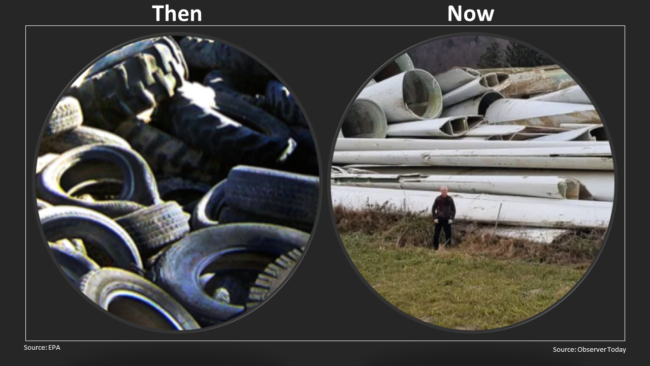
    Lifecycle risk mitigation of an energy resource must include the end of the asset life processes.  What governance driven processes are in place to prevent the accumulation of wind turbine blades or spent solar panels stacked and abandoned?  Just like the tires stacked for decades.

    Turns out the answer is few.  Long life assets such as factories, skyscrapers, fossil fuel production systems, etc. are built to the engineering, industry and local regulatory standards of that day.  Ongoing operations, maintenance, upgrades and so forth keep them performing at acceptable levels.  However, governance models are often focused on the present.  End of asset life risk does not fit into the four quarter management mindset as the event may be sometime in the future.

    The above graphic represents a governance model built around operations and associated risks.  The archetype recognizes that many risk mitigation processes are inadequate for today’s complex organizations with multi-faceted global processes.

    Its framework is built upon the work done by the Treadwell Commission several decades ago to detect financial fraud.  This structure supports the extension into field operations and provides a structure for attaining and sustaining Operational Excellence.

    Risk mitigation is both quantitative and qualitative.  The risk associate with the use of any industrial energy source must be thoroughly assessed as a function of its lifecycle, not just its initial CAPEX and ongoing operations.

    Dumping v Decommissioning

    Illegal industrial dumping has long been a problem.  Today, some in the wind turbine sector appear to be following the decades long vehicle tire disposal process (or lack thereof).

    Lady Bird Johnson at least tried to hide the piles of tire debris but no one has found a way of completely dealing with this growing and massive problem.  As of 2017, some 17% were still disposed of in landfills.  In 2003, the EPA reports that almost 300 million tires are scraped each year.  Flash forward to today and this is likely a very conservative number.  That said, 17% equals approximately 50 million tires headed to landfills as opposed to recycling.

    Moreover, there is a long history of industrial dumping trash so as not to have to pay the disposal fees.  One wonders how many millions of tires destined for landfills (and other recycling) are just dumped?

    The decommissioning process is the responsible end-of-asset-life shutdown and removal.  The intent is to return the site to a condition similar to its initial environment and properly remove and dispose of equipment and materials.  It should not include stacking wind turbine blades next to a pile of discarded vehicle tires.

    Total Carbon Lifecycle Model

    Daily, we hear about the need to reduce carbon output to (net) zero.  Promises are made by many that by such and such a time this metric will be met.  Caveat: usually the time period is beyond the expected tenure of those making the statements.  Often lost in the discussion is the carbon cost of manufacturing and decommissioning.

    Carbon output should include the mineral extraction process, recycling of older materials if appropriate, transportation, manufacturing, installation, operations and decommissioning.  It also must include the carbon cost of the supply chain necessary to support the asset across its lifecycle.  For example, the carbon cost of an EV is not just the vehicle’s operation but the lifecycle of the vehicle as well as the electric power generation and distribution necessary to operate the automobile.  Do not forget the carbon cost of manufacturing a battery and disposing of it at end of life.

    Scrap

    Materials are often staged for recycling.  They feed a process that results in new useful product(s) that may add new value.  This is a useful recycling process that makes a lot of sense.  However, sometimes this is not as economical as new manufacturing.  These economics lead to dumping as the low-cost-solution.  Fields of discarded materials may or may not be awaiting recycling.

    Defining Green

    Being green is not simply using renewable electricity instead of gasoline.  If the carbon footprint is no different or even worse, then the problem is not solved and may even be made greater.

    Keep in mind that coal is still a major fuel in the generation of electricity.  According to the US Energy Information Administration (EIA), in 2020 over 60% of power is generated using fossil fuels of which over 19% is from coal.  This does not include the carbon footprint of materials and products imported to the US.

    So if the carbon footprint of a wind turbine is defined as its lifecycle and if at the end result is abandonment in a field, is the green value of that product positive?  Or is it just dumping not unlike the pollution of a nation’s river systems?

    Being green is not just plugging in your car overnight.  Like most things in life, it is systemic.

    Is Your Organization’s Green Plan Systemic or Myopic?

    For More Information

    Please note, RRI does not endorse or advocate the links to any third-party materials.  They are provided for education and entertainment only.

    For more information on Cross Cultural Engagement, check out our Cross Cultural Serious Game

    We presented, Should Cross Cultural Serious Games Be Included in Your Diversity Program: Best Practices and Lessons Learned at the Online Conference, New Diversity Summit 2020 the week of September 14, 2020.  Check Out this timely event and contact the organizer for access to the presentations!!

    For more on DEI Standards, see the newly released ISO-30415.

    You can contact this author as well.

  • 100

    100

    This edition marks the 100th post in our Critical Mass Blog series.  We have sought to provide thoughtful, unbiased insight into the contemporary business and organizational challenges we all face.  Since our first blog post on November 27, 2017 our world has turned over in ways none expected.  Likely, this trend will continue.

    This series continues a tradition of newsletters, opinion pieces and other on line punditry first begun in 1998 with our New Millennium News.  A bi-monthly email with a subscription base of approximately 7,000 readers.  A huge number at that time.  We estimate that hundreds of thousands or more have benefited from this knowledge transfer.

    Coincidentally, we reach this milestone as we begin the new year–a time of renewal.  We will continue to address critical issues individuals, businesses, agencies and others face as we all navigate an increasingly perilous path.  This series has addressed Human Resource issues including Diversity, Equity and Inclusion (DEI) Teams , the arrival of Smart Technology, International Business, Covid-19, Supply Chain Management, Operational Excellence, Cultural Transformation (including Safety Culture) Sales, Risk Mitigation and of course Leadership.  Today’s organizations must be very good at all of these disciplines!

    Available Tools

    The mission of the Rapid Response Institute (RRI) is to enable our clients with the ability to posture themselves in their market segments so that they can thrive in volatile markets and capitalize on uncertainty, not suffer because of them.  This is especially important for those economic actors in Critical Infrastructure sectors.

    In support of this mission the firm has developed a suite of Intellectual Property (IP) which includes Know How, practical roadmap Books and guidelines as well as Software as a Service (SaaS) solutions among others.  Many readers know that once a process has been standardized with minimal configuration required, the data is the ultimate driver.  This is the heart of most Enterprise Resource Planning (ERP) solutions.

    With advances in technology, RRI has taken these once multi-million dollar solutions to a price point as well as Use Case where all organizations can utilize this capability.  Moreover, our advancements in work flow such as epitomized in our Cross Cultural Serious Games, Economic Value Proposition Matrix, and Smart OpEx (Operations Management System) and Risk Simulation Modeling add immediate and significant value to the challenges faced as articulated above.  Other Free Tools are available as well.

    Pulling It All Together

    The method to our madness is–Operations!!  As some are fond of saying with derision, “It’s All About the Benjamins.”  Well, it actually is.  If ‘for-profit’ firms are not profitable, they fail.  No amount of Environmental, Social, and Governance (ESG) will save them if they cannot deliver to paying customers.

    Everything RRI does helps organizations to deliver stakeholder value, compliant with ESG standards.  That is our Bottom Line and we are also pleased that Dr. Shemwell, Managing Director has been an independent advocate for responsible corporate success since 2004.

    FYI, major losses and legal actions do not enhance stakeholder value.  Neither for employees, local communities or equity holders.  Everyone loses when in terrible scenarios such as Deepwater Horizon, internal bias corporate hubris, poor high reliability processes/human factor shortcomings or lack of actual DEI.

    This journey continues.  Stay tuned for the next 100 editions where will continue to provide our thoughts on relevant matters.  Thank you very much for your readership and support.

    How is Your Organization Positioned for the Next Four Years?

    For More Information

    Please note, RRI does not endorse or advocate the links to any third-party materials.  They are provided for education and entertainment only.

    For more information on Cross Cultural Engagement, check out our Cross Cultural Serious Game

    We presented, Should Cross Cultural Serious Games Be Included in Your Diversity Program: Best Practices and Lessons Learned at the Online Conference, New Diversity Summit 2020 the week of September 14, 2020.  Check Out this timely event and contact the organizer for access to the presentations!!

    For more on DEI Standards, see the newly released ISO-30415.

    You can contact this author as well.