Tag: Safety and Environmental Management Systems

  • Seems Like Yesterday

    Seems Like Yesterday

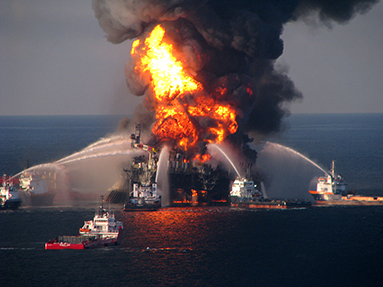
    Hard to believe that 13 years ago the offshore oil and gas industry changed forever.  On April 20, 2010 the Deepwater Horizon drilling rig exploded, later sank.  “Approximately 134 million gallons of oil had spilled into the Gulf, the largest offshore oil spill in U.S. history.”

    One recent LinkedIn comment suggested that nothing had changed regarding field operation safety.  The right referred to management’s position as SAC (Safety as Convenient).  In other words, business as usual.  This may be the case for some organizations but I think the larger issue is the industry transformation to one of a Culture of Safety aka Safety Culture.
    In the immediate aftermath, this pundit and his colleagues were directly involved in this change process.  Working with the aerospace industry, we put forth new ways of managing the work process to assure field processes were completed properly and in keeping with regulatory requirements.  As part of this effort, we worked with Human Factors experts to help process organizations to sustain High Reliability.

    We believe across a number of fronts the sector has made a lot of progress.  Moreover, in 2015 this pundit was invited to present ‘oil & gas lessons learned’ at the International Atomic Energy Agency Technical Meeting on Developing Improvement Programmes for Safety Culture in Vienna, Austria.

    The Center for Offshore Safety and its Good Practices and Safety and Environmental Management System (SEMS) Certification process has been widely accepted.  Additionally, deepwater well containment rapid response systems such as the Marine Well Containment Company (MWCC) are in place.

    There is always room for improvement; however, it is fair to say the industry has taken the Safety Culture seriously and has made great strides.

    Transformational Tools

    There are a wide variety of tools readily available for organizations interested in adopting a Safety Culture.  These include the Bureau of Safety and Environmental Enforcement’s (BSEE) Safety Culture Policy.

    A Safety Culture is not limited to a single sector or even to private enterprises.  Other examples include NASA, Healthcare and SHRM among others.

    In addition to our 2014 seminal book on the subject, IMPLEMENTING A CULTURE of SAFETY: A ROADMAP FOR PERFORMANCE BASED COMPLIANCE we offer a number tools designed with industry experts to assist with this transformation.  These include:

    Finally, our new book Smart Manufacturing: Integrating Transformational Technologies for Competitiveness and Sustainability can help as well even if your organization is not a manufacturer.

    If your organization does not have a Safety Culture, why not?

    For More Information

    The photograph source is NOAA.

    Please note, RRI does not endorse or advocate the links to any third-party materials herein.  They are provided for education and entertainment only.

    See our Economic Value Proposition Matrix® (EVPM) for additional information and a free version to build your own EVPM.

    The author’s credentials in this field are available on his LinkedIn page.  Moreover, Dr. Shemwell is a coauthor of the just published book, “Smart Manufacturing: Integrating Transformational Technologies for Competitiveness and Sustainability.”  His focus is on Operational Technologies.

    “People fail to get along because they fear each other; they fear each other because they don’t know each other; they don’t know each other because they have not communicated with each other.” (Martin Luther King speech at Cornell College, 1962).  For more information on Cross Cultural Engagement, check out our Cross Cultural Serious Game.  You can contact this author as well.

    For more details regarding climate change models, check out Bjorn Lomborg ands his latest book, False Alarm: How Climate Change Panic Costs Us Trillions, Hurts the Poor, and Fails to Fix the Planet.

    Regarding the economics of Climate Change, check out our recent blog, Crippling Green.

    For those start-up firms addressing energy (including renewables) challenges, the author can put you in touch with Global Energy Mentors which provide no-cost mentoring services from energy experts.  If interested, check it out and give me a shout.

  • Whoa Nellie–Delays in the Smart Horseless Carriage

    Whoa Nellie–Delays in the Smart Horseless Carriage

    In the just released NCHRP Research Report 1001/BTSCRP Research Report 2, a new framework provides government and non government parties and other stakeholders a tool for the assessment and risk management for emerging automated driving system (ADS) technologies.

    This Framework for Assessing Potential Safety Impacts of Automated Driving Systems reminds this reader with a sense that the challenge here is similar to other complex critical systems such as health care and energy.  This should not be surprising given the huge global ground transportation sector.

    ADS Maturity

    Maturity Models are useful tools helping management and others assess organizational processes and the value standardization can provide all stakeholders.  Likewise, the ADS Maturity Model follows a similar path of the established ones such as Capability Maturity Model Integration (CMMI).

    According to the automotive authority, J.D. Power Driving Automation Maturity Model contains these six steps (in reverse order):

    5 – Full Driving–Vehicle is self contained as an autonomous operation.

    4 – High Driving–Requires no human driver and most likely be used within geofence boundaries.

    3 – Conditional Driving–Significant step up this level incorporates various systems including Artificial Intelligence (AI).  As of 2021, these level of automation was not approved in the United States.

    2 – Partial Driving–Vehicles with Advanced Driving Assistance Systems (ADAS) but still requires the driver to  remain engaged.

    1 – Driver Assistance–Vehicle contains one or more systems designed to help steerage and/or braking etc.

    0 – No Driving Automation–No automation, driver entirely operates the vehicle.

    While there are some test exceptions, if as noted, Level 2 is the highest approved to date and the step to Level 3 is a big one, it appears we have a ways to go before any of us see an autonomous vehicle.  Not sure were we are on the Gartner Hype Cycle but likely there is some distance to go.

    SEMS

    Safety and Environmental Management Systems (SEMS) have been around for years.  Typically, SEMS requirements are usually integrated into Operations Management Systems.

    In this pundit’s opinion, similar integration will incorporate ADS into policies, processes and procedures for each organization.  As with other sectors, a number of Safety Cultures will emerge.  These will need to collaborate with other like minded but somewhat different business and technology models.

    The Hype

    We are often told that autonomous vehicles will be with us soon.  However, the evidence suggests otherwise.  According to the IT research firm, Gartner ““More than half of the technologies on this Hype Cycle are in the trough [of Disillusionment], which means that the hard work of commercializing many significant technologies is underway.”  Moreover, many advanced technologies necessary for Level 6 are even less developed.  Many may recall the autonomous breaking problems one manufacturer dealt with just three years ago.  Caveat Emptor in this field, at least for a while.

    How willing are you to trust your life to a Smart Vehicle?

    For More Information

    Please note, RRI does not endorse or advocate the links to any third-party materials herein.  They are provided for education and entertainment only.

    The author’s credentials in this field are available on his LinkedIn page.  Moreover, Dr. Shemwell is a coauthor for an in press book (to be released in Spring 2023) titled, “Smart Manufacturing: Integrating Transformational Technologies for Competitiveness and Sustainability.”  His focus is on Operational Technologies.

    “People fail to get along because they fear each other; they fear each other because they don’t know each other; they don’t know each other because they have not communicated with each other.” (Martin Luther King speech at Cornell College, 1962).  For more information on Cross Cultural Engagement, check out our Cross Cultural Serious Game.  You can contact this author as well.

    For those start-up firms addressing energy (including renewables) challenges, the author is a member of Global Energy Mentors which provide no-cost mentoring services from energy experts.  If interested, check it out and give us a shout.

  • ESG Explained

    ESG Explained

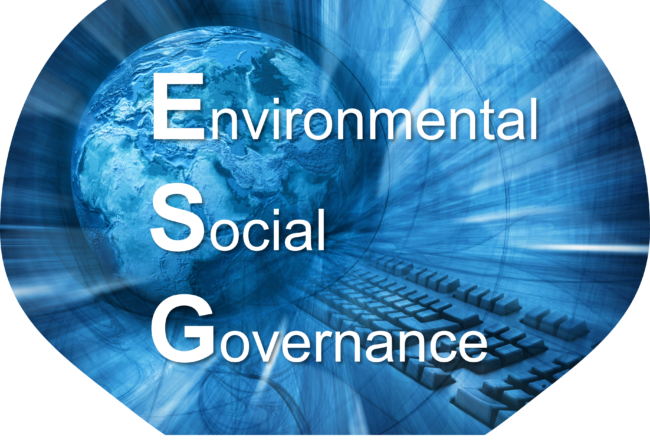
    According to Investopedia, “Environmental, social, and governance (ESG) criteria are a set of standards for a company’s operations that socially conscious investors use to screen potential investments.”  Definitions of the three components are pretty straightforward:

    • Environmental–Generally refers to the stewardship of the planet and how organizations facilitate that responsibility.
    • Social–Facilitating organizational responsibility to the global society, at all levels from the globe to the local communities firms operate in.
    • (Corporate) Governance–Typically, the umbrella organizations put in place to assure issues such as transparency, fraud, safety culture and ethics are in compliance with social norms and local regulations.

    Since the Deepwater Horizon incident of April 2020, operators (oil and gas companies) have extended and enhanced the above criteria to their supply chain ecosystem and in some cases even customers with a Safety and Environmental Management System (SEMS).  This is true of most other Critical Infrastructure sectors as well.

    Likewise, the Sarbanes-Oxley Act of 2002 enhanced transparency and increased fraud protection after the Enron (and other) scandals.  Other incidents have triggered governance changes as well and some are referred to in linked materials.

    Why Is ESG Important?

    By one account, approximately $12 trillion in investments made in 2018 were driven by those who consider themselves socially responsible.  According to Forbes, in 2019 this accounted for almost 25% of total investments and are seen through the lens of sustainability.  Moreover, between 2016 to 2018, the growth rate in such firms grew at 38 percent.

    These numbers confirm our research going back to the turn of the century and perhaps earlier.  In 1993 we controversially posited that the Principles of Scientific Management were applicable to software development by Knowledge Workers.  Developed by Frederick Taylor, his monograph was published circa 1911.

    In other words, owners (investors) have always demanded top notch, legal and ethical performance.  Activist investors, i.e. Carl Icahn are not new.  As always, they have a very important role to play in the current markets.

    Asset/Equipment Integrity Governance

    There is a buzz of newness to ESG; however, from a contrarian perspective, this is not necessarily the case.  After the Deepwater Horizon failure with significant loss of live and many billions in economic losses to many parties including BP, it became clear that traditional Governance models did not have a focus on operations and the management of capital assets, i.e., manufacturing plants, marine vessels and other revenue producing sources.

    In our book we addressed a New Risk Environment from large corporate operations in which ‘failure is really not an option.”  We stated as a risk element, “Escalation of Consequences: The level of consequences of a disaster in the energy industry can now be larger than from the accidental release of a multi-megaton nuclear weapon.”

    Still governance models continued to struggle.  We believe that in the critical infrastructure sectors there is a lack of strong bonding, in other words top management is still hands off and operating from historical ‘control’ models that are no longer relevant or applicable.

    We do not believe this will change until a Strong Bond (tightly coupled) model is adopted.  We define the term as, “A strong model is used by High Reliability Organizations (HRO) and as part of that model, trained; knowledgeable personnel are empowered to make the right decisions in the field.  The strong model provides an organization with the capability to become and remain and HRO.”

    In 2011, we released our monograph, Asset/Equipment Integrity Governance: Operations–Enterprise Alignment; A Case for Board Oversight (AEIG).  In addition to developing a financial model documenting the Return on Investment (ROI) from strong governance, a Compliance Model, as well as a robust AEIG Matrix which incorporates an Asset Maturity Model are part of the solution.

    The AEIG extends the enterprise governance model to include the full ecosystem including subcontractors to its primary supply chain partners.  While not directly addressed at the time, Diversity, Equity and Inclusion (DEI) is implicit in the model.

    This roadmap is comprehensive and is a good starting point for developing and implementing a vigorous ESG initiative.  Other monographs in our Changing the Dialogue series (exploring our New Business Dynamics) include Structural Dynamics and Rapid Response Management are available online.

    Relationships, Behaviors, Conditions

    Scroll down on The Rapid Response Institute, Operational Excellence Platform page and you will find our R B C Framework Cultural Transformation model.  Shown below for ease of readership.

    The R B C model was originally developed to research international (cross cultural) negotiations.  We have extended it to support the transformation process to a robust and model organization culture such discussed herein.  Readers should note that this model is focused on Operational Excellence and is comprised on Processes & Methods supported by Enabling Tools.

    Built on Structural Dynamics which was developed as part of Dr. Shemwell’s doctoral dissertation in 1996.  It is defined as, “The morphology or patterns of motion towards process equilibrium of interpersonal systems.”

    This proven Framework is grounded in Management Science yet is a useful tool (Roadmap) that real originations can successfully and cost effectively implement.  We believe it is the best approach for attaining ESG.

    Summary

    One can view the current ESG status as part of a continuum to hold organizations accountable as appropriate and frankly, increase their Operational Excellence.  We have long known that firm’s that are well managed command superior stock market multiples and greater equity value.

    Many ‘self-serving’ consultants and pundit would have us believe ESG is breakthrough Thought Leadership in need of their help.  Nothing could be further from the truth.

    In the early 1990s, we document the history and evolution of Management Science/Thinking.   It is not written in stone, like most human endeavors it evolves and has for thousands of years.  ESG is a step in this continuum.

    How is Your Organization Addressing the Requirements of Active Investors?

    For More Information

    Please note, RRI does not endorse or advocate the links to any third-party materials.  They are provided for education and entertainment only.

    For more information on Cross Cultural Engagement, check out our Cross Cultural Serious GameTwo current online games; Safety Culture and Diverse Teams specifically address issues raised by ESG Criteria.  If you have any questions, please contact this author as well.

    Graphic Source: The Rapid Response Institute derived from a Storyblocks image under license.