
Tag: Russia

  • Reports of Fossil Fuels Demise Premature? – Renewables Remain Marginalized?

    Reports of Fossil Fuels Demise Premature? – Renewables Remain Marginalized?

    Who would have thought that in the summer with temperatures over 100 degrees Fahrenheit the wind would stop blowing.

    According to NOAA, “The main cause of wind is a little surprising.  It’s actually temperature.  More specifically, it’s differences in temperature between different areas.”  With a major Atmospheric High Pressure parked over a large geographic area, no wonder the wind does not blow.
    Texas Heat

    July 11, 2022 was a true scorcher across the state of Texas.  According to the Dallas Morning News, “Wind speeds have fallen to extremely low levels, and that means the state’s fleet of turbines is at just 8% of their potential output.”  This resulted in this and other Texans receiving an email from the local electricity provider asking for help cut back on power use.

    Texas is major producer of wind energy with over 150 wind farms–total capability of 30,000 MW (2020).  This amounts to approximately, 33% of the state’s power–more electricity produced than any other state.  So in the midst of a major heat wave, less than 25% of the state’s (potential) power generation was effectively available.

    This Level of Unreliability is Unacceptable.

    Previously, we addressed this issue after the Texas Freeze of 2021.  It does not seem like this problem is going away.  Guessing, that like the freeze, lack of energy availability will continue to be mitigated by fossil fuel power production!

    German Cold

    According to the University of Illinois Chicago, “Patients who died because of cold temperatures were responsible for 94% of temperature-related deaths.”

    It gets cold in Germany in the winter.   While the temperature range may vary slightly, Germans need heat every winter.  Despite climate (warming) change, this is not likely to change this coming season.

    The news has reported that Germany has depended on Russian gas for some time.  With the hostilities in Ukraine, that energy source is in jeopardy.  This has caused the country to look to other, reliable sources.  Coal.  Framed as “painful but necessary,” the country had to restart coal based power production.

    Perhaps not desirable for some politicians and prognosticators, Germany has no choice.  Many will be happy with this decision on Christmas Eve.  Near term survival vs. long-term possibilities.

    Clean Fossil

    One day in the 1980s this writer left his hotel in Los Angeles for a morning run.  A few minutes later, I stopped and returned to my room.  The air was so thick with pollution I felt my heath would be better served by doing nothing as opposed to running outside.

    Flash forward to November 1987 when this writer was in Beijing, China for almost a month.  The air was so extreme that frankly my nose contained coal particles simply by breathing.  Moreover, Houston, Texas at the time had similar issues whereby the air actually ‘smelled’ in the industrial area.

    Today, the United States does not have these issues at least at this level (not true with other nations).  The US has ‘cleaned’ its act up so to speak.  Its rivers no longer catch on fire, as they once did.  All of this is the result of better stewardship of carbon based fuels.

    According to the US National Energy Technology Laboratory (NETL), “Coal-fired electricity generation is cleaner than ever.  NETL’s research shows that a new coal plant with pollution controls reduces nitrogen oxides by 83 percent, sulfur dioxide by 98 percent, and particulate matter by 99.8 percent compared to plants without controls.”

    It is possible to responsibly use carbon effectively, efficiently and cleanly.  This is missed by both sides of the climate debate.

    Demise–NOT!

    The humorist Mark Twain is credited with saying, “The reports of my death are greatly exaggerated.”  One can make the same case about fossil fuels.

    According to one source, today there are 1.446 billion motor vehicles on the planet.  Reportedly, just under 284 million are registered in the United States.  Our ‘share’ represents less than 20 % of the global fossil fueled propelled transportation.  Note that this does not include aerospace and the multitude of critical uses of carbon based feedstocks.

    According to the US Energy Information Administration, only 12% of energy was provided by renewables in 2021.  Fossil fuels in aggregate provided 79% of the basket of energy sources.  According to another credible data provider, “The share of wind and solar is rising constantly (+1 point in 2021), reaching 10.7% of the global power mix.”

    This slow growth is over approximately 20 years.

    When the wind does not blow, sun does not shine or solar panels are covered with snow, power comes from dependable fossil fuels.  Moreover, according to experts, none of this linear climate change political response will most likely make a difference anyway.

    Energy Transformation is an uninvestable amount with uncertain returns.  In other words, high and undocumented risk.  So what are we doing?

    How is Your Organization Managing the Risk associated with the Energy Transformation?

    For More Information

    Please note, RRI does not endorse or advocate the links to any third-party materials herein.  They are provided for education and entertainment only.

    The author’s credentials in this field are available on his LinkedIn page.

    “People fail to get along because they fear each other; they fear each other because they don’t know each other; they don’t know each other because they have not communicated with each other.” (Martin Luther King speech at Cornell College, 1962).  For more information on Cross Cultural Engagement, check out our Cross Cultural Serious Game.  You can contact this author as well.

    For more information regarding climate change models, check out Bjorn Lomborg ands his latest book, False Alarm: How Climate Change Panic Costs Us Trillions, Hurts the Poor, and Fails to Fix the Planet.

    For those start-up firms addressing energy challenges, the author is a member of Global Energy Mentors which provide no-cost mentoring services from energy experts.  If interested, check it out and give us a shout.

  • The Thirteen and The One

    The Thirteen and The One

    As of this writing, the situation in Ukraine is fluid at best.  Many see the Ukrainian people as heroes winning against all odds.  Other pundits predict they will be overwhelmed in the near future.  History suggests the later is a premature prognosis.

    In the 1940’s European resistance played a major role in the defeat of the Nazi Germany during World War II.  Later, the Vietnamese were able to overcome both France and the United States.  Afghanistan routed the Soviet Union and the United States.  However, the ultimate (modern era) David vs Goliath model lies elsewhere.

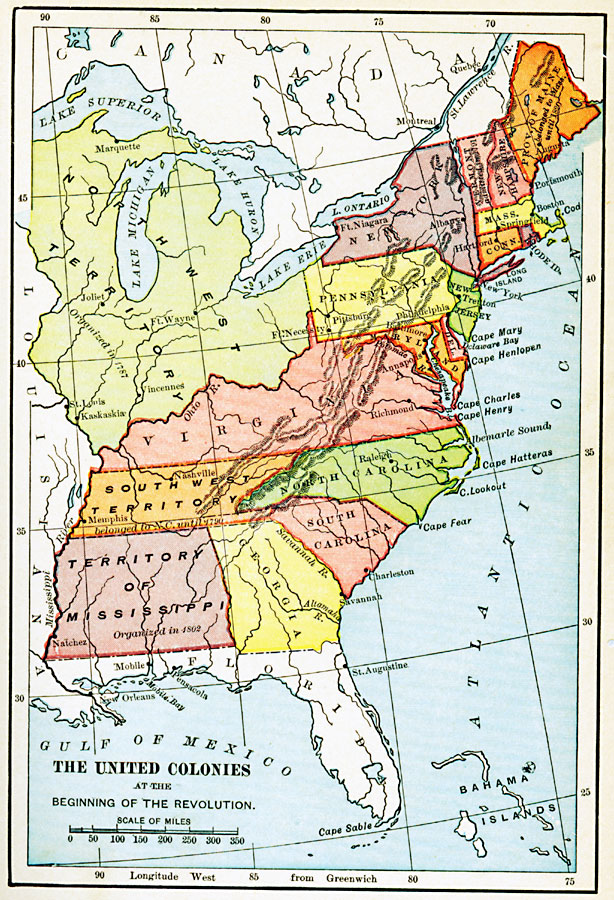
    During the 1770s Great Britain was the most powerful nation in the western world.  A rag tag band of farmers, frontiersmen,  city dwellers and other colonists inhabited a land far from the European continent.  One could argue, who even cared about that bunch?  Yet it was a vassal of European global expansion with perceived riches.

    Then the most powerful country in the world militarily acted, albeit assuming this crowd as weak and taken for granted.  The end result is the United States of America.

    Theoretically easily squashed, yet supported by France and Germany, the ‘shot heard around the world’ transformed the human trajectory significantly and forever.  Europe (including the UK) has been paid back a hundred fold for that investment for over 200 years.  Many others have also fought and attained sustained freedom.

    Do not underestimate the Will (power) of the One.  No one can argue that the Thirteen dramatically impacted the last two plus centuries.  Perhaps the One will change the next few generations.  As before, we may be witnessing the end of a centuries old power structure.

    Will the current investment in Ukraine will return similar dividends?  Odds are, yes.  Even when one does not prevail, i.e., Spartacus and the 300 at Thermopylae the world changed for the better because of their commitments.

    Not limited to conflict, other examples of the small taking on the giant include Microsoft v IBM.  This is a common to the universal human condition with a long track record of success with some failure.  Ukraine has shown themselves to the the Home of the Brave.  Hopefully, soon they will also the Land of the Free.

    Many of us in the global community are heirs of the Thirteen.  What are we doing for the One?

    For More Information

    Please note, RRI does not endorse or advocate the links to any third-party materials.  They are provided for education and entertainment only.

    For more information on Cross Cultural Engagement, check out our Cross Cultural Serious Game.  You can contact this author as well.

  • Beware The Guns of March?

    Beware The Guns of March?

    Readers know that as of this writing there is geopolitical and military tension in eastern Europe.  Hopefully, the situation will resolve peacefully.

    This piece is not about those politics.  Rather it is about the potential for accidental engagement and how that risk can be mitigated.

    President Kennedy is famously cited for the comment that referred to the origin of the War to End All Wars, “Perhaps the greatest contribution historians have made to humanity, at least as historians sometimes tell it, came during the Cuban Missile Crisis when Barbara Tuchman’s book, The Guns of August, saved the world from nuclear war.  The book is Tuchman’s narrative of the origins of the First World War, an account that, in President John F. Kennedy’s reading, showed how miscalculation and inflexible military planning could force great powers into catastrophic conflicts against their leaders’ wishes.”  We might add, against the wishes of the populations that must endure the unbearable cost of stupid interventions.  As noted by Herbert Hoover.

    “Older men declare war. But it is the youth that must fight and die.”

    While the Cuban Missile Crisis worked out well for both parties, including the world in general, it was not necessarily a given.  Miscalculations such as the US lack of knowledge regarding nuclear weapons onboard Soviet submarines or the ‘launch’ upon the invasion of the island of Cuba order could have been disastrous.

    Misunderstanding during the 1983 military exercise Able Archer is another example of a near nuclear catastrophe.  And then there all the Broken Arrows,  nuclear weapon incidents (that we know of).

    Complex Systems’ Behaviors

    This blog series has commented on complex interconnected systems a number of times.  The  Risk Profile is dramatically increased in such systems.  Geopolitical and military systems must be viewed through this lens as well.  However, we know complex systems can be properly managed and thus reduce the likelihood of major global impact events.

    This process is grounded in High Reliability Management (HRM).  Wikipedia defines, “A high reliability organization (HRO) is an organization that has succeeded in avoiding catastrophes in an environment where normal accidents can be expected due to risk factors and complexity.

    This author believes that geopolitical and military complex systems can benefit from this model.  Given that the cost of these type failures is incalculable they certainty fits HRM profile.

    Folly Revisited

    In the 1930s Brinksmanship did not end well.  Following historical patterns, especially from World War I, Europe plunged into the abyss for the second time in two decades.  Miscalculations on the side of multiple parties in both conflicts let to unthinkable destruction and loss of life.

    Today’s militaries are much more powerful than ever.  Hopefully, from Shakespeare, “Beware the ides of March” does not portend this year.

    Geopolitical miscalculations, brinksmanship and other aggressive negotiations can go badly.  This is especially the case when adversaries are not in direct and frequent communication with all parties.

    Even then cultural differences put discussions at risk.  Temperance, communication and though is what saves the world from the unthinkable.  Hopefully, cooler heads will continue to prevail during the current crisis.

    Cross Cultural Negotiation

    The importance of cross cultural understanding cannot be overstated as geopolitics and businesses deal with complex, multi-faceted issues across many nations, ethnicities and cultures.  Old international negotiation models are no longer relevant.

    Behavioral Economics is foremost today.  All parties dealt with are by definition diverse.  They are composed of different genders, ethnicities and ages etc.  This is a more accurate model that reflects the reality of organizations today.

    Also, keep in mind that no nation is homogeneous.  Each is composed of separate regions, cities, with local backgrounds, cultures and more.  So when one talks about two or more geopolitical entities to be at odds over an issue(s), that model is too simplistic and can lead to greater risks as described earlier.

    These are more contributing factors for misunderstanding and miscalculation.  Most of us never ‘step in the other’s shoes.’  However, we can recognize the differences in perspectives, behavior and cultures.

    Changing the Playing Field

    We have often discussed the Relationships, Behaviors and Conditions (RBC) construct among economic actors.  The model argues that new Conditions or Situations and Behaviors change the Relationship among parties.  This applies at all levels of human interactions from two individuals to many nations.  It is applicable here as knowledge to help diffuse difficult situations.  For an in-depth review of the model, check the linked blog.

    No Guns this Time?

    The cascading events following the assassination of the Austrian, Archduke Franz Ferdinand by a small terrorist group is widely believed to have led to the beginning of World War I.  The sceptic must put forth, “you have got to be kidding me.”  Yet, it did happen.

    Our point here is that it does not take much to launch the horrible.  How many American doughboys died for that nonsense?  It can happen again and most likely will at some point given human nature.

    Business Contingency

    Geopolitical risk has always been one component of an organization’s risk profile.  What will be the impact on your business if the unthinkable happens in Europe again?  Other risk mitigation tools include social media.

    In 2013 we published ” Mitigating Operational Risk Using the Power of Social Media” that identified a methodology to better understand the beliefs and behaviors of local populations.  From the footnoted piece, “Large global enterprises can augment existing security and risk management with the same solutions used by the government entities in the defense sector at commercial price points.  The real question is not why, but why not?”

    Since that time, there have been significant advances in these capabilities.  Other readily available tools can assist as well.  Use inexpensive technology to protect global stakeholder interests.

    How Robust is Your Firm’s Contingency Plans for Geopolitical Uncertainties?

    For More Information

    Please note, RRI does not endorse or advocate the links to any third-party materials.  They are provided for education and entertainment only.

    For more information on Cross Cultural Engagement, check out our Cross Cultural Serious Game.  You can contact this author as well.

    Footnote

    Kuiper, Marcus A. and Shemwell, Scott M. (2013, February). Mitigating Operational Risk Using the Power of Social Media. Petroleum Africa Magazine. pp. 28-31.