
Tag: gasoline

  • So Here We Go Again?

    So Here We Go Again?

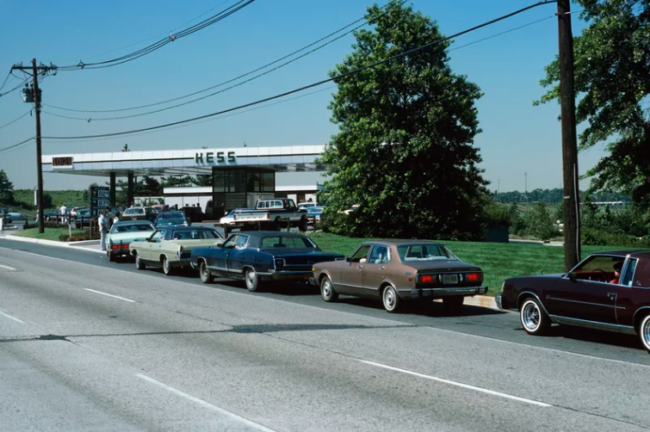
    Will gas lines return?

    Recent geopolitical events have driven the price of gasoline sky high–again!  As of this writing it is difficult to say where this will all lead.  What is known is that the cost of all things related to petroleum have significantly increased and may go even higher.

    According to the U.S. Department of Energy, in addition to transportation and heating, oil and gas are used in over 6,000 everyday products.  In other words, their use is pervasive in all societies and economies.
    As a response to the oil shock of 1973, in 1975 the Energy Policy and Conservation Act (EPCA) developed the Strategic Petroleum Reserve (SPR).  According to the DOE, as of December 2021 the current inventory was approximately 600 million barrels of crude oil.  It is designed to be a buffer or in digital terms a cache in case of disruption or other requirements.

    Furthermore, according to the U.S. Energy Information Administration (EIA), in 2021 the US consumed approximately 20 million barrels of oil per day.  Assuming Russia exports 8% or approximately 1.6 million barrels (including refined products) per day to the US, this shortfall can be replaced with SDR withdraws as well as increases from both domestic producers and other exporters.

    What Do We Do Now?

    Oil and Gas are commodities and are therefore subject to the same Supply and Demand processes inherent to that segment.  Other examples include, gold, cattle, pork bellies and orange juice, etc.

    Today’s global markets perceive that the demand for gasoline is higher than the available supply.  Therefore, sellers can command higher prices.

    The apparent supply can be brought into balance with demand in two fundamental ways.  First, and easiest is to cut back on consumption, i.e., work from home, carpool, mass transit, etc.

    Second, which will take some time is for domestic production to increase.  ‘Small’ increases from trading partners and domestic operators (along with government regulatory assistance) will add up as well.

    One of the worst things that can happen is hording.  Think back to the great Toilet Paper hording in the early days of Covid-19.  It was unlikely that the daily demand for bathroom tissue suddenly increased.

    In effect, households ‘held’ the inventory (instead of stores) until it was worked down.  Manufacturers did not increase production albeit retailers began to ration individual purchases.

    The gas lines of the 1970s were also an example of hording.  Once the Odd and Even license plate model went into effect, they dissipated almost immediately.

    We need NOT go through this experience again!  We all have the tools necessary to change that narrative and not relive history.

    Dealing With the Issue

    For almost two decades we have modeled large scale economic procurement initiatives, both in the public and private sectors.  Attempts to attain 25% or more in value from initiatives are almost always destined to fail.  On the other hand, finding small components of economic value across a number of processes and departments can easily exceed pronouncements of singular, overall great value to be obtained.

    For example if several areas each find 2-5% of value opportunities, 25% can be quickly exceeded.  This works for large and small organizations.  It can work for individual households too.  One need not find the Silver Bullet or make Herculean efforts to overcome difficult challenges.

    Where Can You Find Eight One-Percent Opportunities to Decrease Your Petroleum Footprint?

    For More Information

    Please note, RRI does not endorse or advocate the links to any third-party materials.  They are provided for education and entertainment only.

    Photo Source: NPR

    For more information on Cross Cultural Engagement, check out our Cross Cultural Serious Game.  You can contact this author as well.


  • Going Green? Or NOT!

    Going Green? Or NOT!

    The total or lifecycle carbon footprint for any energy source is a function of the manufacturing, commissioning, operation (including maintenance) and decommissioning of that asset.  Moreover, the value of an electric powered vehicles (EV) is seen as a function of the amount of fossil fuel no longer used by the vehicle.  However, this is only a sub-model of the to carbon footprint of any component in the Basket of (Energy) Goods, aka Energy Basket.

    All energy resources in the basket must be held to the same set of metrics.  These include Human Resources (including diversity and inclusion), Safety Culture, communities as well as the bottom line performance against governance standards (ESG).

    Risk Governance

    A governance framework that exceeds these standards follows.  Evolving over several decades, it reflects a comprehensive approach to operational risk that is often overlooked.  It addresses the entire life of a revenue producing asset.

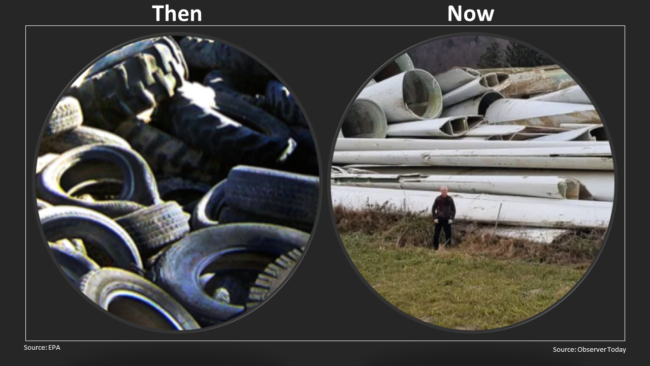
    Lifecycle risk mitigation of an energy resource must include the end of the asset life processes.  What governance driven processes are in place to prevent the accumulation of wind turbine blades or spent solar panels stacked and abandoned?  Just like the tires stacked for decades.

    Turns out the answer is few.  Long life assets such as factories, skyscrapers, fossil fuel production systems, etc. are built to the engineering, industry and local regulatory standards of that day.  Ongoing operations, maintenance, upgrades and so forth keep them performing at acceptable levels.  However, governance models are often focused on the present.  End of asset life risk does not fit into the four quarter management mindset as the event may be sometime in the future.

    The above graphic represents a governance model built around operations and associated risks.  The archetype recognizes that many risk mitigation processes are inadequate for today’s complex organizations with multi-faceted global processes.

    Its framework is built upon the work done by the Treadwell Commission several decades ago to detect financial fraud.  This structure supports the extension into field operations and provides a structure for attaining and sustaining Operational Excellence.

    Risk mitigation is both quantitative and qualitative.  The risk associate with the use of any industrial energy source must be thoroughly assessed as a function of its lifecycle, not just its initial CAPEX and ongoing operations.

    Dumping v Decommissioning

    Illegal industrial dumping has long been a problem.  Today, some in the wind turbine sector appear to be following the decades long vehicle tire disposal process (or lack thereof).

    Lady Bird Johnson at least tried to hide the piles of tire debris but no one has found a way of completely dealing with this growing and massive problem.  As of 2017, some 17% were still disposed of in landfills.  In 2003, the EPA reports that almost 300 million tires are scraped each year.  Flash forward to today and this is likely a very conservative number.  That said, 17% equals approximately 50 million tires headed to landfills as opposed to recycling.

    Moreover, there is a long history of industrial dumping trash so as not to have to pay the disposal fees.  One wonders how many millions of tires destined for landfills (and other recycling) are just dumped?

    The decommissioning process is the responsible end-of-asset-life shutdown and removal.  The intent is to return the site to a condition similar to its initial environment and properly remove and dispose of equipment and materials.  It should not include stacking wind turbine blades next to a pile of discarded vehicle tires.

    Total Carbon Lifecycle Model

    Daily, we hear about the need to reduce carbon output to (net) zero.  Promises are made by many that by such and such a time this metric will be met.  Caveat: usually the time period is beyond the expected tenure of those making the statements.  Often lost in the discussion is the carbon cost of manufacturing and decommissioning.

    Carbon output should include the mineral extraction process, recycling of older materials if appropriate, transportation, manufacturing, installation, operations and decommissioning.  It also must include the carbon cost of the supply chain necessary to support the asset across its lifecycle.  For example, the carbon cost of an EV is not just the vehicle’s operation but the lifecycle of the vehicle as well as the electric power generation and distribution necessary to operate the automobile.  Do not forget the carbon cost of manufacturing a battery and disposing of it at end of life.

    Scrap

    Materials are often staged for recycling.  They feed a process that results in new useful product(s) that may add new value.  This is a useful recycling process that makes a lot of sense.  However, sometimes this is not as economical as new manufacturing.  These economics lead to dumping as the low-cost-solution.  Fields of discarded materials may or may not be awaiting recycling.

    Defining Green

    Being green is not simply using renewable electricity instead of gasoline.  If the carbon footprint is no different or even worse, then the problem is not solved and may even be made greater.

    Keep in mind that coal is still a major fuel in the generation of electricity.  According to the US Energy Information Administration (EIA), in 2020 over 60% of power is generated using fossil fuels of which over 19% is from coal.  This does not include the carbon footprint of materials and products imported to the US.

    So if the carbon footprint of a wind turbine is defined as its lifecycle and if at the end result is abandonment in a field, is the green value of that product positive?  Or is it just dumping not unlike the pollution of a nation’s river systems?

    Being green is not just plugging in your car overnight.  Like most things in life, it is systemic.

    Is Your Organization’s Green Plan Systemic or Myopic?

    For More Information

    Please note, RRI does not endorse or advocate the links to any third-party materials.  They are provided for education and entertainment only.

    For more information on Cross Cultural Engagement, check out our Cross Cultural Serious Game

    We presented, Should Cross Cultural Serious Games Be Included in Your Diversity Program: Best Practices and Lessons Learned at the Online Conference, New Diversity Summit 2020 the week of September 14, 2020.  Check Out this timely event and contact the organizer for access to the presentations!!

    For more on DEI Standards, see the newly released ISO-30415.

    You can contact this author as well.