
Tag: gaming

  • An Era of Hate

    An Era of Hate

    Incredible!! The level of hate as shown on any media today is just that, incredible.  Thieving, beating, sexual abusing and murdering seem taken as the “New Normal.”  Young people are throwing away future careers as they appear in the omnipresent media shouting hate towards one group.  Wearing masks simply make them look like common criminals.  What are they thinking, comes to mind.
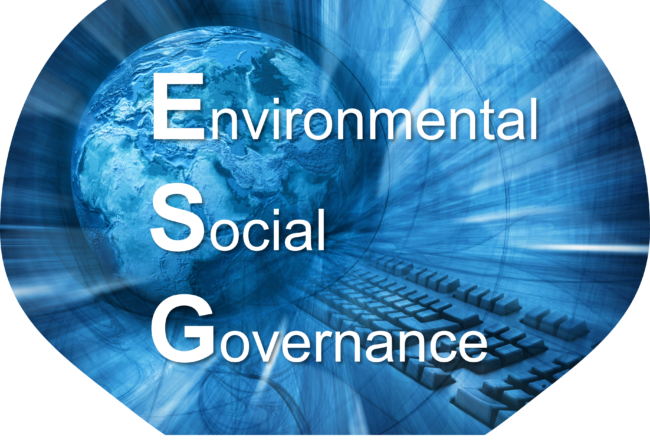
    DEI (Diversity, Equity and Inclusion) and ESG (Environmental, Social and Governance) fads appear to be fading even as their original definitions are lost.  This pundit has been in the workforce since 1974 and before that the military experience.  To say I have seen it all is an understatement.  Well run organizations adhere to the original tenets of these two business/social models

    That said, my perspective follows:

    Servant Leadership

    With a focus on people, this leadership style seeks to develop all individuals and get the best out of cross cultural teams.

    • Diversity–We live in a world of over 8 Billion people.  We all know the level of diverse cultures, lifestyle and locales.  The likelihood that one organization is composed of all of one type is farcical.  So get over it!
    • Equity–Everyone wants to be treated fairly.  A company I was with was acquired.  The culture divided the employees into two groups.  Those who were hired directly and those who transitioned as a result of M&A activities.  As might be expected the mergers were most dilutive (huge employee turnover) and eventually that organization was eaten by an even bigger fish.  More like Lose–Lose!
    • Inclusion–People want to be included and allowed to contribute even if they are awkward about it.  One of the best true stories on this subject is depicted in the 2004 television movie, Something the Lord Made.  Two very different men in a racially challenged Jim Crow era were able to get past many issues and developed a solution for a deadly infant disease.  If you have not seen it; well worth your time.
    Stewardship

    One definition by Michael Barber; “Stewardship is leaving a system better than you found it,” is a very powerful statement.  Our Blog of April 25, 2022, ESG Explained defined these terms:

    • Environmental–Generally refers to the stewardship of the planet and how organizations facilitate that responsibility.
    • Social–Facilitating organizational responsibility to the global society, at all levels from the globe to the local communities firms operate in.
    • (Corporate) Governance–Typically, the umbrella organizations put in place to assure issues such as transparency, fraud, safety culture and ethics are in compliance with social norms and local regulations.

    Finally, over twenty years ago after all of the managerial nonsense that sent many “C” levels to jail from our 2011 White Paper Asset/Equipment Integrity Governance: Operations-Enterprise Alignment: A Case for Board Oversight, “During that period (2002), McKinsey & Company in conjunction with the Global Corporate Governance Forum conducted a study and found that over 75% of over 200 fund managers would value a stock at a higher price point if the company could demonstrate it had strong governance in place.  Moreover, the study also revealed that for western markets, firms with strong shareholder rights averaged 12-14% higher stock prices .”

    It Makes No Sense to Run any Organization Badly.  Either to stakeholders or yourself.

     Gaming the System

    Those of us at a certain age are familiar with the song, Walk A Mile In My Shoes.  What would you say if I told you that using technology multiple parties can exchange their boots?

    There is a way using Virtual Training to interact with other cultures and effectively Walk A Mile In Their Shoes (and they in yours).   “Virtual training typically refers to a specific form of online education that focuses on skill development and practical training.  It often involves structured courses or programs designed to teach specific skills or tasks.”

    Based on International Negotiation experiences, processes and technology tools we have developed an online game.  It enables collaboration or even simulate organizational conflict.

    Additional information is available on our Cross Cultural Serious Game Portal.  Check it out, I think you will like it and its a way to help cool the cultural hate being unleashed

    Walk A Virtual Mile in the Other’s Shoes.  Who Knows You May Even Like it.

    For More Information

    Please note, RRI does not endorse or advocate the links to any third-party materials herein.  They are provided for education and entertainment only.

    See our Economic Value Proposition Matrix® (EVPM) for additional information and a free version to build your own EVPM.

    The author’s credentials in this field are available on his LinkedIn page.  Moreover, Dr. Shemwell is a coauthor of the just published book, “Smart Manufacturing: Integrating Transformational Technologies for Competitiveness and Sustainability.”  His focus is on Operational Technologies.

    “People fail to get along because they fear each other; they fear each other because they don’t know each other; they don’t know each other because they have not communicated with each other.” (Martin Luther King speech at Cornell College, 1962).  For more information on Cross Cultural Engagement, check out our Cross Cultural Serious Game.  You can contact this author as well.

    For more details regarding climate change models, check out Bjorn Lomborg ands his latest book, False Alarm: How Climate Change Panic Costs Us Trillions, Hurts the Poor, and Fails to Fix the Planet.

    Regarding the economics of Climate Change, check out our recent blog, Crippling Green.

    For those start-up firms addressing energy (including renewables) challenges, the author can put you in touch with Global Energy Mentors which provide no-cost mentoring services from energy experts.  If interested, check it out and give me a shout.

  • ESG Explained

    ESG Explained

    According to Investopedia, “Environmental, social, and governance (ESG) criteria are a set of standards for a company’s operations that socially conscious investors use to screen potential investments.”  Definitions of the three components are pretty straightforward:

    • Environmental–Generally refers to the stewardship of the planet and how organizations facilitate that responsibility.
    • Social–Facilitating organizational responsibility to the global society, at all levels from the globe to the local communities firms operate in.
    • (Corporate) Governance–Typically, the umbrella organizations put in place to assure issues such as transparency, fraud, safety culture and ethics are in compliance with social norms and local regulations.

    Since the Deepwater Horizon incident of April 2020, operators (oil and gas companies) have extended and enhanced the above criteria to their supply chain ecosystem and in some cases even customers with a Safety and Environmental Management System (SEMS).  This is true of most other Critical Infrastructure sectors as well.

    Likewise, the Sarbanes-Oxley Act of 2002 enhanced transparency and increased fraud protection after the Enron (and other) scandals.  Other incidents have triggered governance changes as well and some are referred to in linked materials.

    Why Is ESG Important?

    By one account, approximately $12 trillion in investments made in 2018 were driven by those who consider themselves socially responsible.  According to Forbes, in 2019 this accounted for almost 25% of total investments and are seen through the lens of sustainability.  Moreover, between 2016 to 2018, the growth rate in such firms grew at 38 percent.

    These numbers confirm our research going back to the turn of the century and perhaps earlier.  In 1993 we controversially posited that the Principles of Scientific Management were applicable to software development by Knowledge Workers.  Developed by Frederick Taylor, his monograph was published circa 1911.

    In other words, owners (investors) have always demanded top notch, legal and ethical performance.  Activist investors, i.e. Carl Icahn are not new.  As always, they have a very important role to play in the current markets.

    Asset/Equipment Integrity Governance

    There is a buzz of newness to ESG; however, from a contrarian perspective, this is not necessarily the case.  After the Deepwater Horizon failure with significant loss of live and many billions in economic losses to many parties including BP, it became clear that traditional Governance models did not have a focus on operations and the management of capital assets, i.e., manufacturing plants, marine vessels and other revenue producing sources.

    In our book we addressed a New Risk Environment from large corporate operations in which ‘failure is really not an option.”  We stated as a risk element, “Escalation of Consequences: The level of consequences of a disaster in the energy industry can now be larger than from the accidental release of a multi-megaton nuclear weapon.”

    Still governance models continued to struggle.  We believe that in the critical infrastructure sectors there is a lack of strong bonding, in other words top management is still hands off and operating from historical ‘control’ models that are no longer relevant or applicable.

    We do not believe this will change until a Strong Bond (tightly coupled) model is adopted.  We define the term as, “A strong model is used by High Reliability Organizations (HRO) and as part of that model, trained; knowledgeable personnel are empowered to make the right decisions in the field.  The strong model provides an organization with the capability to become and remain and HRO.”

    In 2011, we released our monograph, Asset/Equipment Integrity Governance: Operations–Enterprise Alignment; A Case for Board Oversight (AEIG).  In addition to developing a financial model documenting the Return on Investment (ROI) from strong governance, a Compliance Model, as well as a robust AEIG Matrix which incorporates an Asset Maturity Model are part of the solution.

    The AEIG extends the enterprise governance model to include the full ecosystem including subcontractors to its primary supply chain partners.  While not directly addressed at the time, Diversity, Equity and Inclusion (DEI) is implicit in the model.

    This roadmap is comprehensive and is a good starting point for developing and implementing a vigorous ESG initiative.  Other monographs in our Changing the Dialogue series (exploring our New Business Dynamics) include Structural Dynamics and Rapid Response Management are available online.

    Relationships, Behaviors, Conditions

    Scroll down on The Rapid Response Institute, Operational Excellence Platform page and you will find our R B C Framework Cultural Transformation model.  Shown below for ease of readership.

    The R B C model was originally developed to research international (cross cultural) negotiations.  We have extended it to support the transformation process to a robust and model organization culture such discussed herein.  Readers should note that this model is focused on Operational Excellence and is comprised on Processes & Methods supported by Enabling Tools.

    Built on Structural Dynamics which was developed as part of Dr. Shemwell’s doctoral dissertation in 1996.  It is defined as, “The morphology or patterns of motion towards process equilibrium of interpersonal systems.”

    This proven Framework is grounded in Management Science yet is a useful tool (Roadmap) that real originations can successfully and cost effectively implement.  We believe it is the best approach for attaining ESG.

    Summary

    One can view the current ESG status as part of a continuum to hold organizations accountable as appropriate and frankly, increase their Operational Excellence.  We have long known that firm’s that are well managed command superior stock market multiples and greater equity value.

    Many ‘self-serving’ consultants and pundit would have us believe ESG is breakthrough Thought Leadership in need of their help.  Nothing could be further from the truth.

    In the early 1990s, we document the history and evolution of Management Science/Thinking.   It is not written in stone, like most human endeavors it evolves and has for thousands of years.  ESG is a step in this continuum.

    How is Your Organization Addressing the Requirements of Active Investors?

    For More Information

    Please note, RRI does not endorse or advocate the links to any third-party materials.  They are provided for education and entertainment only.

    For more information on Cross Cultural Engagement, check out our Cross Cultural Serious GameTwo current online games; Safety Culture and Diverse Teams specifically address issues raised by ESG Criteria.  If you have any questions, please contact this author as well.

    Graphic Source: The Rapid Response Institute derived from a Storyblocks image under license.