

Tag: environment

  • What About Today?

    What About Today?

    Why are we so worried about what the world will look like in 2050?

    In that year, this pundit will be 102 years old and most likely dead.  While not denying that our stewardship of the planet is an obligation, perhaps our focus is misplaced.  Climate Change, Climate Change, Climate Change has become the mantra for many.  But what about environmental damage done in the present?
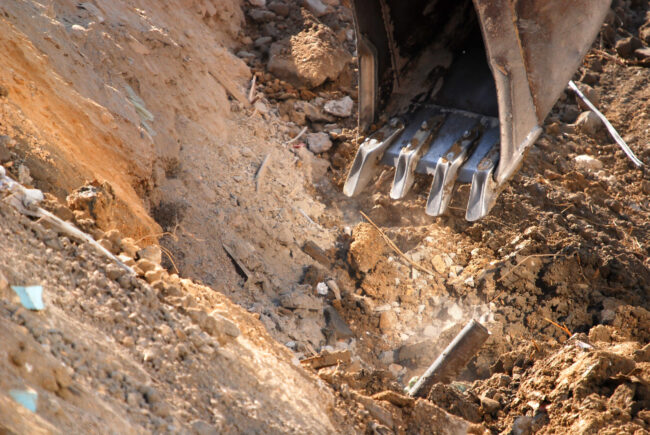
    This author moved to Houston, TX in 1978.  For the next few years, you could smell the chemicals emitted from the refining and petrochemical sectors from the so-called ‘Ship Channel.’  Later, the odor dissipated as the environment was remediated.  Similarly, during that period the smog was so thick in the greater Los Angeles area that one could not see the mountains to the east.  That geography is now better as well.

    At least in the United States, we have shown that we can clean and sustain a decent environment.  Yet society is focused on a global long-term problem that by some accounts is not solvable.  Certainly as long as Asia continues its current energy practices.

    Almost Half a Century Later

    Now we sit at the precipice of the greatest environmental challenge since Love Canal (circa 1978), yet by all accounts “it is no big deal.”  Except to those living in and around East Palestine, Ohio.

    2050 is only 27 years away and we are told (2019)  the world as we know it will end in less than 12 years unless draconian climate steps are taken.  Call me a skeptic, but if we have not been able to stop local manmade environmental disasters, what makes us think we can fix the global climate?

    What Steps are You and Your Organization Taking to Fix the Here and Now?

    For More Information

    Please note, RRI does not endorse or advocate the links to any third-party materials herein.  They are provided for education and entertainment only.

    The author’s credentials in this field are available on his LinkedIn page.  Moreover, Dr. Shemwell is a coauthor for an in press book (to be released in Spring 2023) titled, “Smart Manufacturing: Integrating Transformational Technologies for Competitiveness and Sustainability.”  His focus is on Operational Technologies.

    “People fail to get along because they fear each other; they fear each other because they don’t know each other; they don’t know each other because they have not communicated with each other.” (Martin Luther King speech at Cornell College, 1962).  For more information on Cross Cultural Engagement, check out our Cross Cultural Serious Game.  You can contact this author as well.

    For more information regarding climate change models, check out Bjorn Lomborg ands his latest book, False Alarm: How Climate Change Panic Costs Us Trillions, Hurts the Poor, and Fails to Fix the Planet.

    Regarding the economics of Climate Change, check out our recent blog, Crippling Green.

    For those start-up firms addressing energy (including renewables) challenges, the author can put you in touch with Global Energy Mentors which provide no-cost mentoring services from energy experts.  If interested, check it out and give me a shout.

  • Heavy Metal Rocks

    Heavy Metal Rocks

    Not the rock bands of the 1960s–1980s, but the mining required to extract the heavy metals necessary for electric vehicles and other renewable energy solutions.  So, what is a heavy metal and why do we care?

    Typically, “In science, a heavy metal is a metallic element which is toxic and has a high densityspecific gravity or atomic weight. However, the term means something slightly different in common usage, referring to any metal capable of causing health problems or environmental damage.”  Often these toxic elements are carcinogenic.

    For most readers this will not come as a surprise.  The heavy metals in batteries can be recycled, thus minimizing their negative impact on the environment and subsequently, humans and other life forms, i.e., the food chain.  However, smaller batteries are typically tossed into the trash.  Larger ones such as lead acid automotive batteries are usually reclaimed (for a fee to the consumer).

    From this pundit’s perspective, it is too early in the technology maturity to fully understand how millions of EV (electric vehicle) will be recycled effectively and economically.  Managing the lifecycle of these ‘elements’ from mining, use, recycling and reuse is a significant component of these renewables.  There is a cost associated with this process, both monetary and socially.

    Total Carbon Ownership

    In the business, the term TCO usually referees to the Total Cost of Ownership.  Updated, this Lifecycle metric may better reflect the Total Carbon impact of a product/solution, i.e., large scale batteries, solar panel, fossil fuels, etc.

    TCO = Carbon as a function of two major lifecycle elements; Operations and Decommissioning.

    For this purpose we define Operations (aka Use) as the lifecycle process from mineral extraction, manufacturing, deployment and maintenance.

    Decommissioning is the process of taking out of service, removal and appropriate disposal of components, including recycling.

    Follow on from our blog of November 2, 2021, where Milton Friedman detailed the complex supply chain required to manufacture a simple yellow graphite pencil, one can only imagine how complex the requirements are for a wind turbine.  Carbon neutral is not a simple problem to solve.

    Enter Structural Dynamics

    Many readers understand that Machine Learning Algorithms use the statistical multivariable method, Multiple Linear Regression–defined as, where “one variable is estimated by the use of more than one other variable.”  While this tool can be useful when assessing the impact and relationships of several independent variables, it does not necessarily help organizations to understand their TCO.

    Theoretically, every economic actor in the supply chain or the decommissioning process can calculate their carbon footprint for each​ product/step they control.  In the real world, such intangibles, i.e., safety are open to interpretation, ‘fudging’ or worse.  Moreover, we can expect large gaps or errors (inadvertent or otherwise) in carbon models that must be addressed if we are to realistically address the carbon problem.

    In the 1990s as a result of watching a number of systemic enterprise failures and/or poor performance, and wondering how this happened with such regularity the questions was raised–why?  This led this author coin the term with the subsequent book, Structural Dynamics: Foundation of Next Generation Management Science.

    Most do not understand the processes and structural changes at work on a daily basis.  Focused on near term performance metrics, they lose sight of the forest while concentrating on the trees.  The subsequent disruption caused is often rapid and economically cataclysmic.

    Structural Dynamics uses tools such as Structural Equation Modeling (SEM) to seek to identify the underlying process and structural movements.  It appears to be a useful tool to address the Total Carbon Ownership that organizations will have to address in the very near future.

    Dealing With Residuals

    Whether heavy metals or carbon, organizations must also assure ESG (Environmental, Social, and Governance) criteria are met throughout the energy lifecycle.  However, there is a cost associated with these and other organizational structures from the deployment and/or use of energy of all types.

    TCO is a decades long cost that can transcend actual corporate life, i.e., acquisition, bankruptcy, etc.  Currently, the oil and gas industry is littered with assets no one claims ownership.  Two cases follow:

    • Stranded assets are, “those investments which are made but which, at some time prior to the end of their economic life (as assumed at the investment decision point), are no longer able to generate an economic return, as a result of changes in the market and regulatory environment.”  These resources are no longer worth continued investment.
    • Abandoned assets have reached the end of life.  By one source, it is estimated that there are approximately 53,000 Gulf of Mexico offshore oil and gas well in this category.  Remediation costs range from $500k to $10 million per well–min $26.5 billion.

    It is reasonable to expect that all sources in the ‘energy basket’ will have similar end of life futures.  Green is therefore, not unique.

    “Forewarned is Forearmed”

    A Serious Assessment

    This pundit believes that scant attention has been paid to the lifecycle (economic and social) price of renewables and that the Total Carbon Ownership cost has never been calculated–certainly not published.  However, there are tools that will shed light on this going forward.

    TCO is a function of a detailed and long lifecycle, not unlike oil and gas assets that in some cases are over half a century old.  Any subsequent model of this process is by default complex, detailed and full of unknowns, or unmeasured latent variables.

    The approached this writer has developed using Structural Equation Modeling driven by Structural Dynamics seems well fitted to address this longitudinal and futuristic problem.

    For many, the so-called ‘green energy’ seems without consequences.  The history of energy suggests otherwise.  A full assessment using Structural Dynamics can reveal gaps, misunderstandings, errors and omissions.

    This model will advise management and even regulators what the true cost of an energy source is.  The approach is worthy of a serious discussion.  By the way, this model works for all sources of energy including coal and other fossil fuels as well as renewables.

    What is Your Firm’s TCO and How Can It be Lowered?

    For More Information

    Please note, RRI does not endorse or advocate the links to any third-party materials.  They are provided for education and entertainment only.

    Interested in Cross Cultural Engagement or DEI, check out our Cross Cultural Serious Game

    We presented, Should Cross Cultural Serious Games Be Included in Your Diversity Program: Best Practices and Lessons Learned at the Online Conference, New Diversity Summit 2020 the week of September 14, 2020.

    Contact the author for information on these and others subjects covered in the Critical Mass series.