
Tag: Deepwater Horizon

  • Reputation, Reputation, Reputation

    Reputation, Reputation, Reputation

    “It takes 20 years to build a reputation and five minutes to ruin it.  If you think about that, you’ll do things differently.”

    – Warren Buffett

    It is fascinating how many accident videos get posted to social media.  Guess we all go to NASCAR races to see car wrecks.  In some cases, videos are personal disasters for those involved.  In some cases, they are downright funny and in the category of what were they thinking.

    Equipment and facilities damage, lost production/project time, personal injury litigation are just some obvious costs.  One hidden cost is reputational damage.  Would you hire a firm that hires, does not train, and/or tolerates some of this behavior?  Probably not, and in some case a strong safety record is part of the procurement decision process.

    Risk Mitigation

    Most of the social media video show failures in occupational safety.  Typically, in the United States these would fall under the Occupational Safety and Health Administration (OSHA) and/or state and local safety regulations.  This is laudable, but without a broader safety governance framework, a lackadaisical attitude can continue.

    Under a Strong Bond Governance Framework, a robust Operations Management System (OMS) enables both public and private firms to realize the Safety Culture they seek that will keep them off the social media most watched list.

    Strong Bond Governance

    An organizational governance model with the following attributes first put forth by the author in our seminal 2014 book, following the Deepwater Horizon incident.

    • Direct, defined relationships that enables open and valid information between governance members.
    • Led by authorities who are closely connected and strongly bonded.
    • Strong Governance, Risk, and Compliance (GRC) system.
    • Back office and field processes combined into a single information model (OT-IT).
    • Designed for application and use in Mission-Critical Environments. [i]

    [i] Holland, Winford “Dutch” E. and Shemwell, Scott M. (2014). Implementing a Culture of Safety: A Roadmap to Performance-Based Compliance. New York: Xlibris.

    Operational Excellence

    Operational Excellence is the execution of the business strategy more consistently and reliably than the competition, with lower operational risk, lower operating costs, and increased revenues relative to its competitor.  It is needed more than ever in today’s technology driven rapidly changing business models, which require organizations to undergo end-to-end business transformation. Operational Excellence can also be viewed as execution excellence. 

    However, the focus of Operational Excellence goes beyond the traditional continuous improvement methods to a long-term change in organizational culture.  Companies in pursuit of Operational Excellence do two things significantly differently than other companies: they manage their business and operational processes systematically and invest in developing the right culture. 

    Operational Excellence manifests itself through integrated performance across revenue, cost, and risk. It focuses on meeting customer expectation through the continuous improvement of the operational processes and the culture of the organization.  The goal is to develop one single, integrated enterprise level management system with ideal flow.  The second component, a culture of Operational Discipline, is commonly described as doing the right thing, the right way, every time.  This culture is built upon guiding principles of integrity, questioning attitude, always problem-solving, daily continuous improvement mind-set, level of knowledge, teamwork, and process driven.

    Organizations attain and sustain Operational Excellence using tools such as Operations Management System OMS).

    A Typical OMS Framework includes all the major areas involved in organizational processes such as shown in this graphic.

    OMS is a collection of processes and procedures enabling a company to effectively manage business practices and achieve the highest level of Operational Excellence in daily operations.

    One of the more notable examples is the Safety and Environmental Management System (SEMS).  SEMS embodies the Safety Culture into the organization’s OMS.  This systemic model is incorporated into a Strong Bond Governance Framework causing safety to become ‘the way we do business.’  In other words, the culture of the organization and by extension its Ecosystem.

    Systemic Safety Culture

    In a culture of safety, people are not merely encouraged to work toward change; they take action when it is needed.  Inaction in the face of safety problems is taboo, and eventually the pressure comes from all directions — from peers as well as leaders. There is no room in a culture of safety for those who uselessly point fingers or say, “Safety is not my responsibility, so I’ll file a report and wash my hands of it.” 

    — Institute for Healthcare Improvement

    Systemic Safety Culture is the Core Set of Values and Behavioral Economics of ALL participants of the extended organization and its Enterprise Risk Management strategy that reflect a Strong Bond Governance commitment to behaving as a High Reliability Enterprise Ecosystem in a safe and environmentally responsible manner.

    Most Safety Cultures have a set of tenets similar to the nine shown in the following list.  These are based on those developed by the Bureau of Safety and Environmental Enforcement’s (BSEE) for marine offshore oil and gas operations and are typical of those used in other Critical Infrastructure sectors.

    Nine Tenets of a Culture of Safety

    1. Leadership
    2. Problem Identification and Resolution
    3. Personal Accountability
    4. Work Processes
    5. Continuous Learning
    6. An Environment for Raising Concerns
    7. Effective Communications
    8. Trust and Respect
    9. Inquiring Attitude

    Finally, it is common practice for parties to refer to a singular industry ‘Safety Culture.’  In reality since each organization has its own culture, there are literally hundreds if not thousands of Safety Cultures in any critical infrastructure sector.  As shown in the above figure, each individual can interact routinely with a myriad of other cultures, both internal to their organization as well as with external economic players.

    After the Deepwater Horizon disaster in 2010, the authors quickly recognized that all economic players in the industry regardless of size would need to immediately adopt a Safety Culture if they were to survive.

    The resulting 2014 book, Implementing a Culture of Safety: A Roadmap for Performance Based Compliance remains one the few that readers can use as a roadmap to incorporate a Safety Culture into their Operational Excellence business model regardless of industry.

    Smart OpEx

    Fifteen years ago, large organizational Operations Management Systems were struggling to incorporate structural safety as more than the so-called, ‘slips, trips and falls’ of OSHA regulations to one where safety is endemic to the culture.  Smaller firms, often participants in the supplier ecosystem were largely forgiven.  The logic being that the major contractors and operators would assure that the final work product met Safety Culture requirements.  This is no longer the case.  Firms of all sizes in every business sector with an operations component now require an OMS to manage not just internal operations but third-party contractors as well.

    The Smart OpEx Operations Management System software solution is joint venture between The Rapid Response Institute LLC and Knowledge Ops, Inc.

    As Mr. Buffet mentions, reputations can be lost in an instant.  According to a 2007 Harvard Business Review article, “In an economy where 70% to 80% of market value comes from hard-to-assess intangible assets such as brand equity, intellectual capital, and goodwill, organizations are especially vulnerable to anything that damages their reputations.”  While almost 20 years old, the premise of the HBR piece remains the case as Boeing, Bud Light, and others can attest.

    Put systems with checks and balances in place that enable the organizational governance and protect the company from entering the Halls of the Disreputable.

    An individual’s and organization’s reputation are everything.  How are you assuring both are protected?

    Pre order our new book

    Navigating the Data Minefields:

    Management’s Guide to Better Decision-Making

    We are living in an era of data and software exponential growth.  A substantive flood hitting us every day.  Geek heaven!  But what if information technology is not your cup of tea and you may even have your kids help with your smart devices?  This may not be a problem at home; however, what if your job depends on Big Data and Artificial Intelligence (AI)?

    Available April 2025

    For More Information

    Please note, RRI does not endorse or advocate the links to any third-party materials herein.  They are provided for education and entertainment only.

    See our Economic Value Proposition Matrix® (EVPM) for additional information and a free version to build your own EVPM.

    The author’s credentials in this field are available on his LinkedIn page.  Moreover, Dr. Shemwell is the coauthor of the 2023 book, “Smart Manufacturing: Integrating Transformational Technologies for Competitiveness and Sustainability.”  His focus is on Operational Technologies.

    We are also pleased to announce our forthcoming book to be released by CRC Press in April 2025, Navigating the Data Minefields: Management’s Guide to Better Decision-Making.  This is a book for the non-IT executive who is faced with making major technology decisions as firms acquire advanced technologies such as Artificial Intelligence (AI).

    “People fail to get along because they fear each other; they fear each other because they don’t know each other; they don’t know each other because they have not communicated with each other.” (Martin Luther King speech at Cornell College, 1962).  For more information on Cross Cultural Engagement, check out our Cross-Cultural Serious Game.  You can contact this author as well.

    For more details regarding climate change models, check out Bjorn Lomborg and his book, False Alarm: How Climate Change Panic Costs Us Trillions, Hurts the Poor, and Fails to Fix the Planet.

    Regarding the economics of Climate Change, check out our blog, Crippling Green.

    For those start-up firms addressing energy (including renewables) challenges, the author can put you in touch with Global Energy Mentors which provide no-cost mentoring services from energy experts.  If interested, check it out and give me a shout.

  • How Effective at Multitasking are We?

    How Effective at Multitasking are We?

    According to no less than the Cleveland Clinic, ” Studies (regarding multitasking) show it makes us less efficient and more prone to errors.”

    Cleveland Clinic goes on to make the case:

    • When tasks are easy and routine such as, “like listening to music while walking, or folding laundry while watching TV,” these are generally not a problem.
    • However, when tasks are difficult and complex the situation changes dramatically and attempts at multitasking can be dangerous and even deadly.

    Many of us live in neighborhoods where drivers can be fined if they talk on a cell phone (even handsfree) in a school zone.  Another example is the Federal Aviation Administration’s (FAA) Sterile Cockpit Rule which states, ” requiring pilots to refrain from non-essential activities during critical phases of flight, normally below 10,000 feet (3,048 meters).”

    Moreover, multitasking does not just have to be balancing a number of concurrent tasks, it can also  include managing tasks against some criteria, i.e. budget constraints.

    Safety, Safety, Safety

    In the blog series, as well as a host of publications include our 2014 book,  Implementing a Culture of Safety: A Roadmap to Performance-Based Compliance we have sought to drive the need for ALL organizations in the Critical Infrastructure sectors to live have a strong Safety Culture coupled with High Reliability operating performance.

    Meetings, Meetings, Meetings

    Similarly, many executives seem to prefer to spend their days going from meeting to meeting.  The belief is often that keeping busy is a proxy for progress.  In reality, it usually is not.

    Final Thoughts

    The referenced Cleveland Clinic article goes on to say, “The more we multitask, the less we actually accomplish, because we slowly lose our ability to focus enough to learn.”  In this multitasker, this sentence says it all.

    It is easy to watch TV while doing daily chores.  I do this all the time.  It is an entirely different matter to managing an offshore drilling process multitasking.  The systemic mistakes made in 2010 on the Deepwater Horizon are capture in detail in the book, Deepwater Horizon: A Systems Analysis of the Macondo Disaster.  Lessons learned are applicable to all in complex working environments.

    Does your organization favor multitaskers over those who focus?  If so, stakeholder value is likely degrading.

    For More Information

    Please note, RRI does not endorse or advocate the links to any third-party materials herein.  They are provided for education and entertainment only.

    See our Economic Value Proposition Matrix® (EVPM) for additional information and a free version to build your own EVPM.

    The author’s credentials in this field are available on his LinkedIn page.  Moreover, Dr. Shemwell is a coauthor of the just published book, “Smart Manufacturing: Integrating Transformational Technologies for Competitiveness and Sustainability.”  His focus is on Operational Technologies.

    “People fail to get along because they fear each other; they fear each other because they don’t know each other; they don’t know each other because they have not communicated with each other.” (Martin Luther King speech at Cornell College, 1962).  For more information on Cross Cultural Engagement, check out our Cross Cultural Serious Game.  You can contact this author as well.

    For more details regarding climate change models, check out Bjorn Lomborg ands his latest book, False Alarm: How Climate Change Panic Costs Us Trillions, Hurts the Poor, and Fails to Fix the Planet.

    Regarding the economics of Climate Change, check out our blog, Crippling Green.

    For those start-up firms addressing energy (including renewables) challenges, the author can put you in touch with Global Energy Mentors which provide no-cost mentoring services from energy experts.  If interested, check it out and give me a shout.

  • When Does It End?

    When Does It End?

    Once Again Organizational Safety Cultures Have Failed.  Why Does This Keep Happening?

    The controversial Normal Accident Theory suggests that in complex systems accidents are enviable.  So it would seem with continued major disruptions in Critical Infrastructure Sectors.  We have argued that this is not necessarily correct.

    Systemic Safety Culture

    Following the Deepwater Horizon incident in 2010 and building off our 2014 book, IMPLEMENTING A CULTURE of SAFETY A ROADMAP FOR PERFORMANCE BASED COMPLIANCE, we continue to address the issues associated with safety failures and developed a Roadmap towards the High Reliability Organization (HRO).  An HRO faces the same challenges are its industry peers; however, it has robust processes in place to quickly mitigate safety and critical operational exposures.

    As part of our practice, we have developed a robust toolkit to facilitate the rapid transformation to an organizational Safety Culture without business disruption.  Many of the tools are provided at no cost and are easy to use–their details are available.

    Culture Eats Strategy

    The aircraft manufacture Boeing and its supply chain are undergoing increased scrutiny as result of the Alaskan Airline Max 9 inflight door failure.  This is entirely appropriate.

    As part of this process, the aircraft producer’s culture has come into question.  Some argue the firm moved away from an engineering culture to a safety culture.  This pundit believes that they are one in the same for this sector.

    A more appropriate argument is that the firm has recently exercised other values at the expensive of aircraft manufacturing technology.  Is this a loss of focus and a deviation from core values and capabilities?  Always a danger, i.e., New Coke and Bud Light.

    Get Smart

    In our recent book, “Smart Manufacturing: Integrating Transformational Technologies for Competitiveness and Sustainability, ” we make the case that the smart extended factory floor (including supply chain partners) adds significant value to organizations in that sector.  This approach supports engineering/safety cultures while enabling certain social behaviors.

    We believe that a simple Safety Culture is insufficient in complex environments.  It must be coupled with High Reliable Management.  Only then can organizations capitalize on ‘Smart’ coupled with new solutions such as Artificial Intelligence.

    Is your Safety Culture Adequate?  If not, what are you doing about it?

    For More Information

    Please note, RRI does not endorse or advocate the links to any third-party materials herein.  They are provided for education and entertainment only.

    See our Economic Value Proposition Matrix® (EVPM) for additional information and a free version to build your own EVPM.

    The author’s credentials in this field are available on his LinkedIn page.  Moreover, Dr. Shemwell is a coauthor of the just published book, “Smart Manufacturing: Integrating Transformational Technologies for Competitiveness and Sustainability.”  His focus is on Operational Technologies.

    “People fail to get along because they fear each other; they fear each other because they don’t know each other; they don’t know each other because they have not communicated with each other.” (Martin Luther King speech at Cornell College, 1962).  For more information on Cross Cultural Engagement, check out our Cross Cultural Serious Game.  You can contact this author as well.

    For more details regarding climate change models, check out Bjorn Lomborg ands his latest book, False Alarm: How Climate Change Panic Costs Us Trillions, Hurts the Poor, and Fails to Fix the Planet.

    Regarding the economics of Climate Change, check out our recent blog, Crippling Green.

    For those start-up firms addressing energy (including renewables) challenges, the author can put you in touch with Global Energy Mentors which provide no-cost mentoring services from energy experts.  If interested, check it out and give me a shout.

  • What a Turkey

    What a Turkey

    How many times have you seen someone do something incredibly stupid, even risking their life?  What a turkey!

    Story goes that Benjamin Franklin proposed the turkey as the American National Bird.  Almost 250 years later, this bird often carries a different connotation.  Often maligned, this tasty fowl has its day once a year.  Even two are granted a presidential pardon.

    Enter Safety Culture

    This pundit has spent his career around field operations and heavy equipment, first with the military and later as an oilfield field engineer going on to extensive international travel.  I have seen and done silly, stupid and often dangerous things, yet I emerged uninjured–lucky.

    As a physicist and MBA I started looking at business/technical process from a systems perspective.  A big influence was Peter Senge’s classic book, The Fifth Discipline: The Art and Practice of the Learning Organization.  I could relate to its view of behavior from functional structure perspective.  This led me to Systems Dynamics from which we build several models.

    Finally, in the early to mid 1990s (as part of my doctoral dissertation) we developed our construct of Structural Dynamics which we defined as Structural Dynamics is defined as the morphology or patterns of motion toward process equilibrium of interpersonal systems.

    All of this prepared me for what was to happen next.  In April 2010, Deepwater Horizon exploded in the Gulf of Mexico.  My colleagues and I started looking at this incident through the systems lens described above.  What we saw was very different than conventional wisdom.

    For decades Charles Perrow’s Normal Accident Theory posits that we can expect accidents from complex systems–they are inevitable.  Enter High Reliability Management in Process Industries: Sustained by Human Factors, which suggests that accidents are NOT inevitable and management systems can be put in place to adequately manage even the most complex system of systems.  Moreover, we now know that many disasters failures such as an airliner crash are of the function of many smaller issues happening concurrently.

    This led us to develop four major solutions for better safety in Critical Infrastructure sectors.

    This solution set enables organization of all sizes (public and private) to meet their high performance, high reliability goals while maintaining a sate workplace across their ecosystems.  Also check out our book, Implementing a Culture of Safety: A Roadmap for Performance Based Compliance and perform your own Self-Assessment of your organization’s ecosystem Culture of Safety Maturity.

    A final note.  One of the best books I have read in this regard is Deepwater Horizon: A Systems Analysis of the Macondo  Disaster.  The lesson therein are useful across industry sectors.

    We all know that ‘birds of a feather flock together.’  On a complex project there are many opportunities that might bring out the turkey in us.  Tools are available to limit or prevent the foul damage.

    What processes and procedure does your organization have in place to herd your flock?

    For More Information

    Please note, RRI does not endorse or advocate the links to any third-party materials herein.  They are provided for education and entertainment only.

    See our Economic Value Proposition Matrix® (EVPM) for additional information and a free version to build your own EVPM.

    The author’s credentials in this field are available on his LinkedIn page.  Moreover, Dr. Shemwell is a coauthor of the just published book, “Smart Manufacturing: Integrating Transformational Technologies for Competitiveness and Sustainability.”  His focus is on Operational Technologies.

    “People fail to get along because they fear each other; they fear each other because they don’t know each other; they don’t know each other because they have not communicated with each other.” (Martin Luther King speech at Cornell College, 1962).  For more information on Cross Cultural Engagement, check out our Cross Cultural Serious Game.  You can contact this author as well.

    For more details regarding climate change models, check out Bjorn Lomborg ands his latest book, False Alarm: How Climate Change Panic Costs Us Trillions, Hurts the Poor, and Fails to Fix the Planet.

    Regarding the economics of Climate Change, check out our recent blog, Crippling Green.

    For those start-up firms addressing energy (including renewables) challenges, the author can put you in touch with Global Energy Mentors which provide no-cost mentoring services from energy experts.  If interested, check it out and give me a shout.

  • Why Corporate Initiatives Fail

    Why Corporate Initiatives Fail

    According to the Cambridge Dictionary, one definition of initiative is. “A new plan or action to improve something or solve a problem.”  In corporate parlance this often translates into yet another short-term and often politically correct effort to demonstrate forward motion/social citizenship.  Often forgotten faster than the evening news cycle as new searches for performance take their place.

    Organizations of all types, public, private, profit and nonprofit etc. tend to announce new initiatives with great fanfare and pronouncements about ‘transforming our culture.’  So why do they continuously fall short of expectations?

    According to a Forbes Survey released just before the pandemic, “When participants in our survey were asked to create a list of reasons for (change programs) failure, ‘insufficient budget’ was cited by 23% and ‘insufficient time’ by only 17%.  Instead, participants ranked poor communication (62%), insufficient leadership and support (54%), organizational politics (50%), lack of understanding of the purpose of the change (50%), lack of user buy-in (42%) and lack of collaboration (40%) as the most critical issues.”

    In aggregate, the article suggests a total failure rate of70%.  This percentage level was first put forth in the early 1990s and is accepted by many as still correct today.  While empirical evidence is sketchy, none-the-less, the perception of failure remains high.

    This tracks with other project failure statistics this author has seen over the years.  Yet, all of these failure attributes are human and therefore, manageable and correctable.

    Today’s Buzz

    The economy is always front and center.  More so today given Inflation and Supply Chain problems.

    In this blogger’s opinion and in order of priority other key issues include Diversity, Inclusion and Equity (DEI), Climate Change and Environmental, Social and Governance (ESG).  While different organizations may face other challenges, these Four tend to dominate the news.

    Often issues overlap or compound, thus exponentially amplifying the impact on society.  For example, the electric vehicle (EV) is touted as a lynchpin to ‘fixing’ the Climate Change issue.  However, supply chain issues currently limit battery production and one can surmise this is a long-term problem and not simply current shortages or delays.  If this is correct, meeting desired climate metrics is problematic.

    Diversity, Equity and Inclusion

    Perhaps the most emotional of the Big Four, DEI seeks to level the so-called playing field for all regardless of ethnicity, gender or behavioral preferences.  Almost all organizations have a DEI Initiative underway.  Yet, they seem to be stalling much to the frustration of advocates.

    According to one source, “The DEI industry is dominated by what scholars call ‘personnel managers,’ employees in human resources.”  This is also the observation of this pundit as well.

    LinkedIn profiles include, Chief Diversity Officers, any number of DEI consultants and others carrying similar titles as well as commercial organizations offering DEI products and solutions.  Much like the plethora of Safety Culture ‘experts’ and tools that emerged after Deepwater Horizon offshore drilling rig disaster in 2010.

    From a recent Korn Ferry article, “Experts say companies must treat DE&I as they would any other business issue and use data analytics to understand why things aren’t working.”  This author interprets this to mean that DEI must be incorporated into ‘the way we do business‘ or part of the organization’s culture.

    No longer a simple initiative, the next Chief Diversity Officer may be a Caucasian male or even redundant.  Then, DEI will no longer be seen as a separate and different department.

    Energy Transformation

    The president of the United States recently said, ““ it comes to the gas prices, we’re going through an incredible transition that is taking place that, God willing, when it’s over, we’ll be stronger and the world will be stronger and less reliant on fossil fuels when this is over.”  As many countries implement Climate Change policies, this transition is economically rough to say the least.

    And with no guarantees that these efforts will actually reduce the earth’s temperature decades out, is this a Big Bet with major consequences to all of us.  In our last blog, Innovation: The Key to the Global Future we addressed the economics in detail.  Interested readers should refer to that piece.

    An extensive assessment was developed by Bjorn Lomborg in his latest book, False Alarm: How Climate Change Panic Costs Us Trillions, Hurts the Poor, and Fails to Fix the Planet.  His credentials include the fact that he believes in global warming and is not a ‘denier’ as the phase goes.

    Caution to the lemmings jumping off the Energy Transition cliff, this is the ultimate initiative as it is political by nature.  Fickle by nature, political winds can change quickly and with that the value proposition.

    To some extent we are seeing this already as governments seek to address spirally energy costs, i.e., Germany restarts coal-fired power plants.  We might see more of this after the US midterm elections in November.

    ESG

    This initiative is treated as if it is new.  Well run companies have always enjoyed higher equity value.

    In 2011, we published our White Paper, Asset/Equipment Integrity Governance: Operations–Enterprise Alignment.  In that paper, we quoted, “During that period (2002), McKinsey & Company in conjunction with the Global Corporate Governance Forum conducted a study and found that over 75% of over 200 fund managers would value a stock at a higher price point if the company could demonstrate it had strong governance in place.  Moreover, the study also revealed that for western markets, firms with strong shareholder rights averaged 12-14% higher stock prices.”

    We previously addressed ESG in detail and how it fits in our Relationships, Behaviors, Conditions (RBC) Framework  (risk mitigation).  The operative word is Relationships.  This will include every stakeholder, so the impact can be substantial.

    For some organizations, ESG is new and the source of value in the annual Letter to Shareholders.  For others, business as usual incorporates those premises.  Begs the question, which organization would you like to invest in?

    Concluding Thoughts

    In this corporate animal’s experience, initiatives are seen as short-term events.  Leadership’s ‘rubber stamp’ does not carry gravitas.  Employees often ‘wait them out’ and go just about their business.  Others create media splash which dies quickly as well.  Only when change is codified in the organization’s culture do new approaches add sustained value.

    Initiatives fail because neither the board room nor the factory floor see them as adding value.  Fads driven by political winds, activists or social desires come and go.

    Strong governance is a proven value add.  A diverse workforce can add value but climate change as currently practiced will most like fail and fail Big and Expensive.  Society has addressed similar economic issues and will again.

    Are Your Organizational Initiatives Sustainable or Simply Fads?

    For More Information

    Please note, RRI does not endorse or advocate the links to any third-party materials herein.  They are provided for education and entertainment only.

    The author’s credentials in this field are available on his LinkedIn page.

    Disclaimer, the author has no personal or business relationship with Bjorn Lomborg or his publications other than reading and commenting on his latest book, False Alarm: How Climate Change Panic Costs Us Trillions, Hurts the Poor, and Fails to Fix the Planet.

    For those start-up firms addressing energy challenges, the author is a member of Global Energy Mentors which provide no-cost mentoring services from energy experts.  If interested, check it out and give us a shout.

    For more information on Cross Cultural Engagement, check out our Cross Cultural Serious Game.  You can contact this author as well.


  • 100

    100

    This edition marks the 100th post in our Critical Mass Blog series.  We have sought to provide thoughtful, unbiased insight into the contemporary business and organizational challenges we all face.  Since our first blog post on November 27, 2017 our world has turned over in ways none expected.  Likely, this trend will continue.

    This series continues a tradition of newsletters, opinion pieces and other on line punditry first begun in 1998 with our New Millennium News.  A bi-monthly email with a subscription base of approximately 7,000 readers.  A huge number at that time.  We estimate that hundreds of thousands or more have benefited from this knowledge transfer.

    Coincidentally, we reach this milestone as we begin the new year–a time of renewal.  We will continue to address critical issues individuals, businesses, agencies and others face as we all navigate an increasingly perilous path.  This series has addressed Human Resource issues including Diversity, Equity and Inclusion (DEI) Teams , the arrival of Smart Technology, International Business, Covid-19, Supply Chain Management, Operational Excellence, Cultural Transformation (including Safety Culture) Sales, Risk Mitigation and of course Leadership.  Today’s organizations must be very good at all of these disciplines!

    Available Tools

    The mission of the Rapid Response Institute (RRI) is to enable our clients with the ability to posture themselves in their market segments so that they can thrive in volatile markets and capitalize on uncertainty, not suffer because of them.  This is especially important for those economic actors in Critical Infrastructure sectors.

    In support of this mission the firm has developed a suite of Intellectual Property (IP) which includes Know How, practical roadmap Books and guidelines as well as Software as a Service (SaaS) solutions among others.  Many readers know that once a process has been standardized with minimal configuration required, the data is the ultimate driver.  This is the heart of most Enterprise Resource Planning (ERP) solutions.

    With advances in technology, RRI has taken these once multi-million dollar solutions to a price point as well as Use Case where all organizations can utilize this capability.  Moreover, our advancements in work flow such as epitomized in our Cross Cultural Serious Games, Economic Value Proposition Matrix, and Smart OpEx (Operations Management System) and Risk Simulation Modeling add immediate and significant value to the challenges faced as articulated above.  Other Free Tools are available as well.

    Pulling It All Together

    The method to our madness is–Operations!!  As some are fond of saying with derision, “It’s All About the Benjamins.”  Well, it actually is.  If ‘for-profit’ firms are not profitable, they fail.  No amount of Environmental, Social, and Governance (ESG) will save them if they cannot deliver to paying customers.

    Everything RRI does helps organizations to deliver stakeholder value, compliant with ESG standards.  That is our Bottom Line and we are also pleased that Dr. Shemwell, Managing Director has been an independent advocate for responsible corporate success since 2004.

    FYI, major losses and legal actions do not enhance stakeholder value.  Neither for employees, local communities or equity holders.  Everyone loses when in terrible scenarios such as Deepwater Horizon, internal bias corporate hubris, poor high reliability processes/human factor shortcomings or lack of actual DEI.

    This journey continues.  Stay tuned for the next 100 editions where will continue to provide our thoughts on relevant matters.  Thank you very much for your readership and support.

    How is Your Organization Positioned for the Next Four Years?

    For More Information

    Please note, RRI does not endorse or advocate the links to any third-party materials.  They are provided for education and entertainment only.

    For more information on Cross Cultural Engagement, check out our Cross Cultural Serious Game

    We presented, Should Cross Cultural Serious Games Be Included in Your Diversity Program: Best Practices and Lessons Learned at the Online Conference, New Diversity Summit 2020 the week of September 14, 2020.  Check Out this timely event and contact the organizer for access to the presentations!!

    For more on DEI Standards, see the newly released ISO-30415.

    You can contact this author as well.

  • I Didn’t Do It, He Did — I Didn’t Do It Either, Someone Else Did

    I Didn’t Do It, He Did — I Didn’t Do It Either, Someone Else Did

    “When converted into productive thought and action, the energy it takes to blame, shame, and game is enough to launch anyone into heights of real success and happiness.”

     – Charles F Glassman

    Entrée

    It is not often that an entire geographically LARGE state loses power and water simultaneously.  Now we know it can happen!  Welcome to Texas (ERCOT) circa the dawn of the 21st Century.

    The finger pointing and claims, ‘not my responsibility’ surfaced immediately at all political levels.  As I sat in my power free, cold, waterless house, I was moved that political leadership was focused on saving their own hides.

    Benjamin Franklin’s words, “We must all hang together, or, most assuredly, we shall all hang separately” are lost on our hyper partisan world.  Earth to all polls, there is enough blame on this one to go around.  This society loves to Share and Like and is quick to find fault.

    The usual suspects will pontificate about blaming others and legal initiatives have already surfaced.  Good media, but who actually cares?

    This blog post is not about politics or the blame game.  It rather posits a solution that sees that this never happens again–anywhere.

    Operational Excellence Platform

    Excellent performance requires a conscious effort at all levels of an organization and its ecosystem.  We embodied a approach for heavy industry in our 2012 article, High Reliability Management in Process Industries: Sustained by Human Factors.  In that piece we put forth the argument that High Reliability Management is a strong methodology for management large complex systems such as the Texas Electric Power Grid.  HRM provides organizations with Agility, Resiliency and Sustainability in the face of large complex incidents.

    As we have previously put forth, Normal Accident Theory (NAT) posits, “that some accidents are inevitable because of system complexity.”  While logical, this model has its critics and lacks empirical evidence.

    The Texas electricity power grid got into process/technological/engineering trouble rather quickly.  Debate will rage for years as to what actually happened.  However, it seems practitioners at all levels practiced NAT.  Like Deepwater Horizon, this event did not have to happen.

    Safety Culture

    At the core of High Impact Performance is a strong safety culture.

    Systemic Safety Culture as the Core Set of Values and Behavioral Economics of ALL participants of the extended organization and its Enterprise Risk Management strategy that reflect a Strong Bond Governance commitment to behaving as a High Reliability Enterprise Ecosystem in a safe and environmentally responsible manner.

    Going Forward

    The over used phrase, ‘teachable moment’ suggests that we learn from our history so as not to repeat it.  Most likely oxen will be gored, witch hunts abound and the likelihood of little tangible progress will be made.

    Career losses will most like exceed the six board members who have already resigned.  All because the reactive NAT model was followed.  One is well advised not to follow this lead.

    How are you making sure that your operations processes are proactive?

    For More Information

    Please note, RRI does not endorse or advocate the links to any third-party materials.  They are provided for education and entertainment only.

    For more information on Cross Cultural Engagement, check out our Cross Cultural Serious Game

    We presented, Should Cross Cultural Serious Games Be Included in Your Diversity Program: Best Practices and Lessons Learned at the Online Conference, New Diversity Summit 2020 the week of September 14, 2020.  Check Out this timely event and contact the organizer for access to the presentations!!

    You can contact this author as well.


  • How Dare You!!

    How Dare You!!

    Lessons in Leadership—how dare you put young people in jeopardy for loss of life or failures they will live with the rest of their life?

    As we end Veteran’s Week, we are reminded of President Herbert Hoover’s comment, “Older men declare war.  But it is the youth that must fight and die.”  Hoover was president in the late 1920s and died in 1964.  How many wars has the United States been in since 1930?

    Don’t bother to count—too many.  Probably more to come from political hawks who have never served much less been in combat nor have members of their family.  Not leadership but only positioning for personal gain.

    Disclosure: I have been in the military but not combat.  My father on the other hand was awarded the Silver Star during WW II.

    This piece is not about war or politics, it is about leadership or lack thereof.  After BP Horizon in 2010, this writer attended a conference where a VP responsible for operations from a well-known public oil & gas company admitted that he had never been on an offshore drilling rig but he and his colleagues were making arrangements to visit one soon.

    Dah!  What was he doing for 20 years—home office political parlor games?  Same is true for many Washington Generals/Admirals—check their resumes.

    You’ve Got to Be Kidding Me?  Yet it was true.

    This pundit repeatedly worked on drilling rigs during his 20s.  Begs the question, how can you ‘lead from behind’ when you do not have a clue what your people are dealing with?  How Dare You send young people in an operational grinder you know nothing about?

    Decision making, by definition is made with limited and incomplete data and information.  However, informed decisions are made by those who can put things in context.

    In today’ operationally intense environment, so called ‘ground truth’ is imperative.  Executives owe their employees, contractors and partners their very best and not just organizational politicly correct thinking.

    YOU are responsible for the lives and careers of your team and by extension their families.  There are countless suppliers of training, coaching, and all manner of consulting.  However, bottom line—Lead from the Front!

    The celebrated veterans of this week have blazed your trail.  The US infantry motto, “Follow Me” is not the vision of a desk bound manager espousing leadership consulting mantra.

    Admiral Chester Nimitz is credited with statement, “When you’re in command, command.”  Not the words of a manager but a leader.  I would take his dare.

    But you need to know what you are doing before you send young men and women into harm’s way, whether the military, oil field operation or any critical infrastructure mission or task.

    You owe it to them.  How Dare You if you don’t have the required expertise!  Bonuses don’t mean anything if members of your team are killed.

    Do Your People Respect Your Leadership?

    For More Information

    Please note, RRI does not endorse or advocate the links to any third-party materials.  They are provided for education and entertainment only.

    For more information on Cross Cultural Engagement, check out our Cross Cultural Serious Game

    We presented, Should Cross Cultural Serious Games Be Included in Your Diversity Program: Best Practices and Lessons Learned at the Online Conference, New Diversity Summit 2020 the week of September 14, 2020.  Check Out this timely event and contact the organizer for access to the presentations!!

    You can contact this author as well.

  • Tumultuous Decade: What’s Next for Oil & Gas?

    Tumultuous Decade: What’s Next for Oil & Gas?

    April 20, 2020 marks the tenth anniversary of one of the most horrific incidents in the upstream oil and gas sector—Deepwater Horizon.  In addition to the tragic loss of eleven lives, the sector forever changed.  Immediate restructuring of federal oversight resulted in the establishment of the Bureau of Safety and Environmental Enforcement (BSEE) and their subsequent Safety Culture Policy.

    The industry changed too.  One of the first efforts following Macondo was the formation of the Marine Well Containment Company.  Its mission is to rapidly respond to Deepwater incidents in the Gulf of Mexico.  Subsequent organizations are also positioned around the world.

    Moreover, the industry embraced Safety Culture and continues to improve based upon Systemic Safety Cultures across organizational ecosystems.  These processes are incorporated into Operations Management Systems that incorporate SEMS as part of Operational Excellence Initiatives.

    In 2014, the sector faced another slap in the face with the collapse of oil prices, yet again.  Now it is the double whammy of the Covid-19 pandemic coupled with the price war between Russia and Saudi Arabia.

    Darkest Before the Dawn

    Each time the industry is forced to retrench, it follows a predictable pattern.  Reduction in force (layoffs), corporate restructuring and turning to technology are among the most common steps.

    This chart from the Federal Reserve Bank of St. Louis shows the employment levels for the upstream sector since the early 1970s.  One can make the case that the level of employment in the sector is flat at best.  One likely cause is automation and the extensive use of information technology to manage the business.

    Note: This chart is current as of March 2020

    In 1970, the US population was a little more than 205 million.  Now it tops 330 million.  This supports a hypothesis that the per capita employment by the sector is decreasing.  We expect this to continue.

    The Digital Oilfield marches on with the advent of IT-OT Convergence, Digitalization, etc.  This process has been underway since at least the late 1970s with the advent of the first computerized data acquisition systems.  Likely, much longer if one considers for example, the invention of electric well logging by the Schlumberger brothers in 1926.

    Certainly, other technological advances have contributed as well.  The often maligned fracturing the rock traces its roots back the beginning of the industry (circa 1862).  Contemporary hydraulic fracturing was started by Halliburton in 1949 and shale ‘fracing’ by Mitchell Energy & Development Corporation during the 1990s.

    While we have not done the detailed research, historically oil companies have outsourced to engineering firms, IT companies and others that provide a service as opposed to full time employees.  Today’s disrupted employees may find better careers in the emerging sectors that support petroleum operations as well as other sectors.

    Schumpeter’s Creative Destruction is a work in ‘the patch’ today.  A lot has happened in the Deepwater Horizon incident.  Here’s to calmer waters this next ten years!

    How Are You Positioning Your Career to Capitalize on Disruption?

    For More Information

    Please note, RRI does not endorse or advocate the links to third-party materials.  They are provided for education and entertainment only.

    For more information on Cross Cultural Engagement, check out our Cross Cultural Serious Game

    We presented, Should Cross Cultural Serious Games Be Included in Your Diversity Program: Best Practices and Lessons Learned at the Online Conference, New Diversity Summit 2020 on April 9, 2020.  The summit will be offered again soon.  Check it Out!!

    You can contact the author as well.

  • Operational Complexity: Risk Model Insufficiency

    Operational Complexity: Risk Model Insufficiency

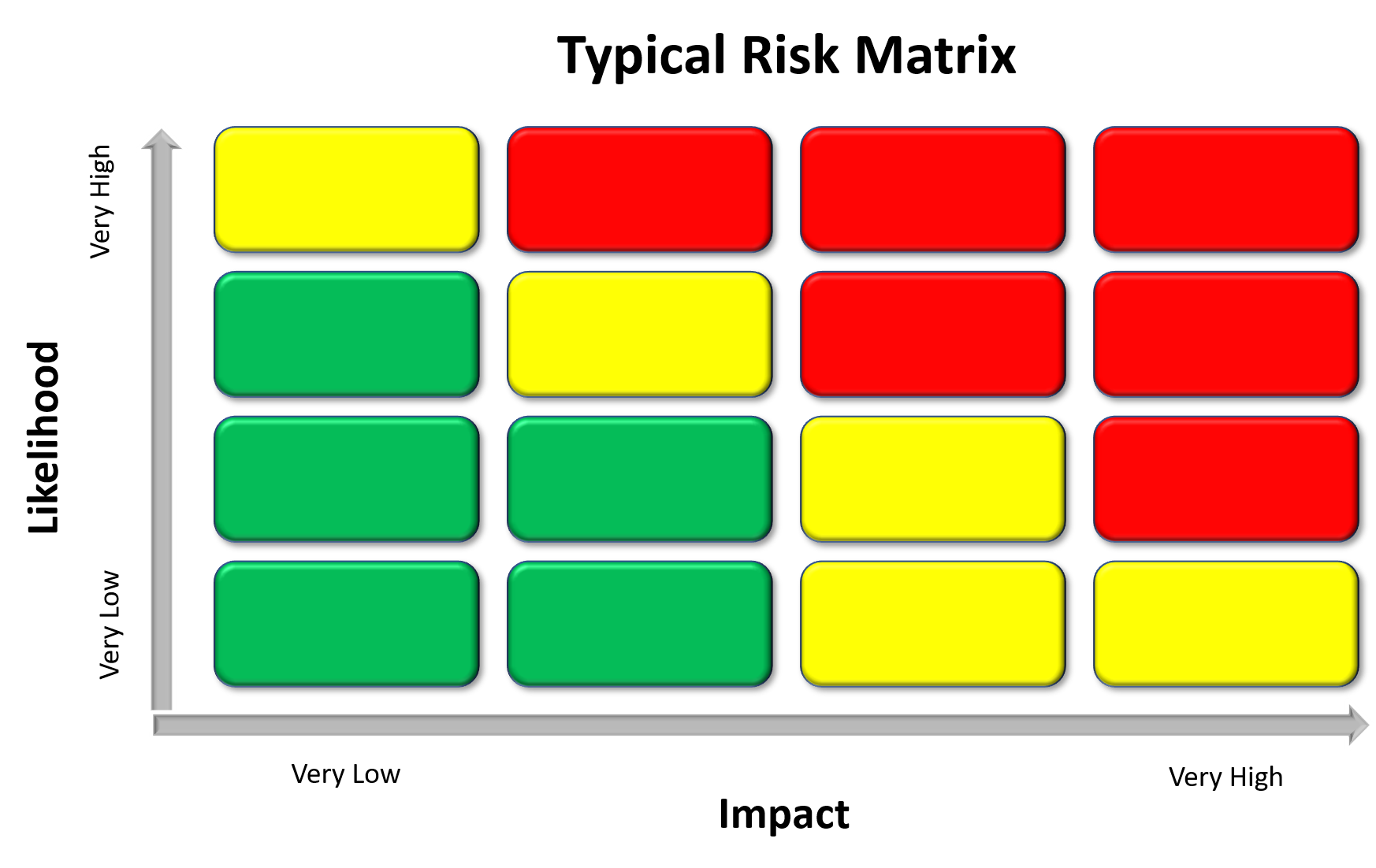
    Most readers will be familiar with the above linear Risk Matrix Model.  This graphical representation of risk exposure is useful but strict adherence to it can lead to a false sense of security.

    Systemic Risk Management

    The real world is very complex with many moving parts.  The potential interaction of processes, events and other challenges can lead to disaster.  It is often the case that the combination of a number of seemingly unrelated and in and of themselves potentially minor events can lead to catastrophe.

    A systemic approach to risk exposure is appropriate.  Field operations usually involves several to many somewhat disparate processes and individuals.

    Typically, the operator will have individuals in the field as well as the office working together.  Contractors and sub-contractors are similarly constructed.  The number of interactions can grow exponentially in a large project or program.

    Therefore, it is important to ‘see’ risk as a dynamic interacting model.  For example, the following quotation is a straightforward presentation of the actual risk field operators face.

    “Planning for the abandonment of Macondo was extremely complex.  The fundamental source of that complexity was a phenomenon well known to systems engineers: the number of potential pairwise interactions among a set of N elements grows as N times N-1, divided by 2.  That means that if there are two elements in the set, there is one potential interaction; if there are five elements, there are ten potential interactions; ten elements and there are forty-five; and so forth.  If the interactions are more complex, such as when more that two things combine, the number is larger.  Every potential interaction does not usually become an actual one, but adding the elements to a set means that complexity grows much more rapidly than ordinary intuition would expect.”

    The authors’ note that NOT all combinations can happen, but the possibility of several is likely.  Many decision makers do not expect exposures as great as they likely are in a complex environment.

    Interactive Model

    So how great is your risk?  The following calculator will give you a perspective on your organization’s exposure.  It is straightforward and easy to use.

    You are only required to input two variables:

    n = the number of elements

    m = elements from n in certain order, it is arrangement

    Taken from the Macondo model above, if n=10 and m=2, the number of combinations of m from n equals 45.


    [planetcalc cid=”977″ language=”en” code=”” label=”PLANETCALC, Combinatorics. Combinations, arrangements and permutations” colors=”#263238,#435863,#090c0d,#fa7014,#fb9b5a,#c25004″ v=”3275″]

    Addition data the calculator provides:

    Each ordered set of n is a permutation

    Generally, the number of combinations of m from n with repetitions is not useful for our purposes other than the recognition that repetition is possible.

    This calculator does not indicate where risk lies.  As the authors of Deepwater Horizon: A Systems Analysis of the Macondo Disaster suggest, it helps decision makers better understand the nature of their complex environment.

    Final Thoughts

    Simple risk models may have their place.  They are useful for presentation purposes.  However, they are insufficient when assessing the exposure of today’s complex operational situations.

    High Reliability Management requires that decision makers NOT simplify the complex.  Understanding the level of exposure using systemic risk management techniques can help clarify organizational threats.

    Are Your Organization’s Risk Management Techniques Robust Enough?

    For more information on Risk Mitigation check out our Operational Excellence Platform.

      Boebert, Earl and Blossom, James M. (2016). Deepwater Horizon: A Systems Analysis of the Macondo Disaster. Cambridge, MA: Harvard University Press. pp. 65-66.

    Appendix–The Math

    For those interested, this is the math for the calculator. It is taken directly from the Planetcalc website.

    So, assume we have a set of n elements.

    Each ordered set of n is called permutation.

    For example, we have set of three elements – А, В, and С.
    Example of ordered set (one permutation) is СВА.
    Number of permutations from n is

    P_n = n!

    Example: For set of А, В, С number of permutations is 3! = 6. Permutations: АВС, АСВ, ВАС, ВСА, САВ, СВА

    If we choose m elements from n in certain order, it is arrangement.

    For example, arrangement of 2 from 3 is АВ, and ВА is the other arrangement. Number of arrangements of m from n is

    A_{n}^m=frac{n!}{(n-m)!}

    Example: For set of А, В, С number of arrangements of 2 from 3 is 3!/1! = 6.
    Arrangements: АВ, ВА, АС, СА, ВС, СВ

    If we choose m elements from n without any order, it is combination.

    For example combination of 2 from 3 is АВ. Number of combinations of m from n is

    C_{n}^m=frac{n!}{m!(n-m)!}

    Example: For set of А, В, С number of combinations of 2 from 3 is 3!/(2!*1!) = 3.
    Combinations: АВ, АС, СВ

    Here is the dependency between permutations, combinations and arrangements

    C_{n}^m=frac{A_{n}^m}{P_m}
    Note Pm – number of permutations from m