

Tag: oil

  • And Just Like That!

    And Just Like That!

    Often attributed to the movie character, Forest Gump the title phrase can be interpreted as an abrupt change in one’s life.

    The past few years have brought significant changes to many of us.  Illness, job change, moving to a new location, kids out of school and so it goes.  Disruption can be intimidating, yet it need not be so.
    Life is all about change.  We move from infancy to youth, adulthood and so on.  In each phase our interests and environment are different.  Moreover, we often seek change.  The celebration upon one’s 16th birthday and getting a driver’s license.  In my case turning 25 when my car insurance cost was lowered.

    Society is moving into an era whereby an individual can expand his or her horizon.  No longer is a college degree seen as the price of entry.  Non graduates now have access to IT positions as well as management and other high paying skills.  The focus is moving from having mountains of college debt to having the desire to achieve.  Additionally, the Great Resignation movement is taking root too.

    So What Happens Now?

    In our 2oo9 White Paper, Rapid Response Management: Thriving in the New World Order we coined the term, Velocity of Information which we defined as, “Similar to the economic theory, Velocity of Money, it is the frequency at which information is exchanged.”  Who would have dreamed today’s volumes would be so massive.  Now we are awash in information and disinformation.  Decisions that depend on valid and reliable data are more difficult, not less.

    However, life’s disruptive moments can force us to move forward in another direction.  The recession in 1974 required that this then young individual to more to Louisiana and enter the oil and gas sector.  This was not on my radar at all as late as two months earlier when a recruiter called.

    This life changing moment was not based on valid and reliable data as ‘I did not have clue’ what I was getting into.  Rather the decision was made with almost no knowledge of the subject.  Fifty years later, the rest as they say is history.

    When one door closes, another opens.

    New Relationships

    We have previously discussed the RBC Framework; Relationships, Behaviors, Conditions (aka the situation).  This straightforward model was developed in 1993 to study International Negotiations and we have found it convenient for all manner of human interaction assessments.

    The military refers to the (true)knowledge of one’s environment as Situational Awareness.  In other words if one has a good understanding of what is happening around them, their behaviors should reflect that knowledge.  Subsequently, relationships may change including making new one or leaving old ones.  In my case, the move to Louisiana and entering a new sector is a good example.

    Going Forward

    Forest Gump embraced change and excelled at a number of things despite his handicap.  Disruption was not a threat but an opportunity.  Like Louis Pasteur, one can prepare for change even if the next step is not immediately clear.

    Finally, “The economist Joseph Schumpeter was the first to coin the term “creative destruction.”  Creative destruction is the destruction of old markets and those active in them through innovation, & inventing of new markets, this can be new technologies, methods, business models, services, or products.”  One can argue that the creative destruction cycle time is very short today.

    What are you doing to prepare for your next step?

    For More Information

    Please note, RRI does not endorse or advocate the links to any third-party materials herein.  They are provided for education and entertainment only.

    The author’s credentials in this field are available on his LinkedIn page.  Moreover, Dr. Shemwell is a coauthor for an in press book (to be released in Spring 2023) titled, “Smart Manufacturing: Integrating Transformational Technologies for Competitiveness and Sustainability.”  His focus is on Operational Technologies.

    “People fail to get along because they fear each other; they fear each other because they don’t know each other; they don’t know each other because they have not communicated with each other.” (Martin Luther King speech at Cornell College, 1962).  For more information on Cross Cultural Engagement, check out our Cross Cultural Serious Game.  You can contact this author as well.

    For those start-up firms addressing energy (including renewables) challenges, the author is a member of Global Energy Mentors which provide no-cost mentoring services from energy experts.  If interested, check it out and give us a shout.

  • So Here We Go Again?

    So Here We Go Again?

    Will gas lines return?

    Recent geopolitical events have driven the price of gasoline sky high–again!  As of this writing it is difficult to say where this will all lead.  What is known is that the cost of all things related to petroleum have significantly increased and may go even higher.

    According to the U.S. Department of Energy, in addition to transportation and heating, oil and gas are used in over 6,000 everyday products.  In other words, their use is pervasive in all societies and economies.

    As a response to the oil shock of 1973, in 1975 the Energy Policy and Conservation Act (EPCA) developed the Strategic Petroleum Reserve (SPR).  According to the DOE, as of December 2021 the current inventory was approximately 600 million barrels of crude oil.  It is designed to be a buffer or in digital terms a cache in case of disruption or other requirements.

    Furthermore, according to the U.S. Energy Information Administration (EIA), in 2021 the US consumed approximately 20 million barrels of oil per day.  Assuming Russia exports 8% or approximately 1.6 million barrels (including refined products) per day to the US, this shortfall can be replaced with SDR withdraws as well as increases from both domestic producers and other exporters.

    What Do We Do Now?

    Oil and Gas are commodities and are therefore subject to the same Supply and Demand processes inherent to that segment.  Other examples include, gold, cattle, pork bellies and orange juice, etc.

    Today’s global markets perceive that the demand for gasoline is higher than the available supply.  Therefore, sellers can command higher prices.

    The apparent supply can be brought into balance with demand in two fundamental ways.  First, and easiest is to cut back on consumption, i.e., work from home, carpool, mass transit, etc.

    Second, which will take some time is for domestic production to increase.  ‘Small’ increases from trading partners and domestic operators (along with government regulatory assistance) will add up as well.

    One of the worst things that can happen is hording.  Think back to the great Toilet Paper hording in the early days of Covid-19.  It was unlikely that the daily demand for bathroom tissue suddenly increased.

    In effect, households ‘held’ the inventory (instead of stores) until it was worked down.  Manufacturers did not increase production albeit retailers began to ration individual purchases.

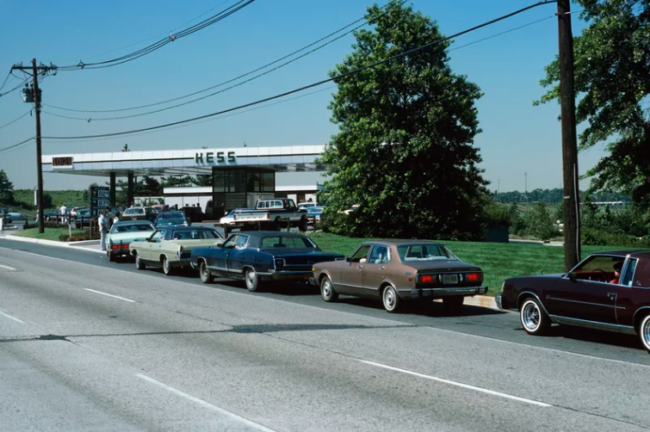
    The gas lines of the 1970s were also an example of hording.  Once the Odd and Even license plate model went into effect, they dissipated almost immediately.

    We need NOT go through this experience again!  We all have the tools necessary to change that narrative and not relive history.

    Dealing With the Issue

    For almost two decades we have modeled large scale economic procurement initiatives, both in the public and private sectors.  Attempts to attain 25% or more in value from initiatives are almost always destined to fail.  On the other hand, finding small components of economic value across a number of processes and departments can easily exceed pronouncements of singular, overall great value to be obtained.

    For example if several areas each find 2-5% of value opportunities, 25% can be quickly exceeded.  This works for large and small organizations.  It can work for individual households too.  One need not find the Silver Bullet or make Herculean efforts to overcome difficult challenges.

    Where Can You Find Eight One-Percent Opportunities to Decrease Your Petroleum Footprint?

    For More Information

    Please note, RRI does not endorse or advocate the links to any third-party materials.  They are provided for education and entertainment only.

    Photo Source: NPR

    For more information on Cross Cultural Engagement, check out our Cross Cultural Serious Game.  You can contact this author as well.


  • Oil: In the DNA of the Silicon Valley

    Oil: In the DNA of the Silicon Valley

    When discussing the likelihood of DNA in crude oil, one source comments, “So the DNA they are talking about is like the DNA, where they’re looking at the live bacteria in the crude oil, which would be descendants of the bacteria that was around when the oil first began its degradation from organic material.”

    Time passes and the Baby Boomers that led the youth movement in the last half of the 20th Century may now be carrying the label of dinosaurs.  Likewise, the oil and gas sector is viewed as a mature sector, aka dinosaur.  And we all know that oil comes from dinosaurs (not a correct statement).


    [advanced_iframe securitykey=”ab3c8c693bafe5b2e240e6d4c1357a8337af1276″ use_shortcode_attributes_only=”true” src=”https://www.youtube.com/embed/vAA7wVYr704?t=15″ width=”100%” height=”600″ id=”advanced_iframe” ]


    However, few know the technology lineage of the sector.  Fewer still know about its long-time leadership in the advancement of information technology.

    As a Schlumberger Senior Field Engineer (circa 1977) in Houma, LA, I worked on the first electric logging truck equipped with a computer—the Cyber Service Unit (CSU) for wellsite instrumentation.  Effectively, this was a mobile real time data acquisition and analysis system.  This was a short two years after the company joined ARPAnet, the predecessor of the Internet.

    Likewise, the other major energy services company Halliburton has advanced dramatically over its 100-year history.  Furthermore, in the field of data processing, the sector was an early adopter of super computers.

    In the early 1980’s this pundit often made sales calls selling industrial technology.  With almost no base business in Austin, Texas, I saw little chance to make my quota from that city.

    In 1987, Schlumberger Ltd. opened it Austin Technology Center.  While not the first technology company with operations in that region, from this author’s perspective this commitment was a game changer for that region—so called ‘Silicon Hills.”

    The sector has long funded technology development.  As noted, a prodigious consumer of advanced technologies, the sector also invests in innovation.  One example, the seemingly never-ending thirst for Saudi (oil) money by the Silicon Valley investment community.

    Next time you hear that the era of fossil fuels is over, think again about the contribution the sector has made and continues to make to the so-called future technologies.  Could be that the technological basis of green energy is built on this 100-million-year-old organic molecule.

    Is Oil in Your Organization’s DNA?

    For More Information

    Contact the author more information.

    End Notes

      https://www.slb.com/who-we-are/our-history/1970s

      https://www.houstonchronicle.com/business/texas-inc/article/Hallburton-Turns-100-going-from-wagons-and-mules-13622229.php

      https://www.gao.gov/assets/220/214775.pdf

      https://www.nytimes.com/2018/10/12/opinion/silicon-valley-saudi-arabia.html

      https://biology.stackexchange.com/questions/31831/does-crude-oil-or-kerogen-contain-ancient-dna