
Tag: Microsoft

  • The Thirteen and The One

    The Thirteen and The One

    As of this writing, the situation in Ukraine is fluid at best.  Many see the Ukrainian people as heroes winning against all odds.  Other pundits predict they will be overwhelmed in the near future.  History suggests the later is a premature prognosis.

    In the 1940’s European resistance played a major role in the defeat of the Nazi Germany during World War II.  Later, the Vietnamese were able to overcome both France and the United States.  Afghanistan routed the Soviet Union and the United States.  However, the ultimate (modern era) David vs Goliath model lies elsewhere.

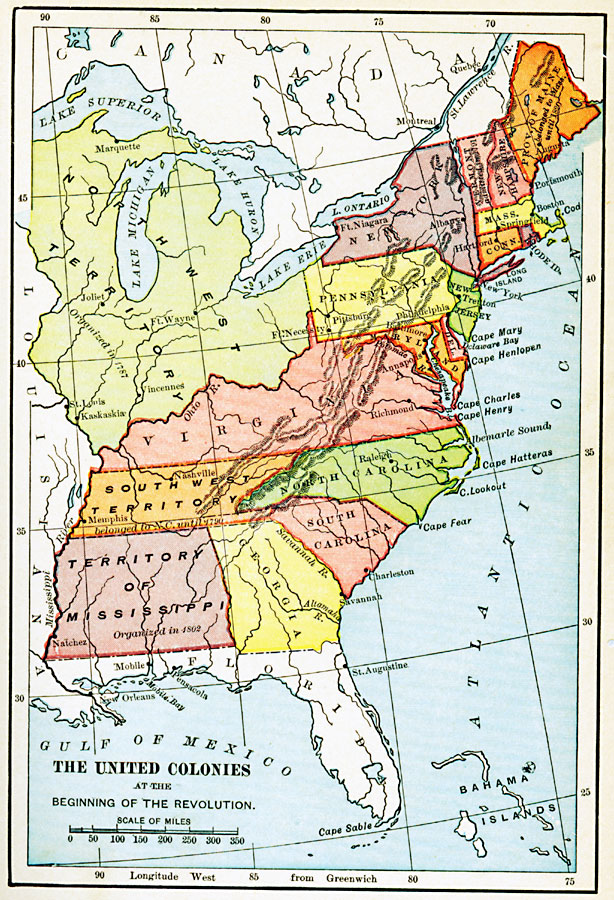
    During the 1770s Great Britain was the most powerful nation in the western world.  A rag tag band of farmers, frontiersmen,  city dwellers and other colonists inhabited a land far from the European continent.  One could argue, who even cared about that bunch?  Yet it was a vassal of European global expansion with perceived riches.

    Then the most powerful country in the world militarily acted, albeit assuming this crowd as weak and taken for granted.  The end result is the United States of America.

    Theoretically easily squashed, yet supported by France and Germany, the ‘shot heard around the world’ transformed the human trajectory significantly and forever.  Europe (including the UK) has been paid back a hundred fold for that investment for over 200 years.  Many others have also fought and attained sustained freedom.

    Do not underestimate the Will (power) of the One.  No one can argue that the Thirteen dramatically impacted the last two plus centuries.  Perhaps the One will change the next few generations.  As before, we may be witnessing the end of a centuries old power structure.

    Will the current investment in Ukraine will return similar dividends?  Odds are, yes.  Even when one does not prevail, i.e., Spartacus and the 300 at Thermopylae the world changed for the better because of their commitments.

    Not limited to conflict, other examples of the small taking on the giant include Microsoft v IBM.  This is a common to the universal human condition with a long track record of success with some failure.  Ukraine has shown themselves to the the Home of the Brave.  Hopefully, soon they will also the Land of the Free.

    Many of us in the global community are heirs of the Thirteen.  What are we doing for the One?

    For More Information

    Please note, RRI does not endorse or advocate the links to any third-party materials.  They are provided for education and entertainment only.

    For more information on Cross Cultural Engagement, check out our Cross Cultural Serious Game.  You can contact this author as well.

  • Getting to Diverse and Inclusive Teams

    Getting to Diverse and Inclusive Teams

    Diversity, Equity, and Inclusion (DEI) Team Models

    There is a tendency to see DEI through the lens of initiatives or often a process semi-outside the daily ‘organizational’ grind.  Does this represent reality?

    Organizations spend countless sums training employees and others they depend on for Operational Excellence performance.  They often trust global Teams to add stakeholder value.

    No less than Microsoft names a software product, Teams.  A tool designed to foster collaboration.

    The Way We Do Business

    Culture is often defined as ‘who we are.’  The approach an organization takes towards its ecosystem.  If this model is an accurate representation, it suggests that when organizations launch initiatives meant to address current social mores, they likely fail or at least do not live up to full potentials.

    Change management, often referred to as transformation often takes on the mantel of ‘you will be changed.’  Contemporarily, take the Covid-19 vaccine or you will be fired!  Not surprisingly, this mandate is resisted and seemingly increasingly with each new warning.

    As of this writing, the all out war (on decrees) has been declared by the likes of the Navy Seals, Health Care Workers, Law Enforcement and others with the demands from the Feds.  Likely, the result will be a draw at best, with the administration quietly acquiescing.  Too many critical, non-replaceable positions are at risk.  Not to mention votes.

    Governance

    In October 2011, we published our first draft of, Asset/Equipment Integrity Governance: Operations–Enterprise Alignment.  We recognized that traditional organizational Governance models were strictly focused on finance and maleficence therein.  The reality is that revenue is generate by operations and as such governance is critical as well.  Safety Culture, is intangible but now required by most organizations in Critical Infrastructure sectors.

    Flash forward to today and Environmental, Social, and Governance (ESG) is the model most organizations use.  Effectively, this expands governance to include a broad range of non-financial commitments.  From this blogger’s perspective, likely DEI will fall under this governance model.  Therefore, moving it from the ‘initiative status’ to the ‘way we do business.’

    Team Building

    This dynamic environment requires workforce upskilling.  The need to constantly assure that individuals have current Knowledge, Skills and Abilities (KSAs) necessary to meet current challenges.  KSAs now include the ability/necessity to work across cultural/diverse lines.

    When one thinks of a ‘team’ it is not a homogenous collection of like minded and ‘like’ individuals.  Teams are a collection of hopefully, ‘fit for purpose’ individuals who comprise the KSAs needs to accomplish the task(s) at hand.  Teams can mirror the discrete views of its members.

    For example, our early research on the subject assessed the different approaches Japanese nationals took when negotiating with white American males.  In each case, the individual players were deemed to be homogenous.

    Nothing could be further from the truth.  Each individual, in this case all males were of different ages, different education, from different regions of their respective countries, married or not and so forth and so on.

    The reality is that individuals do not negotiate deals.  Teams do.   Members of teams, like juries need to arrive at the same place prior to engaging with other collaborative counterparts.

    Juries need to be arrive at consensus.  Likewise, organizational team members must arrive at a similar place internally prior to going forward.  This not to say that individuals must cave to the will of the majority or the Tyranny of the Minority.  It is to say, a common position that all must accept as part of collaboration or consensus.

    Inclusive?

    There is no doubt that token individuals and in some case high profile figureheads have been put forth to ‘prove’ inclusivity.  Thankfully, those days are fading.

    Teams need to have the input of all members, even contrarians.  Often it is the outlier that has the most insight into a difficult problem.  Differences of opinion need to be resolved and a go forward plan agreed upon.

    Often, individuals do not speak up.  Perhaps they are new to the environment, shy or unsure of themselves.  Whatever the reason their input must be sought and at least given a fair hearing.

    Training can help elicit input from the reticent.  Moreover, they help dominate individuals acknowledge and accept said input.

    How Does Your Organization Assure Real Inclusion?

    For More Information

    Please note, RRI does not endorse or advocate the links to any third-party materials.  They are provided for education and entertainment only.

    For more information on Cross Cultural Engagement, check out our Cross Cultural Serious Game

    We presented, Should Cross Cultural Serious Games Be Included in Your Diversity Program: Best Practices and Lessons Learned at the Online Conference, New Diversity Summit 2020 the week of September 14, 2020.  Check Out this timely event and contact the organizer for access to the presentations!!

    For more on DEI Standards, see the newly released ISO-30415.

    You can contact this author as well.