

Tag: maturity

  • The Crisis/Challenge of AI in 2025

    The Crisis/Challenge of AI in 2025

    “Many processes are repeatable and only data inputs change.”
                                                                                                         — Scott Shemwell, 2023.

    Technology disruption has been with humankind since the first invention.  We get used to one model and suddenly, a new way supplants the old.  Much has been written about the innovation process, and it is not the focus of this Blog to regurgitate the obvious.

    However, Wikipedia states, “Beyond business and economics disruptive innovations can also be considered to disrupt complex systems, including economic and business-related aspects.  Through identifying and analyzing systems for possible points of intervention, one can then design changes focused on disruptive interventions.”  This is the broader focus of this piece.

    Human Redundancy?

    One if the ongoing concerns, “will AI replace humans?”  As of this writing, many do not believe it will, at least anytime soon.  Interestingly, according to Harvard professor Karim Lakhani, “Just as the internet has drastically lowered the cost of information transmission, AI will lower the cost of cognition.”  This is consistent with the traditional path of Information Technology innovation.

    Moreover, this concern is not new.  In her 1983 paper, Ironies of Automation, Lisanne Bainbridge posited that there are inherent problems with automating workflow, humans are still required for tasks that are not easily (if at all) automated.  Oversight of automation requires more training in new job skills, not less.  More recently, the former Chief Scientist of the US Air Force points out the “Original Ironies of Automation is highly relevant with regards to today’s new wave of AI-enhanced automation.  Near misses and incidents involving human automation operations often arise from a mismatch between the properties of the system as a whole and the characteristics of human information processing.”

    In our forthcoming book we address the need for Strong Oversight coupled with Standardization and Risk Tolerance to address the broader need for upskilling today.  According to McKinsey, “Any engineering talent rethink needs to begin with an understanding of how gen AI will affect the product development life cycle.”

    Paraphrasing Mark Twain, “The rumors of Human demise are greatly exaggerated.”  AI is here to stay and should be embraced with cautionary guardrails as it is still immature and subject to error.

    Human Factors

    One pundit refers to the ‘Human Edge‘ as the competitive Advantage we have over machines.  This pundit has long been an advocate for Human Factors when it comes to managing technology, especially emerging technology used for process or production management.  The risk profile otherwise is just to0 steep and high.  One only has to look at the recent travails of the once venerable firm, Boeing.

    2025 and Beyond

    Artificial Technology, its future derivative products and solutions not yet envisioned will continue.  Most likely at the breakneck speed or faster of today.  Remember when we used to think of the Internet growth in terms of Dog YearsInsect Years may be the new metric.

    Many, including this writer as documented in our book, believe AI et al is just entering the explosive growth on the maturation curve.  We must live with it and the most successful will get ‘on board’ when the timing is right for them.

    Exciting times lie before us all and it is a great time to be alive, at least from a technology perspective.

    How are you, your family and work colleagues prepared for the future?

    Pre order our new book

    Navigating the Data Minefields:

    Management’s Guide to Better Decision-Making

    We are living in an era of data and software exponential growth.  A substantive flood hitting us every day.  Geek heaven!  But what if information technology is not your cup of tea and you may even have your kids help with your smart devices?  This may not be a problem at home; however, what if you job depends on Big Data and Artificial Intelligence (AI)?

    Available April 2025

    For More Information

    Please note, RRI does not endorse or advocate the links to any third-party materials herein.  They are provided for education and entertainment only.

    See our Economic Value Proposition Matrix® (EVPM) for additional information and a free version to build your own EVPM.

    The author’s credentials in this field are available on his LinkedIn page.  Moreover, Dr. Shemwell is a coauthor of the recently published book, “Smart Manufacturing: Integrating Transformational Technologies for Competitiveness and Sustainability.”  His focus is on Operational Technologies.

    We are also pleased to announce our forthcoming book to be published by CRC Press in 2025, Navigating the Data Minefields: Management’s Guide to Better Decision-Making.  This is a book for the non-IT executive who is faced with making major technology decisions as firms acquire advanced technologies such as Artificial Intelligence (AI).

    “People fail to get along because they fear each other; they fear each other because they don’t know each other; they don’t know each other because they have not communicated with each other.” (Martin Luther King speech at Cornell College, 1962).  For more information on Cross Cultural Engagement, check out our Cross-Cultural Serious Game.  You can contact this author as well.

    For more details regarding climate change models, check out Bjorn Lomborg and his book, False Alarm: How Climate Change Panic Costs Us Trillions, Hurts the Poor, and Fails to Fix the Planet.

    Regarding the economics of Climate Change, check out our blog, Crippling Green.

    For those start-up firms addressing energy (including renewables) challenges, the author can put you in touch with Global Energy Mentors which provide no-cost mentoring services from energy experts.  If interested, check it out and give me a shout.

  • Heavy Metal Rocks

    Heavy Metal Rocks

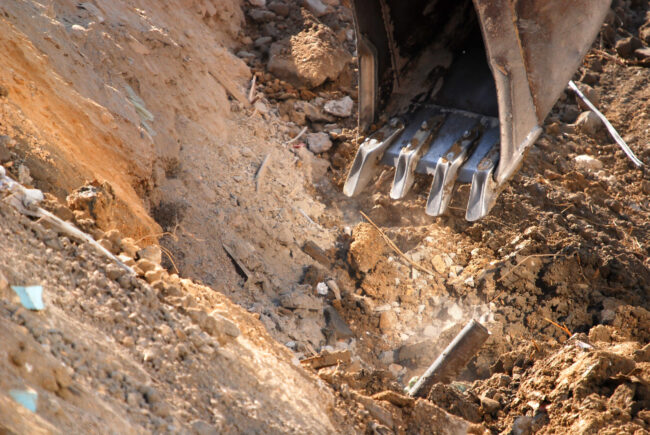
    Not the rock bands of the 1960s–1980s, but the mining required to extract the heavy metals necessary for electric vehicles and other renewable energy solutions.  So, what is a heavy metal and why do we care?

    Typically, “In science, a heavy metal is a metallic element which is toxic and has a high densityspecific gravity or atomic weight. However, the term means something slightly different in common usage, referring to any metal capable of causing health problems or environmental damage.”  Often these toxic elements are carcinogenic.
    For most readers this will not come as a surprise.  The heavy metals in batteries can be recycled, thus minimizing their negative impact on the environment and subsequently, humans and other life forms, i.e., the food chain.  However, smaller batteries are typically tossed into the trash.  Larger ones such as lead acid automotive batteries are usually reclaimed (for a fee to the consumer).

    From this pundit’s perspective, it is too early in the technology maturity to fully understand how millions of EV (electric vehicle) will be recycled effectively and economically.  Managing the lifecycle of these ‘elements’ from mining, use, recycling and reuse is a significant component of these renewables.  There is a cost associated with this process, both monetary and socially.

    Total Carbon Ownership

    In the business, the term TCO usually referees to the Total Cost of Ownership.  Updated, this Lifecycle metric may better reflect the Total Carbon impact of a product/solution, i.e., large scale batteries, solar panel, fossil fuels, etc.

    TCO = Carbon as a function of two major lifecycle elements; Operations and Decommissioning.

    For this purpose we define Operations (aka Use) as the lifecycle process from mineral extraction, manufacturing, deployment and maintenance.

    Decommissioning is the process of taking out of service, removal and appropriate disposal of components, including recycling.

    Follow on from our blog of November 2, 2021, where Milton Friedman detailed the complex supply chain required to manufacture a simple yellow graphite pencil, one can only imagine how complex the requirements are for a wind turbine.  Carbon neutral is not a simple problem to solve.

    Enter Structural Dynamics

    Many readers understand that Machine Learning Algorithms use the statistical multivariable method, Multiple Linear Regression–defined as, where “one variable is estimated by the use of more than one other variable.”  While this tool can be useful when assessing the impact and relationships of several independent variables, it does not necessarily help organizations to understand their TCO.

    Theoretically, every economic actor in the supply chain or the decommissioning process can calculate their carbon footprint for each​ product/step they control.  In the real world, such intangibles, i.e., safety are open to interpretation, ‘fudging’ or worse.  Moreover, we can expect large gaps or errors (inadvertent or otherwise) in carbon models that must be addressed if we are to realistically address the carbon problem.

    In the 1990s as a result of watching a number of systemic enterprise failures and/or poor performance, and wondering how this happened with such regularity the questions was raised–why?  This led this author coin the term with the subsequent book, Structural Dynamics: Foundation of Next Generation Management Science.

    Most do not understand the processes and structural changes at work on a daily basis.  Focused on near term performance metrics, they lose sight of the forest while concentrating on the trees.  The subsequent disruption caused is often rapid and economically cataclysmic.

    Structural Dynamics uses tools such as Structural Equation Modeling (SEM) to seek to identify the underlying process and structural movements.  It appears to be a useful tool to address the Total Carbon Ownership that organizations will have to address in the very near future.

    Dealing With Residuals

    Whether heavy metals or carbon, organizations must also assure ESG (Environmental, Social, and Governance) criteria are met throughout the energy lifecycle.  However, there is a cost associated with these and other organizational structures from the deployment and/or use of energy of all types.

    TCO is a decades long cost that can transcend actual corporate life, i.e., acquisition, bankruptcy, etc.  Currently, the oil and gas industry is littered with assets no one claims ownership.  Two cases follow:

    • Stranded assets are, “those investments which are made but which, at some time prior to the end of their economic life (as assumed at the investment decision point), are no longer able to generate an economic return, as a result of changes in the market and regulatory environment.”  These resources are no longer worth continued investment.
    • Abandoned assets have reached the end of life.  By one source, it is estimated that there are approximately 53,000 Gulf of Mexico offshore oil and gas well in this category.  Remediation costs range from $500k to $10 million per well–min $26.5 billion.

    It is reasonable to expect that all sources in the ‘energy basket’ will have similar end of life futures.  Green is therefore, not unique.

    “Forewarned is Forearmed”

    A Serious Assessment

    This pundit believes that scant attention has been paid to the lifecycle (economic and social) price of renewables and that the Total Carbon Ownership cost has never been calculated–certainly not published.  However, there are tools that will shed light on this going forward.

    TCO is a function of a detailed and long lifecycle, not unlike oil and gas assets that in some cases are over half a century old.  Any subsequent model of this process is by default complex, detailed and full of unknowns, or unmeasured latent variables.

    The approached this writer has developed using Structural Equation Modeling driven by Structural Dynamics seems well fitted to address this longitudinal and futuristic problem.

    For many, the so-called ‘green energy’ seems without consequences.  The history of energy suggests otherwise.  A full assessment using Structural Dynamics can reveal gaps, misunderstandings, errors and omissions.

    This model will advise management and even regulators what the true cost of an energy source is.  The approach is worthy of a serious discussion.  By the way, this model works for all sources of energy including coal and other fossil fuels as well as renewables.

    What is Your Firm’s TCO and How Can It be Lowered?

    For More Information

    Please note, RRI does not endorse or advocate the links to any third-party materials.  They are provided for education and entertainment only.

    Interested in Cross Cultural Engagement or DEI, check out our Cross Cultural Serious Game

    We presented, Should Cross Cultural Serious Games Be Included in Your Diversity Program: Best Practices and Lessons Learned at the Online Conference, New Diversity Summit 2020 the week of September 14, 2020.

    Contact the author for information on these and others subjects covered in the Critical Mass series.

  • Questions, Questions, Questions

    Questions, Questions, Questions

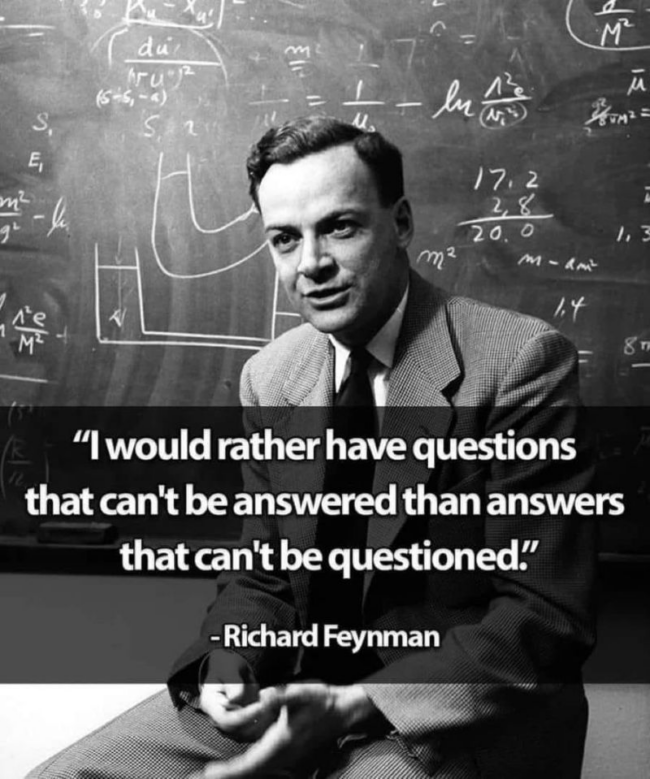
    Picture sourced from LinkedIn, author unknown.

    It seems like there are a lot of answers these days, even to questions that have not been posed.  As of this writing, this author understands that masks work for Covid-19 but vaccines not so much although we are advised to get the shots and even a third one this fall.  So many flip-flops I feel like I spent the last year on a beach.

    Claiming, The settled Science says … is an answer designed to shut down debate.  Facts are, unless one believes the world is flat or the earth is the center of the universe (thank you Galileo Galilei), science is never settled.  If it were. we would be living in a Flintstones’ world.

    “And the Answer Is . . .”

    Thank you Alex.  For almost two years, we have been told the answers to the Covid-19 crisis are understood and the data is valid and reliable.   Then it isn’t.  Blamed on a dynamic and changing environment, we are told “we are following the science.”  Or perhaps just a political slogan.

    Pay no attention to that man behind the curtain!”  Just sit down, shut up and do as your told is often the mantra when authorizes’ edicts are questioned.  Good advise for a toddler but not so much for those over the age of 10.

    Are We There Yet?

    Tesla crashes are the latest Big Data enabled autopilot failures.  The level of maturity regarding digitalization and its various cousins has been discussed in this blog before.  Begging the question, are we ready for data Prime Time?

    We are besieged with answers from all manner of pundits, both electronic and in person.  We are told, “we must believe” without any serious discussion or in-depth assessment of the explanation.  Moreover, many of these statements regarding technology have not undergone the Scientific Method process.

    The result; many do not believe.  Covid-19 vaccination concerns are but one example of this squandering of faith.  Readers may have other issues that bother them.

    One consistent argument for not taking the inoculation is that vaccines take many years to develop and vet.  Perhaps, in the past but (1) we don’t have years with this deadly virus and (2) technology marches on and perhaps years are no longer required.  One can argue that this lack of trust is a result of so many answers in advance of the questions.

    How is your organization assuring that Answers are not being provided before the Questions are asked?

    For More Information

    Please note, RRI does not endorse or advocate the links to any third-party materials.  They are provided for education and entertainment only.

    For more information on Cross Cultural Engagement, check out our Cross Cultural Serious Game

    We presented, Should Cross Cultural Serious Games Be Included in Your Diversity Program: Best Practices and Lessons Learned at the Online Conference, New Diversity Summit 2020 the week of September 14, 2020.  Check Out this timely event and contact the organizer for access to the presentations!!

    You can contact this author as well.

  • Teaming Safely

    Teaming Safely

    “For safety is not a gadget but a state of mind”


    Second only to the basic need for food, water and what is required to sustain physical life, safety and security are the next step in Maslow’s Hierarchy of Needs.  In other words one cannot love or feel belonging or achieve a level of esteem without having the warmth of safety much less attain self-actualization.

    More recently, team safety has come to be defined as Inclusive.

    There are three components of team safety:

    • Sociological — “developing and maintaining friendly social bonds is a fundamental organizing principle of human behavior”
    • Psychological — “defined as a shared belief that the team is safe for interpersonal risk taking”
    • Physiological — “relating to the way in which a living organism or bodily part functions”

    If members do not feel ‘safe’ then the team is not capable of high performance.  Moreover, the synergistic value that can be derived from team diversity can not be captured.

    Attaining Safety

    While the need to be safe is coded in our DNA so to speak, we are not inherently safe.  Individuals as well as teams must be proactive to reach situational safety.

    We are Mindful when we are in touch with ourselves and the environment through nurturing feelings.  Interesting, being mindful is a major requirement of High Reliability Organization/Team.  High reliability is a necessary ingredient for an organization’s Safety Culture and by extension its Teams (including third party ecosystem members).

    Safety is a learned behavior.  Therefore, effective training and ongoing reinforcement are necessary. Moreover, realistic scenarios are mandatory making the learning process relevant.

    Take the following maturity assessment and implement your team training program!

    What is your Team’s Culture of Safety Maturity?

    For More Information

    Please note, RRI does not endorse or advocate the links to any third-party materials.  They are provided for education and entertainment only.

    For more information on Cross Cultural Engagement, check out our Cross Cultural Serious Game

    We presented, Should Cross Cultural Serious Games Be Included in Your Diversity Program: Best Practices and Lessons Learned at the Online Conference, New Diversity Summit 2020 the week of September 14, 2020.  Check Out this timely event and contact the organizer for access to the presentations!!

    You can contact this author as well.