

Tag: Human Factors

  • The Crisis/Challenge of AI in 2025

    The Crisis/Challenge of AI in 2025

    “Many processes are repeatable and only data inputs change.”

                                                                                                         — Scott Shemwell, 2023.

    Technology disruption has been with humankind since the first invention.  We get used to one model and suddenly, a new way supplants the old.  Much has been written about the innovation process, and it is not the focus of this Blog to regurgitate the obvious.

    However, Wikipedia states, “Beyond business and economics disruptive innovations can also be considered to disrupt complex systems, including economic and business-related aspects.  Through identifying and analyzing systems for possible points of intervention, one can then design changes focused on disruptive interventions.”  This is the broader focus of this piece.

    Human Redundancy?

    One if the ongoing concerns, “will AI replace humans?”  As of this writing, many do not believe it will, at least anytime soon.  Interestingly, according to Harvard professor Karim Lakhani, “Just as the internet has drastically lowered the cost of information transmission, AI will lower the cost of cognition.”  This is consistent with the traditional path of Information Technology innovation.

    Moreover, this concern is not new.  In her 1983 paper, Ironies of Automation, Lisanne Bainbridge posited that there are inherent problems with automating workflow, humans are still required for tasks that are not easily (if at all) automated.  Oversight of automation requires more training in new job skills, not less.  More recently, the former Chief Scientist of the US Air Force points out the “Original Ironies of Automation is highly relevant with regards to today’s new wave of AI-enhanced automation.  Near misses and incidents involving human automation operations often arise from a mismatch between the properties of the system as a whole and the characteristics of human information processing.”

    In our forthcoming book we address the need for Strong Oversight coupled with Standardization and Risk Tolerance to address the broader need for upskilling today.  According to McKinsey, “Any engineering talent rethink needs to begin with an understanding of how gen AI will affect the product development life cycle.”

    Paraphrasing Mark Twain, “The rumors of Human demise are greatly exaggerated.”  AI is here to stay and should be embraced with cautionary guardrails as it is still immature and subject to error.

    Human Factors

    One pundit refers to the ‘Human Edge‘ as the competitive Advantage we have over machines.  This pundit has long been an advocate for Human Factors when it comes to managing technology, especially emerging technology used for process or production management.  The risk profile otherwise is just to0 steep and high.  One only has to look at the recent travails of the once venerable firm, Boeing.

    2025 and Beyond

    Artificial Technology, its future derivative products and solutions not yet envisioned will continue.  Most likely at the breakneck speed or faster of today.  Remember when we used to think of the Internet growth in terms of Dog YearsInsect Years may be the new metric.

    Many, including this writer as documented in our book, believe AI et al is just entering the explosive growth on the maturation curve.  We must live with it and the most successful will get ‘on board’ when the timing is right for them.

    Exciting times lie before us all and it is a great time to be alive, at least from a technology perspective.

    How are you, your family and work colleagues prepared for the future?

    Pre order our new book

    Navigating the Data Minefields:

    Management’s Guide to Better Decision-Making

    We are living in an era of data and software exponential growth.  A substantive flood hitting us every day.  Geek heaven!  But what if information technology is not your cup of tea and you may even have your kids help with your smart devices?  This may not be a problem at home; however, what if you job depends on Big Data and Artificial Intelligence (AI)?

    Available April 2025

    For More Information

    Please note, RRI does not endorse or advocate the links to any third-party materials herein.  They are provided for education and entertainment only.

    See our Economic Value Proposition Matrix® (EVPM) for additional information and a free version to build your own EVPM.

    The author’s credentials in this field are available on his LinkedIn page.  Moreover, Dr. Shemwell is a coauthor of the recently published book, “Smart Manufacturing: Integrating Transformational Technologies for Competitiveness and Sustainability.”  His focus is on Operational Technologies.

    We are also pleased to announce our forthcoming book to be published by CRC Press in 2025, Navigating the Data Minefields: Management’s Guide to Better Decision-Making.  This is a book for the non-IT executive who is faced with making major technology decisions as firms acquire advanced technologies such as Artificial Intelligence (AI).

    “People fail to get along because they fear each other; they fear each other because they don’t know each other; they don’t know each other because they have not communicated with each other.” (Martin Luther King speech at Cornell College, 1962).  For more information on Cross Cultural Engagement, check out our Cross-Cultural Serious Game.  You can contact this author as well.

    For more details regarding climate change models, check out Bjorn Lomborg and his book, False Alarm: How Climate Change Panic Costs Us Trillions, Hurts the Poor, and Fails to Fix the Planet.

    Regarding the economics of Climate Change, check out our blog, Crippling Green.

    For those start-up firms addressing energy (including renewables) challenges, the author can put you in touch with Global Energy Mentors which provide no-cost mentoring services from energy experts.  If interested, check it out and give me a shout.

  • What a Turkey

    What a Turkey

    How many times have you seen someone do something incredibly stupid, even risking their life?  What a turkey!

    Story goes that Benjamin Franklin proposed the turkey as the American National Bird.  Almost 250 years later, this bird often carries a different connotation.  Often maligned, this tasty fowl has its day once a year.  Even two are granted a presidential pardon.
    Enter Safety Culture

    This pundit has spent his career around field operations and heavy equipment, first with the military and later as an oilfield field engineer going on to extensive international travel.  I have seen and done silly, stupid and often dangerous things, yet I emerged uninjured–lucky.

    As a physicist and MBA I started looking at business/technical process from a systems perspective.  A big influence was Peter Senge’s classic book, The Fifth Discipline: The Art and Practice of the Learning Organization.  I could relate to its view of behavior from functional structure perspective.  This led me to Systems Dynamics from which we build several models.

    Finally, in the early to mid 1990s (as part of my doctoral dissertation) we developed our construct of Structural Dynamics which we defined as Structural Dynamics is defined as the morphology or patterns of motion toward process equilibrium of interpersonal systems.

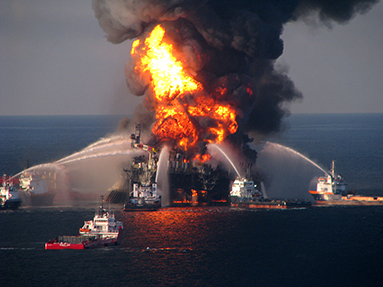
    All of this prepared me for what was to happen next.  In April 2010, Deepwater Horizon exploded in the Gulf of Mexico.  My colleagues and I started looking at this incident through the systems lens described above.  What we saw was very different than conventional wisdom.

    For decades Charles Perrow’s Normal Accident Theory posits that we can expect accidents from complex systems–they are inevitable.  Enter High Reliability Management in Process Industries: Sustained by Human Factors, which suggests that accidents are NOT inevitable and management systems can be put in place to adequately manage even the most complex system of systems.  Moreover, we now know that many disasters failures such as an airliner crash are of the function of many smaller issues happening concurrently.

    This led us to develop four major solutions for better safety in Critical Infrastructure sectors.

    This solution set enables organization of all sizes (public and private) to meet their high performance, high reliability goals while maintaining a sate workplace across their ecosystems.  Also check out our book, Implementing a Culture of Safety: A Roadmap for Performance Based Compliance and perform your own Self-Assessment of your organization’s ecosystem Culture of Safety Maturity.

    A final note.  One of the best books I have read in this regard is Deepwater Horizon: A Systems Analysis of the Macondo  Disaster.  The lesson therein are useful across industry sectors.

    We all know that ‘birds of a feather flock together.’  On a complex project there are many opportunities that might bring out the turkey in us.  Tools are available to limit or prevent the foul damage.

    What processes and procedure does your organization have in place to herd your flock?

    For More Information

    Please note, RRI does not endorse or advocate the links to any third-party materials herein.  They are provided for education and entertainment only.

    See our Economic Value Proposition Matrix® (EVPM) for additional information and a free version to build your own EVPM.

    The author’s credentials in this field are available on his LinkedIn page.  Moreover, Dr. Shemwell is a coauthor of the just published book, “Smart Manufacturing: Integrating Transformational Technologies for Competitiveness and Sustainability.”  His focus is on Operational Technologies.

    “People fail to get along because they fear each other; they fear each other because they don’t know each other; they don’t know each other because they have not communicated with each other.” (Martin Luther King speech at Cornell College, 1962).  For more information on Cross Cultural Engagement, check out our Cross Cultural Serious Game.  You can contact this author as well.

    For more details regarding climate change models, check out Bjorn Lomborg ands his latest book, False Alarm: How Climate Change Panic Costs Us Trillions, Hurts the Poor, and Fails to Fix the Planet.

    Regarding the economics of Climate Change, check out our recent blog, Crippling Green.

    For those start-up firms addressing energy (including renewables) challenges, the author can put you in touch with Global Energy Mentors which provide no-cost mentoring services from energy experts.  If interested, check it out and give me a shout.

  • Seems Like Yesterday

    Seems Like Yesterday

    Hard to believe that 13 years ago the offshore oil and gas industry changed forever.  On April 20, 2010 the Deepwater Horizon drilling rig exploded, later sank.  “Approximately 134 million gallons of oil had spilled into the Gulf, the largest offshore oil spill in U.S. history.”

    One recent LinkedIn comment suggested that nothing had changed regarding field operation safety.  The right referred to management’s position as SAC (Safety as Convenient).  In other words, business as usual.  This may be the case for some organizations but I think the larger issue is the industry transformation to one of a Culture of Safety aka Safety Culture.

    In the immediate aftermath, this pundit and his colleagues were directly involved in this change process.  Working with the aerospace industry, we put forth new ways of managing the work process to assure field processes were completed properly and in keeping with regulatory requirements.  As part of this effort, we worked with Human Factors experts to help process organizations to sustain High Reliability.

    We believe across a number of fronts the sector has made a lot of progress.  Moreover, in 2015 this pundit was invited to present ‘oil & gas lessons learned’ at the International Atomic Energy Agency Technical Meeting on Developing Improvement Programmes for Safety Culture in Vienna, Austria.

    The Center for Offshore Safety and its Good Practices and Safety and Environmental Management System (SEMS) Certification process has been widely accepted.  Additionally, deepwater well containment rapid response systems such as the Marine Well Containment Company (MWCC) are in place.

    There is always room for improvement; however, it is fair to say the industry has taken the Safety Culture seriously and has made great strides.

    Transformational Tools

    There are a wide variety of tools readily available for organizations interested in adopting a Safety Culture.  These include the Bureau of Safety and Environmental Enforcement’s (BSEE) Safety Culture Policy.

    A Safety Culture is not limited to a single sector or even to private enterprises.  Other examples include NASA, Healthcare and SHRM among others.

    In addition to our 2014 seminal book on the subject, IMPLEMENTING A CULTURE of SAFETY: A ROADMAP FOR PERFORMANCE BASED COMPLIANCE we offer a number tools designed with industry experts to assist with this transformation.  These include:

    Finally, our new book Smart Manufacturing: Integrating Transformational Technologies for Competitiveness and Sustainability can help as well even if your organization is not a manufacturer.

    If your organization does not have a Safety Culture, why not?

    For More Information

    The photograph source is NOAA.

    Please note, RRI does not endorse or advocate the links to any third-party materials herein.  They are provided for education and entertainment only.

    See our Economic Value Proposition Matrix® (EVPM) for additional information and a free version to build your own EVPM.

    The author’s credentials in this field are available on his LinkedIn page.  Moreover, Dr. Shemwell is a coauthor of the just published book, “Smart Manufacturing: Integrating Transformational Technologies for Competitiveness and Sustainability.”  His focus is on Operational Technologies.

    “People fail to get along because they fear each other; they fear each other because they don’t know each other; they don’t know each other because they have not communicated with each other.” (Martin Luther King speech at Cornell College, 1962).  For more information on Cross Cultural Engagement, check out our Cross Cultural Serious Game.  You can contact this author as well.

    For more details regarding climate change models, check out Bjorn Lomborg ands his latest book, False Alarm: How Climate Change Panic Costs Us Trillions, Hurts the Poor, and Fails to Fix the Planet.

    Regarding the economics of Climate Change, check out our recent blog, Crippling Green.

    For those start-up firms addressing energy (including renewables) challenges, the author can put you in touch with Global Energy Mentors which provide no-cost mentoring services from energy experts.  If interested, check it out and give me a shout.

  • 100

    100

    This edition marks the 100th post in our Critical Mass Blog series.  We have sought to provide thoughtful, unbiased insight into the contemporary business and organizational challenges we all face.  Since our first blog post on November 27, 2017 our world has turned over in ways none expected.  Likely, this trend will continue.

    This series continues a tradition of newsletters, opinion pieces and other on line punditry first begun in 1998 with our New Millennium News.  A bi-monthly email with a subscription base of approximately 7,000 readers.  A huge number at that time.  We estimate that hundreds of thousands or more have benefited from this knowledge transfer.

    Coincidentally, we reach this milestone as we begin the new year–a time of renewal.  We will continue to address critical issues individuals, businesses, agencies and others face as we all navigate an increasingly perilous path.  This series has addressed Human Resource issues including Diversity, Equity and Inclusion (DEI) Teams , the arrival of Smart Technology, International Business, Covid-19, Supply Chain Management, Operational Excellence, Cultural Transformation (including Safety Culture) Sales, Risk Mitigation and of course Leadership.  Today’s organizations must be very good at all of these disciplines!

    Available Tools

    The mission of the Rapid Response Institute (RRI) is to enable our clients with the ability to posture themselves in their market segments so that they can thrive in volatile markets and capitalize on uncertainty, not suffer because of them.  This is especially important for those economic actors in Critical Infrastructure sectors.

    In support of this mission the firm has developed a suite of Intellectual Property (IP) which includes Know How, practical roadmap Books and guidelines as well as Software as a Service (SaaS) solutions among others.  Many readers know that once a process has been standardized with minimal configuration required, the data is the ultimate driver.  This is the heart of most Enterprise Resource Planning (ERP) solutions.

    With advances in technology, RRI has taken these once multi-million dollar solutions to a price point as well as Use Case where all organizations can utilize this capability.  Moreover, our advancements in work flow such as epitomized in our Cross Cultural Serious Games, Economic Value Proposition Matrix, and Smart OpEx (Operations Management System) and Risk Simulation Modeling add immediate and significant value to the challenges faced as articulated above.  Other Free Tools are available as well.

    Pulling It All Together

    The method to our madness is–Operations!!  As some are fond of saying with derision, “It’s All About the Benjamins.”  Well, it actually is.  If ‘for-profit’ firms are not profitable, they fail.  No amount of Environmental, Social, and Governance (ESG) will save them if they cannot deliver to paying customers.

    Everything RRI does helps organizations to deliver stakeholder value, compliant with ESG standards.  That is our Bottom Line and we are also pleased that Dr. Shemwell, Managing Director has been an independent advocate for responsible corporate success since 2004.

    FYI, major losses and legal actions do not enhance stakeholder value.  Neither for employees, local communities or equity holders.  Everyone loses when in terrible scenarios such as Deepwater Horizon, internal bias corporate hubris, poor high reliability processes/human factor shortcomings or lack of actual DEI.

    This journey continues.  Stay tuned for the next 100 editions where will continue to provide our thoughts on relevant matters.  Thank you very much for your readership and support.

    How is Your Organization Positioned for the Next Four Years?

    For More Information

    Please note, RRI does not endorse or advocate the links to any third-party materials.  They are provided for education and entertainment only.

    For more information on Cross Cultural Engagement, check out our Cross Cultural Serious Game

    We presented, Should Cross Cultural Serious Games Be Included in Your Diversity Program: Best Practices and Lessons Learned at the Online Conference, New Diversity Summit 2020 the week of September 14, 2020.  Check Out this timely event and contact the organizer for access to the presentations!!

    For more on DEI Standards, see the newly released ISO-30415.

    You can contact this author as well.

  • Roadmap to Decision Making In the ‘Smart’ Era

    Roadmap to Decision Making In the ‘Smart’ Era

    “Nothing is more difficult, and therefore more precious, than to be able to decide.”

    Napoleon Bonaparte

    Volumes have been written on decision-making and this pundit has offered his share of insight and comment on the subject as well.  Some of our comments regard the appropriateness of the human intercession in electronic decision making.  Others raise questions regarding algorithm fallibility.  Moreover, Human Factors must be considered for any technology initiative which are becoming increasingly important.

    If one unpacks the previous paragraph a substantial level of complexity emerges.  As complexity increases so does risk and the need from proper governance.  However, many still see this potential transformation through the lens of just another IT initiative.

    Roadmap

    The oil and gas industry faced a similar dilemma at the dawn of the 21st Century.  At the time, referred to as DOFF or Digital Oilfield of the Future, a plethora of technologies became available.  The task was to transform 100 plus years of traditional operation to what is now referred to as the Digital Oilfield, aka Integrated Operations and a number or synonyms.  While this processes continues to evolve as new solutions emerge, i.e., Cloud, at the time much was trial and error.

    In conjunction with industry leadership, we released our Roadmap to Enterprise Optimization: A Guide to the Impact of Information Driven Field Operations on the Petroleum Corporation in the fall of 2004.  We believe it was the first industry (POSC) supported effort that was not simply research but a ‘bona fide’ action plan or roadmap to success based on industry/other knowledge, standards, economic value and best practices.

    Click for full size Integrated Operations Framework or graphic

    Since then, we have updated this roadmap into an Operational Excellence Platform.  Note that Integrated Operations is a key component.  The platform is a robust detailed solution that is available not just to the energy sector but all sectors identified by Homeland Security as Critical Infrastructure.  These sectors were recently identified as susceptible to hacking by the US government.

    Getting Smart

    Enormous corporate (shareholder) wealth has been destroyed implementing ‘game changing’ technology enabled transformation efforts.  Are we about to do that again, getting smart?  The easy answer is yes, but it does not have to be.

    Roadmap constructs are well understood and provide guidance.  In some models the step by step process provide practitioners with well defined models that can lead to success–defined as on time and under budget performance against Key Performance Indicators (KPIs).

    We are in the process of writing a book, to be released in 2022.  One chapter will define a roadmap for the transformation to ‘Smart’ for a major industrial segment.  As with earlier works, it will focus on the human element aligned with a technology assessment process.

    Get Smart was a comedic TV show spoofing the Cold War ‘spy’ environment of the 1960s.  Getting Smart today may not be a lot different.  The goal under a ‘Cone of Silence‘ was to attain and sustain competitive advantaged achieving superior stakeholder returns.

    Getting smart in 2021 will require a ‘Roadmap to Smart.’  A set of ‘to do’ processes that assures success.

    What is your Organization’s Plan to put Smart Decisioning Making Processes in Place?


    For More Information

    Please note, RRI does not endorse or advocate the links to any third-party materials.  They are provided for education and entertainment only.

    For more information on Cross Cultural Engagement, check out our Cross Cultural Serious Game

    We presented, Should Cross Cultural Serious Games Be Included in Your Diversity Program: Best Practices and Lessons Learned at the Online Conference, New Diversity Summit 2020 the week of September 14, 2020.  Check Out this timely event and contact the organizer for access to the presentations!!

    You can contact this author as well.

  • Running Across an Open Field: Strategy for Disruptive Technology?

    Running Across an Open Field: Strategy for Disruptive Technology?

    Several weeks ago, as an amateur history buff, I was watching a documentary about World War I.  During one segment the commentator discussed the apparent fact that if soldiers refused to charge out of their trenches across an open field into the teeth of waiting machine guns they would be shot.

    The brutality of such a command by (so-called) leadership is appalling.  It may have been one thing for Alexander the Great’s armies to engage in open battles with sharp pointed objects as weapons.

    It is quite another for General Pickett’s infantry at Gettysburg to charge cannons and 50+ years later to repeatedly try the same tactic (by both sides) at horrific costs.  Generals always fight the last war, so the saying goes.

    This blog is not about some of history’s follies, it is about learning so as not to repeat the mistakes of others.  These lessons apply to readers’ daily business world as well.

    When New Technology is Deployed

    New disruptive technology can tear the societal fabric.  Some old jobs and companies disappear, and new ones thrive.  This process has been repeated since antiquity.

    Our culture is having this dialogue today regarding digitalization and its suite of technological driven change, i.e., Blockchain, AI, etc.  Principal issues that must be addressed include Human Factors Engineering (HFE).

    “HFE places the human operator at the center of the complex operating environment.  HFE recognizes that this individual or set of individuals is the puppet master and is responsible for the entire show.”  In other words how do we interact with the new technological reality.

    Reliable and valid HFE is the key to successful digitalization initiatives.  It will be the vital to whatever is next as well.

    Tyranny of the Minority

    From political science, “For centuries, theorists have worried about the potential of unrestrained democracy to lead to a tyranny of the majority, in which majority groups ride roughshod over the rights of minorities.  What we often see today is instead a kind of tyranny of the minority: a system in which a particularly extreme and motivated fraction of the populace can wield outsized power in the face of a majority which is either too indifferent or too scared to oppose it,” (italics added).

    In most organizations, there are fewer leaders than those who fabricate a ‘work product.’  The responsibility of leadership is to set the vision, mission and goal as well as enabling the organization with the tools and support necessary to reach targeted stakeholder value.

    But what if this minority group is the slowest to come to grips with disruptive forces?  In the face of newness, they may ‘keep doing what they have always been doing.”  In such an environment, the organization will likely not reap the same reward as in the past.

    Does too indifferent or too scared describe your organization’s ecosystem workforce?  One suspects It would be good to know.

    Fast Fail

    In our last blog we discussed the rapid assessment of technology and when to drop it if it does not appear to be working out.  Perhaps, we should treat managerial processes the same way.  After a horrific and visible failure in leadership, conceivably one preserves best by looking for alternative?

    If charging head long across an open field leads to disaster, why keep doing it?  While a counter argument might be that we had no tools to defeat those equipped with the new technology, to this writer, that logic is suspect.

    Flanking an enemy’s line or using guerrilla tactics, et. al. are as old as human confrontation.  Unconventional warfare has a long record of documented success.

    The business lexicon is loaded with military terminology.  We often speak of business as if it is warfare, when of course it is not.  There are lessons to be learned about human and organizational behavior, however.

    Decades ago, the concept of Guerrilla Marketing was the rage.  With the advent of social media, it has advanced, and the methodology is available to all.  Huge budgets and massive media campaigns are no longer necessary.

    Head-to-Head the biggest ‘guy’ usually wins.  So, if you’re not him/her, DON’T DO IT!!  However, the small mammals may displace slow moving dinosaurs.

    Agile is not an IT term.  It should be the state of mind of leaders at all levels.  To charge across the open business landscape into technology designed to destroy your organization remains folly.

    How Are You Leading the Charge into the Future?

    For More Information

    Please note, RRI does not endorse or advocate the links to other materials.  They are provided for education and entertainment only.

    See this 3:15 minute clip for more information on living in a World War I trench.  Pathetic way for leaders to force those under their command to live.

    For more information on Cross Cultural Engagement, check out our Cross Cultural Serious Game

    You can contact the author as well.

    End Notes

      https://consult2050.com/job-disruption-due-to-digitalization/

      https://therrinstitute.com/wp-content/uploads/2018/10/HRM-in-Process-Industries-Sustained-by-Human-Factors.pdf

      Ibid.

      https://areomagazine.com/2019/04/02/the-tyranny-of-the-minority-and-how-to-prevent-it/

      https://therrinstitute.com/lessons-from-the-seventies/

      https://en.wikipedia.org/wiki/Guerrilla_marketing