
Category: EVPM

  • Radar: Technology Game Changer!

    Radar: Technology Game Changer!

    The battle of Leyte Gulf in 1944 with over 200,000 individuals involved is possibly the largest naval battle in history.  Hopefully, one of the last ones.

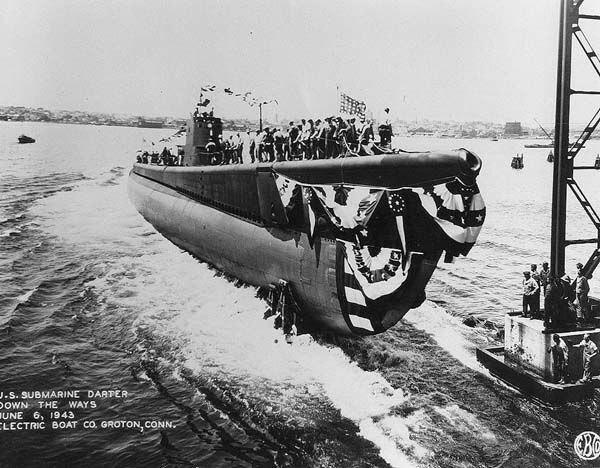
    In that battle, the submarine USS Darter initially detected (on radar) the Japanese task force early on October 23.  Other US naval vessels spotted that armada shortly thereafter on their radar screens.  This advanced knowledge enabled to US Navy to seize the initiative.  After the battle, the Japanese never stood up an equivalent naval force again.

    Technological advantage can be a game changer.  There is evidence of this phenomenon throughout history.  In this instance, the result was the elimination of the adversary’s ability to recover and reengage in a meaningful way.

    History’s Lessons

    Another game changer from that era was the proximity fuse developed by the Applied Physics Laboratory of Johns Hopkins University.  This technology enabled anti-aircraft rounds to explode within 75 feet of an attacking enemy aircraft instead of requiring physical contact which had a poor track record.  Referred to as, “The real secret weapon of World War II,” it is credited with shorting the war.

    Adversity has always led to rapid technological development.  There are indications that the Covid-19 pandemic is fueling an explosion of new ideas that directly address the infection as well as drive performance when the threat has passed.

    Capturing Value

    The conventional approach is to follow the Technology Adoption Life Cycle.  But is that still the realistic model today?  In our article published in 2004 Calculus of Value Model, we argue that the exact opposite is true.

    Advantage can go to those organizations that deploy technology early and codify knowledge obtained as a result.  The resulting ‘unfair advantage’ can change an industry.

    Previously we have made the case that while the concept of Minimum Viable Product aka MVP; a product that Early Adopters will find satisfactory, “The assessment of such technological solutions needs to be robust and thought through.  Not the knee jerk response often seen.”  Meaning that certain risks must be factored in the Value Proposition, but these can be manageable.

    According to Oracle’s Larry Ellison, “If you do everything that everyone else does in business, you’re going to lose.  The only way to really be ahead, is to ‘be different’.”  So Be Different—Start Early!

    How Can You Make New Technologies Your Organizational Game Changer?

    For More Information

    Please note, RRI does not endorse or advocate the links to third-party materials.  They are provided for education and entertainment only.

    For more information on Cross Cultural Engagement, check out our Cross Cultural Serious Game

    We are presenting, Should Cross Cultural Serious Games Be Included in Your Diversity Program: Best Practices and Lessons Learned at the Online Conference, New Diversity Summit 2020 the week of September 14, 2020.  Check Out this timely event!!

    You can contact the author as well.

  • Want – Like – Need

    Want – Like – Need

    Years ago, as part of a never-ending series of company reorganizations, a team of our change management consultants headed to the ‘field’ to interview users.  Upon their return, they presented an extensive list of technology investments deemed necessary to remain competitive.

    Their list focused on technology and not business concerns.  Wondering, I asked who they interviewed.  Proudly, they proclaimed the “field engineers.”  When queried–did they talk with district managers, regional engineers and others with P&L or other managerial responsibilities, the answer was “no.”

    This very expensive process by a major professional services organization simply generated a wish list of junior employees.  It was what they thought they WANTED.

    In our current jargon, “cool stuff.”  Needless to say, none of these projects were funded.  Wasted time and money by those not familiar with our business!

    Today, we are driven to LIKE everything!  CRM systems demand input before we have even procured the product or service.  Log on to any given website and the request to complete a survey will hit you before you read the first line.  Five stars or thumbs-up emojis appears to be the goal.

    Do wants and likes add value?  Perhaps a like is a statement of preference, but perhaps the consumer wants the digital driven question to just go away without the hassle of someone begging for a higher ranking like.  Fibbing to surveys has become a national pastime.

    Business should be most concerned about what a prospect or returning customer NEED.  What pain point or problem does your product/service solve?  If you can’t answer that question, no amount of wants and likes will add to your bottom line.

    I may want a hamburger and go to a fast food restaurant with lots of likes.  However, if I am in a hurry and their preference is clearly to move cars via the drive-through faster than those of us waiting inside, my need to eat quickly will not be met.  I may leave without my meal or most likely not respond to a survey seeking likes.  Then never return!

    That lost customer will never surface in any analysis—not even one star.  Enough of those responses and the business will be in jeopardy and management my not even know why.  Collecting likes should never be a Key Performance Indicator (KPI).

    Finding the Pain

    In a recent Global Energy Mentors leadership meeting, an investment group recounted their business model as one that focused on identifying organizational ‘pain’ points.  Once a specific pain was articulated, the search for new technologies that would address/resolve that pain was undertaken.

    This model flies in the face of Steve Job’s, “A lot of times, people don’t know what they want until you show it to them.”  That may be and sometimes unknown needs are uncovered.

    However, in critical infrastructure sectors where failure is not be an option because it can be very expensive solving a known need is usually most important.  Without exception, this entrepreneur’s success has been focusing on addressing industrial client known pain points.  As an example, our EVPM modeling process demands input from customer groups.

    In this blog series, we have referred to successful change management that comes from addressing the—what’s in it for me question.  From a customer perspective; freeing ‘me’ from known pain is often more valuable than alleviating pain I did not know I had.

    Does Your Value Proposition Solve a Need, Address a Want, or Simply Generate a Like?

    For More Information

    Please note, RRI does not endorse or advocate the links to other materials.  They are provided for education and entertainment only.

    You can contact the author more information as well.

    End Notes

      http://globalenergymentors.org/

      https://www.helpscout.com/blog/why-steve-jobs-never-listened-to-his-customers/

      https://therrinstitute.com/brand-your-digital-oilfield-culture-internalize-its-transformation/

  • It’s the Economics Stupid!

    It’s the Economics Stupid!

    Since it was first uttered in the early 1990s, the phrase “It’s the economy stupid” has been used and misused extensively.  Let’s squander the lexicon one more time.

    The US ‘silly’ political season is well underway and forecast to last almost 13 more months—no telling what voodoo economics will emerge.  Those of us with our business noses to the grindstone must ride this stormy weather to a safe port next November.

    Most have an interest in the macroeconomic policies nation states put forth but other than voting and perhaps lobbying, there is little many can do to materially impact the economy.  What we can do is focus on the economics of our business—CAPEX.  Hence, our daily mantra should be, “It’s the Economics Stupid.”

    What Is Your Value to the Customer?

    For over the fifteen our organization has been, “Helping Clients Achieve Organizational Agility, Resiliency and Sustainability.”  Assisting clients develop and articulate a viable economic value proposition has been one of the most elusive and vexing challenges.

    There is a strong tendency to make statements that are Overstated, Not Demonstrable, and Not Defendable.  Declarations such as, “Enhanced credit control system for partners through increased information visibility” are effectively meaningless—yes, this is an actual quotation from a software company.  Customers are left with the question, “What does that mean for me?”

    Translate Technology into the Language of Business

    If you leave your customer with the above and/or other questions regarding your value to their enterprise, likely the sale will not close.  Probably, a more coherent competitor will leave with the deal.

    CAPEX always undergoes extensive scrutiny; even at the Board level in some cases.  While new and cool technology may ultimately be disruptive and of extremely high value, peddlers must speak the language of the Chief Financial Officer and her staff.  These are ‘green’ deals!

    Those tasked with generating revenue from technological solutions must also take on the role of translator.  Bridging the cultural differences between cool stuff and the bottom line requires a Rosetta Stone.

    The Economic Value Proposition Matrix® model (EVPM) was originally developed with a Super Independent oil and gas operator at the first part of the century to become that Rosetta Stone.  Working with customers, technology providers can now prepare for the inevitable decision by the CFO.  Usually, the vendor will not attend said meeting but preparing the customer staff to make the case is mandatory.

    This video tells the whole story in less than 43 minutes.  Is winning your next deal worth an investment of three quarters of an hour?  If not, keep doing what your doing and hope for a different result.

    The video makes the case that technology offerings often seems similar.  The same buzzwords and euphemisms often confused clients and make it appear that since the solutions are basically the same, just go with the low dollar.  Rising above this clutter is required to be successful.

    How is Your Value Proposition Better Than Your Competitors’?

    For More Information

    Please note, RRI does not endorse or advocate the links to third party materials.  They are provided for education and entertainment only.

    You can contact the author more information as well.

    End Notes

      https://en.wikipedia.org/wiki/It%27s_the_economy,_stupid

      https://www.forbes.com/sites/briandomitrovic/2018/12/02/george-h-w-bushs-voodoo-rhetoric/#26f9ad21798a

      https://www.investopedia.com/ask/answers/042415/what-difference-between-operating-expense-and-capital-expense.asp

     https://en.wikipedia.org/wiki/Rosetta_Stone