
Category: Big Data

  • Linear Metrics in Non-Linear Times?

    Linear Metrics in Non-Linear Times?

    “If it disagrees with experiment, its wrong”

    Our point today is to assess how behavioral decisions are being made today; not about the politics of one candidate or the other.

    The race to the US presidential election has entered its final phase.  As of this writing, establishment wisdom holds the conventional candidate as the presumptive winner.

    Pollical polling is a linear straightforward process albeit with the inherent bias of ‘all’ behavioral instruments.  Effective surveys will take a statistically significant representative sample and project those results to the larger electorate.  A time-honored approach for product marketing as well.

    However, there is another school of thought.  When a new produce/idea is disruptive or not well understood, the firm needs to be proactive rather than simply reactive such as using a survey.  Steve Jobs stated, “You can’t just ask customers what they want and then try to give that to them.  By the time you get it built, they’ll want something new.

    One interpretation, ‘They don’t know what they don’t know.’  Echo the words of Donald Rumsfeld!

    Pollsters suggests that 2016 will not be repeated and they have modified their survey instrument control processes.  Recently one noted canvasser, Frank Luntz stated, “Pollsters did not do a good job in 2016.  So, if Donald Trump surprises people, if Joe Biden had a 5 or 6-point lead, my profession is done.”

    Our Lying Eyes

    When the world was the center of the universe with all the stars and galaxies rotating around us, linear projections confirmed the observed metrics.  However, famously, Nobel laureate, Richard Feynman taught us that, “If it disagrees with experiment, its wrong.”

    Galileo and Kepler among others experimented using the observable data differently.  They discovered that the universe does not revolve around our planet.

    Their assessments altered the given world forever and caused them significant personal angst in the process.  Established ‘science’ did not welcome this change readily.

    If the incumbent rallies and is elected for a second term despite expert projections using legacy linear tools, it maybe time to rethink how social beliefs and behaviors are measured.  Given the problems with Covid-19 data management, the same maybe said for that issue as well

    Hypothesis—Disruption cannot be accurately measured with traditional tools.

    Learnings

    Beyond politics and marketing, there are lessons for all of us.  Artificial Intelligence, Search Engines, Predictive, Big Data Analytics, Machine Learning, IoT et al are now all the rage.  But what if they are using the wrong algorithms?

    There are ramifications for our daily lives.  In March 2019, the Boeing Max 8 was grounded and has yet to return to service.  Will driverless automobiles put us all at risk?

    This survey question maybe answered on November 3 or whenever the final results are tabulated.  Other questions about the use of other metrics will remain unanswered; at least for now.

    How are you certain your decision supports processes and tools are providing valid and reliable data?

    For More Information

    Please note, RRI does not endorse or advocate the links to any third-party materials.  They are provided for education and entertainment only.

    For more information on Cross Cultural Engagement, check out our Cross Cultural Serious Game

    We presented, Should Cross Cultural Serious Games Be Included in Your Diversity Program: Best Practices and Lessons Learned at the Online Conference, New Diversity Summit 2020 the week of September 14, 2020.  Check Out this timely event and contact the organizer for access to the presentations!!

    You can contact this author as well.
  • Data Bias: The Latent or Unobserved

    Data Bias: The Latent or Unobserved

    In statistics a Latent Variable can be defined as, ‘a variable inferred from observed or measured data.’ Its analysis is often used psychology, economics, and predictive modeling.  This author used Structural Equation Models (SEM) in his 1996 doctoral dissertation, Cross Cultural Negotiations Between Japanese and American Businessmen: A Systems Analysis (Exploratory Study).

    From that abstract, “The use of sophisticated statistical techniques such as structural equation modeling and game theory is becoming increasing more important.  Traditional techniques are known to be limited, particularly in the context of cross-cultural behavioral studies.”

    Survival Bias

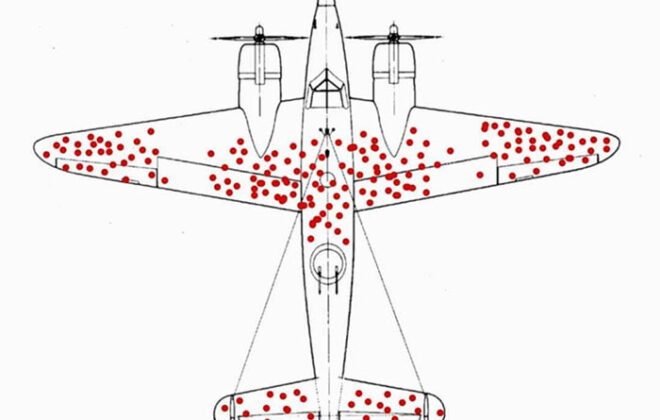
    A recent LinkedIn post alerted this writer to the inimitable perspective statistician Abraham Wald brought to the assessment of World War II Allied bomber damage upon return from missions.  He argued that observed anti-aircraft damage was non-crippling since the aircraft remained airworthy and was able to return.

    He surmised that planes that did not come home may have suffered damage to other areas making them unairworthy and hence their data was unobserved.  Based on this analysis, the U.S. Navy beefed-up armor in the less or unaffected areas and this was credited with saving lives and aircraft.

    This type of analysis came to known as Survival Bias which has its proponents and detractors.  On the surface, it seemed intuitively obvious that areas of damage need addressing while not necessarily those statistically showing fewer issues.

    It is not our intent herein to assess its merits and applicability.  Rather to help readers better understand the very nature of big data and its use, especially in predictive and behavioral models.

    Covid-19

    Today, policy and other decision makers are tasked with dealing with a deadly global pathogen.  Apparently developing quickly and spreading exponentially—a super spreading event.  As of this writing has afflicted millions in 188 countries/region in much less than 12 months.

    In this pundit’s opinion, much of the concern, confusion and clearly wrong information regarding this disease and mitigation protocols can be traced to data collection and analysis.  By now most readers will have some familiarity with the chaos associated with these predictive models.

    For example, according to the US National Library of Medicine, National Institute of Health, “A key fact for us all to remember is that, for the majority of countries, we’re not actually counting how many people have the virus—instead were counting the reports of how many people have the virus, and, like all metrics, those numbers vary according to how they’re measured.  An increase in the number of tests being carried out will result in an increase in the number of infections detected.”

    In addition to the Herculean efforts to tame this tiger from the vast medical, scientific, technology and many other disciplines, Structural Equation Modeling is being used to shed additional light on the latent variables.

    Final Thoughts

    The 2020 Coronavirus is an early test of Big Data analysis in support of decision makers both for public policy and non-government organizations.  While performance so far has been weak, this pundit believes great value can come from this effort.

    Data quality must be highly reliable and valid.  Moreover, models must assess what is not seen, the latent variables such as found in Survival Bias.  These two aspects of strong decision support models are crucial.  These are lessons for all of us.

    Where Didn’t the Bullets Hit Your Business Model?

    For More Information

    Please note, RRI does not endorse or advocate the links to third-party materials.  They are provided for education and entertainment only.

    For more information on Cross Cultural Engagement, check out our Cross Cultural Serious Game

    We are presenting, Should Cross Cultural Serious https://rri-ccgame.com/Games Be Included in Your Diversity Program: Best Practices and Lessons Learned at the Online Conference, New Diversity Summit 2020 the week of September 14, 2020.  Check Out this timely conference!!

    You can contact the author as well.

  • Is Big Data Analysis Being Applied?

    Is Big Data Analysis Being Applied?

    We have been hearing for years how, Big Data Analysis will help us optimize our businesses and generate performance at levels here to for never hear of.  So where is it now?

    Two major sources for data on the Covid-19 virus are Johns Hopkins University and the Centers for Disease Control and Prevention.  This is fine at one level.  Living in the Houston, Texas metropolitan area, this pundit can see a general (real time) overview of the situation from either.

    However, my home is on the west side of the city.  I was recently surprised to learn that most of the local exposure is on the east side; 30+ miles from my domicile.  Is my risk lower than I am being told by the authorities?  Or is it the same or higher?

    Why am I staying at home?  Perhaps the result of a blunt policy instrument?

    It appears to me that most medical professionals are not Data Scientists.  Absolutely knowledgeable in their field, including pathogens (I personally know many in the field including a pathologist).  Is that system taking help from data scientists?  I have not heard that it is.

    Additionally, if the argument is we don’t yet have enough data, this holder of a doctoral degree will argue that Small Data set modeling can be effective as well.  My doctoral dissertation was founded on these statistics.

    I have no doubt that the best minds are working this problem.  However, if policy makers take a hammer to the nail, when perhaps a series of tacks is appropriate, significant economic damage will continue.

    The tack approach appears to be what we are hearing about certain parts of the United States coming back online in a week or so.  The concept of months some advocate makes no sense to this writer.  We will see social unrest long before that.

    The Big Data Analysis sector has been pressing their value proposition and software/solutions for years as a way of optimizing businesses.  Why is the sector quiet regarding coronavirus?

    If we can parse data and sell web advertisements based on ‘clicks’ why can’t we figure this out a level of granularity that allows the economy to restart (at least in some geographies)?  Get to work guys and prove my concerns wrong!

    Finally, what is the role for Artificial Intelligence (AI)?  Its advocates suggest it has magical powers and it  has been used to solve other problems.  Prove it on this global stage!

    Where are Big Data and AI in this fight?

    For More Information

    Please note, RRI does not endorse or advocate the links to third-party materials.  They are provided for education and entertainment only.

    For more information on Cross Cultural Engagement, check out our Cross Cultural Serious Game

    We will be presenting, Should Cross Cultural Serious Games Be Included in Your Diversity Program: Best Practices and Lessons Learned at the Online Conference, New Diversity Summit 2020 beginning April 5, 2020.  Check it Out!!

    You can contact the author as well.

  • In Defense of Humans—Machines Are Not Ready Yet

    In Defense of Humans—Machines Are Not Ready Yet

    I recently submitted an internal organizational document that was spellchecked in addition to my review; several times.  One sentence where there the intent was to say, “that which is …” was change to “that witch is …”

    Did I type it wrong or did ‘auto correct’ take over the decision process?  In any event spellcheck did not perform adequately against minimal Quality Assurance standards.  And how many of us ‘fat finger’ text messages?

    Is this is the technology that is going to drive me to work safely over 200 days a year; round trip?  I hope not.

    One pervasive message—technology gets better with time (more mature).  Is this true?

    How old is spellcheck?  By some accounts it dates to the 1960s.  Most believe by the late 1970s.  So close to half a century.  Yet!

    Usually a spellchecker is not used in a life or death situation.  That is unless it’s for your resume or job application!  However, what about software that is utilized for critical processes, i.e., medicine, process control, etc.

    There are many examples where apparent software failures have negatively impacted human life.  This pundit has written this subject including a look at Man Machine Codependency.  In another blog we commented on problems associated with valid and reliable analysis of Big Data.

    In this author’s opinion, software is getting better and while most likely will not be perfect, will change our daily processes.  The human overlords will need to be trained and/or retrained for the digitalization era.

    This cautionary tale is not about this writer’s inability to use word processing tools.  As we depend on these tools for critical decision making, we must have the core knowledge of the subject we are tackling.

    During a class on digitalization for my master’s level students, I put forth several examples where errors were made by various software applications.  Most had a level of comedy to them, but ALL have potential real-world consequences (bold font).

    • All People in Canada are the Same AgeDemographics for Census or Marketing
    • In Excel 2007, multiplying 77.1 times 850 yielded 100,000 instead of the accurate answer 65,535—Accounting or Engineering
    • The Making of a Fly, a classic work in developmental biology, was listed on Amazon.com as having 17 copies for sale: 15 used from $35.54, and two new from $23,698,655.93 (plus $3.99 shipping)–Procurement
    • Finally, Airline Disaster on AutopilotSafety for the Traveling Public

    This writer has authored books, articles, speeches, presentations, and blogs for many years.  Arguably, he can claim some experience as a writer.  Subject Matter Expert?

    In one instance, the ‘witch’ word won over my intent.  Did the technology cause this error?  Probably, as the goddess of Halloween is not something I typically pontificate about—not on my radar, so to speak.

    Humans can rule for the foreseeable future.  That is unless we seed to the technology.  Most importantly, algorithmic errors can lead to cataclysmic business and even life events.

    Finally, I spellchecked this blog before publication, and it caught the ‘witch’ word this time.  Go figure.

    How Prepared is Your Organization to Oversee the Digitalization Transformation?

    For More Information

    Please note, RRI does not endorse or advocate the links to other materials.  They are provided for education and entertainment only.

    You can contact the author more information as well.

    End Notes

      https://en.wikipedia.org/wiki/Spell_checker

      https://therrinstitute.com/wp-content/uploads/2018/10/Man-Machine-Codependency-September-22-2014.pdf

      https://therrinstitute.com/wp-content/uploads/2018/10/Big-Data-Revisited-December-15-2016.pdf

      https://consult2050.com/job-disruption-due-to-digitalization/