Category: Economy

  • Living on the Edge?

    Living on the Edge?

    The (credited to) Chinese saying, “May you live in interesting times” was once reframed by a colleague of mine.  He suggested, “May we live in less interesting times.”

    His statement was made years ago in yet another major economic downturn.  Today, we are living in the turmoil of economic inflation as well as civil unrest, political uproar and even active military conflicts in Europe and the Middle East as well as threats of more in the Asian theater.

    If you Google the term, “Tension at the Margin,” you will get almost nothing.  This scientist has long used this terminology do describe surface tension such as shown between water in a glass and the air as well as other intersections.

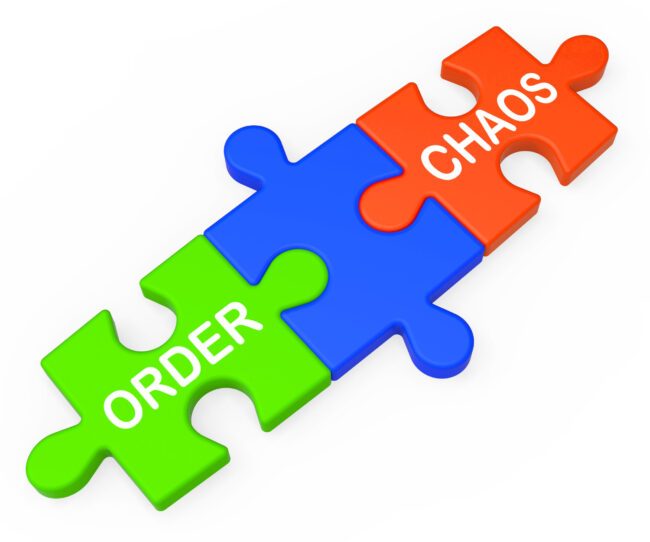
    So it is with life.  There is a level of good tension between a well-ordered environment and total chaos.  Successful societies live in that tension.  Unsuccessful ones either fall into Totalitarian Order or decent into Disastrous Chaos.

    Benjamin Franklin is credited with the prophetic statement when asked about the political structure of the emerging then new United States of America, “A Republic, If You Can Keep It.”

    Tension at the Margin is defined and well understood by Physics.  Human behavioralists seems to think that this is an abnormal situation.  It is NOT!

    The Chinese philosophy concept of Ying and Yang speaks to this issue–“opposite but interconnected, mutually perpetuating forces.”  Is this not the same as what Physicist believe about the natural world?

    I the choice is a Dictatorship, Warfare in the Streets or a Republic, I will take the Republic Tension at the Margin.

    There are almost 9 billion people in the world and best I can tell none of think exactly the same.  These differences should be celebrated and capitalized on.  All other positions are economically and socially disadvantaged.

    What is your organization doing to capitalize on this Positive and Natural Tension?

    For More Information

    Please note, RRI does not endorse or advocate the links to any third-party materials herein.  They are provided for education and entertainment only.

    See our Economic Value Proposition Matrix® (EVPM) for additional information and a free version to build your own EVPM.

    The author’s credentials in this field are available on his LinkedIn page.  Moreover, Dr. Shemwell is a coauthor of the just published book, “Smart Manufacturing: Integrating Transformational Technologies for Competitiveness and Sustainability.”  His focus is on Operational Technologies.

    “People fail to get along because they fear each other; they fear each other because they don’t know each other; they don’t know each other because they have not communicated with each other.” (Martin Luther King speech at Cornell College, 1962).  For more information on Cross Cultural Engagement, check out our Cross Cultural Serious Game.  You can contact this author as well.

    For more details regarding climate change models, check out Bjorn Lomborg ands his latest book, False Alarm: How Climate Change Panic Costs Us Trillions, Hurts the Poor, and Fails to Fix the Planet.

    Regarding the economics of Climate Change, check out our recent blog, Crippling Green.

    For those start-up firms addressing energy (including renewables) challenges, the author can put you in touch with Global Energy Mentors which provide no-cost mentoring services from energy experts.  If interested, check it out and give me a shout.

  • It’s The Holiday Season–Maybe?

    It’s The Holiday Season–Maybe?

    At least in the United States we will soon be kicking off the Holiday Season with all the craziness it brings.

    Starting with the US Thanksgiving, followed by Black Friday (often practiced the entire month of November) many will prepare for Santa Claus then on into the New Year’s celebration.  Many religions have holy days or periods at this time of year as well,

    This 45 days or so of consumer ‘over buying’ is a bellwether for retail economic health and as well as the overall economy.  Soon the media will be counting the daily cash registers.  Economists and other pundits will will tell us all that the state of the economy depends on the success of the gift giving season.

    A Difficult Economy

    We all know the challenges most families are facing.  Inflation, high gasoline prices, supply chain shortages, etc.  We have documented some of these issues in earlier editions of this blog.  We covered such areas as:

    As of this writing, the Tech Giants are laying off thousands along with hiring freezes.  Major retailers appear not to be hiring as much seasonal help as expected.

    This suggests the major economic market may not be as robust as hoped.

    Soft or Hard?

    Economists and others talk about a Hard or Soft Landing when it comes to the down side of economic cycles.  Some believe the markets have already priced Federal Reserve (the Fed) micro policies into the price points.  For example, the shift from “Zero Interest Rate Program and Quantitative Easing to raising rates and Quantitative Tightening.”  Others suggest that not all factors are yet priced into financial markets.

    Over simplified: A Hard Landing results in a Recession.  A Soft Landing avoids a Recession.

    As of this writing opinions appear to be split with some believing the the Soft scenario and other convinced we are in for a very Hard recession in 2023.

    Going Forward

    Retail numbers this holiday season will be a significant signal for the 2023 economy.  This pundit with over five decades as an economic participant believes a Hard Landing is more Likely than a Soft one.  By December 26, 2022 we will  have a better idea of the first two quarters the next calendar year.

    What are you doing to assure that your family and your organization have the agility to weather the possible coming economic storms?

    For More Information

    Please note, RRI does not endorse or advocate the links to any third-party materials herein.  They are provided for education and entertainment only.

    The author’s credentials in this field are available on his LinkedIn page.

    There is a vast body of work regarding Hard v Soft economic Landings.  A good starting source for those interested in addition information is Investopedia.

    “People fail to get along because they fear each other; they fear each other because they don’t know each other; they don’t know each other because they have not communicated with each other.” (Martin Luther King speech at Cornell College, 1962).  For more information on Cross Cultural Engagement, check out our Cross Cultural Serious Game.  You can contact this author as well.

    For more insight regarding the economics of Climate Change, check out our recent blog, Crippling Green.

    For those start-up firms addressing energy (including renewables) challenges, the author is a member of Global Energy Mentors which provide no-cost mentoring services from energy experts.  If interested, check it out and give us a shout.

  • Hierarchy of Team Needs in Challenging Times

    Hierarchy of Team Needs in Challenging Times

    First it was Covid-19 and now a Recession?  Is a Global Military Conflict on the Horizon as well?


    Social, economic and personal pressures continue to mount.  There is already evidence of Reductions in Force, (RIF) aka layoffs are underway or planned.  With consumers stretched to the max, higher interest rates, equity markets in retreat and a struggling real estate environment, one wonders what the holiday season will bring.

    Cross Cultural (Diverse) Teams

    Ronald Reagan is credited with saying, “Recession is when your neighbor loses his job. Depression is when you lose yours.”  Would that it would be that simple.

    As we have addressed in the series on several occasions organizational teams consists of different types of people with diverse background and perspectives on life.  More importantly team members can be at different levels of maturity (both personally and organizationally).  We will address this in more detail.

    Maslow’s Hierarchy

    Many are familiar with Maslow’s Hierarchy of Needs.  While a simple physiological (group level) safety model and as my colleague Rob Jones discusses in his new book, A Hole In Science–Grammar of The Sociological Problem.  He takes a very sophisticated and well thought out approach to addressing this group dynamic problem.  For our purposes in the blog, his in-depth analysis is really for professionals and not the casual reader.  However, for those interested, I highly recommend this newly released publication.

    Released in the early 1940s, the hierarchy consists of these five levels of needs that humans progressively move through (these levels were take directly from the aforementioned linked article and should be treated as direct quotations):

    1. Physiological–Air, water, food, sleep, health, clothes, and shelter, etc.
    2. Safety–Include personal and emotional security (e.g., safety from abuse), financial security, and wellbeing.
    3. Belongingness and Love–Family connections, friendship, and intimacy.
    4. Esteem–According to Maslow, there are two subtypes of esteem.  The first is esteem reflected in others’ perceptions of us.  That is, esteem in the form of prestige, status, recognition, attention, appreciation, or admiration.  The second form of esteem is rooted in a desire for confidence, strength, independence, and the ability to achieve.
    5. Self-Actualization–Examples include the acquisition of a romantic partner, parenting, the utilization and development of one’s talents and abilities, and goal pursuit 

    Maslow and others continued to advance the model, but readers can get the gist of it from these definitions.  Moreover, the following short (2.17 min) video covers this model very effectively.

    We can look at Maslow through the lens of a Maturity Model.  For example, certain Teams and/or Individuals might be higher up the hierarchy than others.

    This may change team interactions.  Usually, such models reflect the maturity of the lowest member.

    With the stress of an economic setback, some members may move from of a position of feeling good to one of Safety if jobs or personal cash flow are threatened.

    Guidelines for Going Forward

    In one sense,, teams composed of individuals in different phases of the Hierarchy are no different than other diverse teams.  Teambuilding techniques such as found in our Cross Cultural Serious Games are good tools to teach team member about the state of mind of their team members and/or competitors.

    We have been through tough times before and we will all get through this one as well.  Be sure to learn from history so as not to repeat it.

    How are you helping your family and organization deal with challenging times?

    Note: The definition of a recession is a political football and this is a blog about organizational excellence and not politics.  Investopedia has a good and generally accepted definition of the term (recession) and it is provided herein for completeness.  Readers can decide for themselves as to  its relevance to their individual situation.

    For More Information

    Please note, RRI does not endorse or advocate the links to any third-party materials herein.  They are provided for education and entertainment only.

    The author’s credentials in this field are available on his LinkedIn page.

    “People fail to get along because they fear each other; they fear each other because they don’t know each other; they don’t know each other because they have not communicated with each other.” (Martin Luther King speech at Cornell College, 1962).  For more information on Cross Cultural Engagement, check out our Cross Cultural Serious Game.  You can contact this author as well.

    For more insight regarding the economics of Climate Change, check out our recent blog, Crippling Green.

    For those start-up firms addressing energy (including renewables) challenges, the author is a member of Global Energy Mentors which provide no-cost mentoring services from energy experts.  If interested, check it out and give us a shout.

  • Agility, Resiliency and Sustainability: Needed Now More than Ever

    Agility, Resiliency and Sustainability: Needed Now More than Ever

    This pundit and his firm have long been proponents of building organizational cultures that provide firm the capability of adjusting to ‘events on the ground’ quickly with strong Situational Awareness.  Moreover, when adversity raises its ugly head, the response of a High Reliability Organization enables the resilience to adjust and go forward.  Finally, stakeholder value is destroyed if the organization does not have a viable economic future.

    In the last few editions of this series, we addressed a number of high impact and potentially negative situations and the forces at work.  We continue to make the point, that organizations ignore these signals at their peril.

    First Contact

    The German field marshal, known as Moltke the Elder, believed in developing a series of options for battle instead of a single plan, saying “No plan of operations extends with certainty beyond the first encounter with the enemy’s main strength.”  Today, “no plan survives contact with the enemy” is the popular reconfiguration of this concept.”

    In such an environment, P:lan B.,C, D et al. may not be fluid enough.  Having the ability to jump to Plan Z or no previous option, is what wins military and organizational battles.  In 1944, George Patton famously turned an entire army, in the middle of winter 90 degrees to relive defenders known as the Battle of the Bulge.  It was tis type of audacious decision making and effective action that won World War II.  This is a model for contemporary organizational behavior, and the basis of our Relationships, Behaviors, Conditions (RBC) approach to agility, resiliency and sustainability in today’s world.

    Elite Athletics

    In addition to military models, athletics is another allegory for business executives to follow.  In 2009 we released our White Paper, Rapid Response Management: Thriving in the New World Order.  In that document, we developed the Rapid Response Management Matrix.

    In this model we compared organizational Fitness Maturity as a function of its ability to Recover (catch your breath and move on to the next play).  Value of course is highest for those that are in the best ‘shape.’

    Preparation, Preparation, Preparation

    We have discussed this issue before.  In our June 22, 2018 blog, we quoted race car driver Bobby Unser, “Success is where preparation and opportunity meet.”  Additionally, Louis Pasteur taught us.  “Chance favors the prepared mind.”

    Sports teams, the military and dance troupes as well as others practice incessantly.  It is the only way to keep at the top of ‘your game.’  Businesses, not so much.

    Choreography

    Much like a Broadway musical, organizations need to understand and assure all the moving pieces (and people) work together.  For example, a decade or so ago an energy services company sought to understand how NASCAR choreographed ‘pit stops.’  There goal was to see if best practices could be used by the field operations teams.

    Into 2023

    Years ago in the middle of yet another oil bust, a colleague paraphrased the old Chinese curse by saying, “May we live in less interesting times.”  Be that as it may we live in interesting times and must respond accordingly.

    How are you and your organization preparing for the uncertainty of the near future?

    For More Information

    Please note, RRI does not endorse or advocate the links to any third-party materials herein.  They are provided for education and entertainment only.

    The author’s credentials in this field are available on his LinkedIn page.

    “People fail to get along because they fear each other; they fear each other because they don’t know each other; they don’t know each other because they have not communicated with each other.” (Martin Luther King speech at Cornell College, 1962).  For more information on Cross Cultural Engagement, check out our Cross Cultural Serious Game.  You can contact this author as well.

    For more insight regarding the economics of Climate Change, check out our recent blog, Crippling Green.

    For those start-up firms addressing energy (including renewables) challenges, the author is a member of Global Energy Mentors which provide no-cost mentoring services from energy experts.  If interested, check it out and give us a shout.

  • At the Precipice?

    At the Precipice?

    On October 8, 2021, we posted the blog, Welcome to the 70s–Again!  The point that the awful economy of that decade could return.  It seems that one year later, those comments have come true.  Many are now freely comparing out contemporary time to that period before most adults were born.  This Baby Boomer graduated from college in 1970s and ‘enjoyed’ the full economic Stagflation experience and it was not pretty and definitely not fun.

    However, increasing global events, especially from Europe and Asia beg the question, Are we entering the 1930s again?  Seeming sinister forces both internal to the United States and global are conspiring to wreck havoc if we are not careful.  Even the word, World War  III is being ‘loosely’ tossed about by various journalists and pundits.

    On top of all these daily headlines, we are told the planet is in peril.  However, the trillions and trillions of dollars necessary do to seem to be available.  “Damned if I do, damned if I don’t.”

    What to Do?

    Geopolitical Risk is not a new concept.  Organizations have been dealing with it for many millenniums.  As always, the race goes to the best economic players.  Agile, Smart, and Decisive continue to play a big role in the success of organization live and even thrive in hard times.

    R B C

    We have long been advocates of the Relationship(s), Behavior(s), Condition(s) model first put forth to research International Negotiations by Stephen Weiss in 1993.  It is a good construct to assess behavioral changes based on situational (conditions) changes, even transformation.  Which results in changes in relationships including adding new and dropping existing.

    Interested readers can search this website, there are 14 blogs on this subject in our Critical Mass series.

    Pressure Cooker

    No one can predict the future but it is abundantly clear there a  lot of pressures on business and people in general.  This writer is not as sure that new behavioral tools are as necessary as good old fashion Leadership!  For executives, the adage, “Lead, Follow or Get Out of the Way” is applicable today as it ever was. 

    Finally, with so many mounting and rapidly changing Conditions, a constant review and assessment is in order.  For example, in the last period of great inflation, successful companies conducted ongoing review of their pricing and cost structures.

    How are You Leading Your Team/Organization/Family in these Trying Times?

    For More Information

    Please note, RRI does not endorse or advocate the links to any third-party materials herein.  They are provided for education and entertainment only.

    The author’s credentials in this field are available on his LinkedIn page.

    “People fail to get along because they fear each other; they fear each other because they don’t know each other; they don’t know each other because they have not communicated with each other.” (Martin Luther King speech at Cornell College, 1962).  For more information on Cross Cultural Engagement, check out our Cross Cultural Serious Game.  You can contact this author as well.

    For more insight regarding the economics of Climate Change, check out our recent blog, Crippling Green.

    For those start-up firms addressing energy (including renewables) challenges, the author is a member of Global Energy Mentors which provide no-cost mentoring services from energy experts.  If interested, check it out and give us a shout. 

  • Will Price Controls Work This Time?

    Will Price Controls Work This Time?

    Update: Just after we published this edition, Goldman Sachs released this comprehensive research piece; Stagflation Risk.

    Recently, one media outlet raised the suggestion of government price controls.  Generally, seen as a bad idea, none-the-less in this inflationary environment, some may perceive value from an action of this kind.

    Additionally, in the current environment some politicians favor cancelling the gasoline tax at both the state and federal levels.  This might beg the question, if these taxes can be abated, why are they in place anyway?

    In 1971, President Nixon implemented price and wage controls.   Some saw this as an election ploy and if so, it worked as he was reelected.  In 2008, the free market Republican George W. Bush stated that sometimes you have to, “abandon free‐​market principles to save the free‐​market system.”  WHAT?

    Elected politicians often think they know more about running companies and economies than those who actually do.  Printing money and regulating commercial processes that they know nothing about, usually in the name of the people who may have put them in office.  Since most of these individuals do not have a working knowledge of the economy, is it any wonder that they bugger things up when they insert themselves?

    And Now!

    Self imposed, inflation is now higher than it has been since the 1970s.  Blamed on a third world country invading its neighbor, leadership states, I “can’t do much” about gasoline prices.  Need I say, malarkey!  The world is awash with ‘clean’ fossil fuels; societies just choose not to use them effectively.

    The concept of an Energy Basket is well defined and depending on geographical location, and need requirements any or all can be used as economically feasible.  Moreover, the concept of Energy Transition is not new.

    In  1993,  Theodore Modis published this diagram in his peer reviewed work, Technological Substitutions in the Computer Industry whereby he presented a technology substitution model that both energy and silicon mapped to very well.

    While renewables were not included in the model, readers will get the point that energy transition has always been an on going process.

    We further discussed this process in our 2015 book, Structural Dynamics: Foundation of Next Generation Management Science.  We defined, Structural Dynamics “the morphology or patterns of motion towards process equilibrium of interpersonal systems.”  In other words the nexus of structure and process whereby markets seek equilibrium if only for a time.

    Markets drive technology substitution.  Only when the economics of new energy sources are acceptable does the ‘take up’ move quickly.

    Volckerism

    Tough Love by the Fed kicked Stagflation in the gut and yes it hurt the US economy for years, but it saved the country from a worse fate.  From the Federal Reserve Bank of St. Louis, “On Oct. 6, 1979, Fed Chairman Paul Volcker took dramatic steps to rein in the runaway inflation that had been sapping the strength of our economy since the mid-1960s.  Without his bold change in monetary policy and his determination to stick with it through several painful years, the U.S. economy would have continued its downward spiral.  By reversing the misguided policies of his predecessors, Volcker set the table for the long economic expansions of the 1980s and 1990s.”

    In 1965, the inflation rate was one percent.  By 1980, it had hit 14 percent.  Per Chairman Volcker’s statement, both Nixon and Carter implemented price controls with catastrophic effects on the nation.

    The Heavy Hand

    This  is not a piece on fiscal or monetary policy, rather it is meant as a wake up call from someone who lived through that period.  Distorted markets always correct, often rapidly and harshly.  The Great Depression comes to mind as well, as the Dotcom Bubble, Financial Crisis of  2008, etc.

    Those interested in the details and theory of human behavior in this period can follow up with the cited materials as well as a wealth of knowledge on  the subject of price controls.

    Bottom line, price controls did not work.  Markets became distorted.  Moreover, easy credit (very low interest rate) transformed to expensive credit (high interest rate) and eventually this painful process negatively transformed the marketplace in ways most contemporary readers have never known their whole life.

    Price controls are tempting.  It is easy to say, lets stop corporations from making obscene profits or gouging.  However, the downside negatively impacts those who need economic help the  most.

    One expects that in the coming months, especially as the election nears calls for price controls will become louder.  History has shown the results of such actions as economic suicide.

    How will your company prepare for mandated price freezes?

    For More Information

    Please note, RRI does not endorse or advocate the links to any third-party materials.  They are provided for education and entertainment only.

    For more information on Cross Cultural Engagement, check out our Cross Cultural Serious Game.  You can contact this author as well.

    References:

    Modis, Theodore. (1993). Technological Substitutions in the Computer Industry. Technological Forecasting and Social Change. 43. pp. 157-167.

  • So Here We Go Again?

    So Here We Go Again?

    Will gas lines return?

    Recent geopolitical events have driven the price of gasoline sky high–again!  As of this writing it is difficult to say where this will all lead.  What is known is that the cost of all things related to petroleum have significantly increased and may go even higher.

    According to the U.S. Department of Energy, in addition to transportation and heating, oil and gas are used in over 6,000 everyday products.  In other words, their use is pervasive in all societies and economies.

    As a response to the oil shock of 1973, in 1975 the Energy Policy and Conservation Act (EPCA) developed the Strategic Petroleum Reserve (SPR).  According to the DOE, as of December 2021 the current inventory was approximately 600 million barrels of crude oil.  It is designed to be a buffer or in digital terms a cache in case of disruption or other requirements.

    Furthermore, according to the U.S. Energy Information Administration (EIA), in 2021 the US consumed approximately 20 million barrels of oil per day.  Assuming Russia exports 8% or approximately 1.6 million barrels (including refined products) per day to the US, this shortfall can be replaced with SDR withdraws as well as increases from both domestic producers and other exporters.

    What Do We Do Now?

    Oil and Gas are commodities and are therefore subject to the same Supply and Demand processes inherent to that segment.  Other examples include, gold, cattle, pork bellies and orange juice, etc.

    Today’s global markets perceive that the demand for gasoline is higher than the available supply.  Therefore, sellers can command higher prices.

    The apparent supply can be brought into balance with demand in two fundamental ways.  First, and easiest is to cut back on consumption, i.e., work from home, carpool, mass transit, etc.

    Second, which will take some time is for domestic production to increase.  ‘Small’ increases from trading partners and domestic operators (along with government regulatory assistance) will add up as well.

    One of the worst things that can happen is hording.  Think back to the great Toilet Paper hording in the early days of Covid-19.  It was unlikely that the daily demand for bathroom tissue suddenly increased.

    In effect, households ‘held’ the inventory (instead of stores) until it was worked down.  Manufacturers did not increase production albeit retailers began to ration individual purchases.

    The gas lines of the 1970s were also an example of hording.  Once the Odd and Even license plate model went into effect, they dissipated almost immediately.

    We need NOT go through this experience again!  We all have the tools necessary to change that narrative and not relive history.

    Dealing With the Issue

    For almost two decades we have modeled large scale economic procurement initiatives, both in the public and private sectors.  Attempts to attain 25% or more in value from initiatives are almost always destined to fail.  On the other hand, finding small components of economic value across a number of processes and departments can easily exceed pronouncements of singular, overall great value to be obtained.

    For example if several areas each find 2-5% of value opportunities, 25% can be quickly exceeded.  This works for large and small organizations.  It can work for individual households too.  One need not find the Silver Bullet or make Herculean efforts to overcome difficult challenges.

    Where Can You Find Eight One-Percent Opportunities to Decrease Your Petroleum Footprint?

    For More Information

    Please note, RRI does not endorse or advocate the links to any third-party materials.  They are provided for education and entertainment only.

    Photo Source: NPR

    For more information on Cross Cultural Engagement, check out our Cross Cultural Serious Game.  You can contact this author as well.


  • The Thirteen and The One

    The Thirteen and The One

    As of this writing, the situation in Ukraine is fluid at best.  Many see the Ukrainian people as heroes winning against all odds.  Other pundits predict they will be overwhelmed in the near future.  History suggests the later is a premature prognosis.

    In the 1940’s European resistance played a major role in the defeat of the Nazi Germany during World War II.  Later, the Vietnamese were able to overcome both France and the United States.  Afghanistan routed the Soviet Union and the United States.  However, the ultimate (modern era) David vs Goliath model lies elsewhere.

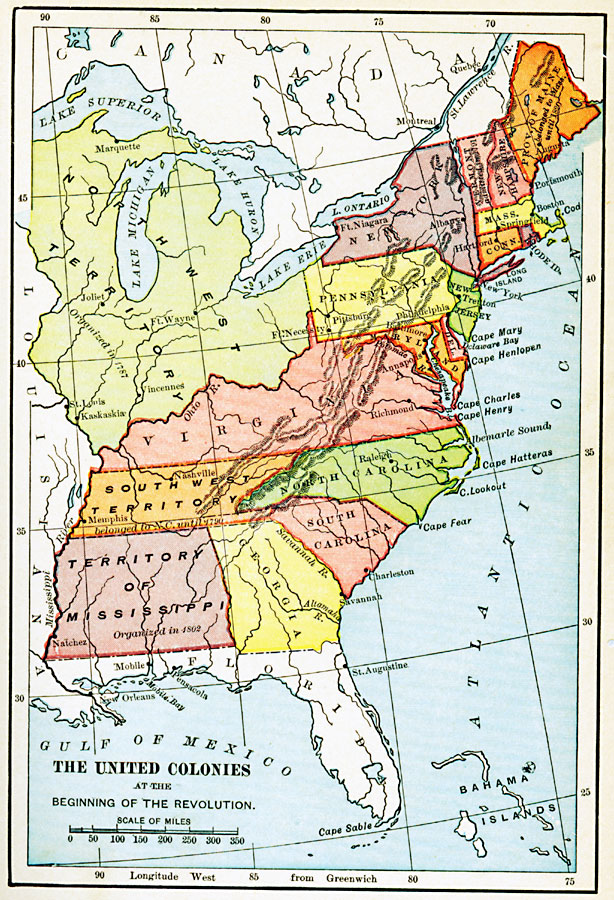
    During the 1770s Great Britain was the most powerful nation in the western world.  A rag tag band of farmers, frontiersmen,  city dwellers and other colonists inhabited a land far from the European continent.  One could argue, who even cared about that bunch?  Yet it was a vassal of European global expansion with perceived riches.

    Then the most powerful country in the world militarily acted, albeit assuming this crowd as weak and taken for granted.  The end result is the United States of America.

    Theoretically easily squashed, yet supported by France and Germany, the ‘shot heard around the world’ transformed the human trajectory significantly and forever.  Europe (including the UK) has been paid back a hundred fold for that investment for over 200 years.  Many others have also fought and attained sustained freedom.

    Do not underestimate the Will (power) of the One.  No one can argue that the Thirteen dramatically impacted the last two plus centuries.  Perhaps the One will change the next few generations.  As before, we may be witnessing the end of a centuries old power structure.

    Will the current investment in Ukraine will return similar dividends?  Odds are, yes.  Even when one does not prevail, i.e., Spartacus and the 300 at Thermopylae the world changed for the better because of their commitments.

    Not limited to conflict, other examples of the small taking on the giant include Microsoft v IBM.  This is a common to the universal human condition with a long track record of success with some failure.  Ukraine has shown themselves to the the Home of the Brave.  Hopefully, soon they will also the Land of the Free.

    Many of us in the global community are heirs of the Thirteen.  What are we doing for the One?

    For More Information

    Please note, RRI does not endorse or advocate the links to any third-party materials.  They are provided for education and entertainment only.

    For more information on Cross Cultural Engagement, check out our Cross Cultural Serious Game.  You can contact this author as well.

  • Beware The Guns of March?

    Beware The Guns of March?

    Readers know that as of this writing there is geopolitical and military tension in eastern Europe.  Hopefully, the situation will resolve peacefully.

    This piece is not about those politics.  Rather it is about the potential for accidental engagement and how that risk can be mitigated.

    President Kennedy is famously cited for the comment that referred to the origin of the War to End All Wars, “Perhaps the greatest contribution historians have made to humanity, at least as historians sometimes tell it, came during the Cuban Missile Crisis when Barbara Tuchman’s book, The Guns of August, saved the world from nuclear war.  The book is Tuchman’s narrative of the origins of the First World War, an account that, in President John F. Kennedy’s reading, showed how miscalculation and inflexible military planning could force great powers into catastrophic conflicts against their leaders’ wishes.”  We might add, against the wishes of the populations that must endure the unbearable cost of stupid interventions.  As noted by Herbert Hoover.

    “Older men declare war. But it is the youth that must fight and die.”

    While the Cuban Missile Crisis worked out well for both parties, including the world in general, it was not necessarily a given.  Miscalculations such as the US lack of knowledge regarding nuclear weapons onboard Soviet submarines or the ‘launch’ upon the invasion of the island of Cuba order could have been disastrous.

    Misunderstanding during the 1983 military exercise Able Archer is another example of a near nuclear catastrophe.  And then there all the Broken Arrows,  nuclear weapon incidents (that we know of).

    Complex Systems’ Behaviors

    This blog series has commented on complex interconnected systems a number of times.  The  Risk Profile is dramatically increased in such systems.  Geopolitical and military systems must be viewed through this lens as well.  However, we know complex systems can be properly managed and thus reduce the likelihood of major global impact events.

    This process is grounded in High Reliability Management (HRM).  Wikipedia defines, “A high reliability organization (HRO) is an organization that has succeeded in avoiding catastrophes in an environment where normal accidents can be expected due to risk factors and complexity.

    This author believes that geopolitical and military complex systems can benefit from this model.  Given that the cost of these type failures is incalculable they certainty fits HRM profile.

    Folly Revisited

    In the 1930s Brinksmanship did not end well.  Following historical patterns, especially from World War I, Europe plunged into the abyss for the second time in two decades.  Miscalculations on the side of multiple parties in both conflicts let to unthinkable destruction and loss of life.

    Today’s militaries are much more powerful than ever.  Hopefully, from Shakespeare, “Beware the ides of March” does not portend this year.

    Geopolitical miscalculations, brinksmanship and other aggressive negotiations can go badly.  This is especially the case when adversaries are not in direct and frequent communication with all parties.

    Even then cultural differences put discussions at risk.  Temperance, communication and though is what saves the world from the unthinkable.  Hopefully, cooler heads will continue to prevail during the current crisis.

    Cross Cultural Negotiation

    The importance of cross cultural understanding cannot be overstated as geopolitics and businesses deal with complex, multi-faceted issues across many nations, ethnicities and cultures.  Old international negotiation models are no longer relevant.

    Behavioral Economics is foremost today.  All parties dealt with are by definition diverse.  They are composed of different genders, ethnicities and ages etc.  This is a more accurate model that reflects the reality of organizations today.

    Also, keep in mind that no nation is homogeneous.  Each is composed of separate regions, cities, with local backgrounds, cultures and more.  So when one talks about two or more geopolitical entities to be at odds over an issue(s), that model is too simplistic and can lead to greater risks as described earlier.

    These are more contributing factors for misunderstanding and miscalculation.  Most of us never ‘step in the other’s shoes.’  However, we can recognize the differences in perspectives, behavior and cultures.

    Changing the Playing Field

    We have often discussed the Relationships, Behaviors and Conditions (RBC) construct among economic actors.  The model argues that new Conditions or Situations and Behaviors change the Relationship among parties.  This applies at all levels of human interactions from two individuals to many nations.  It is applicable here as knowledge to help diffuse difficult situations.  For an in-depth review of the model, check the linked blog.

    No Guns this Time?

    The cascading events following the assassination of the Austrian, Archduke Franz Ferdinand by a small terrorist group is widely believed to have led to the beginning of World War I.  The sceptic must put forth, “you have got to be kidding me.”  Yet, it did happen.

    Our point here is that it does not take much to launch the horrible.  How many American doughboys died for that nonsense?  It can happen again and most likely will at some point given human nature.

    Business Contingency

    Geopolitical risk has always been one component of an organization’s risk profile.  What will be the impact on your business if the unthinkable happens in Europe again?  Other risk mitigation tools include social media.

    In 2013 we published ” Mitigating Operational Risk Using the Power of Social Media” that identified a methodology to better understand the beliefs and behaviors of local populations.  From the footnoted piece, “Large global enterprises can augment existing security and risk management with the same solutions used by the government entities in the defense sector at commercial price points.  The real question is not why, but why not?”

    Since that time, there have been significant advances in these capabilities.  Other readily available tools can assist as well.  Use inexpensive technology to protect global stakeholder interests.

    How Robust is Your Firm’s Contingency Plans for Geopolitical Uncertainties?

    For More Information

    Please note, RRI does not endorse or advocate the links to any third-party materials.  They are provided for education and entertainment only.

    For more information on Cross Cultural Engagement, check out our Cross Cultural Serious Game.  You can contact this author as well.

    Footnote

    Kuiper, Marcus A. and Shemwell, Scott M. (2013, February). Mitigating Operational Risk Using the Power of Social Media. Petroleum Africa Magazine. pp. 28-31.

  • Are We There Yet?

    Are We There Yet?

    Who among us have not uttered these words as a child or for those who are parents heard them?  Usually in the context of a trip in an automobile, but perhaps now in our journey to the next . . .

    Society is on a number of interconnected journeys.  Most visible is the Covid-19 transit (hopefully) out of the pandemic category.  Supply chain issues are very visible to the public as well.  More toilet paper anyone?

    Not as conspicuous but perhaps in the long run more impactful is our collective trip to ‘Smart.”  We are finalizing our book, Smart Manufacturing: Integrating Transformational Technologies for Competitiveness and Sustainability, due out in 2022.  In it we discuss a full range of issues and the societal transformation that is occurring.

    In one sense, this all began circa 2007 with the advent of the commercial smartphone.  How has our relationship with the phone changed since then.  Needless to say it has in a dramatic fashion in less than fifteen years.  A personal smart device that enables telephone calls in addition to a host of ever growing Apps.

    There are some enterprise level smart firms, most notably in the tech sector, i.e., social media.  Imagine when 15 years from now ALL major organizations and their supply chain partners are fully smart?  Sounds like a good deal doesn’t it?  However!

    There is risk associated with this transformation.  Notable recent examples include the Colonial Pipeline ransomware in May 2021 and the devastation caused to the East Coast of the US.  More recently, the October 2021 outage at Facebook, WhatsApp and Instagram ostensively caused by a single internal issue.

    These are scary, yet the most insidious will be the social cultural changes.  The very nature of jobs will change.  For example, we have already dipped our toe in the online video conferencing waters.  Many workers will remain remote indefinitely.  However, not everyone wants the isolation that comes from a home office.  They miss the human interaction and the gossip at the preverbal ‘water cooler.’

    Also, consider this.  What Knowledge, Skills and Abilities (KSAs) will you need in 5, 10 or 15 years to remain a viable employee?  By some accounts, up to 60 percent of the workforce will need to be reskilled or upskilled.  This is a huge number and this writer knows from personal experience that not all individual can or want to be re-purposed.

    Moreover, most digitalization initiatives have failed to date.  The IT project track record has been poor for decades.

    This suggests the road will be rocky for many, but not all.  As always, there will be winners and losers.  Both sectors, firms and even at the individual level.

    Historically, once an individual graduated from school and got job/career path formal education ended.  Yes many go back to night school, test for credentials, i.e., CPA, PE etc.  Some professions require ongoing Continuing Professional Education (CPE).  Yet most do not.

    It will be imperative at all levels, that we continuously re-invent ourselves throughout our careers.  The reality is–We Never Get There.  This is a lifelong journey.

    What Are You Doing to Assure Relevancy Tomorrow?

    For More Information

    Please note, RRI does not endorse or advocate the links to any third-party materials.  They are provided for education and entertainment only.

    Interested in Cross Cultural Engagement or DEI, check out our Cross Cultural Serious Game

    We presented, Should Cross Cultural Serious Games Be Included in Your Diversity Program: Best Practices and Lessons Learned at the Online Conference, New Diversity Summit 2020 the week of September 14, 2020.

    Contact the author for information on these and others subjects covered in the Critical Mass series.

  • Welcome to the 70s—Again!

    Welcome to the 70s—Again!

    This Baby Boomer graduated from college in 1970.  Just in time for Saturday Night Fever and Grease, Avocado colored refrigerators and Harvest Gold dinnerware.  Plus, the best friend a then bachelor ever had–the microwave oven!

    Not to forget the Gasoline Lines and Hyper Inflation, Vietnam, Peace/Race Protests/Riots, a Major Recession, Stagflation and other wonderful (not) youthful memories–ugly political and economic time not wished on future generations.  Adjusted for inflation a gallon of gasoline was $0.36 in 1970.  By 1980 it was $1.19–greater than a 330% increase.

    Seems like as Yoga Berra once said, “It’s like déjà vu all over again,” or ‘Those who do not learn history are doomed to repeat it.”  Yet here we are again, or so it seems.

    While I am not dusting off my leisure suit or growing what’s left of my hair, if as this boomer believes we are beginning to relive the 1970s economy, so what should we do?  How should we respond to this new, yet old situation?

    Most financial planners, corporate executives, academics, regulators and others were either not old enough or even alive when the economic and political shocks of the 1970s engulfed the globe.  Without this experienced knowledge, many maybe ill equipped to deal with the current  tsunami that is building.  Perhaps a critical concern for everyone’s 401K retirement investments?

    Hyper inflation is a cancer.  It destroys economies and even societies, not to mention families and individuals in its wake.  Real estate may be a winner if anyone can afford to purchase your house.  However, equities struggle and cash is toast.  From 1970 to 1980 the Dow Jones Industrial Average advanced a scant 5 percent.

    How does this compare with an over 300% increase in the gasoline we all needed for our automobiles?  Short answer, it does not and individual households went backward during that period.

    So What Do We Do Now?

    Flight to quality.  But what represents quality?  Big Tech comes to mind but what is the underlying value proposition of a web based database?  The outage of a major player blamed on a network issue and a number of (internal) cascading issues–the plague of many industrial incidents including Deepwater Horizon questions that proposition.

    Are companies this vulnerable in our age of digitalization, or was this a sign of something else?  As with many IT oriented decisions, “It depends.”  The fact that one of the world’s largest, high profile web based companies suffered a significant outage, not as a result of a cyber attack but apparently its own technical incompetency is not reassuring in a Cloud based global economy.

    The something else–we have discussed the need for High Reliability for complex sectors including the 16 sectors the US Homeland Security deems as Critical Infrastructure.  Social media is not on that list, but manufacturing is.  In our forthcoming (2022) book, “Smart Manufacturing: Integrating Transformational Technologies for Competitiveness and Sustainability,” we address risk mitigation strategies that can inoculate organizations from such catastrophic IT failures.

    Heavy industries such as oil and gas are routinely criticized when a catastrophic incident occurs.  These need no longer happen and we have put forth strategies routinely for more than a decade including in our 2014 book, Implementing a Culture of Safety: A Roadmap to Performance-Based Compliance.

    As we move into the ‘Smart’ era, it will be incumbent on organizations to take steps to mitigate what happened to a web based chat room provider.  The exogenous risk of critical infrastructure failing is significant, per the recent Colonial Pipeline ransomware attack and the systemic damage done to the US east coast.

    The 1970s were marked by turmoil and follow on from the late 1960s.  Richard Nixon took the country off the Gold Standard opening up significant economic and individual distress.  We appear to be on the cusp of Yogi’s cautionary tale.  It does not have to be, but appears likely.  Is the US dollar no longer the world’s reserve currency in a era of bitcoin?  If so, what are the ramifications?

    Finally, as the son of parents from the Greatest Generation, I admit I never faced the challenges they endured.  During my 20s, the period was an inconvenience, yet one I do not care to relive in my 70s.  The graphic was taken from the Internet without citation.  The author is unknown but we acknowledge his/her sense of humor.  AND I can relate to it!

    The Fed has indicated Inflation (Stagflation?) is here to stay.  To this individual, this is a scary statement even though it posited as essentially ‘no big deal.’  We will see in a year if it was as big a deal as it was in the 1970s.

    How will You Manage in this Environment?

    For More Information

    Please note, RRI does not endorse or advocate the links to any third-party materials.  They are provided for education and entertainment only.

    Interested in Cross Cultural Engagement or DEI, check out our Cross Cultural Serious Game

    We presented, Should Cross Cultural Serious Games Be Included in Your Diversity Program: Best Practices and Lessons Learned at the Online Conference, New Diversity Summit 2020 the week of September 14, 2020.

    For more information on these and others subjects covered in the Critical Mass series contact this author.